 English
 Español
 Français
 Deutsch
 Português (Brasil)
 Русский
 العربية

重型桥式起重机厂家 | 定制桥式起重解决方案

 China

- 交期:
- 随报价一并确认
- 包装:
- 标准出口包装
- 样品:
- 可按需提供
产品详情
桥式起重机技术规范
| 技术参数 | 标准规格 |
|---|---|
| 产品名称 | 桥式起重机( overhead crane) |
| 起重机类型 | 单梁、双梁、顶部运行或底部运行 |
| 额定起重量 | 1–500 公吨,可定制 |
| 起重机跨度 | 5–40 m,可根据车间尺寸定制 |
| 起升高度 | 6–50 m 或定制 |
| 工作级别 | ISO M3–M8 / FEM 1Am–5m |
| 起升速度 | 0.5–20 m/min;可选变频控制 |
| 小车运行速度 | 2–40 m/min;可调 |
| 起重机运行速度 | 5–100 m/min;可调 |
| 起升机构 | 电动钢丝绳葫芦或开放式卷扬小车 |
| 主梁材料 | Q235B、Q355B、S235JR、S355JR 或同等结构钢 |
| 电源 | 三相交流,380–690 V,50/60 Hz;根据目的地定制 |
| 控制方式 | 手柄控制、无线遥控或司机室 |
| 电机防护等级 | IP54–IP65 |
| 电气绝缘等级 | F 级或 H 级 |
| 环境温度 | -20°C 至 +45°C;可提供高温或低温版本 |
| 安全装置 | 超载限制器、上下限位开关、紧急停止、行程限位器、缓冲器和防碰撞系统 |
| 适用标准 | ISO、FEM、DIN、EN、CMAA、GB 或客户指定标准 |
| 表面处理 | 抛丸、防腐底漆和工业面漆 |
| 应用 | 钢厂、仓库、制造车间、发电站、船厂和制造设施 |
| 定制选项 | 防爆、冶金、绝缘、抓斗、电磁、自动化及智能监控配置 |
Heavy Duty Bridge Crane Manufacturer | Custom Overhead Lifting Solutions
A bridge crane is an overhead material-handling system designed to move heavy loads across a defined rectangular working area. It serves overseas procurement teams in steelmaking, machinery production, warehousing, power generation, precast concrete, and other industries that require controlled lifting above the shop floor. By combining a traveling bridge, runway system, hoist, trolley, electrical controls, and safety devices, a properly engineered bridge crane can improve load positioning while reducing dependence on floor-based handling equipment. Each project should be configured around rated capacity, span, lifting height, duty classification, operating environment, applicable standards, and the buyer’s building conditions.
Bridge Crane Product Overview
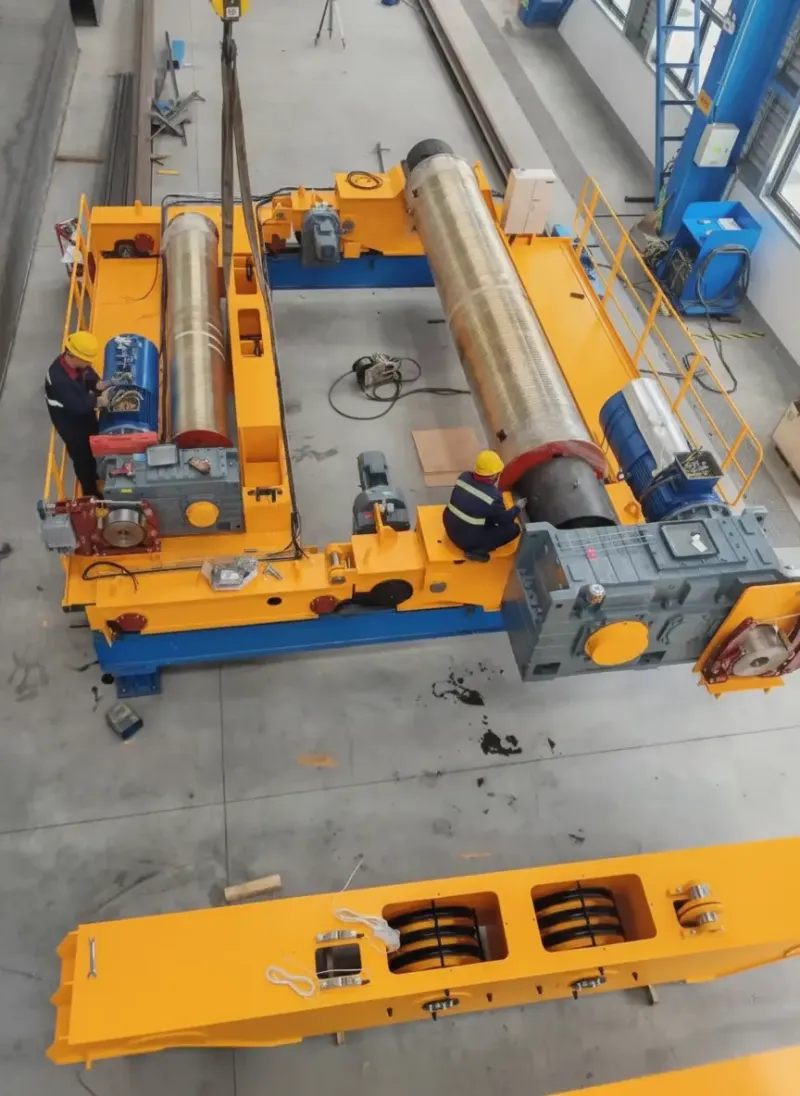
A bridge crane, also called an overhead traveling crane, consists primarily of one or two bridge girders that travel along elevated runway rails. A trolley-mounted hoist moves across the bridge, allowing the load hook to travel longitudinally, laterally, and vertically. This three-axis movement provides broad coverage within a workshop bay without occupying valuable production-floor space.
The two principal configurations are single-girder and double-girder bridge cranes. A single-girder bridge crane normally uses one main beam with a hoist traveling below or alongside the girder, depending on the design. It is commonly evaluated for moderate lifting requirements, shorter spans, and projects where building headroom or overall system weight is important. A double-girder design uses two parallel bridge beams with a trolley positioned between or above them. It is generally considered for heavier loads, longer spans, demanding duty cycles, greater hook approaches, or installations requiring specialized lifting equipment.
Top-running and under-running arrangements are also available. A top-running bridge travels on rails installed above the runway beams, while an under-running unit operates from the lower flanges of a supporting runway structure. The correct arrangement depends on the building design, available headroom, wheel loads, runway capacity, maintenance access, and required hook coverage. Buyers comparing these layouts can review related overhead lifting configurations at [[INTERNAL_LINK]].
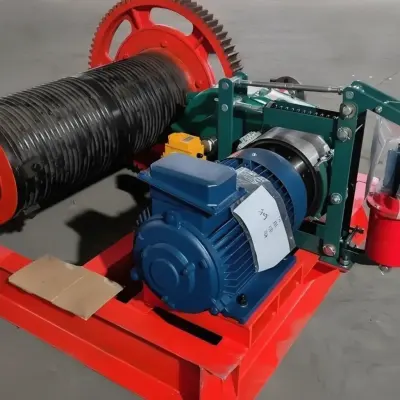
Structural components may be produced from suitable structural steel selected according to the engineering design and specified market standard. The lifting mechanism typically includes a wire-rope or chain hoist, motor, gearbox, brake, drum or load wheel, rope guide, hook block, and limit devices. Other key components can include end carriages, wheels, buffers, conductor systems, festoon cables, control panels, radio remote controls, operator cabins, warning devices, and anti-collision systems. Final component selection should reflect the application rather than a generic catalog description.
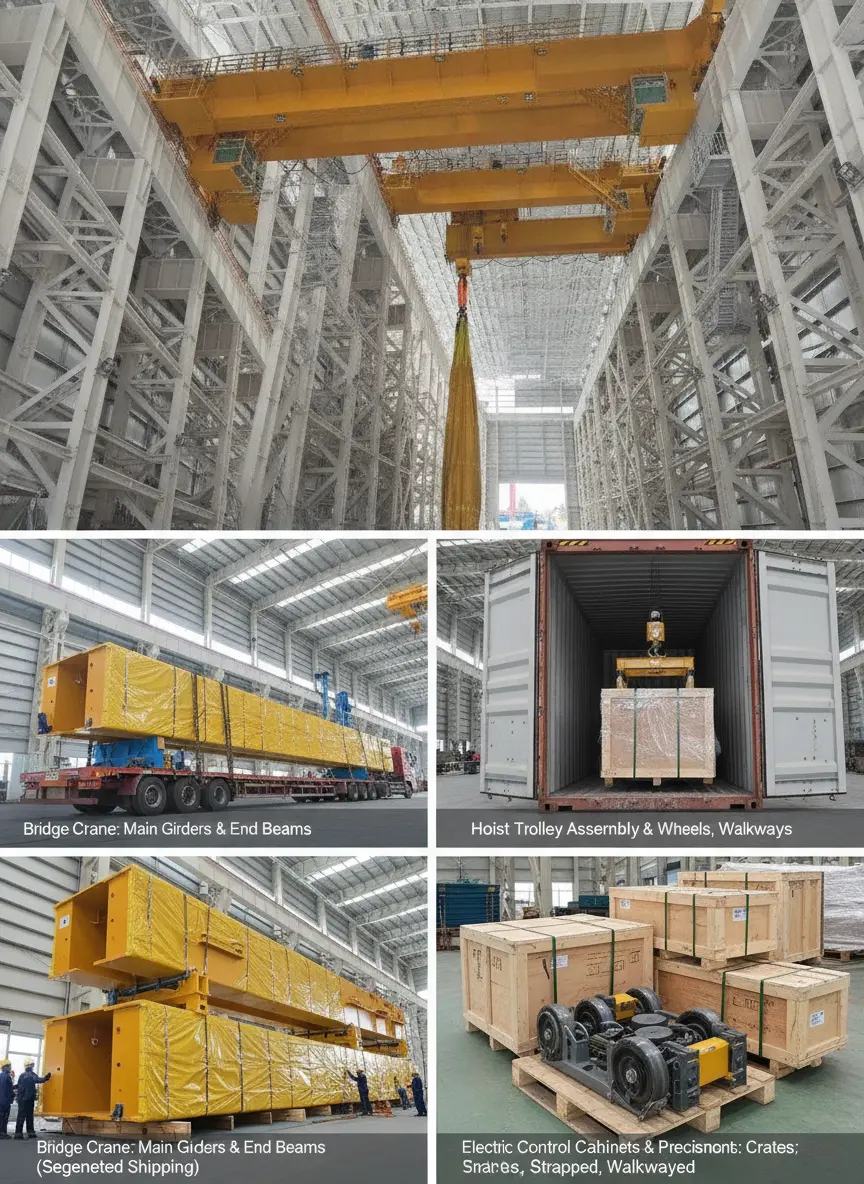
Important operating characteristics include rated load, lifting speed, trolley speed, bridge travel speed, load spectrum, starts per hour, operating time, ambient temperature, dust exposure, humidity, corrosive substances, and indoor or outdoor installation. A bridge crane used intermittently for maintenance has different design requirements from one handling molten metal, feeding a production line, or operating continuously in a steel service center. Information about hoist selection is available through [[INTERNAL_LINK]].
Bridge Crane Specifications & Standards
Bridge crane specifications should be established through a technical data sheet and confirmed before production. Capacity alone is not enough to define a safe or commercially suitable system. Span, lifting height, runway length, hook approach, duty classification, control method, power supply, travel speeds, environmental conditions, and local conformity requirements all affect the final design.
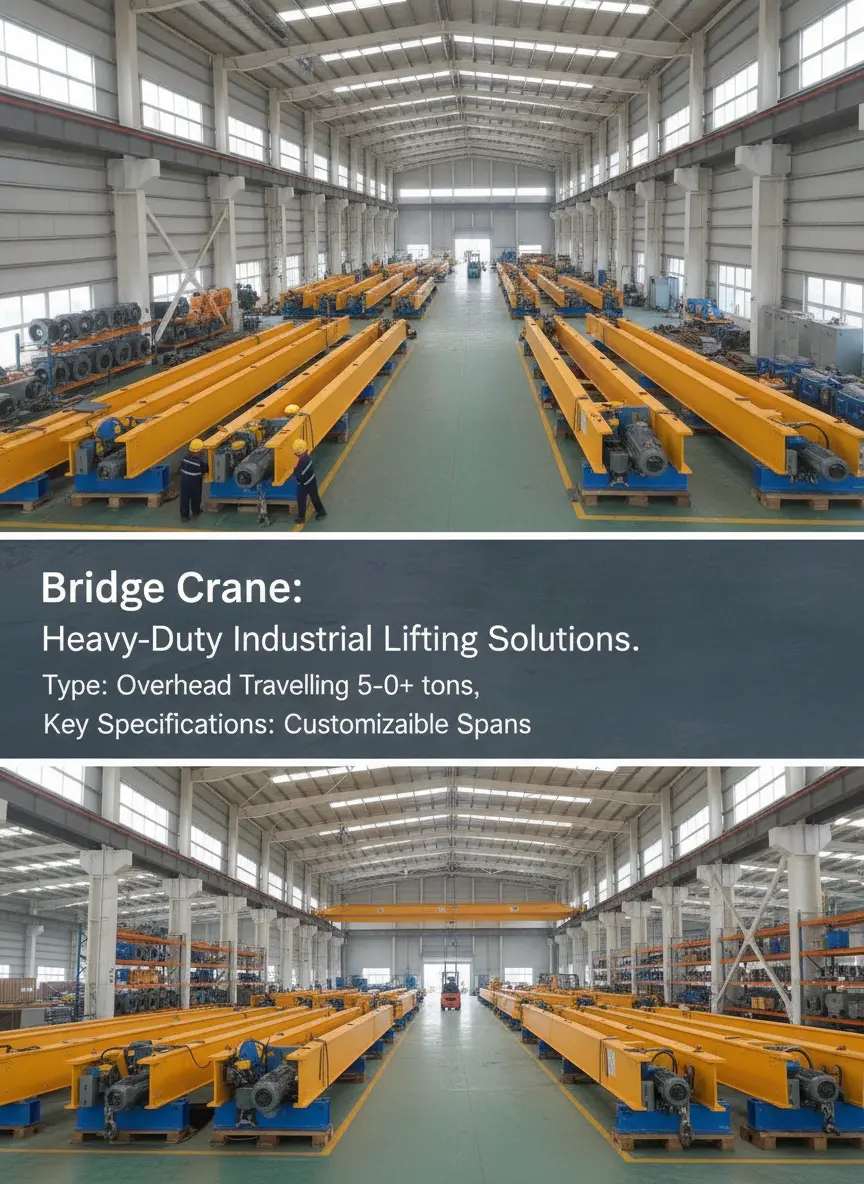
| Specification Item | Options or Information Required | Procurement Significance |
|---|---|---|
| Rated lifting capacity | Maximum permitted working load, excluding or including below-the-hook devices as clearly stated | Determines the structural, hoisting, braking, wheel, and electrical design basis |
| Crane span | Horizontal distance defined according to the applicable design convention and runway layout | Affects girder dimensions, deflection, wheel loads, self-weight, and transport planning |
| Lifting height | Required vertical hook travel and lowest/highest hook positions | Controls rope reeving, drum capacity, headroom, and hoist arrangement |
| Duty classification | Classification based on utilization, load spectrum, operating cycles, and application | Influences fatigue design, mechanism selection, motor rating, brakes, and service life assumptions |
| Travel speeds | Hoisting, trolley travel, and bridge travel speeds; single-speed or variable-frequency control | Affects positioning accuracy, productivity, motor selection, and control complexity |
| Power supply | Site voltage, phase, frequency, allowable variation, and control voltage | Must match the destination facility and selected electrical components |
| Control mode | Pendant, radio remote control, cabin, automated control, or a combination | Determines operator position, visibility, ergonomics, and system integration |
| Operating environment | Indoor or outdoor use, temperature, humidity, dust, corrosion, wind, hazardous areas, or process heat | Influences enclosure protection, coatings, component selection, and special safety measures |
| Runway conditions | Rail type, runway length, elevation, alignment, support spacing, and existing beam data | Required for wheel-load review, interface design, installation, and commissioning |
Applicable standards vary by destination country, crane type, contractual requirements, and authority having jurisdiction. EN 15011:2020, Cranes — Bridge and gantry cranes, establishes European requirements for bridge and gantry crane design and construction. EN 13001-1:2015 covers general crane design principles, while EN 13001-2:2021 addresses load actions. Relevant steel-structure verification may also refer to the applicable parts of the EN 13001-3 series.
For classification, ISO 4301-1:2016 provides general crane classification principles based on the total number of working cycles and load spectrum. In North American projects, ASME B30.2 applies to overhead and gantry cranes with top-running bridges and top-running trolleys, while CMAA Specification No. 70 is commonly referenced for top-running multiple-girder electric overhead traveling cranes. CMAA Specification No. 74 addresses single-girder top-running and under-running cranes. These documents are not automatically interchangeable, so the purchase contract should state which standard governs the project.
Electrical equipment may be specified with reference to IEC 60204-32:2023, which addresses electrical equipment of hoisting machines. Where European conformity is required, the complete equipment and documentation package must be evaluated against the legislation applicable at the time of supply, rather than assuming that compliance with one design standard alone satisfies every legal obligation. Buyers can consult the related crane standards guide at [[INTERNAL_LINK]].
Structural steel specifications should be confirmed during engineering. If an ASTM-based material specification is contractually required, standards such as ASTM A36/A36M or ASTM A572/A572M may be considered where appropriate to the design. European projects may specify steel under EN 10025-2, while Chinese-origin material may be ordered according to relevant grades in GB/T 1591. These references identify material frameworks, but they do not prove that a particular grade is suitable for a specific bridge crane without design verification, traceability, and approved drawings.
A typical inspection package may include general arrangement drawings, electrical schematics, material records where specified, component certificates, inspection reports, load-test documentation, and operation and maintenance manuals. The exact document list, language, acceptance criteria, and third-party inspection scope should be agreed before order confirmation. More information about inspection planning is provided at [[INTERNAL_LINK]].
Bridge Crane Applications
A bridge crane is suitable for facilities that need repeated lifting across a fixed production or storage bay. Its design must still be matched to the real load spectrum and environment. Common applications include the following:
Steel Processing and Metal Fabrication
Steel service centers and fabrication plants use overhead cranes to handle plate, coils, beams, fabricated structures, dies, and machine components. Load shape and attachment method are critical. Coils may require C-hooks or coil grabs, while plate handling may involve clamps, magnets, or vacuum devices selected for the material and process. Below-the-hook equipment must be included in capacity and clearance calculations. Related lifting attachments can be reviewed at [[INTERNAL_LINK]].
Machinery Manufacturing and Assembly
Machine builders use bridge crane systems for positioning frames, motors, gearboxes, tooling, and assembled equipment. Variable-frequency drives can be specified where controlled acceleration and more precise positioning are needed. For tandem lifting, synchronized motion, or critical assembly work, the control philosophy and allowable load sharing should be defined during engineering.
Warehousing and Logistics
Industrial warehouses may use a bridge crane to move long, bulky, or heavy products that are difficult to handle with forklifts. Typical examples include structural sections, molds, industrial equipment, and bundled materials. The buyer should assess aisle layout, rack clearance, pedestrian separation, hook coverage, and interaction with other handling equipment.
Power, Maintenance, and Utility Facilities
Power stations, pump rooms, and maintenance workshops often require cranes for installing and servicing turbines, generators, pumps, valves, and other major equipment. Although operation may be infrequent, lifts can be critical and may require strict positioning, redundant braking provisions, or project-specific inspection documentation.
Precast Concrete and Heavy Construction Products
Precast plants use cranes to lift molds, reinforcement assemblies, concrete elements, and finished products. Outdoor operation may introduce wind, rain, temperature variation, and corrosion exposure. If loads are lifted between indoor and outdoor areas, the environmental design basis should cover the full travel path. Buyers considering outdoor layouts may also review gantry crane alternatives at [[INTERNAL_LINK]].
How to Choose a Bridge Crane / Buying Guide
Bridge crane procurement should begin with a written operating profile. State the weight of the heaviest load, normal load range, load dimensions, center-of-gravity conditions, lifting frequency, shifts per day, required travel distances, and expected service life. Do not select duty classification from capacity alone. A crane repeatedly handling partial loads may accumulate more fatigue cycles than a maintenance crane that occasionally lifts its rated load.
Confirm the physical dimensions of the building and runway. Procurement teams should provide the clear span, available headroom, runway elevation, bay length, column spacing, obstructions, maintenance clearances, and floor-to-hook requirements. For an existing runway, obtain rail data, beam details, alignment records, and allowable vertical and horizontal loads from the responsible structural engineer. The crane supplier’s wheel-load data must be checked against the supporting structure.
Define the required standard and certification package in the request for quotation. Specify whether the project follows EN 15011, an applicable ASME B30 standard, a CMAA specification, ISO classification, or another national requirement. Also identify any required third-party inspection, welding documentation, material traceability, electrical certification, test procedures, and document language. A clear quality plan prevents disputes that cannot be resolved by a generic statement of “standard compliance.”
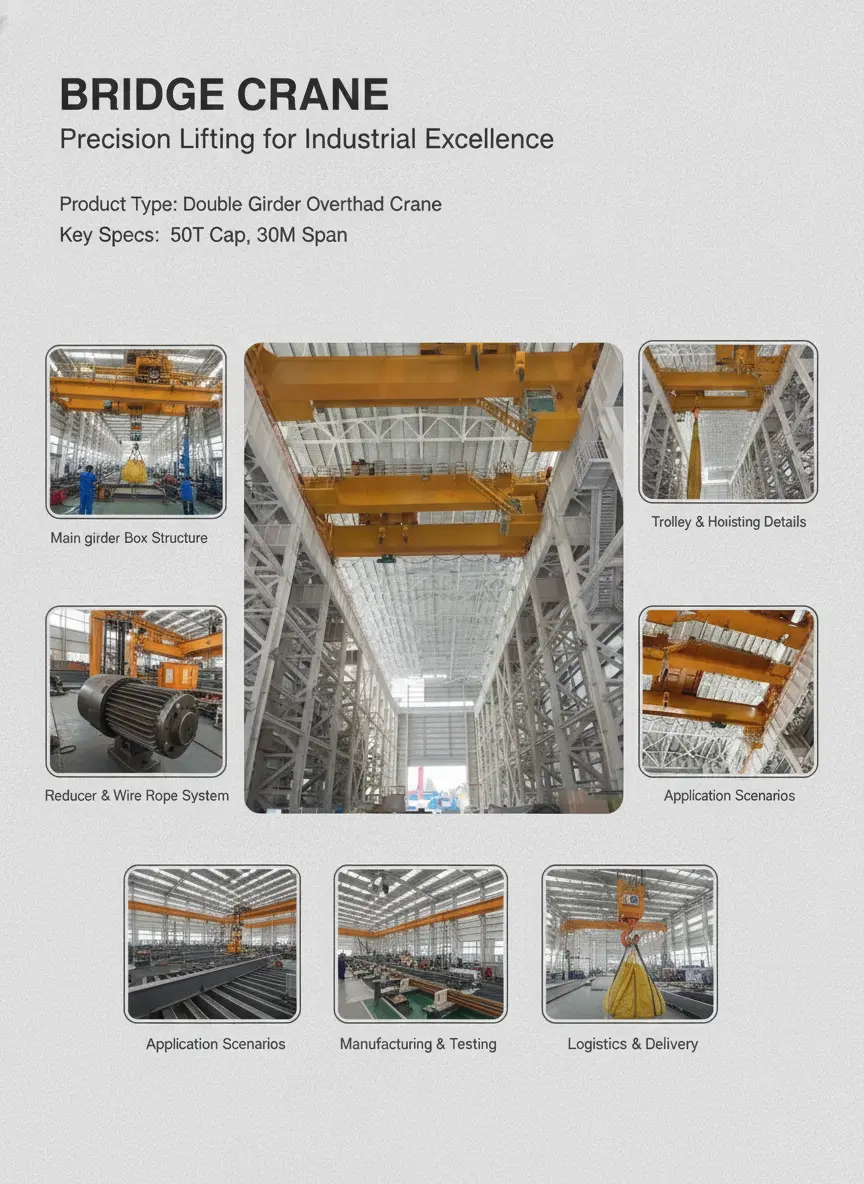
Evaluate the hoist and control system against the task. Pendant control is straightforward for many workshop applications, while radio remote control can allow the operator to choose a safer viewing position. Cab control may be appropriate where travel distances are long or process visibility requires an elevated station. Variable-frequency drives can support smoother starts, reduced load swing, and adjustable speeds, but parameters must be commissioned for the actual crane and load behavior. Control options are discussed further at [[INTERNAL_LINK]].
Ask suppliers to state the proposed minimum order quantity rather than assuming a standard figure. A complete custom bridge crane is generally treated as a project order, while spare parts, rails, conductor systems, or lifting accessories may have different commercial minimums. The quotation should identify what is included: crane bridge, hoist, runway rail, power feeding system, installation supervision, testing, commissioning, spare parts, and documentation.
Lead time should be confirmed after technical approval because it can depend on engineering complexity, component availability, inspection hold points, drawing approval, and production scheduling. Separate the drawing-approval period from manufacturing time, inspection, export packing, and international transit. Changes to span, capacity, duty class, electrical brand, or documentation after approval may affect both delivery and cost.
Logistics planning is especially important for long bridge girders. Ask for preliminary package dimensions, weights, lifting points, center-of-gravity markings, corrosion protection, and packing method. Depending on the span and transport restrictions, the bridge may be shipped in sections for site assembly. The buyer should review container or breakbulk suitability, destination handling capability, customs documentation, inland transport restrictions, and site unloading equipment before shipment. Installation preparation guidance is available at [[INTERNAL_LINK]].
Finally, compare quotations by technical scope rather than headline price. Review rated capacity, classification, girder design basis, motor and brake configuration, control features, safety devices, supplied documentation, exclusions, warranty terms, commissioning support, and spare-parts availability. Commercial differences often reflect different scopes rather than equivalent equipment.
Bridge Crane Frequently Asked Questions
Q: What is the difference between a single-girder and double-girder bridge crane?
A: A single-girder crane has one main bridge beam and is often considered where moderate capacity, lower self-weight, or limited headroom is important. A double-girder crane has two main beams and may provide advantages for heavier loads, longer spans, demanding classifications, specialized trolleys, or improved hook geometry. The appropriate choice must be based on capacity, span, duty, headroom, wheel loads, and lifecycle requirements.
Q: Which standards can be used for a bridge crane?
A: The applicable standard depends on the destination and contract. Common references include EN 15011:2020 for bridge and gantry cranes, ISO 4301-1:2016 for classification, ASME B30.2 for certain top-running overhead and gantry cranes, CMAA Specification No. 70 for multiple-girder cranes, CMAA Specification No. 74 for certain single-girder cranes, and IEC 60204-32:2023 for electrical equipment of hoisting machines. The governing edition and compliance scope should be written into the purchase specification.
Q: Can a bridge crane be customized for an existing workshop?
A: Yes, but the existing building and runway require engineering review. The buyer should provide drawings or verified measurements covering span, runway elevation, rail type, support spacing, headroom, obstructions, and allowable loads. A structural engineer responsible for the building should confirm that the runway and supporting structure can accept the crane’s maximum wheel loads and horizontal forces.
Q: What certifications and documents should an overseas buyer request?
A: Requirements vary by jurisdiction and project. Buyers commonly request approved drawings, electrical diagrams, inspection records, load-test documentation, operation manuals, component certificates, and material records where contractually specified. Third-party inspection, welding qualifications, conformity documentation, and local registration support should be listed explicitly in the inquiry because they are not automatically included in every supply scope.
Q: What is the minimum order quantity for a bridge crane?
A: MOQ depends on whether the inquiry covers a complete engineered crane, standardized components, spare parts, rails, or accessories. A custom crane may be quoted as one project unit, while components can have separate packaging or manufacturing minimums. Buyers should request an itemized offer showing the MOQ and scope for each line item instead of relying on a general quantity statement.
Q: What payment methods are normally available for international orders?
A: Payment arrangements are negotiated according to order value, project duration, buyer credit review, and contractual risk. Common international trade structures may include bank transfer with staged payments or a letter of credit, subject to agreement between the parties. Payment milestones should correspond to defined events such as order effectiveness, drawing approval, production completion, inspection, or shipment. Bank charges, document requirements, and currency should be stated in the contract.
Q: How long does bridge crane production and delivery take?
A: Lead time cannot be determined accurately from capacity alone. It depends on technical complexity, drawing approval, component sourcing, production scheduling, inspection requirements, packing, and shipping route. Request a project schedule that separates engineering, buyer approval, manufacturing, testing, dispatch preparation, and transit. Delivery commitments should begin from an agreed commercial and technical starting point.
Q: Is installation and load testing included in the quotation?
A: Not necessarily. Some quotations cover equipment supply only, while others may include installation supervision, commissioning, operator training, or local service. Clarify responsibility for runway preparation, unloading, erection labor, cranes or lifts used during installation, electrical connection, test weights, permits, travel expenses, and final acceptance. The load-test procedure should follow the governing standard and local regulatory requirements.
Q: How should spare parts be selected for a bridge crane?
A: Spare-parts planning should reflect operating criticality, local availability, expected wear, and shipment time. Typical discussions cover brake components, contactors, limit switches, wire rope, rope guides, pendant parts, radio-control components, wheel assemblies, and seals. The final list should match the approved component brands and model numbers. Procurement teams should also request recommended inspection intervals and part-identification drawings.
Send your required capacity, span, lifting height, duty classification, power supply, operating environment, runway information, destination requirements, and preferred control method to request a technical proposal and quotation for a custom bridge crane. Providing building drawings, load details, certification expectations, and delivery terms at the inquiry stage will support a more accurate configuration, scope comparison, and project schedule.
评分与评价

了解供应商
- 交期:
- 随报价一并确认
- 包装:
- 标准出口包装
- 样品:
- 可按需提供