 English
  Español
  Français
  Deutsch
  Português (Brasil)
  Русский
  العربية
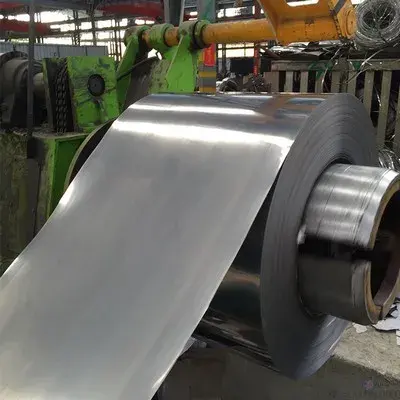
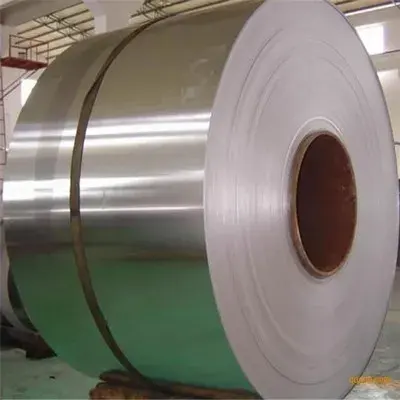
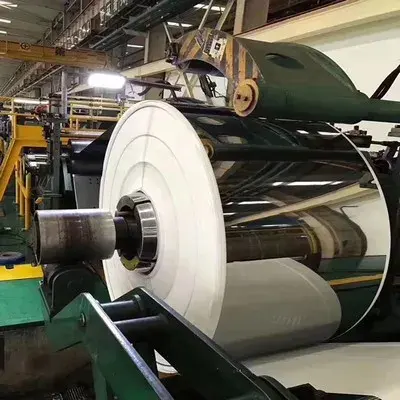
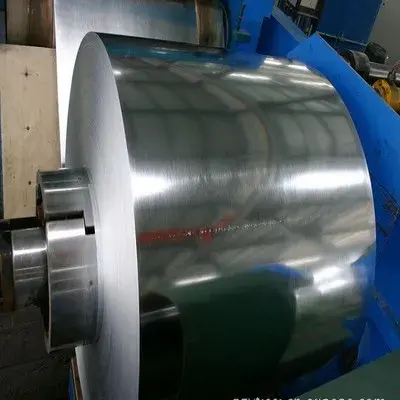
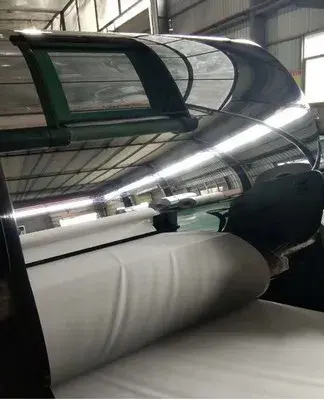
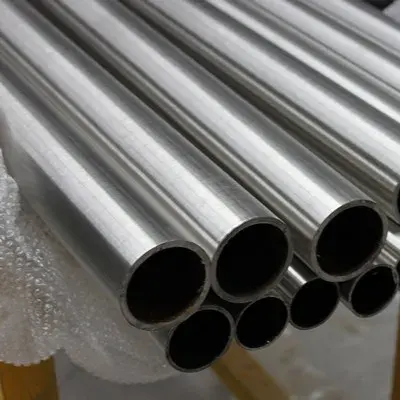
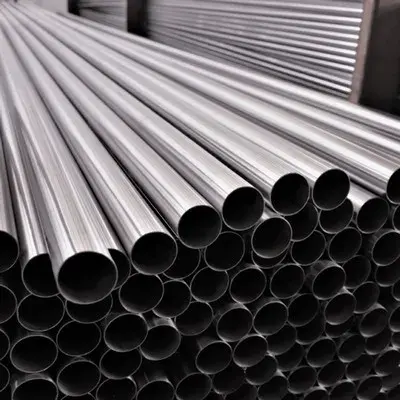
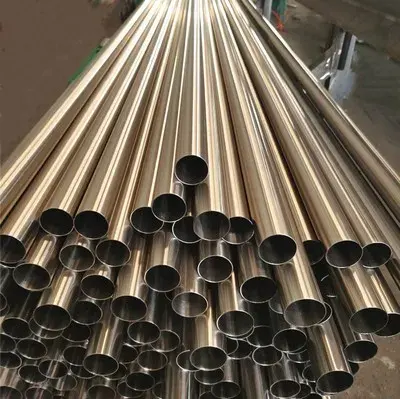
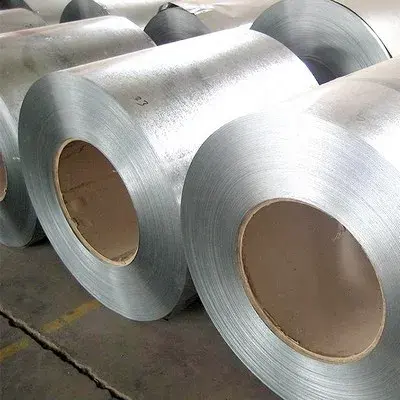
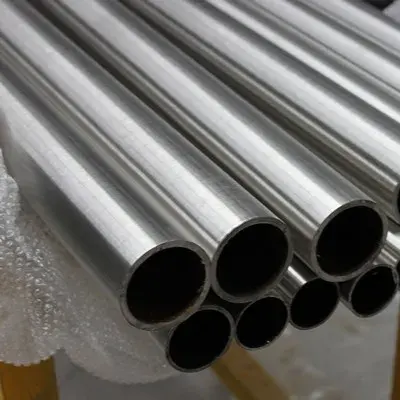
Stainless Steel Plate - 304/316 Grade, Cold Rolled & Hot Rolled, ASTM A240

 China
China

Supplier's customization ability
- Drawing-based customization
- Sample-based customization
- Full customization
Minimum order quantity: 1 Ton
Shipping total: To be negotiated
- Lead time:
- confirmed with the quotation
- Packaging:
- standard export packing
- Samples:
- available on request
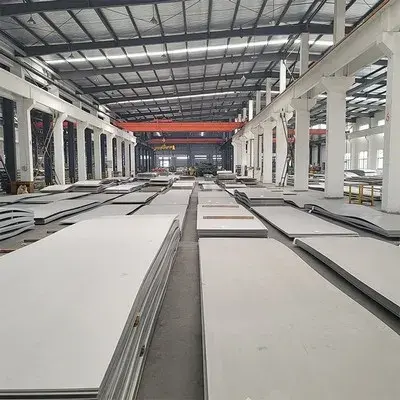
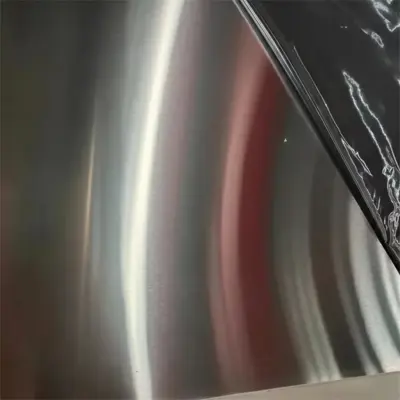
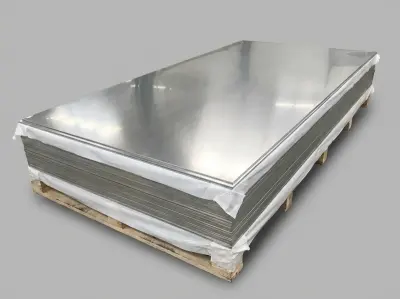
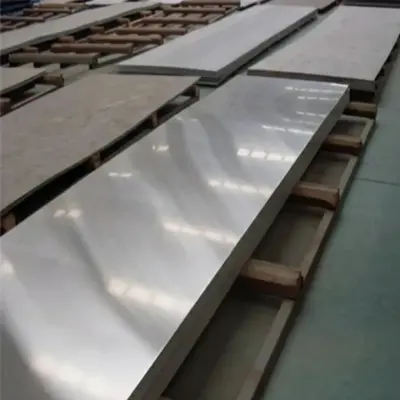
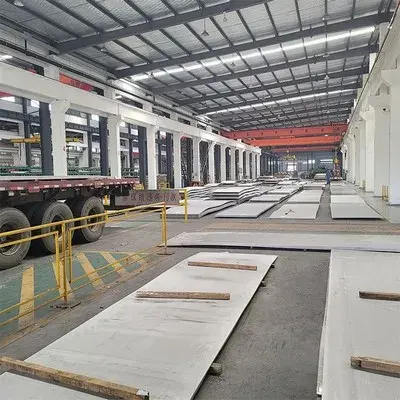
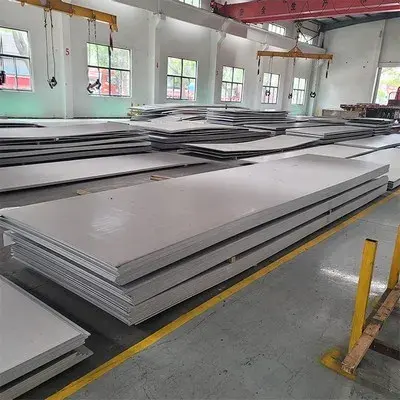
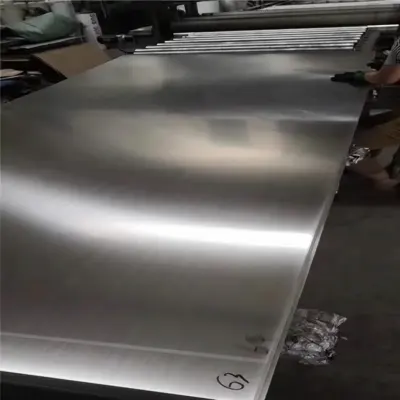


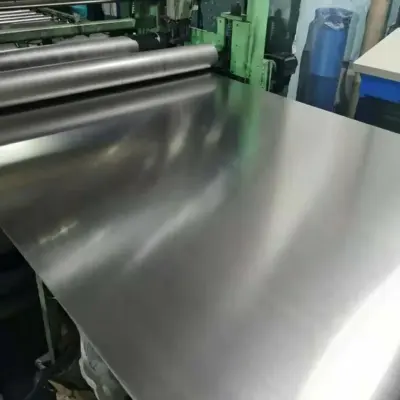
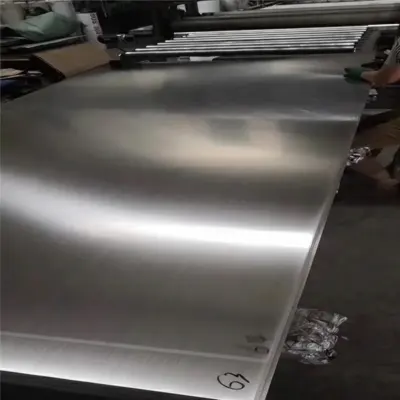
Product details
Technical Specifications of Stainless Steel Plate
| Property | Parameter | Description |
|---|---|---|
| Product Name | Stainless Steel Plate | Corrosion-resistant flat-rolled steel product |
| Material Grade | 304/304L, 316/316L, 310S, 321, 430 | Multiple austenitic and ferritic grade options |
| Standard Compliance | ASTM A240, EN 10088-2, JIS G4304, GB/T 3280 | Meets major international standards |
| Carbon Content (C) | ≤0.03% (L grades) / ≤0.08% (standard) | Low carbon variants for enhanced weldability |
| Chromium (Cr) | 16.0-26.0% | Primary element for corrosion resistance |
| Nickel (Ni) | 8.0-22.0% | Enhances ductility and austenite stability |
| Molybdenum (Mo) | 2.0-3.0% (316/316L) | Improves pitting and crevice corrosion resistance |
| Tensile Strength | ≥515 MPa | Minimum tensile strength per ASTM A240 |
| Yield Strength | ≥205 MPa | Minimum yield strength at 0.2% offset |
| Elongation | ≥40% | Ductility in 50mm gauge length |
| Hardness | ≤200 HBW (annealed condition) | Brinell hardness maximum for soft temper |
| Thickness Range | 0.3mm - 100mm | Available thickness options from thin to heavy plate |
| Width Range | 1000mm - 3000mm | Standard widths, custom cutting available |
| Length Range | 2000mm - 6000mm or coil | Cut-to-length or continuous coil supply |
| Surface Finish | 2B, BA, No.4, HL, Mirror 8K | Multiple surface treatment options for different applications |
| Application | Chemical processing, food equipment, marine, architecture | Versatile applications across industries |
| Certification | EN 10204 3.1/3.2, ISO 9001, PED | Mill test certificates and quality certifications |
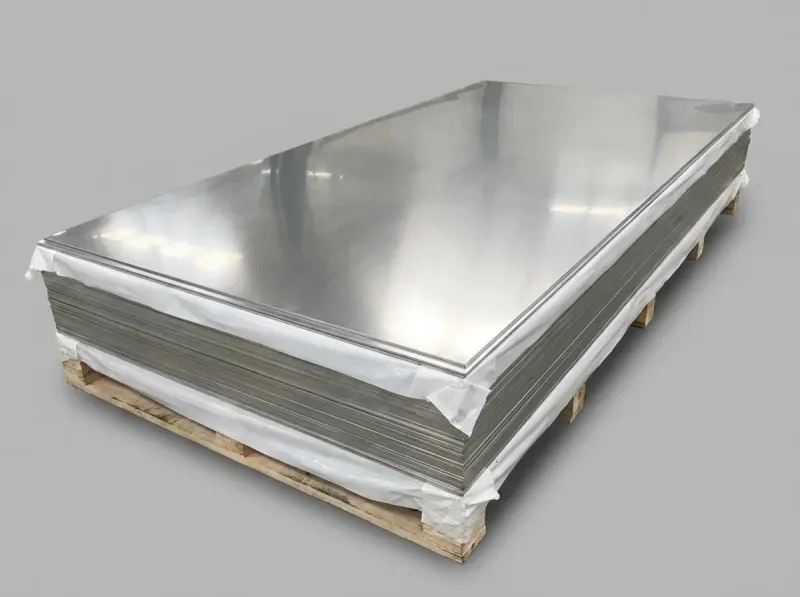
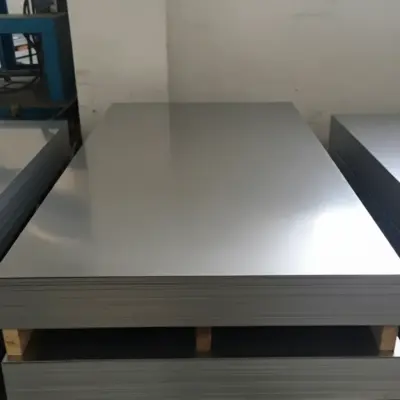
| Packaging | Wooden pallet, waterproof paper, steel strapping | Export-standard seaworthy packaging |
| MOQ | 1 ton | Minimum order quantity for standard grades |
Product Description
Stainless Steel Plate - 304/316 Grade, Cold Rolled & Hot Rolled, ASTM A240
Stainless steel plate represents a fundamental material solution for industries requiring superior corrosion resistance combined with structural integrity. Manufactured through precision rolling processes and available in multiple austenitic grades, these flat-rolled products serve critical roles in chemical processing, food production, architectural applications, and marine environments. Our mill-direct stainless steel plates comply with ASTM A240/A240M-20a standards, offering thickness ranges from 0.5mm to 100mm with certified chemical composition and mechanical properties tailored to your specific operational requirements.
What is Stainless Steel Plate?
Stainless steel plate refers to flat-rolled austenitic or duplex alloy products with thickness exceeding 4.75mm, distinguished from sheet material by dimensional classification per ASTM standards. These corrosion-resistant plates contain minimum 10.5% chromium content, forming a passive oxide layer that provides exceptional durability in aggressive environments. Manufacturing processes include hot rolling for heavier gauges and cold rolling for precision thickness control, with subsequent annealing treatments to optimize metallurgical properties and surface finish characteristics.
Stainless Steel Plate Technical Specifications
Our stainless steel plate inventory encompasses ASTM A240 Grade 304 with 18-20% chromium and 8-10.5% nickel, delivering tensile strength of 515 MPa minimum and yield strength of 205 MPa. Grade 316L variants incorporate 2-3% molybdenum for enhanced pitting resistance, maintaining carbon content below 0.03% maximum to prevent sensitization during welding operations. Dimensional tolerances conform to ASTM A480/A480M specifications, with flatness deviation limited to 6mm per meter for hot-rolled material and 3mm per meter for cold-rolled precision plates.
Manufacturing Process and Surface Finishes
Hot-rolled stainless steel plates undergo controlled temperature processing between 1050-1200°C, followed by descaling through shot blasting or acid pickling to achieve No.1 finish per ASTM A480 Table 1. Cold-rolled plates receive additional reduction passes at ambient temperature, producing 2B finish with reflectivity values of 200-300 gloss units. Advanced surface treatments include 2D matte finish through annealing under controlled atmosphere, BA (bright annealed) finish achieving 600+ gloss units, and No.4 directional polishing for architectural applications requiring 150-180 grit equivalent smoothness.
Cold Rolling vs Hot Rolling Comparison
Cold-rolled stainless steel plate exhibits superior dimensional accuracy with thickness tolerance of ±0.05mm for gauges below 6mm, compared to ±0.4mm tolerance for equivalent hot-rolled material. The cold working process increases tensile strength by 15-20% through work hardening mechanisms, while reducing ductility from 55% elongation to 45% elongation in standard tensile tests. Hot-rolled plates offer cost advantages of 12-18% lower pricing for thickness above 8mm, making them the preferred choice for structural applications where precise tolerances are secondary to mechanical strength requirements.
Grade 304 Applications and Properties
Grade 304 stainless steel plate serves as the industry-standard austenitic alloy, finding extensive application in food processing equipment, kitchen appliances, and general industrial fabrication. With density of 7.93 g/cm³ at 20°C and thermal conductivity of 16.2 W/m·K, this grade maintains stable austenitic structure from -196°C cryogenic service to 870°C intermittent exposure. The 18-8 chromium-nickel composition provides excellent forming characteristics with minimum bend radius of 1T for material under 3mm thickness, supporting complex fabrication requirements without intermediate annealing cycles.
Grade 316L Enhanced Corrosion Performance
Grade 316L stainless steel plate incorporates 2-3% molybdenum addition, elevating pitting resistance equivalent number (PREN) to 24-26 compared to 18-20 for standard 304 material. This enhanced composition demonstrates superior performance in chloride-containing environments, withstanding seawater exposure with corrosion rates below 0.02mm per year under ASTM G48 Method A testing. The ultra-low carbon specification (0.03% maximum) eliminates chromium carbide precipitation during welding, maintaining corrosion resistance in heat-affected zones without post-weld heat treatment requirements for section thickness up to 19mm.
Quality Certifications and Testing Standards
All stainless steel plate shipments include Mill Test Certificates (MTC) per EN 10204 Type 3.1, documenting chemical composition analysis via optical emission spectroscopy and mechanical property verification through standardized tensile testing. Ultrasonic examination per ASTM A435 detects internal discontinuities exceeding 3mm equivalent diameter, while dimensional inspection confirms thickness, width, and length measurements within specified tolerances. Third-party certification options include Lloyd's Register, DNV-GL, and ABS approval for marine applications, plus NACE MR0175/ISO 15156 compliance documentation for sour service environments in oil and gas operations.
Chemical Composition Verification
Positive material identification (PMI) testing employs X-ray fluorescence spectroscopy to verify elemental composition against ASTM A240 Table 1 requirements, with particular attention to chromium equivalency ratios affecting corrosion resistance. Carbon content determination through combustion analysis ensures compliance with L-grade specifications, while nitrogen measurement confirms austenite stability in duplex grades. Traceability systems maintain heat number linkage from steelmaking through final plate cutting, enabling complete material genealogy documentation for quality assurance and failure analysis purposes.
Mechanical Property Testing Protocols
Tensile testing per ASTM E8/E8M utilizes standard rectangular specimens machined from plate edges, measuring yield strength at 0.2% offset, ultimate tensile strength, and elongation over 50mm gauge length. Hardness verification through Rockwell B-scale testing confirms annealing effectiveness, with typical values of 85-95 HRB for austenitic grades indicating proper heat treatment. Impact testing per ASTM A370 Charpy V-notch method demonstrates toughness retention at service temperatures, particularly critical for cryogenic applications requiring minimum 27 Joules absorbed energy at -196°C.
Fabrication and Processing Capabilities
Our processing facilities accommodate plasma cutting for plates up to 150mm thickness with kerf width of 3-5mm and heat-affected zone limited to 2mm depth, maintaining mechanical properties within 10mm of cut edges. Waterjet cutting provides zero heat input alternative for precision parts, achieving tolerances of ±0.1mm without material property degradation. Laser cutting systems handle 304 and 316L grades up to 25mm thickness with edge quality suitable for direct welding applications, eliminating secondary grinding operations and reducing fabrication cycle time by 30-40% compared to conventional mechanical cutting methods.
Forming and Bending Operations
Press brake forming of stainless steel plate requires inside bend radius minimum of 1T for cold-rolled 2B finish material under 6mm thickness, increasing to 2T for hot-rolled No.1 finish to prevent surface cracking. Work hardening during bending operations elevates yield strength by 25-35% in deformed regions, necessitating stress relief annealing at 1040-1120°C for components subjected to corrosive service conditions. Roll forming accommodates gradual curvature development with minimum radius of 50T for cylindrical tanks, while stretch forming enables compound curves in architectural panels without localized thinning exceeding 15% of original gauge.
Welding Procedures and Filler Selection
Gas tungsten arc welding (GTAW/TIG) provides optimal fusion characteristics for stainless steel plate joints, utilizing ER308L filler for 304 base material and ER316L for 316 grade applications per AWS A5.9 specifications. Shielding gas composition of 98% argon with 2% hydrogen addition enhances arc stability and penetration depth, while backing purge gas maintains oxygen content below 20 ppm to prevent sugaring on root pass surfaces. Interpass temperature control between 150-200°C prevents excessive heat input that could promote sensitization, with maximum heat input of 1.5 kJ/mm recommended for L-grade materials to preserve corrosion resistance in welded assemblies.
Frequently Asked Questions
What is the minimum order quantity (MOQ)?
Our standard minimum order quantity stands at 1 metric ton per specification, though we accommodate smaller quantities of 500kg for established customers requiring multiple grades or finishes. Mixed container loads enable efficient procurement of various thickness and surface finish combinations, optimizing inventory investment while maintaining mill-direct pricing advantages for total shipment weights exceeding 5 metric tons.
Do you provide material test certificates?
Every stainless steel plate shipment includes comprehensive Mill Test Certificates (MTC) per EN 10204 Type 3.1 standard, documenting complete chemical analysis, mechanical property test results, and heat treatment parameters traceable to original steel mill production records. Additional third-party inspection certificates from Lloyd's Register, Bureau Veritas, or SGS are available upon request, with PMI testing and dimensional verification reports provided at no additional charge for orders exceeding 10 metric tons.
What is the typical delivery time?
Stock material in standard grades 304 and 316L with 2B or No.1 finish ships within 5-7 business days from order confirmation, while custom thickness or surface finish requirements necessitate 25-35 days production lead time from mill scheduling. Expedited processing reduces delivery to 15-20 days for premium service charges, with air freight options available for urgent requirements under 500kg total weight, ensuring material availability aligns with your project critical path milestones.
Can you cut to custom sizes?
Our precision cutting services accommodate custom dimensions from 100mm x 100mm minimum piece size to full plate dimensions of 3000mm x 12000mm, with tolerance control of ±1mm for plasma cutting and ±0.5mm for waterjet operations. Edge preparation includes straight cutting, beveling for weld joint preparation, and radius corner cutting per your engineering drawings. Volume discounts apply for cutting services when combined with material purchase, reducing total fabrication costs by 15-20% compared to separate processing arrangements.
Get a Competitive Quote for Stainless Steel Plate
Request your customized quotation today and benefit from our mill-direct procurement relationships that eliminate intermediary markups, delivering cost savings of 12-18% compared to distributor pricing. Our technical sales team provides comprehensive material selection guidance, ensuring optimal grade and finish specification for your specific corrosion resistance, mechanical strength, and fabrication requirements. With inventory positions exceeding 5,000 metric tons across multiple warehouse locations, we guarantee material availability that supports your production schedules without compromise.
- 24/7 customer support available via phone, email, and live chat
- Free samples for quality evaluation - 100mm x 100mm coupons with MTC documentation
- Competitive pricing for bulk orders - volume discounts starting at 10 metric tons
- Professional technical consultation - metallurgical engineering support at no charge
Contact us today to get your free quote within 24 hours!
Ratings & Reviews

Know your supplier
Product Display
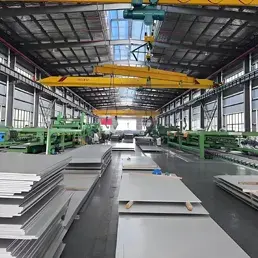
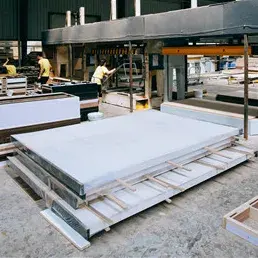
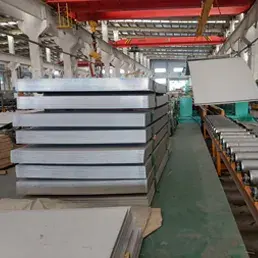
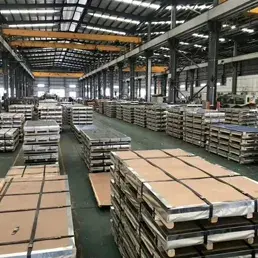
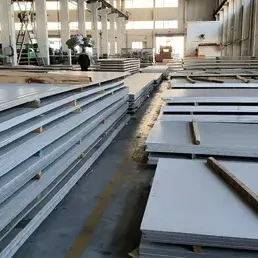
After more than a decade of continuous investment and innovation, Feihong Steel Co., Ltd. has now developed into a leading enterprise in the industry with a complete industrial chain, a wide range of product specifications, prompt supply, excellent product quality, strong industry influence and good social reputation. Currently, our products are mainly sold to the eastern region of China and over 40 countries and regions, such as Southeast Asia, South Asia, West Asia, Eastern Europe, South America, etc. Our stainless steel series products have consistently ranked among the top in China for many years.
Customer feedback
Customer feedback
Supplier's customization ability
- Drawing-based customization
- Sample-based customization
- Full customization
Minimum order quantity: 1 Ton
Shipping total: To be negotiated
- Lead time:
- confirmed with the quotation
- Packaging:
- standard export packing
- Samples:
- available on request