 English
  Español
  Français
  Deutsch
  Português (Brasil)
  Русский
  العربية
Tinplate Steel Coil - Cold Rolled Electrolytic Tin Coated Steel Strip for Packaging

 China
China



Supplier's customization ability
- Drawing-based customization
- Sample-based customization
- Full customization
Minimum order quantity: 1 ton
Shipping total: To be negotiated
- Lead time:
- confirmed with the quotation
- Packaging:
- standard export packing
- Samples:
- available on request
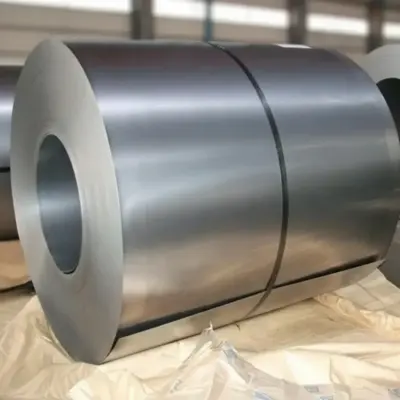
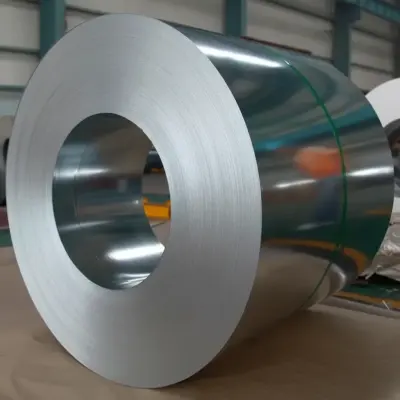
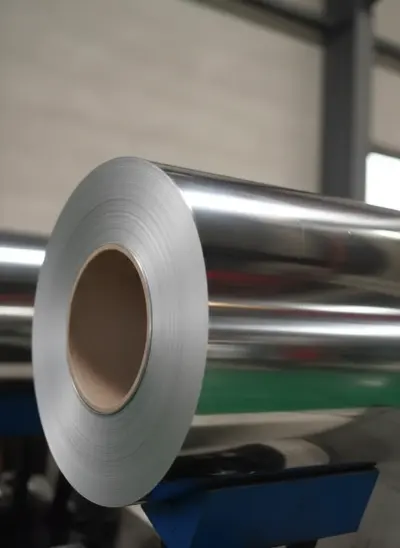
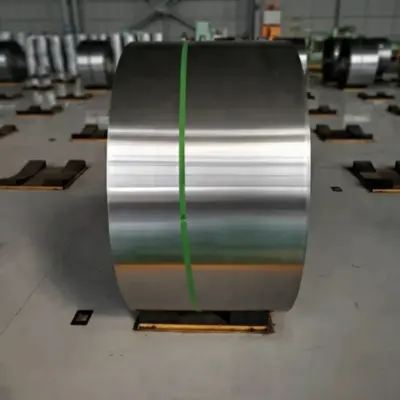
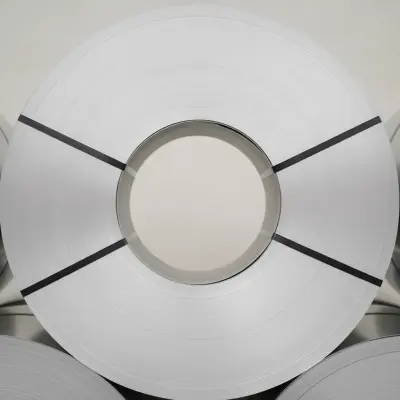
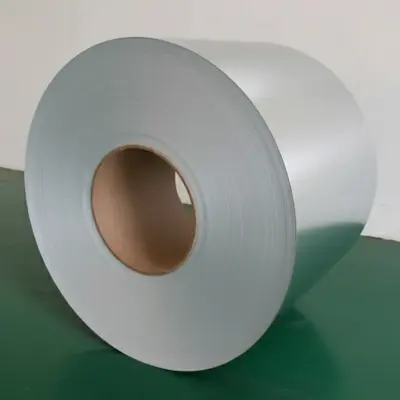
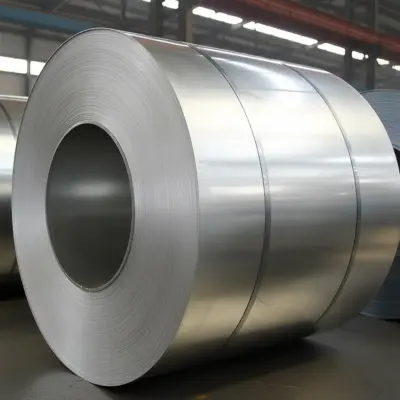
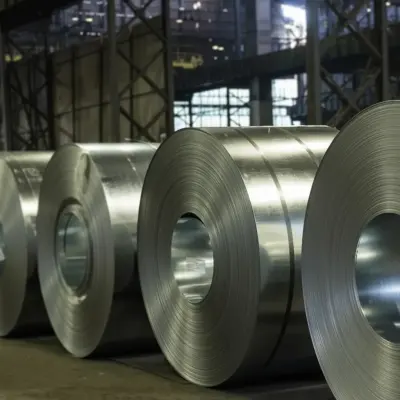
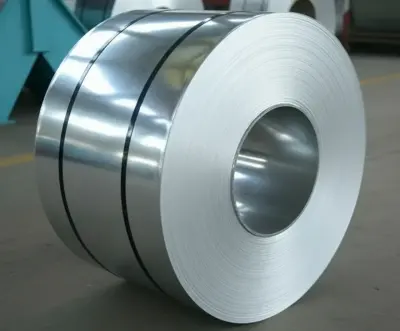
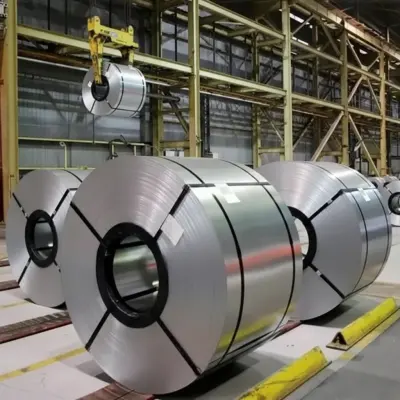
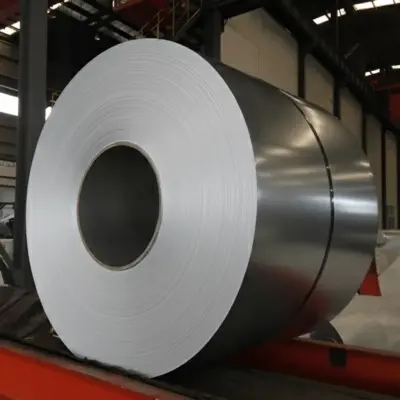
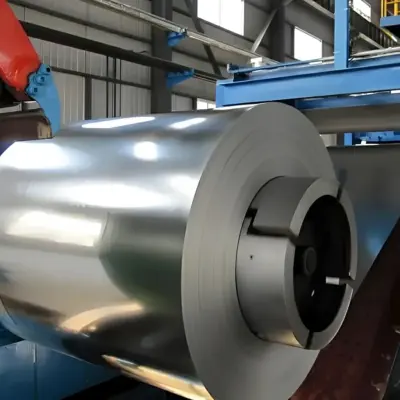
Product details
Technical Specifications of Tinplate Steel Coil
| Property | Parameter | Description |
|---|---|---|
| Product Name | Tinplate Steel Coil | Cold-rolled steel coated with tin for corrosion resistance |
| Material Grade | MR/SPCC/T1-T5 (EN 10202) | Temper grades per international standards |
| Standard Compliance | EN 10202, JIS G3303, ASTM A623 | Meets major international tinplate standards |
| Base Steel Thickness | 0.15 - 0.50 mm | Cold-rolled steel substrate thickness range |
| Tin Coating Weight | 2.8 - 11.2 g/m² (per side) | Electrolytic tin coating, grade E1-E5.6 |
| Coil Width | 600 - 1050 mm | Standard width range for packaging applications |
| Coil Weight | 3 - 10 tons | Typical coil weight per roll |
| Tensile Strength | ≥300 MPa (T3 grade) | Varies by temper grade (T1-T5) |
| Elongation | ≥32% (T3 grade) | Ductility for forming operations |
| Surface Finish | Bright, Stone, Silver | Multiple surface treatment options |
| Coating Type | Electrolytic Tinplate (ETP) | Uniform tin layer via electroplating |
| Passivation | 311/314 Chromium Treatment | Enhanced corrosion resistance |
| Application | Food cans, aerosol cans, metal packaging | FDA-compliant for food contact |
| Corrosion Resistance | Excellent in acidic environments | Tin coating protects base steel |
| Certification | EN 10204 3.1, ISO 9001, FDA | Quality and food safety certifications |
| Packaging | Eye-to-wall, waterproof paper, steel strapping | Export-standard seaworthy packaging |
| MOQ | 25 tons | Minimum order quantity per specification |
Tinplate Steel Coil - Cold Rolled Electrolytic Tin Coated Steel Strip for Packaging
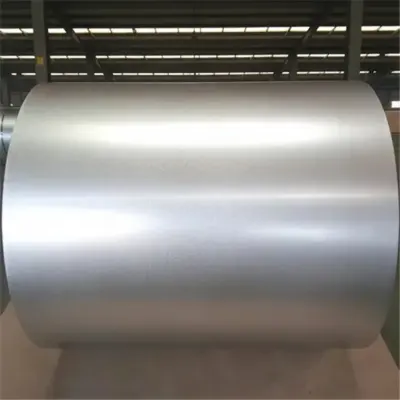
Tinplate steel coil represents a specialized cold-rolled steel product featuring an electrolytic tin coating applied to low-carbon steel substrate. This metallurgical combination delivers exceptional corrosion resistance, superior formability, and food-safe surface properties that serve critical roles in metal packaging, electronics, and decorative applications. Manufactured through continuous electroplating processes, tinplate coils provide cost-effective protection for steel while maintaining excellent printability and lacquer adhesion characteristics essential for modern packaging solutions.
What is Tinplate Steel Coil?
Tinplate steel coil consists of cold-rolled low-carbon steel strip with thickness ranging from 0.15mm to 0.50mm, coated with pure tin layer through electrolytic deposition. The tin coating weight typically varies between 2.8 g/m² to 11.2 g/m² per surface, designated by coating mass codes from E2.8/2.8 to E11.2/11.2 according to EN 10202:2001 standards. This dual-layer structure combines steel's mechanical strength with tin's corrosion resistance and non-toxic properties.
Tinplate Steel Coil Technical Specifications
Standard tinplate coils comply with ASTM A623, EN 10202, and JIS G3303 specifications. Base steel exhibits tensile strength of 290-450 MPa depending on temper grade (T-1 through T-5), with elongation values ranging from 32% minimum for T-1 to 2% minimum for T-5 hardness. Tin coating thickness measures 0.38-1.52 micrometers per side, providing uniform protection verified through coulometric testing per ASTM B545 methodology.
Manufacturing Process and Quality Control
Production begins with cold-rolled black plate manufactured to precise thickness tolerances of ±0.01mm. The continuous electroplating line applies tin coating at current densities of 20-40 A/dm² in acidic electrolyte solutions containing stannous sulfate. Following tin deposition, thermal flow brightening at 230-250°C creates the characteristic bright finish. Chemical passivation treatment then applies chromium oxide layer (10-120 mg/m² Cr) to prevent tin oxidation and enhance lacquer adhesion. Coil width ranges from 600mm to 1100mm with standard inside diameter of 508mm or 610mm.
Applications Across Industries
Tinplate steel coil finds extensive application in food and beverage packaging, accounting for approximately 80% of global consumption. Three-piece welded cans, two-piece drawn cans, and metal closures rely on tinplate's combination of barrier properties and formability. The electronics sector employs tinplate for component lead frames and shielding applications due to excellent solderability. Decorative applications include aerosol containers, paint cans, and promotional packaging where lithographic printing quality proves essential. Chemical resistance makes tinplate suitable for industrial containers storing non-aggressive products.
Advantages Over Alternative Materials
Compared to tin-free steel (TFS), tinplate offers superior welding characteristics and traditional soldering compatibility without specialized equipment. The tin coating provides cathodic protection to steel substrate at coating discontinuities, unlike chromium-based TFS coatings. Tinplate demonstrates exceptional deep-drawing capabilities with reduction ratios exceeding 50% for T-2 and T-3 tempers. Environmental benefits include 100% recyclability with magnetic separation efficiency and lower carbon footprint versus aluminum packaging when considering full lifecycle analysis. Cost advantages emerge in high-volume production due to established manufacturing infrastructure and material availability.
Surface Finishes and Coating Options
Bright finish tinplate undergoes flow melting treatment producing mirror-like reflectivity suitable for lithographic decoration. Stone finish (matte) tinplate receives differential thermal treatment creating rougher surface texture preferred for enhanced paint adhesion. Coating mass selection depends on application severity: light coatings (E2.8/2.8 to E5.6/5.6) suit dry product packaging, while heavier coatings (E8.4/8.4 to E11.2/11.2) protect against acidic or sulfur-containing foods. Differential coating applies varied tin thickness to interior versus exterior surfaces, optimizing material usage and performance.
Frequently Asked Questions
What is the minimum order quantity (MOQ)?
Standard MOQ for tinplate steel coil ranges from 20-25 metric tons per specification, equivalent to approximately one full coil depending on thickness and width parameters. Mixed container loads accommodating multiple specifications require minimum 5 tons per item with 20-ton total shipment. Mill-direct orders for custom specifications typically mandate 100-ton minimum to justify production scheduling and electrolytic bath adjustments.
Do you provide material test certificates?
Comprehensive mill test certificates accompany each coil shipment, documenting chemical composition per ASTM E1019 carbon-sulfur analysis and optical emission spectrometry for alloying elements. Mechanical property verification includes tensile testing per ASTM E8 methodology reporting yield strength, ultimate tensile strength, and elongation values. Coating weight determination follows ASTM B545 coulometric method with results traceable to NIST standards. Surface inspection reports detail porosity levels, coating uniformity, and passivation treatment parameters.
What is the typical delivery time?
Standard specification tinplate coils ship within 30-45 days from confirmed order and deposit receipt, subject to production queue status. Custom specifications requiring specific base steel chemistry or non-standard coating parameters extend lead times to 60-75 days to accommodate steel mill coordination and electroplating line configuration. Expedited production slots may reduce delivery to 20-25 days with premium pricing applying. Sea freight transit adds 25-35 days for Asian origins or 10-15 days from European mills.
Can you cut to custom sizes?
Slitting services accommodate custom width requirements from 150mm minimum to maximum coil width in 10mm increments, maintaining original thickness and coating specifications. Blanking operations produce rectangular sheets to specified dimensions with tolerances of ±0.5mm on length and width. Minimum quantities for slitting typically require 5 tons per width specification, while blanking services mandate 2-ton minimums per sheet dimension. Edge conditioning options include deburred, rounded, or square-cut profiles depending on end-use requirements.
Get a Competitive Quote for Tinplate Steel Coil
Request factory-direct pricing for tinplate steel coil tailored to your packaging or industrial application requirements. Our technical sales team provides specification guidance, coating selection recommendations, and volume-based pricing structures. Contact us with your thickness, width, coating mass, temper grade, and annual volume projections to receive detailed quotations within 24 hours including mill test certificate samples and shipping logistics proposals.
Ratings & Reviews

Know your supplier
Supplier's customization ability
- Drawing-based customization
- Sample-based customization
- Full customization
Minimum order quantity: 1 ton
Shipping total: To be negotiated
- Lead time:
- confirmed with the quotation
- Packaging:
- standard export packing
- Samples:
- available on request