 English
  Español
  Français
  Deutsch
  Português (Brasil)
  Русский
  العربية
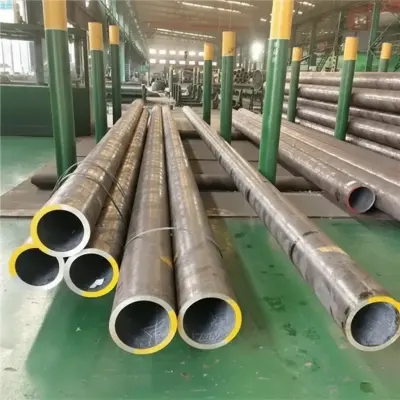
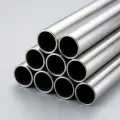
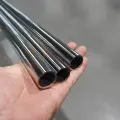
3/4 in Stainless Steel Pipe - ASTM A312 TP304/TP316 Welded & Seamless

 China
China
Supplier's customization ability
- Drawing-based customization
- Sample-based customization
- Full customization
Minimum order quantity: 1 ton
Shipping total: To be negotiated
- Lead time:
- confirmed with the quotation
- Packaging:
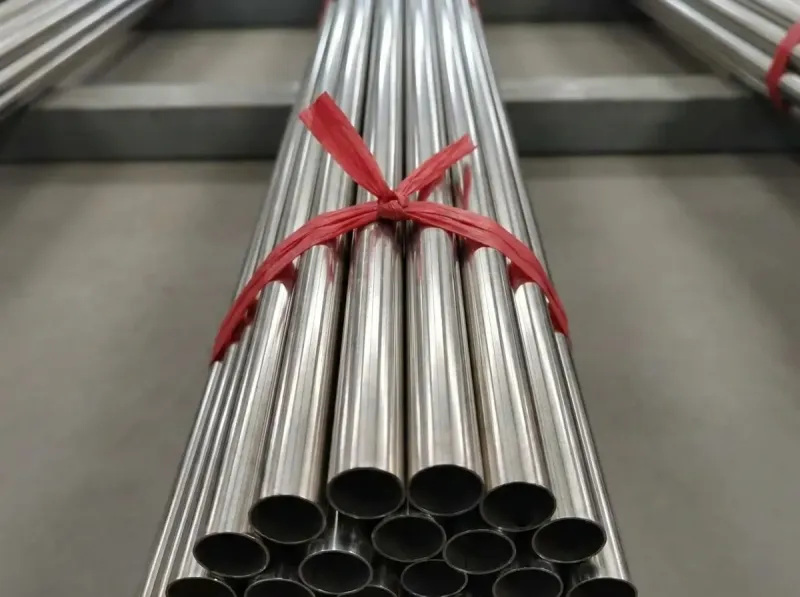
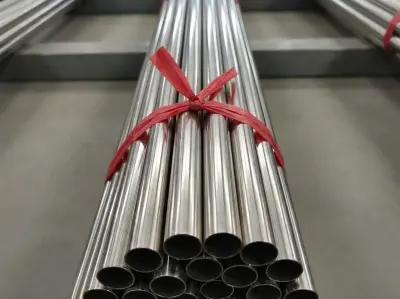
- standard export packing
- Samples:
- available on request
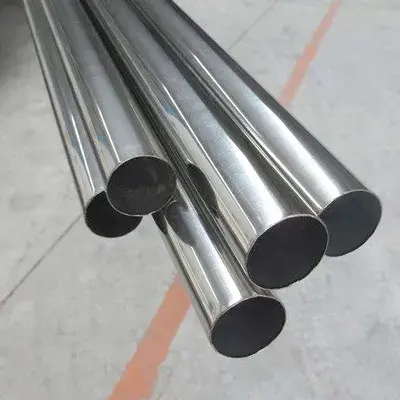
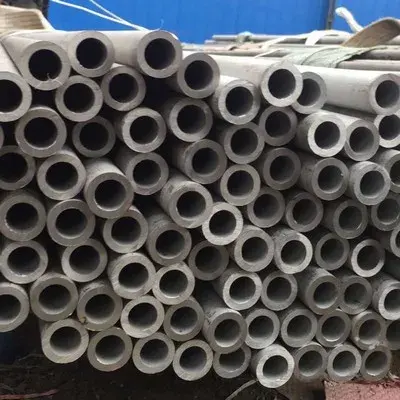
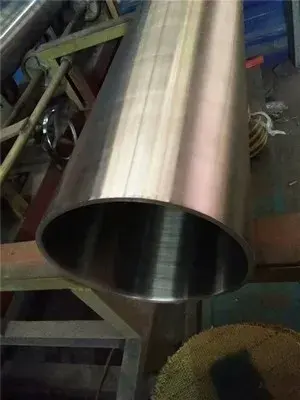
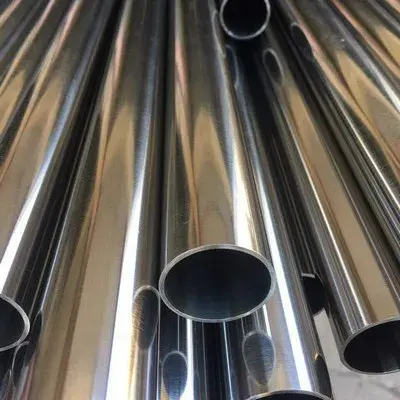
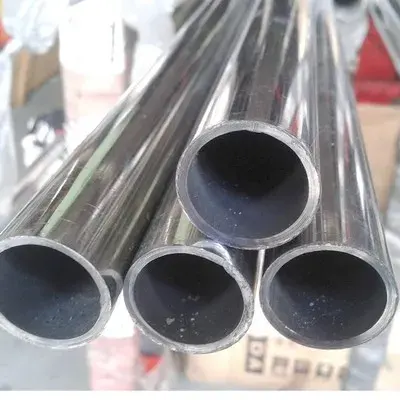
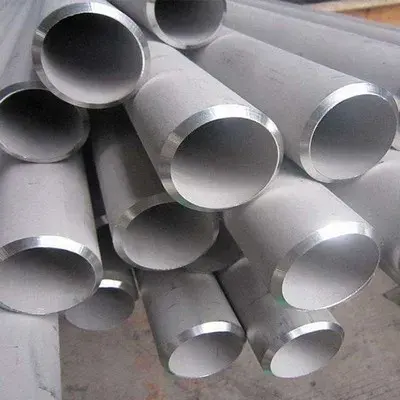
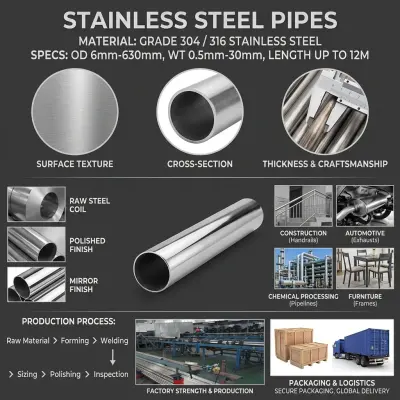
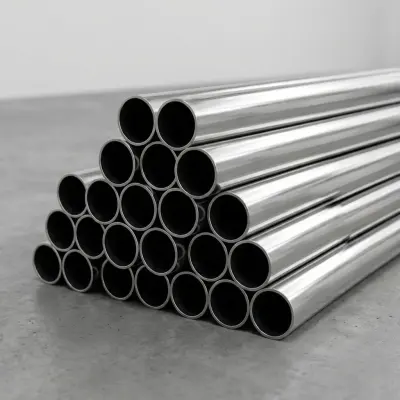
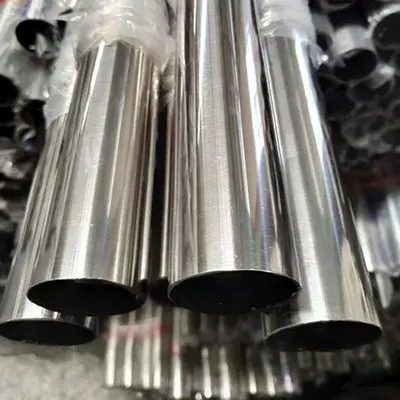
Product details
Technical Specifications of 3/4 in Stainless Steel Pipe
| Property | Parameter | Description |
|---|---|---|
| Product Name | 3/4 in Stainless Steel Pipe | Corrosion-resistant pipe for industrial and commercial applications |
| Nominal Size | 3/4 inch (DN20) | Standard nominal pipe size designation |
| Outer Diameter | 26.67 mm (1.050 in) | Standard OD per ASME B36.19 |
| Wall Thickness | Schedule 10S: 1.65mm / Schedule 40S: 2.87mm | Common schedule options available |
| Material Grade | 304/304L, 316/316L | ASTM A312 austenitic stainless steel grades |
| Standard Compliance | ASTM A312, ASME SA312, EN 10217-7 | Meets international pipe standards |
| Chromium (Cr) | 304: 18.0-20.0% / 316: 16.0-18.0% | Provides corrosion resistance |
| Nickel (Ni) | 304: 8.0-10.5% / 316: 10.0-14.0% | Enhances ductility and corrosion resistance |
| Molybdenum (Mo) | 316: 2.0-3.0% / 304: - | Improves pitting resistance in 316 grade |
| Carbon (C) | ≤0.08% (≤0.03% for L grades) | Low carbon for improved weldability |
| Tensile Strength | ≥515 MPa | Minimum tensile strength per ASTM A312 |
| Yield Strength | ≥205 MPa | Minimum yield strength |
| Manufacturing Process | Seamless or Welded (TIG/ERW) | Available in seamless and welded options |
| Length Range | 6m (20 ft) standard or custom | Standard and custom lengths available |
| Surface Finish | Annealed & Pickled, Polished (180/320 grit) | Multiple surface treatment options |
| Application | Food processing, pharmaceutical, chemical, marine | Suitable for corrosive environments |
| Temperature Range | -196°C to 925°C | Operating temperature range |
| Certification | EN 10204 3.1, ASME, PED, ISO 9001 | Quality certifications provided |
| MOQ | 100 meters or 500 kg | Minimum order quantity |
3/4 in Stainless Steel Pipe - ASTM A312 TP304/TP316 Welded & Seamless
3/4 in stainless steel pipe represents a versatile tubular product extensively employed across industrial, commercial, and residential applications requiring corrosion resistance and structural integrity. This intermediate diameter size finds critical roles in fluid transport systems, process piping networks, and structural frameworks where space constraints demand compact yet robust solutions. Manufactured to stringent international standards including ASTM A312 and EN 10217-7, these pipes serve industries ranging from chemical processing to food production, delivering reliable performance in demanding service conditions.
What is 3/4 in Stainless Steel Pipe?
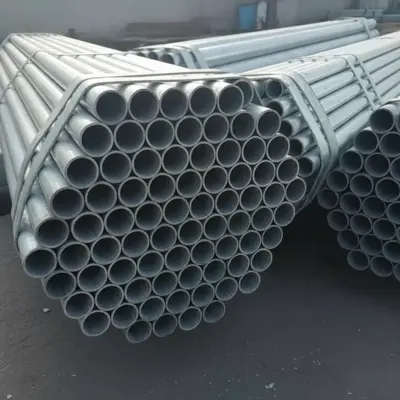
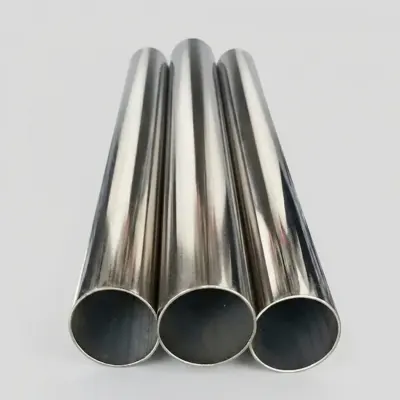
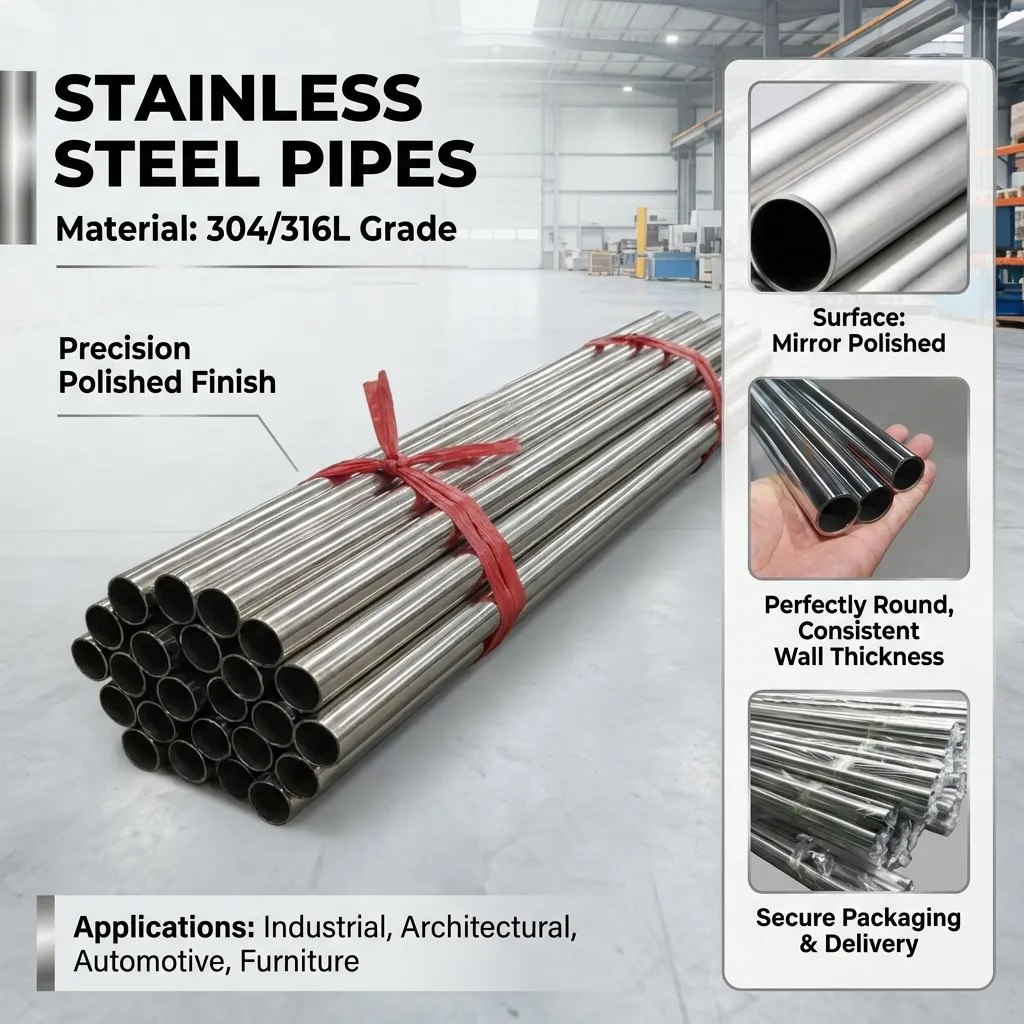
A 3/4 in stainless steel pipe is a hollow cylindrical product with a nominal diameter of 0.75 inches (19.05 mm outer diameter for Schedule 40), fabricated from austenitic or duplex stainless steel grades. The designation follows ASME B36.19M standards for stainless steel pipe dimensions, with wall thickness varying according to schedule ratings from 5S to XXS. These pipes are produced through either seamless manufacturing via hot extrusion or welded processes using TIG/plasma arc fusion, with post-weld heat treatment ensuring uniform mechanical properties throughout the pipe body.
3/4 in Stainless Steel Pipe Technical Specifications
Standard 3/4 in Schedule 40 pipe exhibits an outer diameter of 26.67 mm (1.050 inches) with a wall thickness of 2.87 mm (0.113 inches) per ASTM A312 requirements. TP304 grade material demonstrates tensile strength of 515 MPa minimum with yield strength exceeding 205 MPa, while TP316L variants offer enhanced corrosion resistance through 2.0-3.0% molybdenum content. The pipe supports working pressures up to 15.5 MPa at 20°C for Schedule 40 configuration, with allowable stress values decreasing proportionally at elevated temperatures according to ASME B31.3 code calculations.
Available Grades and Their Properties
TP304 Standard Grade Characteristics
TP304 material contains 18-20% chromium and 8-10.5% nickel, providing excellent general-purpose corrosion resistance in atmospheric and mildly corrosive environments. The austenitic microstructure ensures superior welding characteristics without requiring preheat or post-weld heat treatment for most applications. Carbon content limited to 0.08% maximum prevents carbide precipitation during welding, maintaining intergranular corrosion resistance per ASTM A262 Practice E testing protocols.
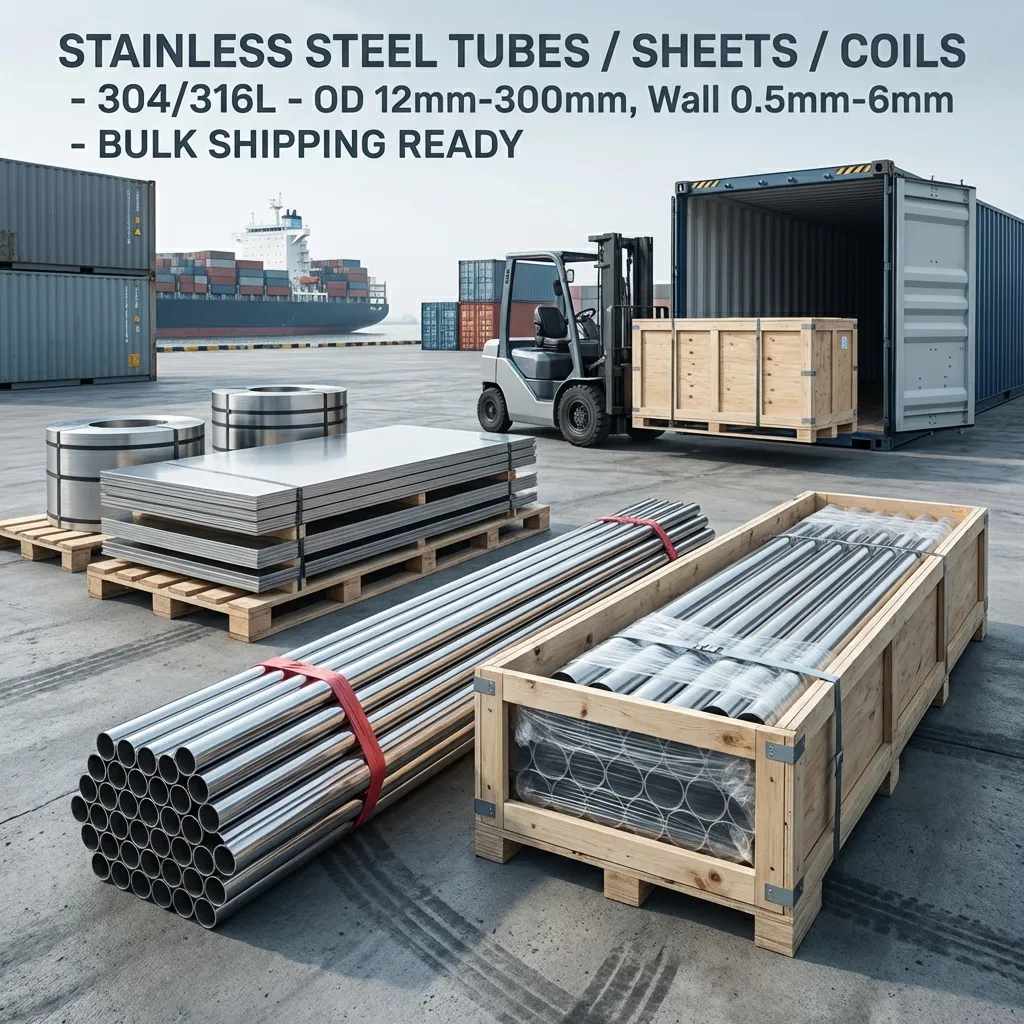
TP316L Low Carbon Enhanced Corrosion Resistance
TP316L grade incorporates 2.0-3.0% molybdenum alongside reduced carbon content (0.03% maximum), delivering superior resistance to pitting and crevice corrosion in chloride-containing environments. This composition proves essential for marine applications, chemical processing systems handling acidic media, and pharmaceutical manufacturing where contamination risks must be minimized. The material achieves PREN (Pitting Resistance Equivalent Number) values exceeding 24, significantly outperforming standard 304 variants in aggressive service conditions.
TP321 Stabilized High-Temperature Grade
TP321 utilizes titanium stabilization (minimum 5× carbon content) to prevent chromium carbide precipitation during exposure to temperatures between 425-815°C. This grade serves critical roles in high-temperature piping systems, heat exchanger tubes, and exhaust manifolds where thermal cycling occurs regularly. The stabilized structure maintains corrosion resistance and mechanical properties after welding operations without requiring solution annealing treatments.
Manufacturing Methods and Quality Standards
Seamless Pipe Production Process
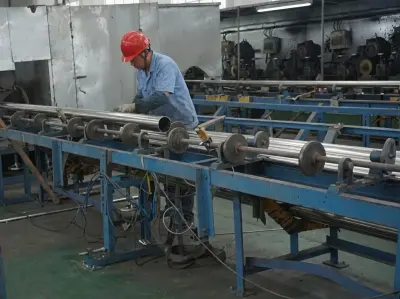
Seamless 3/4 in pipes undergo hot extrusion from solid billets heated to 1200-1250°C, followed by rotary piercing and pilger mill reduction to achieve final dimensions. This manufacturing route eliminates longitudinal weld seams, providing superior pressure containment capability and uniform wall thickness distribution. Final products receive cold drawing to improve dimensional tolerances to ±0.4 mm on outer diameter and ±10% on wall thickness per ASTM A312 Table X1.1 requirements.
Welded Pipe Fabrication Techniques
Welded variants employ continuous TIG (Tungsten Inert Gas) or plasma arc welding of precision-slit coil stock, with weld seam inspection via eddy current testing detecting defects exceeding 0.25 mm depth. Post-weld processes include online annealing at 1040-1120°C to restore corrosion resistance, followed by pickling in mixed acid solutions (HNO₃/HF) to remove heat tint and restore passive chromium oxide layer. Finished pipes meet ASTM A999 radiographic quality level 1 standards with 100% weld seam examination.
Dimensional Standards and Tolerances
Schedule-Based Wall Thickness Options
3/4 in pipes are available in schedules 5S through XXS, with wall thickness ranging from 1.65 mm (Schedule 5S) to 7.47 mm (Schedule XXS) according to ASME B36.19M dimensional tables. Schedule 40 represents the most commonly specified variant for general industrial service, offering optimal balance between flow capacity and pressure rating. Schedule 80 and 160 variants serve high-pressure applications exceeding 20 MPa working pressure at ambient temperatures.
Length and Straightness Requirements
Standard production lengths range from 6 meters (20 feet) random length to 12 meters (40 feet) double random length configurations, with custom cut lengths available upon request. Straightness tolerances comply with ASTM A999 requirements limiting deviation to 3.2 mm per meter of length, ensuring proper fit-up during installation. Pipe ends receive square-cut finishing with burr removal and beveling options for welded connections per ASME B16.25 specifications.
Surface Finishes and Treatments
Mill Finish and Polished Options
Standard mill finish exhibits 2B surface condition with Ra roughness values between 0.5-1.0 micrometers, suitable for most industrial applications. Electropolished surfaces achieve Ra values below 0.4 micrometers, essential for pharmaceutical and food processing systems requiring smooth, easily cleanable surfaces that minimize bacterial adhesion. Mechanical polishing to 180-320 grit levels provides intermediate finish quality for architectural and decorative applications.
Passivation and Protective Coatings
Chemical passivation treatments per ASTM A967 restore and enhance the natural chromium oxide passive layer, improving corrosion resistance after fabrication operations. Citric acid-based passivation (Method 6) offers environmentally friendly alternative to traditional nitric acid processes while achieving equivalent corrosion protection. For severe service environments, thin-film ceramic or polymer coatings provide additional barrier protection without significantly affecting internal flow characteristics.
Pressure Ratings and Temperature Limits
Working Pressure Calculations
Schedule 40 TP304 pipe supports maximum allowable working pressure of 15.5 MPa at 20°C, calculated using ASME B31.3 formula: P = 2St/D, where S represents allowable stress (138 MPa), t denotes wall thickness (2.87 mm), and D indicates outer diameter (26.67 mm). Pressure ratings decrease proportionally at elevated temperatures, with 50% derating occurring at approximately 540°C service temperature for austenitic grades.
Temperature Service Ranges
TP304 and TP316L grades maintain structural integrity across temperature ranges from cryogenic conditions (-196°C for LNG service) to 815°C continuous exposure in oxidizing atmospheres. Intermittent temperature excursions to 925°C are permissible for short durations without permanent property degradation. At sub-zero temperatures, austenitic stainless steels exhibit increasing tensile strength while maintaining excellent impact toughness, unlike carbon steels which become brittle below -40°C.
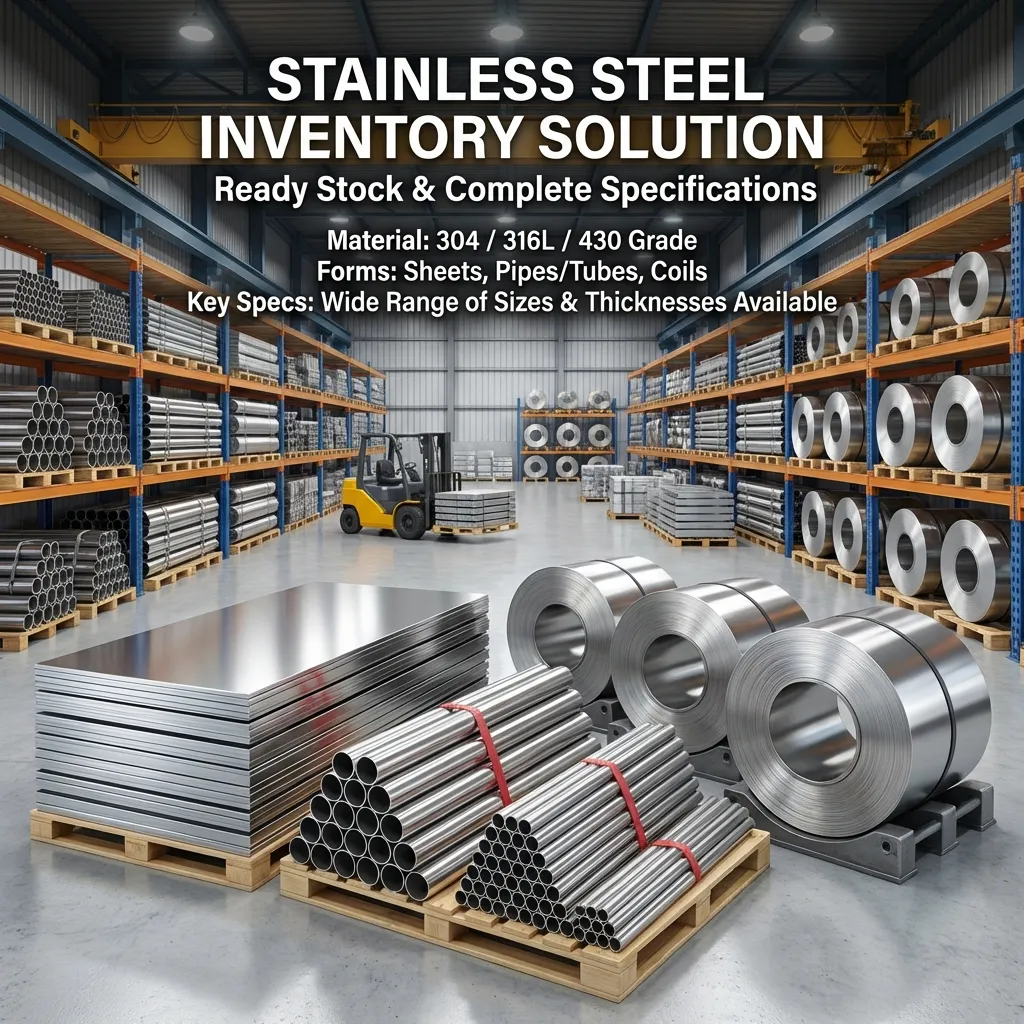
Connection Methods and Fittings
Welded Joint Configurations
Butt-welded connections following ASME B16.25 preparation standards provide highest integrity for permanent installations, with GTAW (Gas Tungsten Arc Welding) preferred for root passes ensuring full penetration. Orbital welding systems deliver repeatable, high-quality welds meeting ASME Section IX qualification requirements, particularly valuable for pharmaceutical and semiconductor applications requiring validated processes. Post-weld passivation and radiographic inspection per ASME B31.3 paragraph 341.4 ensure joint reliability.
Mechanical Connection Systems
Compression fittings utilizing ferrule-based sealing mechanisms accommodate 3/4 in pipe connections without welding requirements, suitable for installations requiring future disassembly or field modifications. Threaded connections per ASME B1.20.1 NPT standards serve low-pressure applications below 2 MPa, though thread cutting reduces effective wall thickness and introduces stress concentration points. Grooved mechanical couplings provide rapid installation capability for large-diameter distribution systems while maintaining pressure ratings to 4 MPa.
Application-Specific Considerations
Chemical Processing Systems
In chemical plants handling corrosive media, 3/4 in TP316L pipe serves as preferred material for sampling lines, instrument connections, and small-bore process piping where corrosion allowances cannot be tolerated. The compact size facilitates installation within congested pipe racks while maintaining code-required spacing from adjacent lines. Material selection follows NACE MR0175/ISO 15156 guidelines for sour gas service and NACE SP0304 for refinery applications.
Food and Beverage Production
Sanitary-grade 3/4 in pipe with electropolished interior surfaces (Ra ≤ 0.8 micrometers) meets 3-A Sanitary Standards and FDA 21 CFR 177.2600 requirements for direct food contact applications. Tri-clamp connections with EPDM or silicone gaskets enable tool-free disassembly for CIP (Clean-In-Place) procedures, essential for dairy processing and beverage production maintaining strict hygiene protocols. Sloped installation at minimum 1:100 gradient ensures complete drainage preventing bacterial growth in stagnant liquid.
HVAC and Plumbing Systems
Potable water distribution systems increasingly specify stainless steel pipe for superior corrosion resistance compared to copper, eliminating concerns about lead leaching and pinhole failures. The 3/4 in size serves as standard branch line dimension for residential and light commercial installations, delivering flow rates to 15 liters per minute at acceptable velocity limits below 2.5 m/s preventing erosion-corrosion. Installation follows local plumbing codes with expansion provisions accommodating thermal movement in hot water circuits.
Quality Certifications and Testing
Material Test Reports and Traceability
EN 10204 Type 3.1 certificates document chemical composition via optical emission spectroscopy, mechanical properties through tensile testing per ASTM E8, and intergranular corrosion resistance via ASTM A262 Practice E testing. Heat number traceability enables tracking from steel mill through pipe production to final installation, essential for nuclear, petrochemical, and pressure vessel applications requiring complete material genealogy. PMI (Positive Material Identification) via XRF analyzers verifies grade accuracy during receiving inspection.
Non-Destructive Examination Methods
Eddy current testing per ASTM E309 detects surface and near-surface defects to 0.25 mm depth in welded pipe seams, while ultrasonic examination following ASTM E213 identifies internal discontinuities throughout wall thickness. Hydrostatic pressure testing to 1.5× design pressure per ASME B31.3 paragraph 345.4 validates pressure containment capability before shipment. Radiographic examination of circumferential welds meets ASME Section V Article 2 acceptance criteria for critical service applications.
Frequently Asked Questions
What is the minimum order quantity for 3/4 in stainless steel pipe?
Standard minimum order quantities range from 100 meters for common grades like TP304/TP316L in Schedule 40 configuration, with smaller quantities available from distributor stock at premium pricing. Custom specifications including non-standard schedules, special lengths, or alternative surface finishes typically require 500-meter minimum orders to justify production setup costs. Sample lengths of 1-2 meters can be provided for qualification testing prior to production orders.
Do you provide material test certificates with pipe shipments?
Every shipment includes EN 10204 Type 3.1 material test certificates documenting chemical composition, mechanical properties, and heat treatment conditions traceable to individual heat numbers. Certificates specify test results for tensile strength, yield strength, elongation percentage, and hardness values alongside chemical analysis showing compliance with ASTM A312 composition requirements. Additional testing such as intergranular corrosion resistance per ASTM A262 or PMI verification can be arranged upon request.
What is the typical delivery time for standard specifications?
Stock items in TP304/TP316L Schedule 40 configuration ship within 5-7 business days from regional warehouses, while mill-direct orders for standard specifications require 6-8 weeks lead time including production and international shipping. Expedited production slots accommodate urgent requirements with 3-4 week delivery for premium charges. Custom specifications including special chemistry, non-standard dimensions, or additional testing extend lead times to 10-12 weeks depending on mill scheduling.
Can you cut pipe to custom lengths and prepare ends for welding?
Full fabrication services include precision cutting to tolerances of ±1.5 mm, end beveling per ASME B16.25 standards (37.5° included angle with 1.6 mm root face), and deburring ensuring smooth edges for welding. Additional services encompass threading per ASME B1.20.1, grooving for mechanical couplings, and end-capping for shipping protection. All cutting operations utilize methods preventing heat-affected zones that could compromise corrosion resistance, with final passivation restoring surface integrity.
Get a Competitive Quote for 3/4 in Stainless Steel Pipe
Our technical sales team provides comprehensive support for material selection, specification development, and application engineering to ensure optimal product performance in your specific service conditions. With direct mill relationships and strategic inventory positioning across North America, Europe, and Asia-Pacific regions, we deliver competitive pricing combined with reliable supply chain performance. Whether your project requires small quantities for maintenance applications or large-volume supply for new construction, our flexible approach accommodates diverse customer requirements while maintaining consistent quality standards.
- 24/7 customer support available via phone, email, and online chat
- Free samples for quality evaluation and compatibility testing
- Competitive pricing for bulk orders with volume discount programs
- Professional technical consultation for material selection and application engineering
- Complete documentation package including MTRs, test reports, and compliance certificates
- Global logistics support with consolidated shipping and customs clearance assistance
Contact us today to get your free quote within 24 hours! Our experienced team will review your specifications and recommend the optimal solution for your application requirements.
Ratings & Reviews

Know your supplier
Supplier's customization ability
- Drawing-based customization
- Sample-based customization
- Full customization
Minimum order quantity: 1 ton
Shipping total: To be negotiated
- Lead time:
- confirmed with the quotation
- Packaging:
- standard export packing
- Samples:
- available on request