 English
  Español
  Français
  Deutsch
  Português (Brasil)
  Русский
  العربية
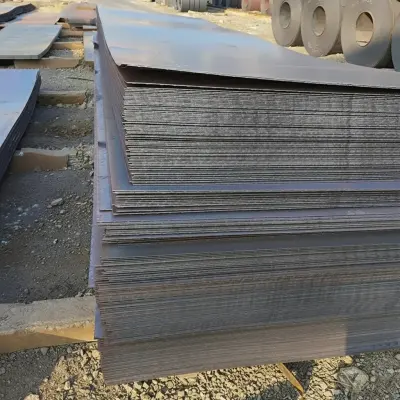
AR500 Ballistic Steel Plate - Hardened Armor Grade for Military & Tactical Use

 China
China

Supplier's customization ability
- Drawing-based customization
- Sample-based customization
- Full customization
Minimum order quantity: 1 ton
Shipping total: To be negotiated
- Lead time:
- confirmed with the quotation
- Packaging:
- standard export packing
- Samples:
- available on request
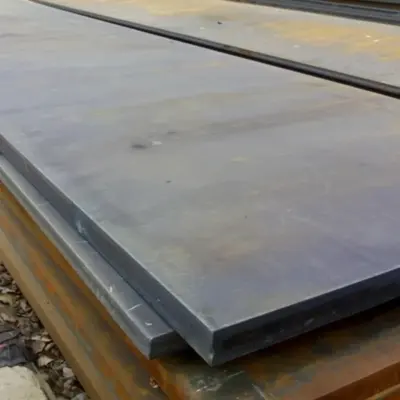
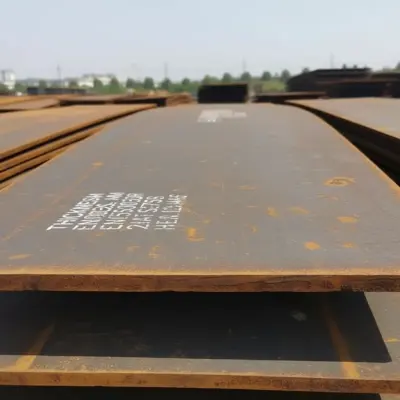
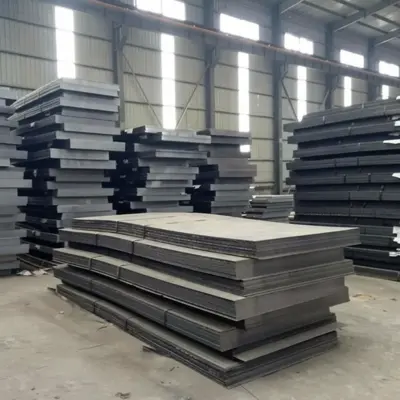
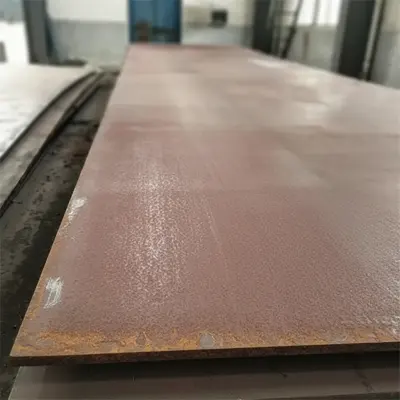
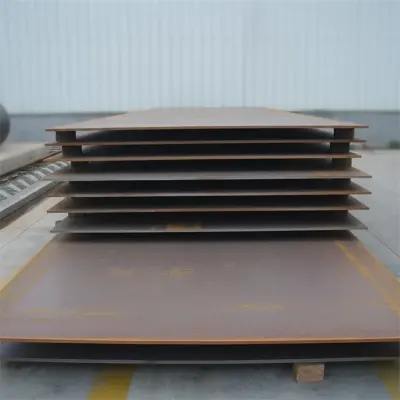
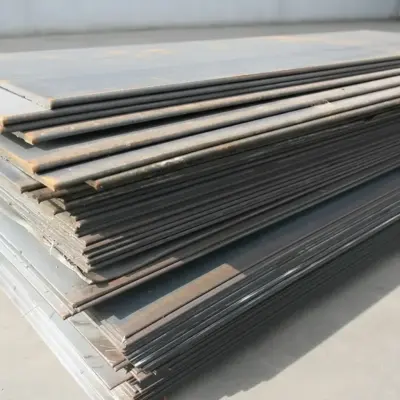
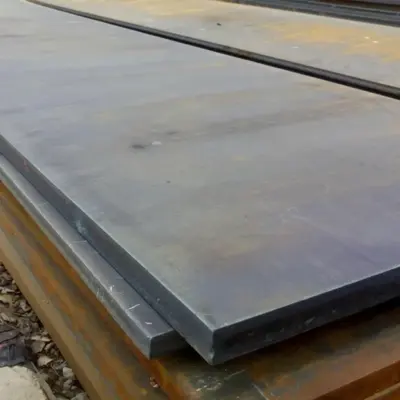
Product details
Technical Specifications of AR500 Ballistic Steel Plate
| Property | Parameter | Description |
|---|---|---|
| Product Name | AR500 Ballistic Steel Plate | Abrasion-resistant steel for ballistic protection applications |
| Material Grade | AR500 / MIL-DTL-46100E | High-hardness armor steel meeting military standards |
| Standard Compliance | MIL-DTL-46100E, ASTM A514 | Meets military and industrial armor plate standards |
| Hardness (Brinell) | 460-540 HBW | High surface hardness for ballistic resistance |
| Carbon (C) | 0.28-0.35% | Carbon content for strength and hardness |
| Manganese (Mn) | 0.80-1.20% | Improves hardenability and toughness |
| Chromium (Cr) | 0.40-0.70% | Enhances wear resistance |
| Nickel (Ni) | 0.40-0.70% | Improves impact resistance |
| Molybdenum (Mo) | 0.15-0.30% | Increases strength at elevated temperatures |
| Tensile Strength | ≥1400 MPa | Minimum tensile strength per MIL-DTL-46100E |
| Yield Strength | ≥1070 MPa | Minimum yield strength |
| Elongation | ≥8% | Ductility in 50mm gauge length |
| Thickness Range | 6 - 50 mm | Available thickness options for armor applications |
| Ballistic Performance | NIJ Level III / IV | Stops rifle rounds up to .30-06 AP |
| Surface Finish | Hot Rolled, Shot Blasted | Standard surface treatment options |
| Application | Body armor, vehicle armor, shooting targets, security barriers | Typical ballistic protection applications |
| Weldability | Fair (preheating required) | Requires controlled welding procedures |
| Certification | MIL-DTL-46100E, ISO 9001, Material Test Report | Quality certifications and test documentation provided |
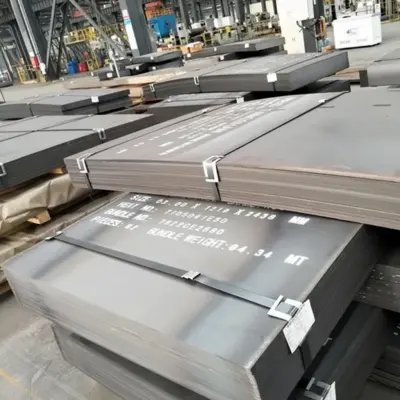
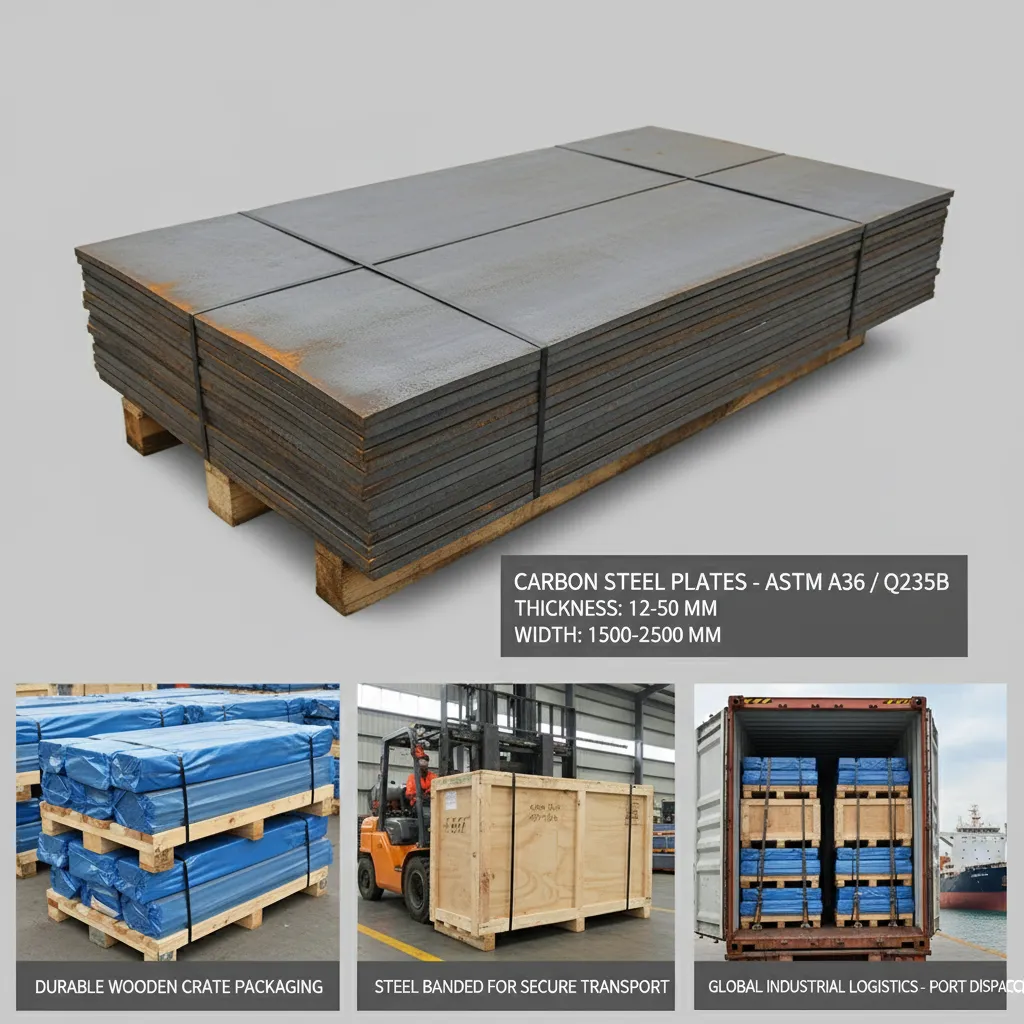
| Packaging | Steel banding, wooden crate, moisture barrier | Standard export packaging for heavy plates |
| MOQ | 500 kg | Minimum order quantity |
AR500 Ballistic Steel Plate - Hardened Armor Grade for Military & Tactical Use
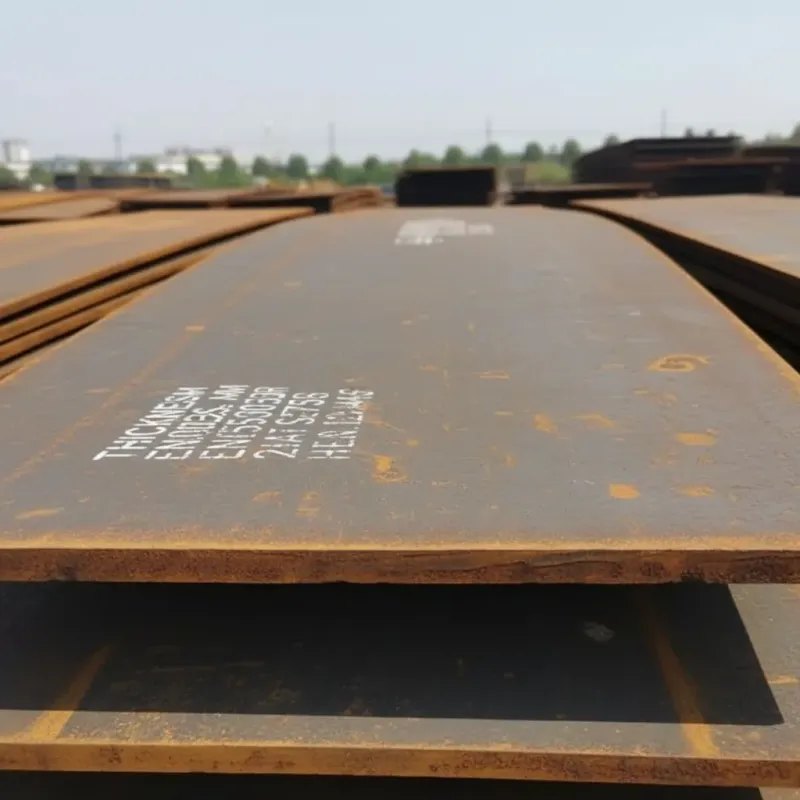
AR500 ballistic steel plate represents a premium-grade abrasion-resistant steel specifically engineered for ballistic protection applications. This through-hardened armor plate delivers exceptional impact resistance with a nominal hardness of 477-534 HBW, making it the preferred choice for military vehicle armor, shooting range targets, and tactical equipment manufacturers requiring reliable threat protection against small arms fire and fragmentation.
What is AR500 Ballistic Steel Plate?
AR500 ballistic steel plate is a high-carbon, quenched and tempered alloy steel designed to provide superior protection against ballistic threats. The designation "AR500" indicates an abrasion-resistant steel with a minimum hardness of 500 Brinell, though actual hardness typically ranges from 477 to 534 HBW. This material combines exceptional surface hardness with adequate core toughness, enabling it to defeat projectiles through a combination of deflection and energy absorption rather than penetration.
AR500 Ballistic Steel Plate Technical Specifications
AR500 ballistic plate exhibits a typical chemical composition of 0.28-0.33% carbon, 0.70-1.00% manganese, 0.15-0.35% silicon, with chromium and molybdenum additions for hardenability. The material achieves tensile strength values of 1,400-1,700 MPa with yield strength exceeding 1,100 MPa. Density measures 7.85 g/cm³ at ambient temperature, while the through-hardening process ensures consistent properties across plate thickness ranging from 6mm to 25mm standard offerings.
Ballistic Performance Characteristics
When properly heat-treated, AR500 steel plate provides Level III protection according to NIJ Standard 0101.06, capable of defeating multiple impacts from 7.62×51mm NATO M80 ball ammunition at velocities up to 847 m/s. The material's face-hardened structure causes projectile fragmentation upon impact while the tougher core prevents through-cracking. Testing per MIL-DTL-46100E demonstrates consistent V50 ballistic limits exceeding specification requirements for armor applications.
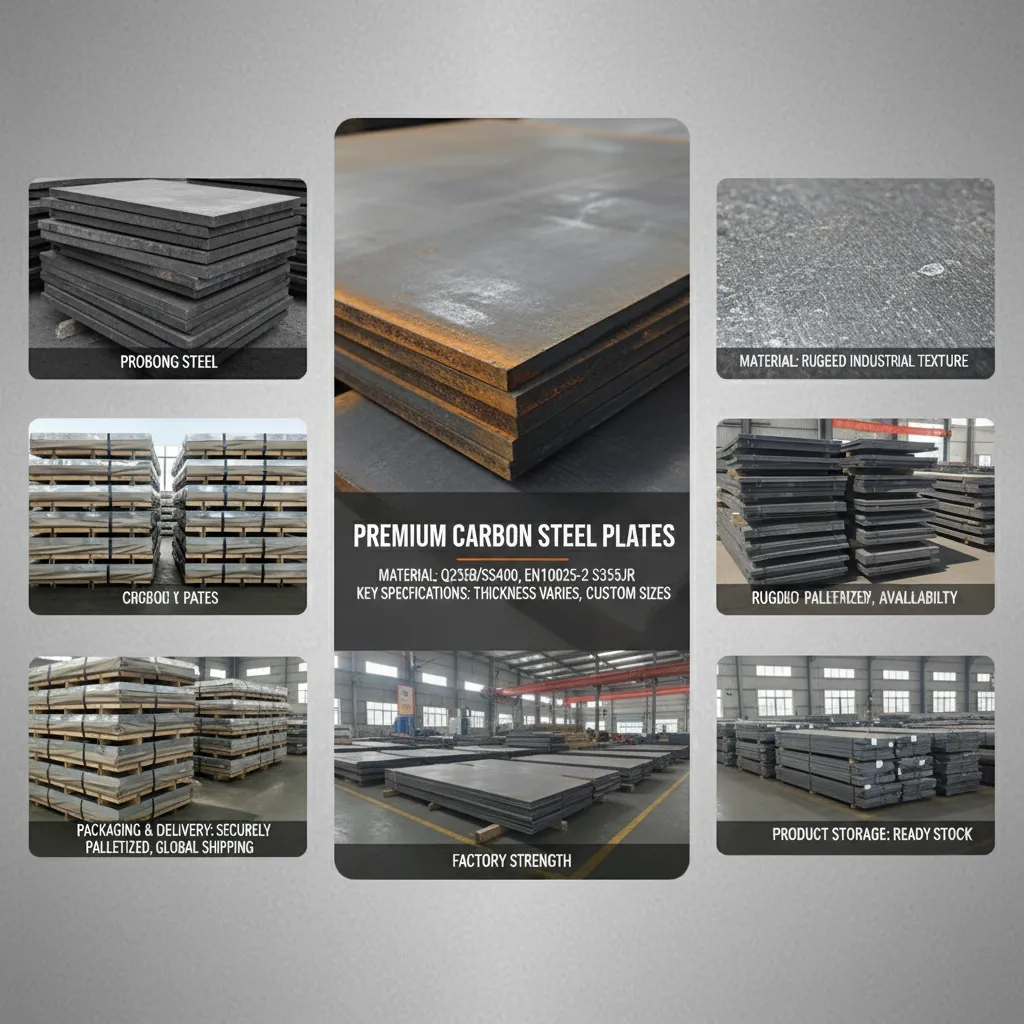
Surface Hardness Distribution
AR500 exhibits uniform surface hardness across the plate face, with variations typically maintained within ±15 HBW. This consistency proves critical for multi-hit protection scenarios where subsequent impacts may occur near previous strike locations. Hardness testing follows ASTM E10 methodology using a 3000 kgf load with 10mm ball indenter.
Impact Energy Absorption
The through-hardened microstructure enables AR500 to absorb impact energies exceeding 3,400 joules without complete penetration when tested against standard threat matrices. Energy dissipation occurs through plastic deformation, projectile fragmentation, and controlled backface deformation limited to 44mm maximum per NIJ specifications.
Manufacturing Process and Quality Control
Production of AR500 ballistic plate involves controlled rolling of steel billets followed by austenitizing at 870-900°C, then water quenching to achieve the martensitic structure required for ballistic performance. Tempering at 175-205°C relieves internal stresses while maintaining target hardness values. Each production lot undergoes ultrasonic testing per ASTM A435 to verify internal soundness, with ballistic verification testing conducted on representative samples.
Heat Treatment Specifications
The quench and temper cycle must be precisely controlled to achieve optimal ballistic properties. Austenitizing time varies with plate thickness, typically 1 hour per 25mm of thickness. Quench rates exceed 28°C per second through the critical temperature range to ensure complete transformation. Tempering duration ranges from 2-4 hours depending on plate dimensions.
Dimensional Tolerances
AR500 ballistic plate is manufactured to thickness tolerances of ±0.5mm for plates under 12mm thick, and ±0.75mm for heavier gauges. Flatness specifications require deviation not exceeding 0.3% of plate width or length. Surface finish achieves Ra values of 6.3 μm or better through controlled rolling practices.
Applications in Defense and Security
AR500 ballistic steel finds extensive application in vehicle armor systems for military and law enforcement, including add-on armor kits for tactical vehicles, armored personnel carriers, and cash-in-transit vehicles. The material serves as the standard for commercial shooting range target systems, offering extended service life under repeated high-velocity impacts. Security infrastructure applications include blast-resistant walls, safe room construction, and perimeter barriers requiring certified ballistic protection.
Vehicle Armor Integration
When integrated into vehicle armor systems, AR500 plates are typically configured in spaced armor arrays or combined with composite backing materials to optimize weight efficiency. Attachment methods must account for the material's hardness, requiring specialized drilling and fastening techniques. Proper installation maintains a standoff distance of 150-200mm from the protected space to allow projectile fragmentation dispersion.
Target System Design
Shooting range targets fabricated from AR500 demonstrate service lives exceeding 3,000 rounds of centerfire rifle ammunition when properly designed with appropriate impact angles. Target thickness selection depends on anticipated threat levels and engagement distances, with 10mm plates suitable for pistol calibers and 12-15mm recommended for rifle applications at distances beyond 100 meters.
Frequently Asked Questions
What is the minimum order quantity for AR500 ballistic steel plate?
Standard minimum order quantities begin at 1,000 kilograms for stock thickness offerings between 6mm and 25mm. Custom thickness requirements may necessitate higher minimum quantities of 3,000-5,000 kilograms depending on mill scheduling. Sample quantities of 100-200 kilograms are available for qualification testing purposes with lead times of 4-6 weeks.
Do you provide ballistic test certificates for AR500 plate?
Each production lot includes certified mill test reports documenting chemical composition per ASTM E415 and mechanical properties per ASTM A370. Ballistic performance certification follows NIJ Standard 0101.06 testing protocols, with V50 ballistic limit data provided for representative samples. Third-party verification testing through accredited laboratories can be arranged upon request with 6-8 week lead times.
What is the typical delivery time for AR500 ballistic plate orders?
Standard thickness inventory in 6mm, 10mm, and 12mm gauges ships within 2-3 weeks from order confirmation. Custom thickness requirements necessitate mill production runs with delivery schedules of 10-14 weeks depending on quantity and specification complexity. Expedited processing is available for qualified defense contractors with approved priority status.
Can AR500 ballistic plate be cut to custom sizes and shapes?
Precision cutting services accommodate customer specifications using waterjet, plasma, or laser cutting technologies suitable for hardened steel processing. Waterjet cutting proves optimal for maintaining material properties without heat-affected zones, achieving tolerances of ±0.5mm on complex geometries. Minimum feature sizes of 25mm diameter holes and 50mm radius curves are achievable. Edge preparation including beveling and deburring is available to customer specifications.
Get a Competitive Quote for AR500 Ballistic Steel Plate
Our technical sales team provides comprehensive support for AR500 ballistic steel plate selection, specification development, and application engineering. Request detailed quotations including material certifications, ballistic test data, and custom processing options. Volume pricing programs offer cost advantages for qualified defense contractors and OEM manufacturers requiring consistent supply of certified armor-grade steel. Contact our ballistic materials specialists to discuss your specific protection requirements and receive mill-direct pricing for AR500 plate in your required dimensions and quantities.
Ratings & Reviews

Know your supplier
Supplier's customization ability
- Drawing-based customization
- Sample-based customization
- Full customization
Minimum order quantity: 1 ton
Shipping total: To be negotiated
- Lead time:
- confirmed with the quotation
- Packaging:
- standard export packing
- Samples:
- available on request