 English
 Español
 Français
 Deutsch
 Português (Brasil)
 Русский
 العربية

Overhead Bridge Crane Manufacturer | Custom & Heavy-Duty Solutions

 China


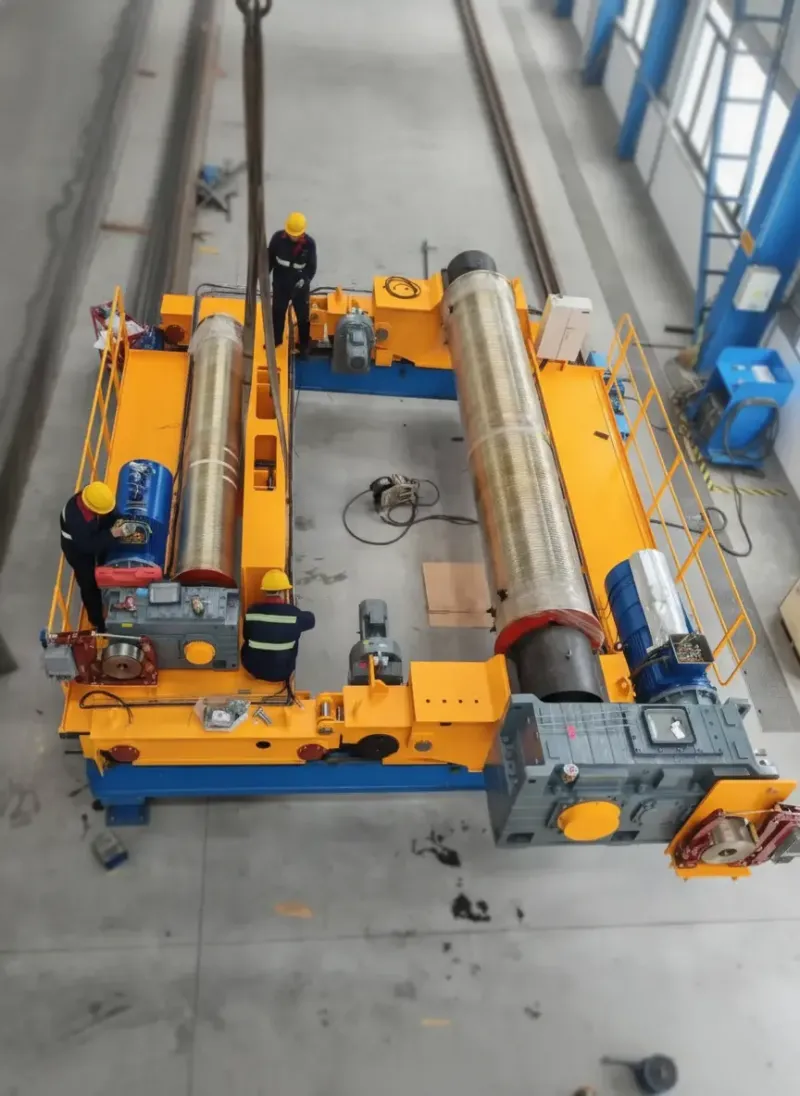
Supplier's customization ability
- Drawing-based customization
- Sample-based customization
- Full customization
Minimum order quantity: 1 pieces
Shipping total: To be negotiated
- Lead time:
- confirmed with the quotation
- Packaging:
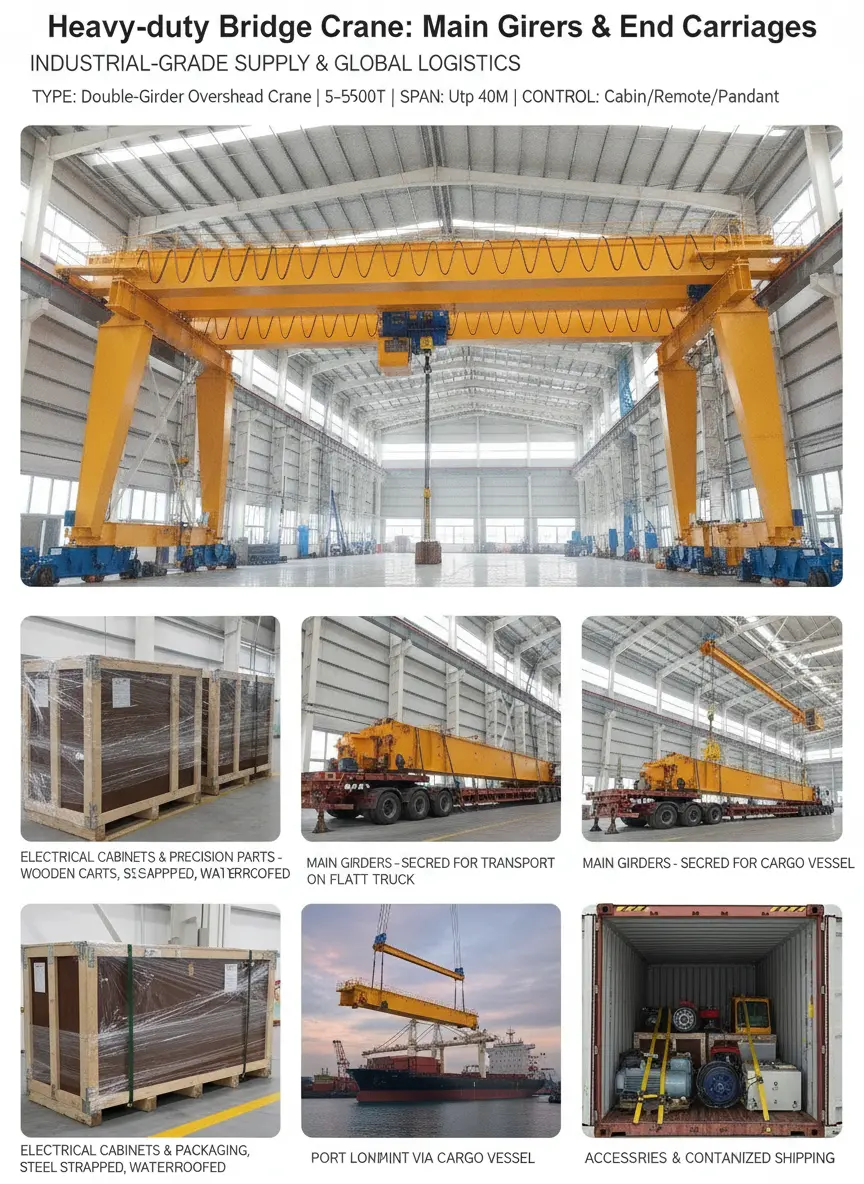
- standard export packing
- Samples:
- available on request
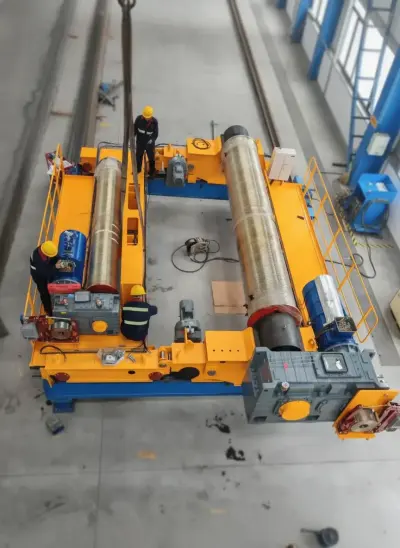
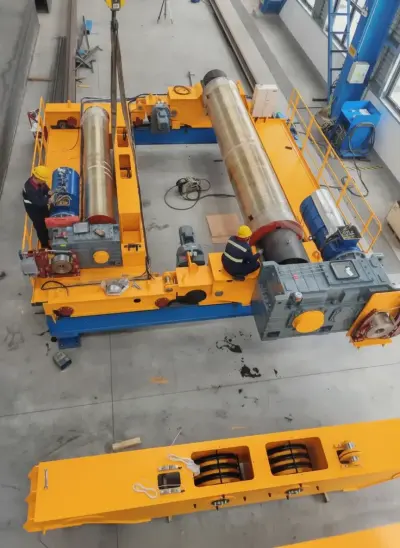
Product details
Overhead Bridge Crane Technical Specifications
| Parameter | Standard Specification | Available Options |
|---|---|---|
| Product Type | Overhead Bridge Crane | Single Girder or Double Girder |
| Rated Lifting Capacity | 1-500 metric tons | Custom capacity available |
| Crane Span | 5-40 m | Engineered to runway dimensions |
| Lifting Height | 6-30 m | Custom lifting height available |
| Crane Duty Class | A3-A8 according to FEM and ISO duty requirements | Light, medium, heavy, or severe service |
| Main Girder Material | Q235B, Q355B, or equivalent structural steel | Grade selected according to load and operating conditions |
| Girder Construction | Welded box girder or rolled steel beam | Optimized design for strength, rigidity, and dead weight |
| Hoisting Mechanism | Electric wire rope hoist or open winch trolley | Single-speed or variable-frequency operation |
| Lifting Speed | 0.5-12 m/min | Dual-speed or VFD-controlled speed |
| Cross Travel Speed | 2-30 m/min | Adjustable by variable-frequency drive |
| Long Travel Speed | 5-60 m/min | Adjustable by variable-frequency drive |
| Control Method | Pendant control | Wireless remote control or operator cabin |
| Power Supply | 380 V, 50 Hz, 3-phase | Voltage and frequency customized by destination country |
| Motor Protection Class | IP54 or IP55 | Higher protection ratings available |
| Insulation Class | Class F | Class H available for demanding environments |
| Braking System | Electromagnetic fail-safe brake | Additional emergency or redundant braking system |
| Safety Devices | Overload limiter, lifting limit switch, travel limit switch, emergency stop, and buffer | Anti-collision, load display, wind alarm, and remote monitoring |
| Operating Temperature | -20°C to +40°C | Low-temperature or high-temperature configuration available |
| Installation Environment | Indoor industrial facility | Outdoor, dusty, humid, corrosive, or high-temperature service |
| Applicable Standards | ISO, FEM, DIN, GB, and CMAA | CE-compliant design available |
| Surface Treatment | Shot blasting, anti-corrosion primer, and industrial topcoat | Custom coating system and RAL color |
| Typical Applications | Steel mills, warehouses, fabrication plants, foundries, power stations, and logistics centers | Application-specific crane engineering available |
Overhead Bridge Crane Manufacturer | Custom & Heavy-Duty Solutions
An overhead bridge crane is a material-handling system that moves heavy or bulky loads across a defined working area using a bridge, runway, trolley, and hoist. It is designed for overseas manufacturers, steel processors, warehouses, power plants, maintenance contractors, and engineering companies that require controlled lifting without occupying valuable floor space. A properly configured crane can improve load positioning, reduce manual handling, and support repeatable production workflows. Available configurations may include single-girder, double-girder, top-running, and under-running designs. Each project should be engineered around the required capacity, span, lifting height, duty classification, operating environment, building conditions, and applicable local regulations.
Overhead Bridge Crane Product Overview
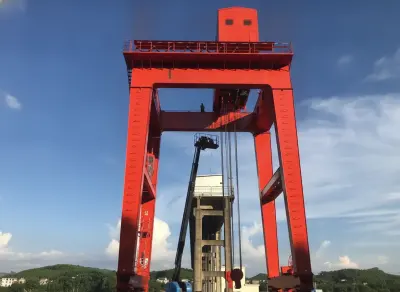
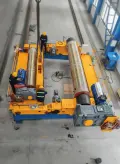
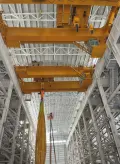
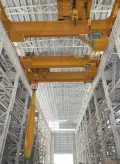
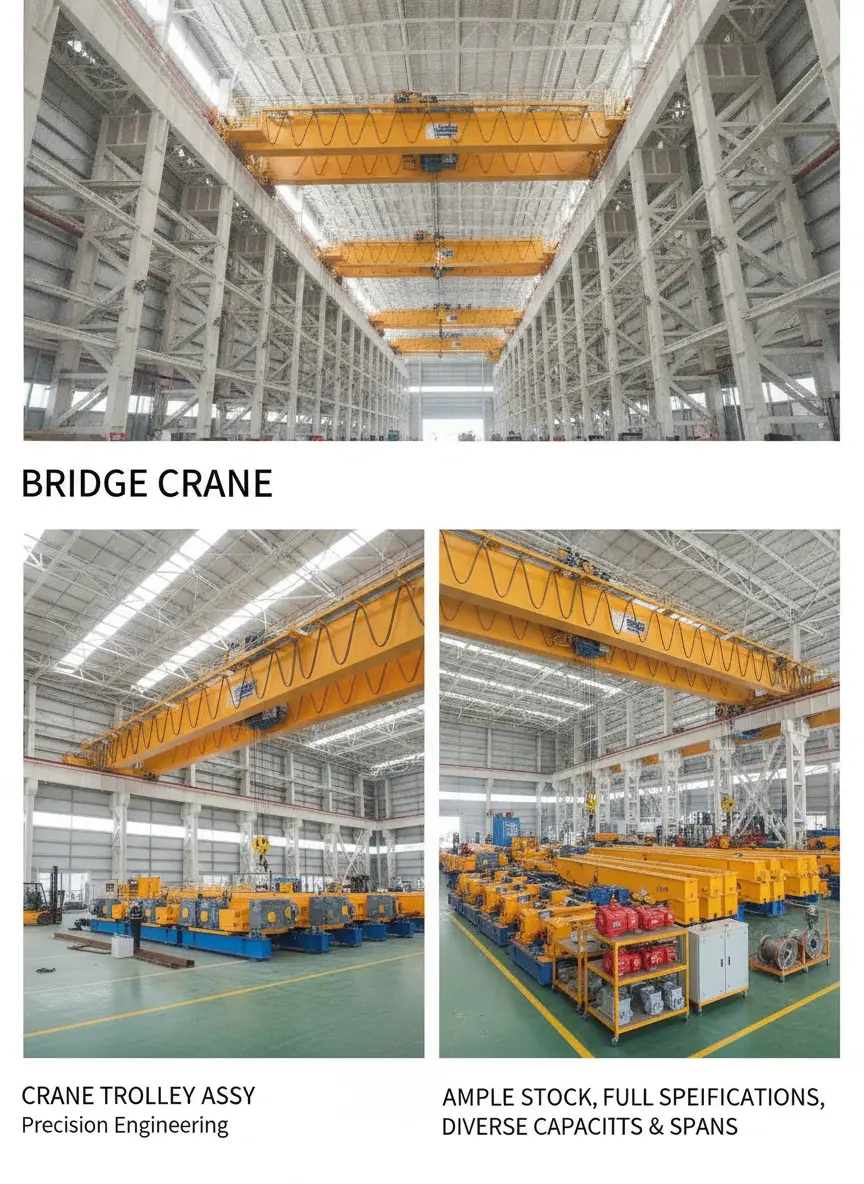
An overhead bridge crane travels along parallel runway rails installed on building columns, independent support structures, or specially designed runway beams. The crane bridge spans the working area, while a powered or manual trolley carries the hoist across the bridge. This arrangement provides longitudinal, transverse, and vertical movement, allowing an operator to position loads within the crane’s service envelope.
The main structural components normally include bridge girders, end carriages, wheels, runway rails, a trolley frame, a wire-rope or chain hoist, electrical controls, brakes, buffers, and lifting accessories. Structural members are commonly fabricated from suitable carbon or low-alloy structural steel selected according to the design standard, load spectrum, temperature, and customer specification. Material grades should be confirmed in the approved technical agreement rather than assumed from nominal lifting capacity alone. Buyers comparing structural steel options can consult [[INTERNAL_LINK]] for related material guidance.
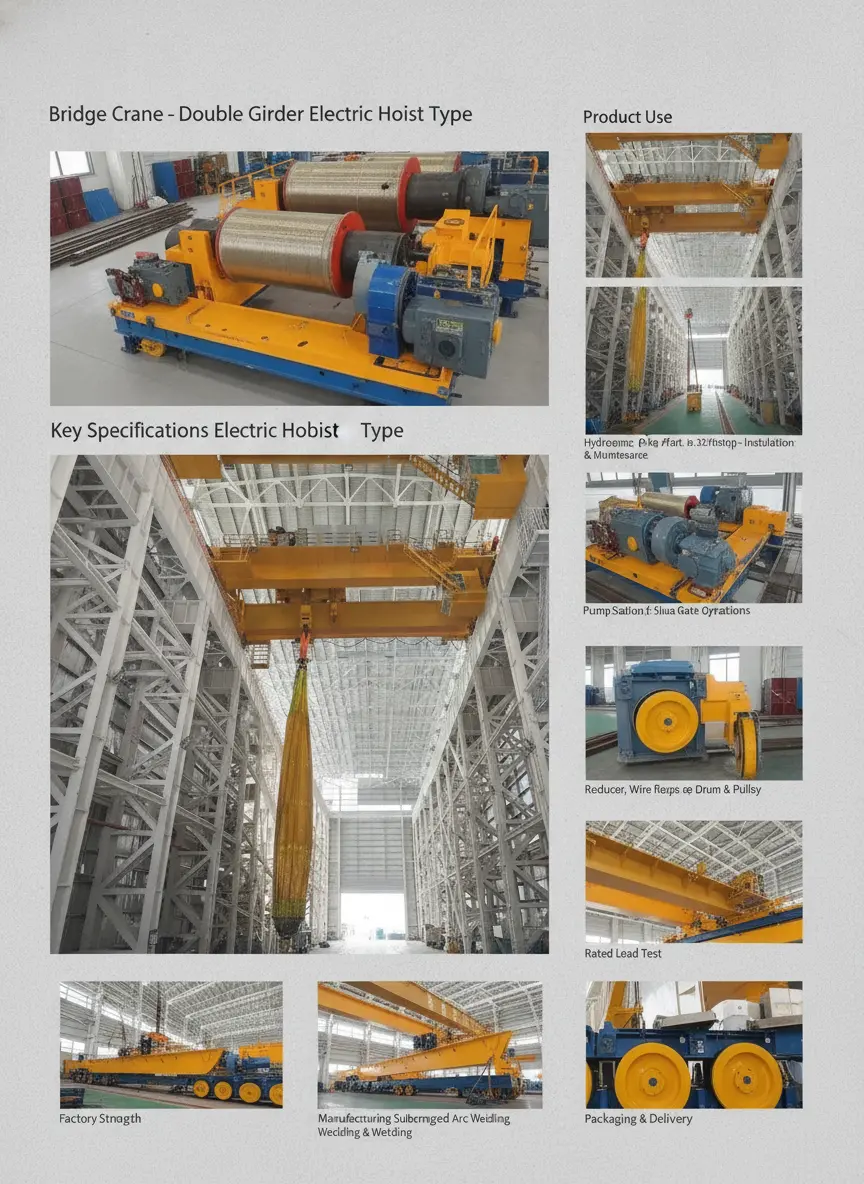
Single-Girder and Double-Girder Configurations
A single-girder overhead bridge crane uses one principal bridge beam with the hoist typically suspended beneath it. This configuration is often considered for moderate capacities, shorter or medium spans, and applications where building headroom and wheel loads permit. Its relatively simple structure can reduce self-weight and simplify installation, but the final suitability depends on duty class, deflection limits, and operating frequency.
A double-girder overhead bridge crane uses two principal bridge girders with the trolley generally running above or between them. It is commonly evaluated for heavier loads, longer spans, higher lifting heights, demanding duty cycles, or applications requiring maintenance platforms and specialized lifting mechanisms. Double-girder construction does not automatically mean better performance for every facility; it should be selected when the load, geometry, service conditions, and lifecycle requirements justify it. Related heavy-lifting equipment is available through [[INTERNAL_LINK]].
Top-Running and Under-Running Designs
Top-running cranes travel on rails mounted on top of runway beams. They are widely used where higher capacities, longer spans, or robust industrial service are required. Under-running cranes travel on the lower flange of runway beams and may suit facilities with limited floor space or lighter supporting structures. However, the existing building must be checked by a qualified structural engineer before either system is installed. Crane wheel loads, lateral forces, vertical reactions, runway tolerances, and foundation capacity are critical engineering inputs.
Control options may include pendant stations, radio remote controls, fixed operator cabins, or combinations of these methods. Variable-frequency drives can be specified where smoother acceleration, controlled positioning, reduced load swing, or process integration is needed. Common protective functions include upper and lower hoist limits, travel limits, overload protection, emergency stopping, brakes, buffers, warning devices, and electrical isolation. The exact safety package must comply with the project specification and the regulations applicable at the installation site.
Overhead Bridge Crane Specifications & Standards
Overhead bridge crane specifications should be established through a technical data sheet rather than selected only by rated capacity. Capacity is one input, but span, hook approach, lifting height, operating speed, duty classification, load spectrum, ambient conditions, electrical supply, runway design, and control method can materially affect equipment life and building loads.
| Specification Item | Information Required from Buyer | Engineering Significance |
|---|---|---|
| Rated lifting capacity | Maximum load, lifting attachment weight, and expected normal load | Determines hoist selection, structural design, brakes, wheels, and load-limiting settings |
| Crane span | Center-to-center distance between runway rails | Affects girder depth, deflection, self-weight, wheel loads, and transport planning |
| Lifting height | Vertical distance required between the lowest and highest hook positions | Determines rope or chain length, drum arrangement, headroom, and hook travel |
| Duty classification | Operating hours, starts per hour, load spectrum, and production cycle | Influences mechanism class, motor rating, gearbox selection, brakes, and fatigue design |
| Travel speeds | Required hoisting, trolley, and bridge speeds | Controls production cycle time, positioning accuracy, motor sizing, and drive configuration |
| Power supply | Voltage, phase, frequency, and site electrical rules | Required for motors, panels, current collectors, transformers, and protection devices |
| Operating environment | Indoor or outdoor use, temperature, humidity, dust, fumes, corrosion, and hazardous-area status | Determines enclosure rating, coatings, component protection, and whether specialized certification is necessary |
| Runway condition | New or existing runway, rail type, alignment data, beam details, and support spacing | Needed to verify compatibility, wheel loads, clearances, and installation tolerances |
| Control method | Pendant, radio remote, cabin, or automated control | Affects operator visibility, electrical architecture, ergonomics, and risk controls |
Applicable standards depend on the destination country, purchaser specification, and selected design system. EN 15011:2020 covers bridge and gantry cranes, while the EN 13001 series provides general crane design principles and limit-state verification. Relevant parts include EN 13001-1 for general principles and requirements, EN 13001-2 for load actions, and EN 13001-3-1 for the limit states and proof of competence of steel structures. Electrical equipment for hoisting machines may be specified according to EN 60204-32:2008, subject to current contractual and jurisdictional requirements.
For projects based on Chinese standards, GB/T 14405-2011 addresses general-purpose overhead travelling cranes, and GB/T 3811-2008 provides crane design rules. The edition required by the contract should be checked because standards may be revised or replaced. Structural steel may be procured to a recognized material specification such as ASTM A36/A36M, ASTM A572/A572M, EN 10025-2, JIS G 3101, or an appropriate GB/T specification, but no grade should be substituted without engineering approval. See [[INTERNAL_LINK]] for further information about steel grade equivalency.
| Area | Commonly Referenced Standard | Purpose |
|---|---|---|
| Bridge and gantry crane requirements | EN 15011:2020 | Defines safety requirements for bridge and gantry crane design and construction |
| Crane design principles | EN 13001-1 and EN 13001-2 | Addresses general design principles and load actions |
| Steel structure verification | EN 13001-3-1 | Covers limit states and proof of competence for crane steel structures |
| Electrical equipment | EN 60204-32:2008 | Addresses electrical equipment requirements for hoisting machines |
| General-purpose overhead cranes | GB/T 14405-2011 | Provides technical requirements for general-purpose overhead travelling cranes |
| Crane design rules | GB/T 3811-2008 | Provides design principles and calculation requirements for cranes |
Documentation should be agreed before production. Depending on the contract, the inspection package may include general arrangement drawings, electrical diagrams, material certificates, welding records, nondestructive examination reports, dimensional inspection results, component certificates, load-test records, manuals, and packing lists. Buyers should state whether third-party inspection or destination-market conformity documentation is required when requesting a quotation. Guidance on crane inspection documentation can be found at [[INTERNAL_LINK]].
Overhead Bridge Crane Applications
Steel Mills and Metal Service Centers
An overhead bridge crane can handle plates, coils, billets, profiles, fabricated assemblies, and production tooling in steel-processing facilities. The lifting device must match the load form: hooks, C-hooks, coil grabs, clamps, magnets, and lifting beams have different operating limits and safety considerations. Buyers should include the attachment weight in the rated-load calculation and define whether the crane will handle hot materials, sharp-edged products, or loads with an offset center of gravity. See [[INTERNAL_LINK]] for complementary steel-handling solutions.
Machinery Manufacturing and Assembly
Machine builders use bridge cranes to position frames, castings, motors, molds, dies, and assembled equipment. Low-speed control and variable-frequency drives may be valuable where operators must align components during assembly. For maintenance work, the required capacity should account for the heaviest removable component rather than only the weight of routine production materials.
Warehousing and Logistics
Warehouses use overhead lifting systems for long products, heavy crates, tooling, and loads that cannot be handled efficiently by forklifts. Because the crane operates above the floor, it can preserve aisle space and reach areas that mobile equipment cannot access. The warehouse layout, stacking method, pedestrian routes, and truck-loading process should be reviewed during system design. Related warehouse material-handling products are listed at [[INTERNAL_LINK]].
Power Generation and Industrial Maintenance
Power stations, pump rooms, and processing plants may install an overhead bridge crane for turbine, generator, pump, valve, or gearbox maintenance. These cranes may operate infrequently but still need accurate positioning and reliable availability during scheduled shutdowns. Long idle periods do not eliminate inspection requirements; brakes, ropes, controls, lubrication, and limit devices must be maintained according to the approved manual and local rules.
Precast Concrete and Fabrication Yards
Indoor fabrication halls and certain outdoor yards use bridge cranes to move molds, reinforcement assemblies, concrete elements, and welded structures. Outdoor or partially exposed service requires special attention to wind actions, rain protection, corrosion systems, drainage, electrical enclosures, and rail securing arrangements. Environmental assumptions should be documented before the overhead bridge crane is engineered.
How to Choose an Overhead Bridge Crane / Buying Guide
Procurement managers should begin with the process rather than a generic crane model. Record the maximum lifted load, typical load distribution, number of operating cycles, required movement path, available headroom, runway span, hook approaches, and any future production changes. A crane sized only for today’s average load may become unsuitable if attachments, dies, or manufactured products become heavier.
Confirm Capacity, Span, and Clearances
State whether the requested capacity includes the hook, lifting beam, magnet, grab, or other below-the-hook device. Provide accurate runway-rail center dimensions and building drawings where available. Critical clearance data include the distance from rail level to the roof, distance between columns, highest obstacle, lowest required hook position, and available end approach. A site survey is advisable when drawings are incomplete or the building has been modified.
Define the Real Duty Cycle
Describe how often the overhead bridge crane will lift, how far it will travel, and what proportion of lifts occur near maximum capacity. Duty classification cannot be determined reliably from capacity alone. A maintenance crane making occasional lifts has different fatigue and thermal demands from a production crane operating throughout multiple shifts. Share starts per hour, operating hours per day, load spectrum, and expected service life with the engineering team.
Review Standards, Certification, and Inspection
Specify the destination country and required design code in the inquiry. Ask the supplier to identify the standards used for structural, mechanical, and electrical design. Confirm which documents are included and whether a third-party inspector must witness material verification, welding inspection, assembly checks, or load testing. Destination-market compliance should be agreed in writing because a standard factory inspection package may not satisfy every local authority or end user. Additional procurement guidance is available at [[INTERNAL_LINK]].
Clarify MOQ, Production Schedule, and Commercial Terms
Overhead crane systems are normally quoted by project configuration, so minimum order quantity depends on design scope, shared components, and supplier policy. Buyers should request written confirmation rather than assume that a published MOQ applies to customized equipment. Lead time likewise depends on engineering approval, material availability, manufacturing complexity, inspection requirements, and shipping arrangements. The schedule should separate drawing approval, production, testing, packing, dispatch, and site installation where applicable.
Plan Packaging and International Logistics
Long girders, end carriages, electrical panels, and loose accessories may require different packing and transport methods. Provide the delivery destination early so the supplier can evaluate container loading, break-bulk shipment, lifting points, package dimensions, inland access, and local unloading capacity. Clarify the Incoterms rule and named place in the quotation. Spare parts, fasteners, cables, rails, and installation tools should be itemized to reduce the risk of missing components at the site. Refer to [[INTERNAL_LINK]] for international equipment shipping considerations.
Overhead Bridge Crane Frequently Asked Questions
Q: What is the difference between a single-girder and double-girder overhead bridge crane?
A: A single-girder crane has one main bridge girder and commonly uses an under-slung hoist, while a double-girder crane has two main girders and commonly carries the trolley above or between them. Single-girder systems may reduce self-weight and structural complexity for suitable duties. Double-girder systems are often considered for heavier capacities, longer spans, greater hook height, or demanding service. The correct choice requires evaluation of duty class, headroom, deflection, wheel loads, maintenance access, and lifecycle cost.
Q: Which standards can be used for overhead bridge crane design?
A: The contractual standard depends on the destination and purchaser’s requirements. Common references include EN 15011:2020 for bridge and gantry cranes, the EN 13001 series for crane design, EN 60204-32:2008 for electrical equipment of hoisting machines, GB/T 14405-2011 for general-purpose overhead travelling cranes, and GB/T 3811-2008 for crane design rules. The required edition and any national deviations should be confirmed before engineering begins.
Q: Can material certificates and inspection documents be supplied?
A: Documentation can generally be included when it is defined in the purchase contract. Buyers should list the required certificate type, inspection scope, language, and acceptance standard in the inquiry. Typical requests may include material certificates, welding records, dimensional reports, electrical diagrams, component certificates, and load-test records. Third-party inspection should be arranged before production or before the relevant hold point, not requested after shipment.
Q: What is the minimum order quantity for an overhead bridge crane?
A: MOQ is supplier- and project-dependent because bridge cranes are commonly engineered to match a specific capacity, span, building, and control requirement. A single customized system may be commercially possible, but this must be confirmed in the formal quotation. For multiple cranes, buyers should identify which units share the same design and which require different spans, capacities, or duty classes.
Q: What payment methods are available for international orders?
A: Payment methods depend on contract value, customization, credit assessment, destination, and supplier policy. Common international trade arrangements may include bank transfer or a letter of credit, but availability and terms must be negotiated for the individual order. The contract should link payment milestones to clearly defined events such as order confirmation, drawing approval, inspection, or shipping document release.
Q: How long does production and delivery take?
A: Lead time varies with crane configuration, engineering workload, material availability, component sourcing, buyer drawing approval, testing, and logistics. Customized double-girder or process cranes may require a different schedule from standardized light-duty systems. Ask for a project timeline that identifies document submission, approval deadlines, manufacturing, inspection, packing, and estimated dispatch. Ocean or inland transit time should be shown separately from manufacturing time.
Q: Can an overhead bridge crane be installed in an existing building?
A: It may be possible, but the building and runway system must be assessed by qualified engineers. The review should cover vertical wheel loads, lateral forces, runway-beam strength, column and foundation capacity, rail alignment, clearances, electrical supply, and installation access. An existing runway should not be assumed suitable simply because a previous crane operated on it.
Q: What information is needed for an accurate quotation?
A: Provide rated capacity, span, lifting height, duty cycle, travel distances, desired speeds, power supply, control method, operating environment, destination country, applicable standard, runway details, and required lifting attachment. Building drawings and load information improve accuracy. Also state certification, inspection, documentation, packing, installation, commissioning, training, and spare-parts requirements. A structured inquiry checklist is available through [[INTERNAL_LINK]].
Q: Are installation and commissioning included in the equipment price?
A: Installation and commissioning scope varies by contract. The quotation should state whether pricing covers equipment supply only, remote guidance, site supervision, full installation, commissioning, load testing, or operator training. Buyers should also clarify responsibility for runway construction, electrical feeders, lifting machinery, local labor, travel costs, permits, test weights, and acceptance by local authorities.
Send your overhead bridge crane capacity, span, lifting height, duty cycle, power supply, operating environment, destination, and required standards to request a technically aligned quotation. Include building or runway drawings where available so the engineering team can review clearances, wheel loads, control options, documentation, packing, and delivery requirements before preparing the proposal.
Ratings & Reviews

Know your supplier
Supplier's customization ability
- Drawing-based customization
- Sample-based customization
- Full customization
Minimum order quantity: 1 pieces
Shipping total: To be negotiated
- Lead time:
- confirmed with the quotation
- Packaging:
- standard export packing
- Samples:
- available on request