 English
 Español
 Français
 Deutsch
 Português (Brasil)
 Русский
 العربية

Square Steel Bar Supplier | Custom Sizes, Grades & Wholesale Prices

 China
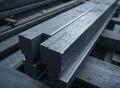
Supplier's customization ability
- Drawing-based customization
- Sample-based customization
- Full customization
Minimum order quantity: 2 ton
Shipping total: To be negotiated
- Lead time:
- confirmed with the quotation
- Packaging:
- standard export packing
- Samples:
- available on request
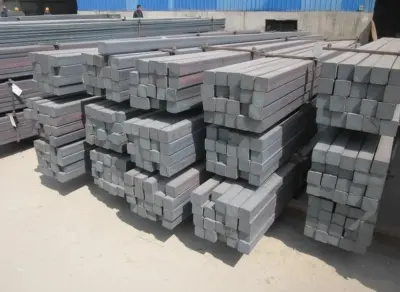
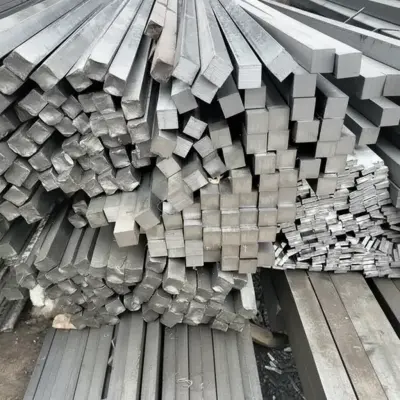
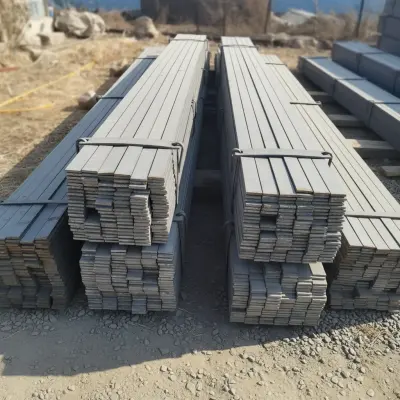
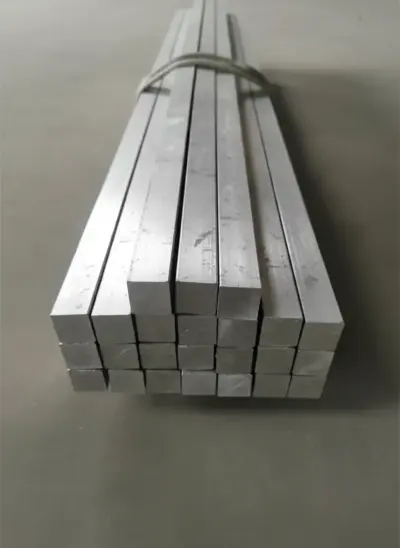
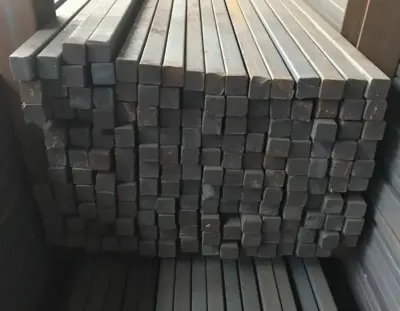
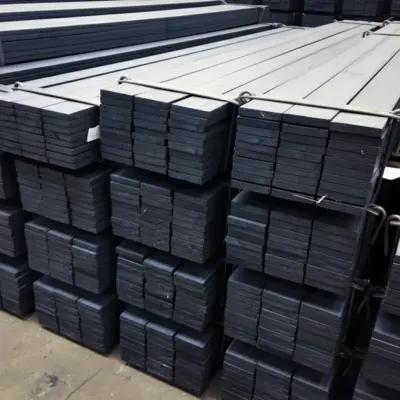
Product details
Square Steel Bar Technical Specifications
| Property | Specification |
|---|---|
| Product Name | Square Steel Bar |
| Material | Carbon Steel, Alloy Steel, Stainless Steel |
| Common Grades | ASTM A36, AISI 1018, AISI 1045, Q235B, Q355B, S235JR, S355JR, SS400, 304, 316 |
| Manufacturing Process | Hot Rolled, Cold Drawn, Forged |
| Cross Section | Solid Square |
| Side Width | 6 mm to 200 mm; custom sizes available |
| Length | 1 m to 12 m or customized |
| Dimensional Tolerance | According to applicable standard or customer requirements |
| Surface Finish | Black, Pickled, Bright, Polished, Galvanized, Shot Blasted |
| Edge Condition | Sharp Edge or Rounded Edge |
| Straightness | According to applicable standard or agreed specification |
| Standards | ASTM, AISI, EN, DIN, JIS, GB/T |
| Heat Treatment | As Rolled, Annealed, Normalized, Quenched and Tempered |
| Testing | Chemical Composition, Mechanical Properties, Dimensional and Surface Inspection |
| Processing Services | Cutting, Drilling, Welding, Machining, Bending, Heat Treatment |
| Applications | Steel Structures, Machinery Parts, Shafts, Frames, Fencing, Tools, Automotive Components and General Fabrication |
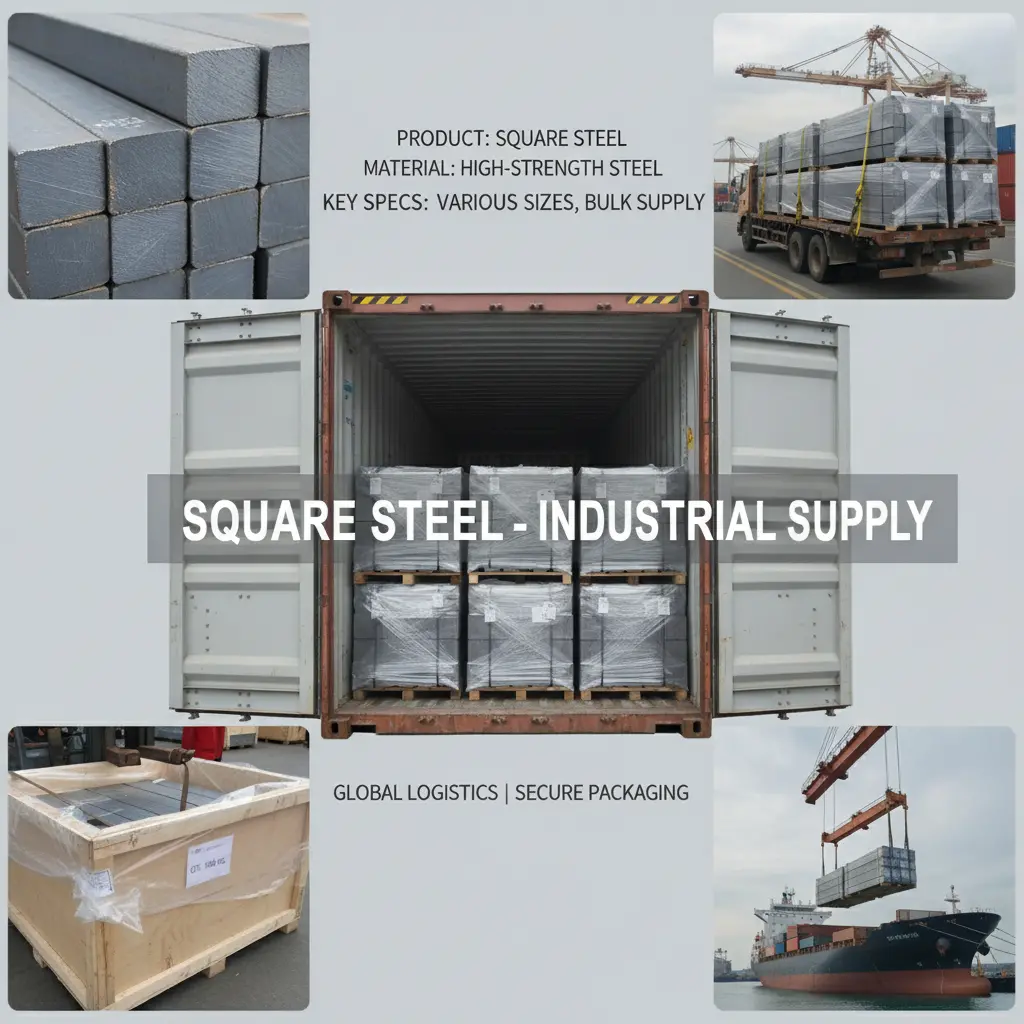
| Packaging | Steel Bundles, Waterproof Wrapping or Customized Export Packaging |
Square Steel Bar Supplier | Custom Sizes, Grades & Wholesale Prices
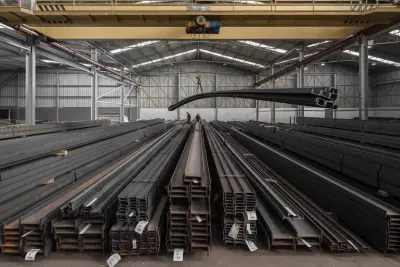
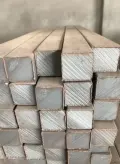
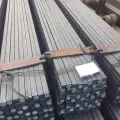
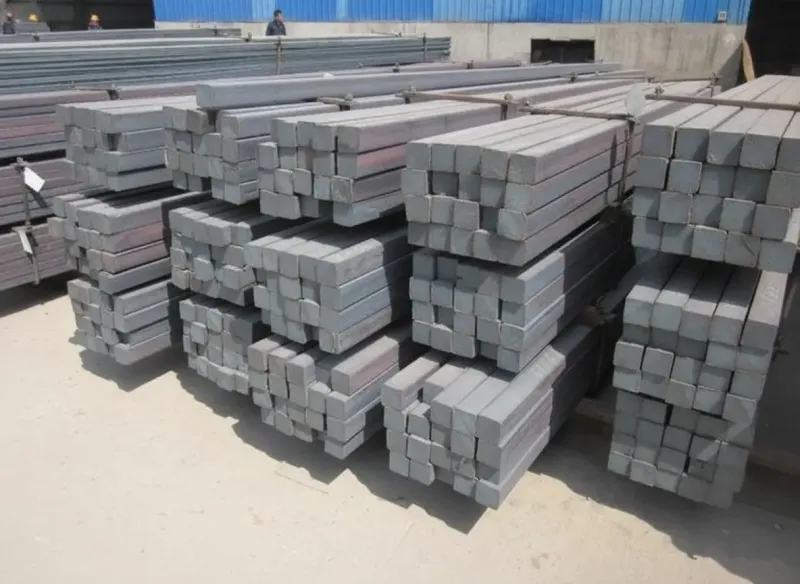
Square steel is a solid metal bar with four equal sides and a uniform square cross-section, supplied in hot-rolled, cold-drawn, forged, or machined condition according to the required application. It is purchased by steel distributors, fabrication companies, construction contractors, machinery manufacturers, and industrial component producers that need predictable dimensions and reliable processing performance. The principal procurement advantages include straightforward cutting and welding, efficient stacking, compatibility with automated machining, and access to multiple carbon or alloy steel grades. Overseas buyers can specify the side length, bar length, manufacturing condition, dimensional tolerance, surface condition, testing requirements, and export packaging for project-based or recurring wholesale orders.
Square Steel Product Overview
Square steel bar, sometimes called solid square bar or square-section steel, differs from square hollow section because it contains no internal cavity. Its solid cross-section provides consistent material throughout the section and makes it suitable for components that will be drilled, milled, welded, forged, or subjected to concentrated loads. Buyers comparing solid products with structural tubing should confirm the required section type before requesting a quotation. Related hollow structural products can be reviewed through [[INTERNAL_LINK]].
The material may be produced from low-carbon steel, medium-carbon steel, or alloy steel, depending on the intended fabrication process and mechanical requirements. General-purpose structural grades are commonly selected for frames, brackets, supports, gates, and welded fabrications. Engineering carbon or alloy grades may be specified for shafts, machine parts, tools, fasteners, and components that require heat treatment or controlled hardness. Grade availability depends on the requested dimensions, production route, quantity, and applicable standard.
Hot-rolled square steel is formed at elevated temperature and is generally chosen where practical structural tolerances and a mill-scale surface are acceptable. It is economical for fabrication, welding, forging, and general industrial use. Rounded corners and minor surface scale are normal characteristics of hot-rolled production, although the permitted condition must comply with the purchase specification.
Cold-drawn square bar is processed through a die after initial hot rolling. This route can provide tighter dimensional control, straighter bars, a smoother surface, and improved suitability for precision machining. Cold working may also change hardness, strength, ductility, and residual stress, so purchasers should not treat hot-rolled and cold-drawn products as interchangeable without an engineering review. More information about drawn and precision bar products is available at [[INTERNAL_LINK]].
Forged or machined square steel may be considered for unusually large sections, demanding internal soundness requirements, low production volumes, or components that require substantial downstream machining. In every case, the inquiry should identify whether the quoted dimension refers to the nominal side length or a finished machined dimension. Machining allowance must be agreed before production.
- Cross-section: Solid square with four nominally equal sides.
- Production conditions: Hot rolled, cold drawn, forged, peeled, ground, or machined, subject to availability.
- Material groups: Structural carbon steel, engineering carbon steel, and alloy steel.
- Processing options: Straight cutting, sawing, drilling, milling, welding, forging, heat treatment, and surface finishing.
- Supply format: Mill lengths, fixed lengths, multiple lengths, or cut pieces as confirmed in the order.
Square Steel Specifications & Standards
Square steel specifications should define more than the nominal side dimension. A complete purchase description normally includes the standard and grade, side length, length, dimensional tolerance, corner condition, straightness requirement, surface condition, heat-treatment condition, quantity, inspection documents, marking, and packaging. Custom size availability must be confirmed against the selected production method and mill capability rather than assumed from a general catalogue.
ASTM A36/A36M covers carbon structural steel shapes, plates, and bars for use in riveted, bolted, or welded construction. ASTM A29/A29M specifies general requirements for steel bars made from carbon and alloy steels and is relevant when an engineering bar grade is ordered to an applicable ASTM product specification. ASTM A108 covers cold-finished carbon and alloy steel bars, making it an important reference for purchasers who require a cold-finished square bar rather than a standard hot-rolled structural product.
For European procurement, EN 10025-2 defines technical delivery conditions for non-alloy structural steels such as S235JR, S275JR, and S355JR. JIS G 3101 covers rolled steels for general structure, including the widely specified SS400 grade. GB/T 700 covers carbon structural steels such as Q235 and Q275 series grades. These specifications are not automatically equivalent: differences can apply to chemical limits, deoxidation practice, impact testing, dimensional ranges, tensile properties, and inspection documentation. A substitution should therefore be approved by the responsible engineer or end user. A broader guide to international steel grade comparisons is available at [[INTERNAL_LINK]].
| Reference standard | Example grade or scope | Typical purchasing context | Important buyer instruction |
|---|---|---|---|
| ASTM A36/A36M | A36 carbon structural steel | Welded and bolted structural fabrications | State the product form, dimensions, length, and any supplementary testing. |
| ASTM A29/A29M | General requirements for carbon and alloy steel bars | Engineering bars ordered to a relevant ASTM grade specification | Identify both the material grade specification and the general requirements. |
| ASTM A108 | Cold-finished carbon and alloy steel bars | Machined parts requiring improved finish or dimensional control | Confirm grade, cold-finished condition, tolerance, straightness, and surface requirements. |
| EN 10025-2 | S235JR, S275JR, S355JR | European structural fabrication and construction | Specify the full grade designation, inspection document, and required impact property. |
| JIS G 3101 | SS400 and other general structural grades | General structures and fabricated components | Do not assume direct equivalence with ASTM or EN grades. |
| GB/T 700 | Q235 and Q275 series carbon structural steels | General structural and fabrication use | State the complete grade suffix and delivery requirements where applicable. |
The following figures are representative minimum or range values commonly associated with selected structural grades. They are provided for initial procurement comparison only. Actual requirements vary with product thickness, diameter or section size, delivery condition, test-piece orientation, and the current edition of the governing standard. The mill certificate and project specification must control final acceptance.
| Grade and standard | Representative minimum yield strength | Representative tensile strength range | Qualification |
|---|---|---|---|
| ASTM A36, ASTM A36/A36M | 250 MPa | 400-550 MPa | Values and test requirements depend on product form and thickness. |
| S235JR, EN 10025-2 | 235 MPa | 360-510 MPa | Representative values for thinner sections; strength changes with thickness. |
| S275JR, EN 10025-2 | 275 MPa | 410-560 MPa | Representative values for thinner sections; verify the ordered thickness range. |
| S355JR, EN 10025-2 | 355 MPa | 470-630 MPa | Representative values for thinner sections; impact requirements follow the full designation. |
| SS400, JIS G 3101 | 245 MPa | 400-510 MPa | Representative yield value for sections up to the standard’s applicable thickness threshold. |
| Q235B, GB/T 700 | 235 MPa | 370-500 MPa | Representative values for thinner sections; confirm dimensions and current standard edition. |
Dimensional tolerances should be stated by reference to the applicable product standard or agreed drawing. A buyer who needs a finished 20.00 mm component, for example, should not simply order a nominal 20 mm hot-rolled bar. The correct approach is to determine the machining allowance and then specify an appropriate oversize starting section. Similar attention should be given to corner radius, twist, camber, end squareness, decarburization, and surface defects where these characteristics affect processing. Guidance on steel bar tolerance terminology can be found at [[INTERNAL_LINK]].
Square Steel Applications
Square steel is used across industrial sectors because its flat faces are easy to locate, clamp, weld, and machine. Suitability nevertheless depends on grade, dimensions, loading, fabrication route, corrosion environment, and local design rules. Common applications include:
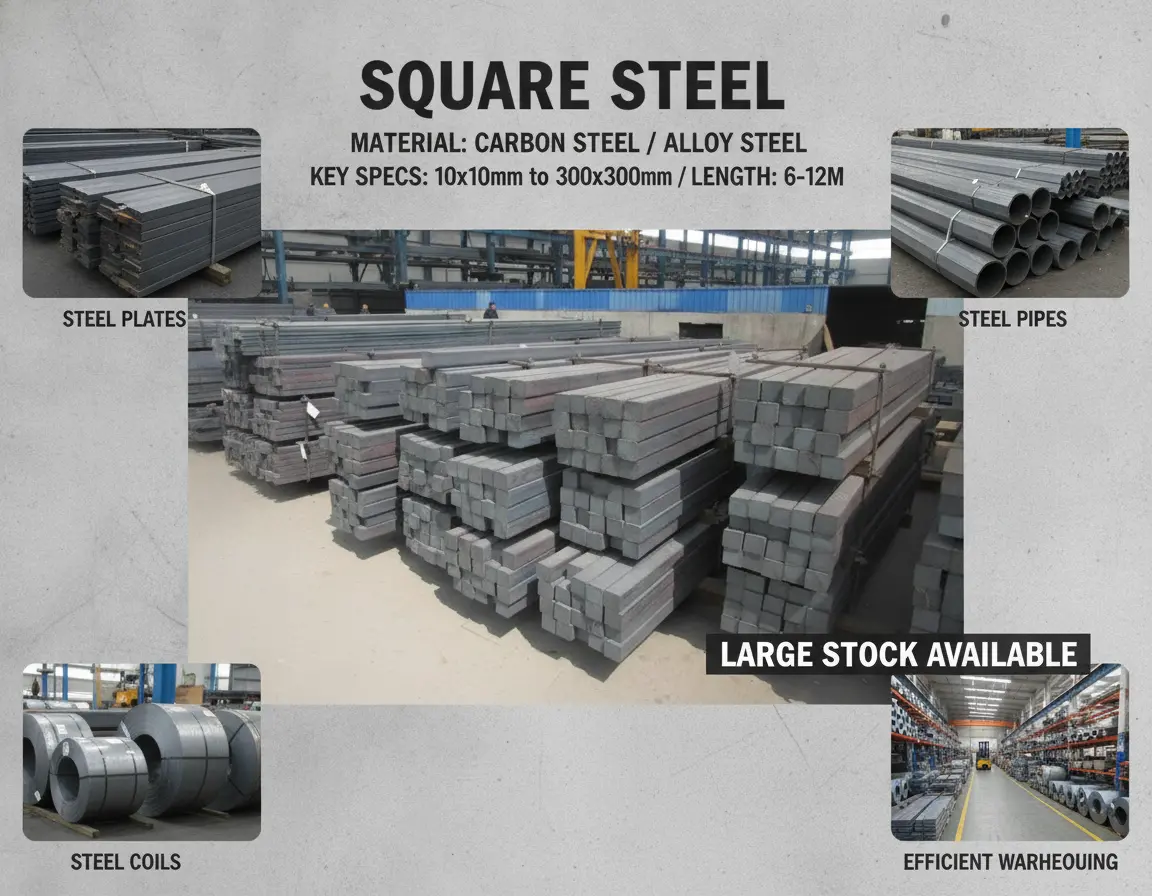
Structural and General Fabrication
Fabricators use solid square bar for brackets, supports, stiffeners, railings, security grilles, gate components, base details, and welded frames. Low-carbon structural grades are often preferred where forming and weldability are more important than heat-treatment response. For load-bearing construction, the designer must verify that the selected standard and section satisfy the project calculations and applicable building regulations. Related structural steel products are listed at [[INTERNAL_LINK]].
Machinery and Equipment Components
Machining workshops convert square steel into keys, blocks, guides, spacers, fixtures, tool holders, and equipment parts. Flat sides simplify workholding and orientation during milling or drilling. Cold-drawn material may reduce initial machining, while hot-rolled material can be appropriate where more stock removal is planned. Engineering grades should be selected according to required strength, hardness, toughness, and heat-treatment response.
Agricultural and Material-Handling Equipment
Square bar can be fabricated into supports, adjustment elements, wear components, linkages, and repair parts used in agricultural implements or material-handling systems. These applications may involve impact, abrasion, cyclic loading, or outdoor exposure. The purchaser should therefore specify whether a general structural grade is sufficient or whether an alloy grade, heat treatment, or protective coating is necessary.
Fasteners, Forgings, and Custom Hardware
Manufacturers use square steel as feedstock for forged hardware, special fasteners, clamps, anchors, hand tools, and custom industrial fittings. For forging applications, chemical composition, internal soundness, surface condition, and heat-treatment response can be more important than the nominal tensile properties of the as-supplied bar. Buyers should communicate the final manufacturing route so the supplier can evaluate suitable material specifications. See [[INTERNAL_LINK]] for related forging stock.
Architectural Metalwork
Solid square sections are used in exposed balustrades, screens, gates, furniture frames, and decorative metalwork. Visual applications require additional agreement on corner consistency, scale removal, grinding, weld dressing, and coating preparation. Bare carbon steel is susceptible to atmospheric corrosion, so painting, powder coating, galvanizing, plating, or another protection system may be required for the service environment.
How to Choose Square Steel / Buying Guide
A reliable square steel quotation starts with a technically complete inquiry. Procurement managers should issue a line-by-line requirement rather than relying on a product name alone. The following points reduce commercial ambiguity and help suppliers calculate material utilization, processing time, packing weight, and production scheduling.
- Define the standard and full grade. State ASTM A36/A36M, an ASTM engineering grade used with ASTM A29/A29M, EN 10025-2 S355JR, JIS G 3101 SS400, GB/T 700 Q235B, or the exact project specification. Avoid requesting an “equivalent” grade unless substitution criteria have been approved.
- Specify the production condition. Identify hot rolled, cold drawn, forged, peeled, ground, machined, normalized, annealed, quenched and tempered, or another required condition. The condition affects tolerance, surface, mechanical performance, machinability, and cost.
- List dimensions and tolerances. Provide nominal side length, bar length, length tolerance, side tolerance, straightness, corner condition, and cut-end requirements. Include a drawing for finished pieces or parts with nonstandard tolerances.
- Confirm quantity and MOQ. Request the minimum order quantity for each grade and size. MOQ varies with stock availability, mill production requirements, cutting setup, and whether the dimensions are standard or custom. Combining unrelated grades does not necessarily satisfy a mill minimum.
- Request the correct certification. State whether a manufacturer’s test certificate is required and identify the document type. EN 10204 defines inspection documents including Type 2.2, Type 3.1, and Type 3.2. Type 3.1 is frequently requested for traceable commercial supply, while Type 3.2 requires additional validation arrangements that must be agreed before production.
- Identify supplementary inspection. Chemical analysis, tensile testing, impact testing, hardness, ultrasonic examination, dimensional inspection, or third-party inspection should be specified during the inquiry. Additional testing can affect price and lead time and may not be possible after material has been cut.
- Clarify lead time. Ask the supplier to separate stock preparation time from new-production lead time. Custom rolling, heat treatment, laboratory testing, machining, coating, and third-party witnessing can extend the schedule. Lead time should be reconfirmed after technical approval and payment arrangements.
- Agree export packaging and logistics. Specify bundles, lifting points, piece marking, protective wrapping, rust prevention, package weight limits, and destination handling constraints. For long bars, verify loading feasibility and available transport equipment. A guide to export steel packaging is available through [[INTERNAL_LINK]].
Commercial comparison should use the same delivery basis. Check whether offers include cutting loss, testing, certificates, packing, inland transport, freight, insurance, duties, and destination charges. Payment method and credit terms depend on order value, transaction history, banking conditions, and supplier policy. They should be confirmed in the formal quotation and sales contract rather than inferred from previous orders.
Square Steel Frequently Asked Questions
Q: What is the difference between square steel bar and square hollow section?
A: Square steel bar is solid throughout its cross-section, while square hollow section is a welded or seamless tube with an internal cavity and specified wall thickness. Solid bar is commonly selected for machining, forging, concentrated loading, and compact fabricated components. Hollow section provides a more efficient strength-to-weight relationship in many frames and columns. The correct choice must be based on engineering calculations and the intended fabrication process.
Q: What is the difference between hot-rolled and cold-drawn square steel?
A: Hot-rolled square steel generally has mill scale, less restrictive dimensional tolerances, and corner characteristics associated with hot forming. Cold-drawn bar normally provides closer dimensions, improved straightness, and a smoother surface. Cold working can increase strength and hardness while reducing ductility and introducing residual stress. Buyers should specify the manufacturing condition instead of comparing the two products only by nominal size.
Q: Can ASTM A36, S235JR, SS400, and Q235B be treated as equivalent grades?
A: No automatic equivalence should be assumed. These grades are governed respectively by ASTM A36/A36M, EN 10025-2, JIS G 3101, and GB/T 700. Their property ranges may overlap, but chemical composition, test methods, thickness rules, impact requirements, and documentation can differ. Any substitution should be reviewed against the drawing, design code, welding procedure, and end-user approval requirements.
Q: Can a material test certificate be supplied with square steel?
A: Inspection documents can be requested, subject to the material source and order arrangement. The inquiry should state the required certificate type, such as an EN 10204 Type 3.1 inspection certificate, and identify any project-specific reporting fields. Buyers should also request heat-number traceability if pieces must remain linked to the original certificate after cutting. Certification requirements need to be agreed before order confirmation.
Q: What is the minimum order quantity for custom square steel?
A: There is no universal MOQ. It depends on whether the grade and dimension are available from stock, whether a new mill campaign is needed, and whether cutting, drawing, forging, machining, testing, or special packaging is required. Buyers should provide the required kilograms or metric tons per size and grade. The supplier can then confirm a stock-based minimum or a production-based minimum in the quotation.
Q: What payment methods are available for an overseas order?
A: Available methods depend on supplier policy, order value, destination, transaction history, currency, and banking compliance. Commercial arrangements may use bank transfer or a letter of credit where mutually accepted, but no method should be assumed before quotation. The sales contract should clearly state the deposit or credit structure, balance trigger, bank charges, document requirements, and payment deadline.
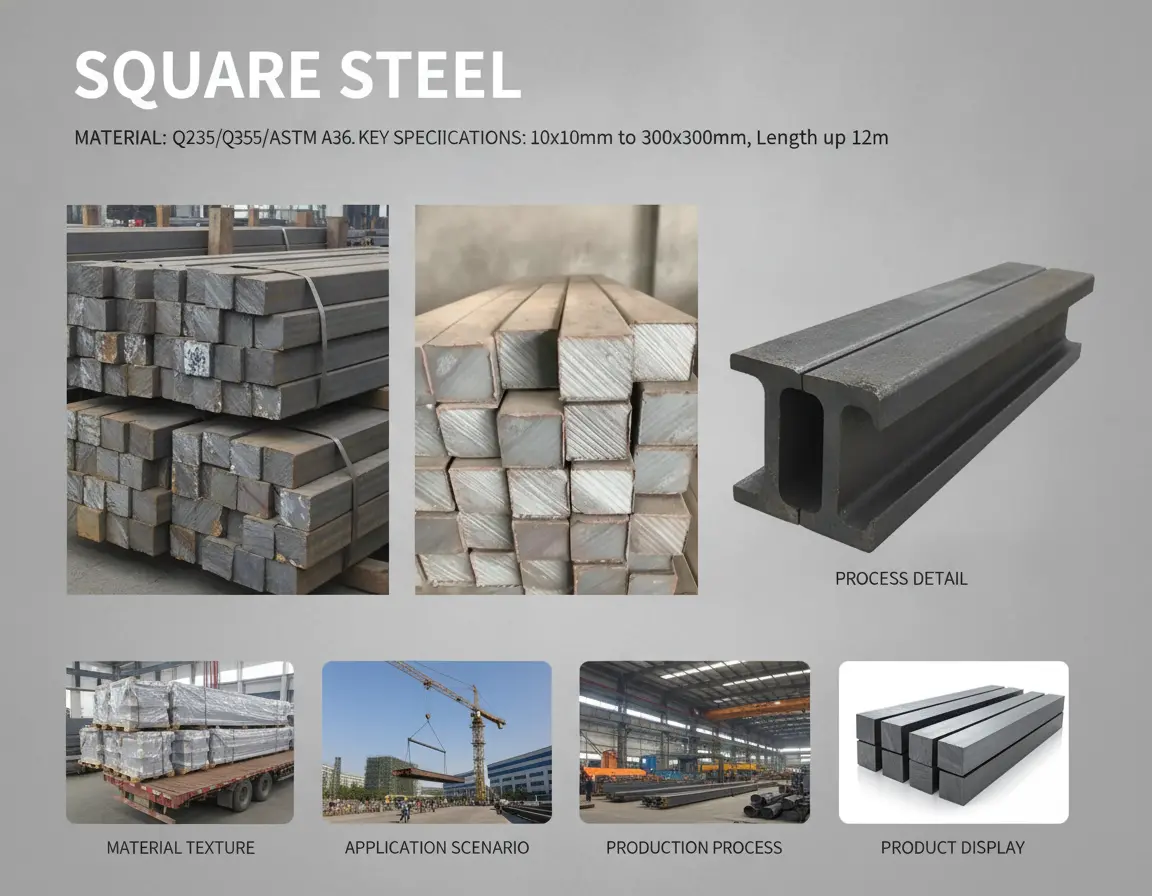
Q: How long does square steel production and delivery take?
A: Lead time varies according to stock status, grade, section size, quantity, manufacturing condition, testing, cutting, coating, and packaging. Stock material with straightforward cutting can usually be prepared faster than custom-rolled, cold-drawn, forged, or heat-treated bars. International transit is separate from production time and depends on the agreed logistics route and destination. Request a written schedule after all technical details are approved.
Q: Can square steel be cut to fixed lengths or supplied as machined pieces?
A: Fixed-length cutting and further processing may be available, subject to dimensional capability and order quantity. The buyer should provide length tolerance, cut method, end condition, burr requirements, machining allowance, and a controlled drawing when applicable. Finished dimensions should not be assumed from nominal bar dimensions. Inspection criteria and responsibility for final machining must be agreed in the purchase order.
Q: Is carbon square steel suitable for welding?
A: Many low-carbon structural grades are commonly used in welded fabrication, but weldability is grade- and thickness-dependent. The fabricator must consider chemical composition, carbon equivalent, restraint, heat input, consumables, preheat, post-weld treatment, and the applicable welding code. A qualified welding procedure should govern critical work. Alloy and higher-carbon grades may require more restrictive controls than general structural steel.
Q: How should square steel be protected during ocean transport?
A: Packaging should account for humidity, salt exposure, condensation, handling, and storage duration. Depending on the surface requirement, protection may include secure bundling, separators, waterproof wrapping, desiccant, temporary rust preventive, protected labels, and suitable lifting points. The required package weight and corrosion-protection method should be stated before shipment, especially for precision cold-drawn or machined surfaces.
Send your square steel inquiry with the standard, grade, side dimension, length, tolerance, surface or delivery condition, quantity, certificate requirement, destination, and requested delivery schedule. Drawings are recommended for cut or machined components. Contact the supply team to confirm manufacturing feasibility, MOQ, current lead time, export packaging, and a project-specific wholesale quotation.
Ratings & Reviews

Know your supplier
Supplier's customization ability
- Drawing-based customization
- Sample-based customization
- Full customization
Minimum order quantity: 2 ton
Shipping total: To be negotiated
- Lead time:
- confirmed with the quotation
- Packaging:
- standard export packing
- Samples:
- available on request