 English
 Español
 Français
 Deutsch
 Português (Brasil)
 Русский
 العربية

Slide Gate Manufacturer | Heavy-Duty Steel Slide Gate for Industrial Applications

 China



Supplier's customization ability
- Drawing-based customization
- Sample-based customization
- Full customization
Minimum order quantity: 1 pieces
Shipping total: To be negotiated
- Lead time:
- confirmed with the quotation
- Packaging:
- standard export packing
- Samples:
- available on request
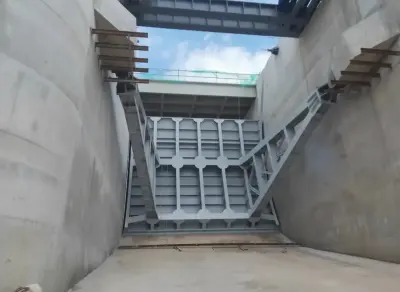
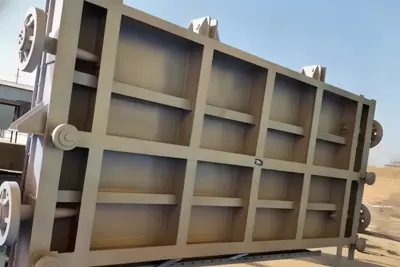
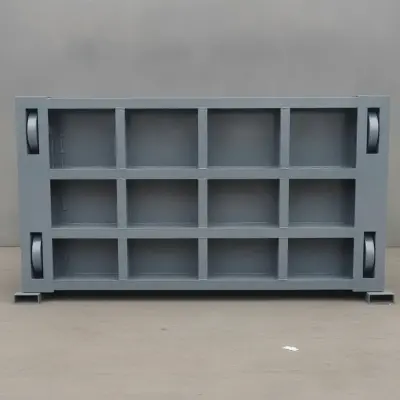
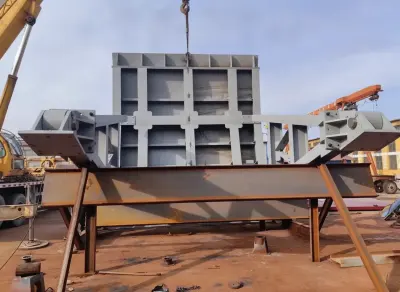

Product details
Technical Specifications for Steel Slide Gate
| Parameter | Technical Specification |
|---|---|
| Product Name | Slide Gate |
| Product Type | Slide Gate Flow Control System for Steelmaking and Continuous Casting |
| Main Application | Used for opening, closing, and precise control of molten steel flow in ladles, tundishes, and molten steel transfer equipment |
| Applicable Medium | High-temperature molten steel |
| Structural Design | Slide gate mechanism, refractory slide plates, drive system, clamping mechanism, and guide components |
| Drive Type | Hydraulic or pneumatic drive, depending on equipment configuration |
| Control Mode | Manual, semi-automatic, or automatic control; supports integration with continuous casting control systems |
| Slide Plate Material | High-temperature refractory materials, commonly alumina-carbon, alumina-zirconia-carbon, or other customized refractory materials |
| Gate Body & Frame Material | High-strength heat-resistant steel or alloy steel welded structure |
| Nominal Bore | Customized according to ladle capacity, molten steel flow rate, and nozzle specifications |
| Operating Temperature | Designed for high-temperature molten steel casting conditions; actual operating temperature depends on refractory materials and process conditions |
| Sealing & Clamping | Spring-loaded, hydraulic, or mechanical clamping system to ensure proper contact between slide plates and reduce the risk of molten steel leakage |
| Flow Control | Continuous molten steel flow regulation through slide plate opening, supporting opening, closing, and throttling operations |
| Refractory Replacement | Modular design for quick replacement of slide plates, upper and lower nozzles, and related refractory components |
| Safety Configuration | Optional position detection, pressure monitoring, abnormal-condition alarms, rapid shut-off, and misoperation prevention devices |
| Installation Method | Bottom-mounted installation for ladles or tundishes; mounting interfaces can be customized according to equipment dimensions |
| Maintenance Requirements | Regular inspection of slide plate wear, clamping force, drive mechanism, guide components, and refractory condition |
| Customization Options | Customized according to ladle specifications, casting process, molten steel flow rate, installation space, and automation requirements |
Slide Gate Manufacturer | Heavy-Duty Steel Slide Gate for Industrial Applications
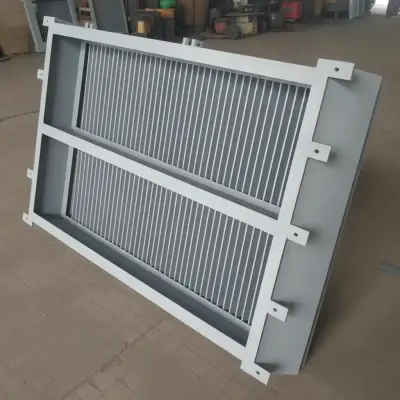
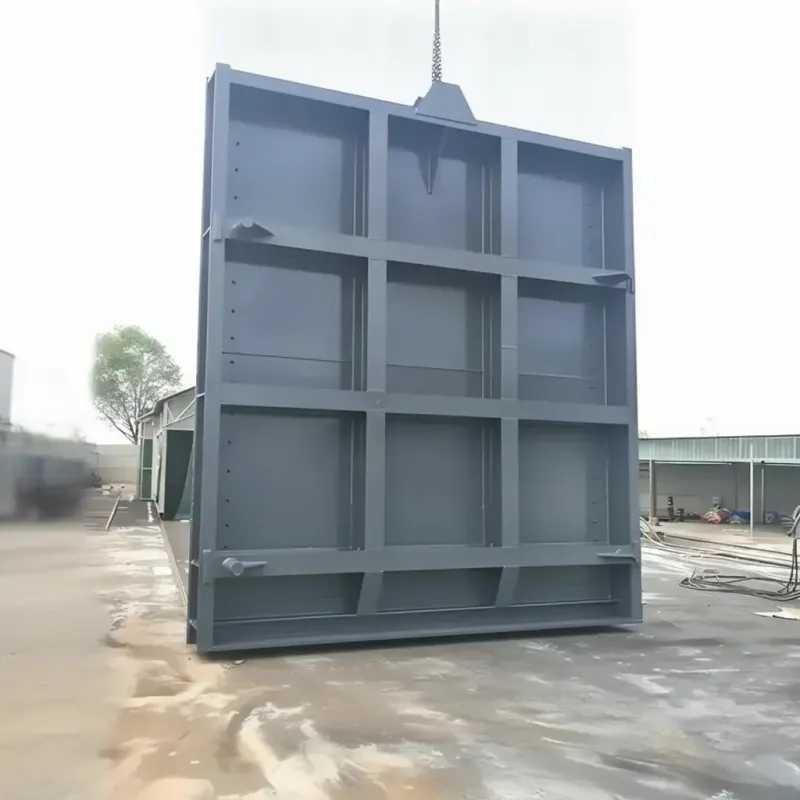
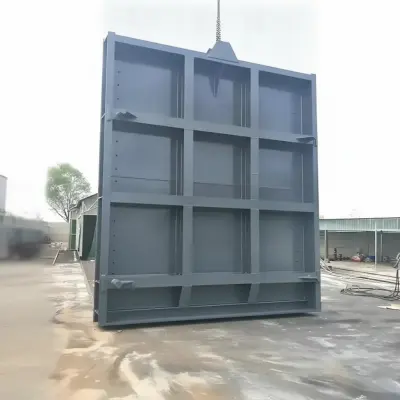
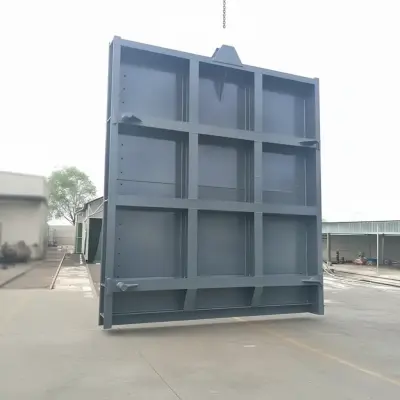
A slide gate is a manually operated or automated steel isolation device designed to control, stop, or divert the flow of dry bulk solids, powders, granules, and selected process materials in industrial systems. This product is commonly specified by cement plants, mining companies, aggregate processors, grain handlers, power stations, wastewater facilities, and equipment manufacturers that need a dependable shut-off point in a chute, hopper, silo, conveyor, or transfer line. A properly selected Slide Gate combines a rigid steel frame, a guided sliding plate, suitable sealing arrangements, and an actuation method matched to the operating environment. The result is more controlled material handling, easier maintenance access, and a practical interface with upstream and downstream equipment.
Product Overview: Slide Gate Construction and Function
A Slide Gate is a gate valve or isolation gate in which a flat plate travels through guides to open or close a material passage. In open position, the plate moves clear of the flow path. In closed position, it blocks the opening and helps isolate equipment for inspection, cleaning, process changeover, or emergency shutdown. Unlike a regulating valve designed for precise throttling, a Slide Gate is generally selected for isolation, discharge control, or coarse flow control. The suitability of a particular design depends on the material being handled, temperature, pressure, particle size, moisture, abrasiveness, and required cycle frequency.
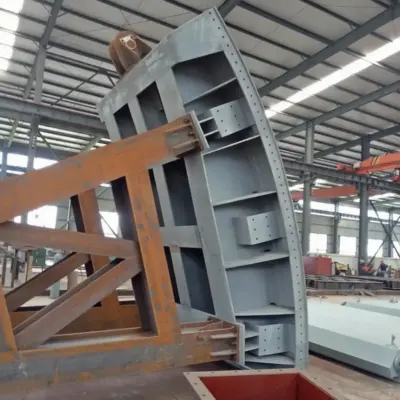
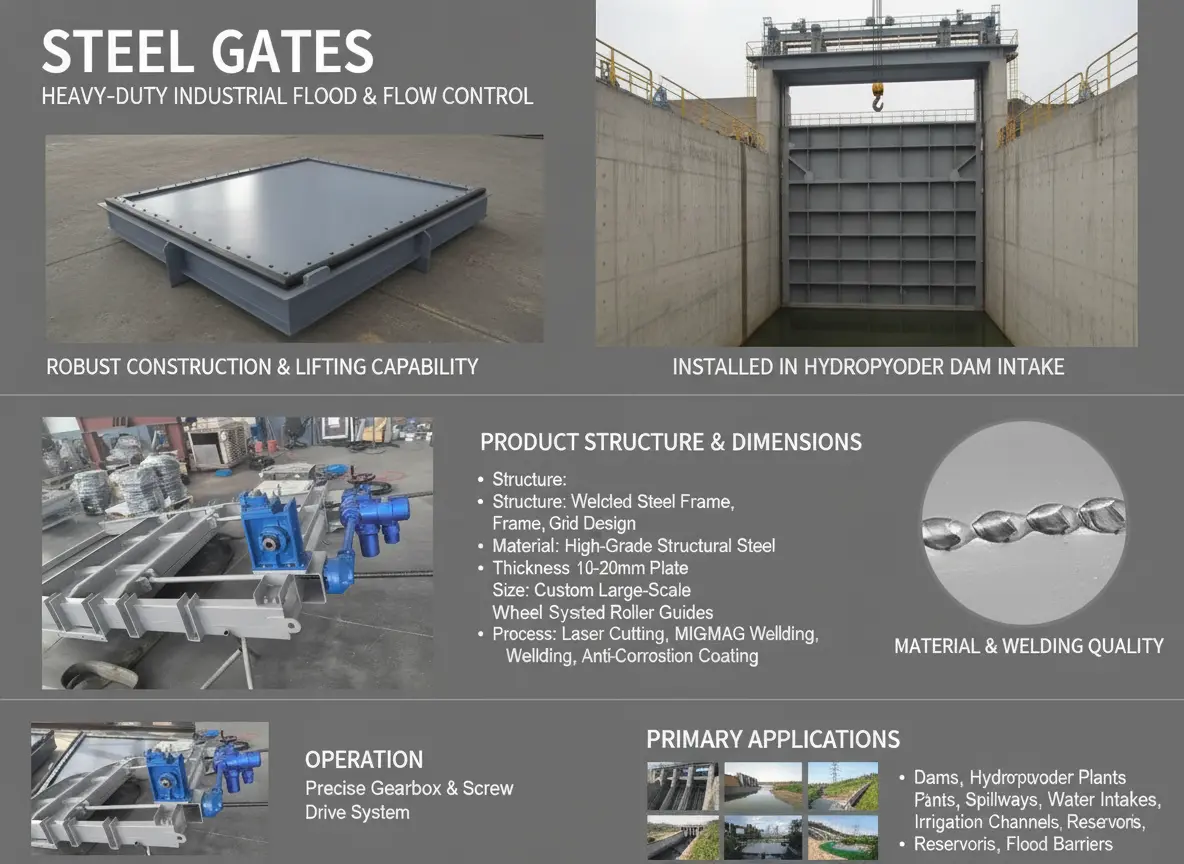
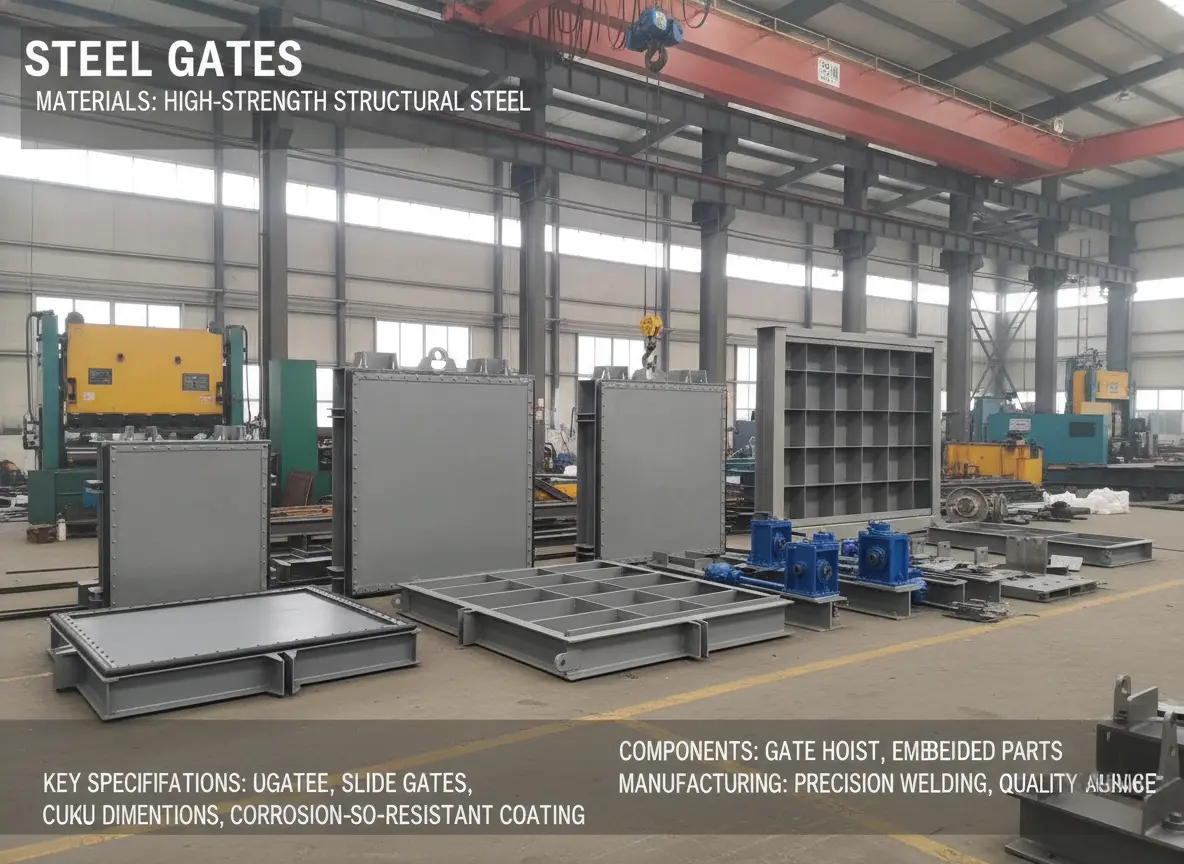
Industrial Slide Gate bodies are typically fabricated from carbon steel, stainless steel, or another specified alloy. Carbon steel is often used for general dry-bulk applications where corrosion exposure is controlled. Stainless steel can be considered where washdown, humidity, food-process conditions, or corrosive materials place greater demands on the wetted or exposed surfaces. The gate plate may use a plain steel construction, a reinforced design, or a wear-resistant material selection when abrasive solids are expected. Surface preparation and coating requirements should be stated in the purchase specification rather than assumed.
The main components commonly include a fabricated body or frame, sliding plate, guide rails, seals or packing, mounting flange, handwheel or lever, and optional pneumatic, hydraulic, electric, or geared actuator. A rack-and-pinion, screw, chain, or cylinder arrangement may be used according to gate size and operating force. Accessible inspection points and replaceable wear parts can reduce maintenance time, especially in installations where the gate is positioned above a hopper or inside a transfer tower. For related material-handling equipment, buyers may also review [[INTERNAL_LINK]] and [[INTERNAL_LINK]].
Design details should address alignment and deflection. A gate that is too thin for its opening may distort under load, while inadequate guide clearance can cause binding when dust accumulates or the frame changes temperature. Seals should be selected with awareness of the conveyed material: fine powder may require a different sealing arrangement from coarse aggregate. The supplier should confirm whether the gate is intended to operate under a material head, whether it may be closed while loaded, and whether it is suitable for continuous cycling.
Specifications & Standards for Slide Gate
Slide Gate specifications should be finalized from the installation duty rather than from nominal opening size alone. The purchase inquiry should identify clear opening width and height, body dimensions, face-to-face or overall length, connection type, mounting orientation, plate thickness, material grades, operating temperature, pressure or material head, actuation, sealing method, and finish. If the gate forms part of a larger pressure-containing system, the applicable pressure design code must be confirmed by the responsible engineer. A dry-bulk isolation gate and a pressure-rated process valve are not automatically interchangeable.
| Specification area | Information to define | Why it matters |
|---|---|---|
| Nominal opening | Clear width and height, or nominal line size | Determines throughput, fit, and interface with connected equipment |
| Body and plate material | Carbon steel, stainless steel, or specified alloy | Influences strength, corrosion resistance, wear life, and fabrication method |
| Operating duty | Isolation, discharge, intermittent control, or frequent cycling | Sets actuator, guide, seal, and structural requirements |
| Material handled | Powder, grain, clinker, coal, ore, aggregate, ash, or other solids | Determines abrasion, dust sealing, bridging, and plate-load considerations |
| Temperature and environment | Normal and maximum temperature, humidity, washdown, outdoor exposure | Guides material, coating, gasket, and actuator selection |
| Connection | Flanged, bolted, welded, square, rectangular, or custom interface | Controls installation compatibility and field modification risk |
| Actuation | Manual, pneumatic, electric, hydraulic, or geared | Must provide adequate force and integrate with plant controls |
International standards should be applied according to the gate design and the contract scope. ASTM material standards may be used to define steel plate, structural sections, stainless steel, fasteners, or other purchased materials; the exact ASTM designation should match the material grade and product form. EN standards may apply to steel products, structural fabrication, welding quality, machinery safety, or conformity documentation. JIS material or fabrication standards may be requested for projects designed to Japanese specifications, while GB/T standards may govern Chinese material supply, welding, dimensions, or inspection. The buyer should name the required standard and edition in the inquiry, because “ASTM steel” or “EN compliant” is not sufficiently precise.
For structural steelwork, EN 10025-2 may be relevant where the project specifies hot-rolled non-alloy structural steel products, subject to grade and product-form confirmation. For stainless steel products, EN 10088-2 or an applicable ASTM stainless-steel specification may be considered. Welding quality and execution may require standards such as ISO 3834 or EN 1090-2 when the gate is treated as fabricated structural equipment; applicability should be confirmed by the engineering and inspection teams. Machinery safety and guarding requirements may also be relevant where the actuator, moving plate, or pinch points are accessible to operators.
Material chemistry and mechanical properties should not be invented when the reference documentation does not state a grade. The manufacturer should provide a material certificate identifying the supplied grade, heat or batch reference where applicable, and the governing standard. If a project requires a chemical composition or tensile, yield, and elongation table, those values should be taken from the selected standard and confirmed against the mill certificate. Buyers can use [[INTERNAL_LINK]] to request the relevant material documentation and [[INTERNAL_LINK]] for inspection options.
Typical quality documentation may include a dimensional inspection report, weld visual inspection record, coating report, actuator test record, operating test, packing list, and certificate of conformity. A pressure test should only be specified when the product is designed and rated for that test. For dust-tight service, the buyer should define the acceptance method for leakage or sealing performance rather than relying on a general statement. Electrical actuators may require separate requirements for voltage, enclosure protection, cable entries, limit switches, and hazardous-area certification.
Applications of Slide Gate in Industrial Systems
A Slide Gate is used in a broad range of bulk-material systems, but each application imposes different design priorities.
- Cement and concrete production: Slide Gates can isolate hoppers, clinker transfer points, dust collectors, weigh feeders, and storage equipment. Abrasion from clinker, cement, and mineral additives makes plate and guide selection important.
- Mining and aggregate handling: Gates are installed below bins, at crusher discharge points, and along conveyors to isolate equipment or control the discharge of ore, stone, sand, and gravel. Structural stiffness and wear resistance are often more important than compact dimensions.
- Grain and food-related bulk handling: Gates may be used beneath silos, bins, and feeders. Buyers should specify cleanability, corrosion resistance, suitable coatings, and any food-contact or hygiene requirements that apply to the installation.
- Power generation and ash handling: Coal, fly ash, bottom ash, and other residues can demand dust control, abrasion resistance, and reliable operation in warm or difficult-to-access areas.
- Wastewater and environmental equipment: A Slide Gate may isolate channels, screens, hoppers, sludge-handling equipment, or dry solids systems. Corrosion exposure, washdown, and actuator protection should be included in the duty description.
For a custom system, the gate should be reviewed together with the chute, hopper angle, feeder, conveyor, and support steel. A correctly sized opening can still perform poorly if the surrounding equipment allows material to bridge above the plate or imposes uneven loading. Additional product information for adjacent equipment can be found through [[INTERNAL_LINK]], [[INTERNAL_LINK]], and [[INTERNAL_LINK]].
How to Choose / Buying Guide for Slide Gate
Purchasing managers should begin with a complete duty sheet. State the material name, bulk density if known, particle size range, moisture, abrasiveness, temperature, corrosiveness, flow direction, expected material head, and whether the gate opens or closes while loaded. Include the available installation drawing and the dimensions of the connected flange or chute. Photographs of the installation can help the manufacturer identify access, support, and actuator-clearance constraints.
Next, define the required opening and operating duty. A gate used once a month for maintenance isolation has different requirements from one cycling every few minutes beneath a feeder. Frequent cycling may justify an automated actuator, replaceable wear components, position feedback, and more robust guides. Manual operation can be practical for smaller or infrequently operated gates, but the handwheel force and operator access should be checked. Pneumatic actuation requires clean, adequate air supply and suitable control components; electric actuation requires power, protection, controls, and environmental compatibility.
Material and finish are equally important. Carbon steel may be suitable for dry indoor service, while stainless steel, galvanizing, or a specified coating system may be required outdoors or in humid environments. Do not select a coating solely by color. Specify surface preparation, coating type, dry-film thickness, and repair requirements when corrosion protection is contractually important. For abrasive solids, ask whether the plate, guides, liners, and seals are replaceable and whether the manufacturer can provide expected wear-part dimensions.
Certification should be agreed before production. Depending on the destination and project, the document package may include a certificate of conformity, material certificates, welding records, dimensional reports, coating records, actuator documentation, and inspection or testing results. CE-related requirements, UKCA requirements, local machinery regulations, or hazardous-area certification may apply to the complete assembly or actuator. The exporter should confirm what it can supply and what must be provided by the integrator.
MOQ, lead time, packaging, and logistics should be quoted as project-specific commercial terms. There is no universal minimum order quantity or standard delivery period for every Slide Gate because size, material, actuation, customization, testing, and production loading can change the offer. Ask for the proposed Incoterm, packing method, shipping dimensions, gross weight, export documents, and spare-parts recommendation. For overseas shipments, verify whether the gate is protected against moisture and whether the crate or pallet is suitable for the chosen transport route.
Payment terms should appear clearly in the quotation and sales contract. Common arrangements may involve an advance payment with the balance before shipment, documentary arrangements, or another mutually agreed method, but the applicable terms depend on the supplier, order value, destination, and commercial relationship. Request a formal quotation that separates the base gate, actuator, accessories, inspection, spare parts, packaging, freight, and any certification charges. Use [[INTERNAL_LINK]] to compare the supplier's related export and documentation services.
Frequently Asked Questions About Slide Gate
Q: What is the difference between a Slide Gate and a knife gate valve?
A: Both use a moving plate, but their intended duties can differ. A Slide Gate is commonly used in dry-bulk handling equipment such as hoppers, chutes, silos, and feeders. A knife gate valve is more often specified for fluid, slurry, or other process piping applications, depending on its design and rating. The correct choice depends on the medium, pressure, temperature, sealing requirements, and applicable code.
Q: Which material should I choose for a Slide Gate?
A: The choice depends on corrosion, abrasion, temperature, hygiene, and structural duty. Carbon steel is often considered for general industrial dry solids, while stainless steel may be appropriate for corrosive, humid, washdown, or hygiene-sensitive service. The plate and wear components may require a different material or liner from the frame. Provide the complete operating environment so the manufacturer can recommend a documented grade.
Q: Can a Slide Gate be supplied with an actuator?
A: Yes, a gate may be configured for manual, pneumatic, electric, hydraulic, or geared operation when the design supports it. The actuator must be sized for the plate load, friction, material head, temperature, and required cycle time. The order should also define controls, limit switches, position feedback, enclosure protection, power supply, and any hazardous-area requirements.
Q: What certifications can I request with a Slide Gate?
A: Certification depends on the project and destination. Buyers may request material certificates, a certificate of conformity, dimensional and operating inspection records, weld documentation, coating records, actuator documentation, and applicable machinery or electrical compliance documents. If CE, UKCA, ATEX, or another local requirement applies, identify it before quotation so responsibility for the complete assembly is clear.
Q: What is the minimum order quantity for a Slide Gate?
A: MOQ is supplier-specific and may vary by standard size, custom dimensions, material, actuator, and production arrangement. Some manufacturers may quote a single custom gate, while others may apply commercial conditions to small orders or special fabrication. Request the MOQ, sample or prototype policy, and any tooling or engineering charges in writing.
Q: What is the usual delivery time for a Slide Gate?
A: Delivery time depends on design approval, material availability, fabrication capacity, coating, actuator procurement, testing, and export preparation. A standard manual unit may follow a different schedule from a large automated gate with project documentation. Ask the supplier to state the lead time from drawing approval or down payment, and confirm the estimated shipment date in the purchase order.
Q: Which payment methods are available for overseas Slide Gate orders?
A: Available payment methods vary by supplier and transaction. The quotation may offer an advance and balance arrangement, documentary payment, bank transfer, or another agreed method. Confirm the currency, beneficiary details through an authorized channel, payment milestones, inspection conditions, and whether bank charges are included.
Q: How should a Slide Gate be packed for export?
A: The gate should be protected against movement, impact, moisture, and contamination during handling and transport. Ask for suitable crating or palletizing, actuator protection, sealed documentation, lifting points, shipping marks, net and gross weights, and package dimensions. Wood packaging should meet the importing country's applicable treatment and marking requirements where required.
Request a Slide Gate Quote
Send the required opening, material handled, operating conditions, connection dimensions, actuation preference, destination, quantity, and documentation requirements to a qualified Slide Gate manufacturer. A drawing, equipment layout, or installation photograph can reduce clarification time. Request a technical proposal, applicable standards, inspection scope, commercial terms, packing details, and estimated lead time so the offer can be compared on engineering and total-delivery criteria. Contact the supplier to request a tailored quotation and confirm the configuration before placing your order.
Ratings & Reviews

Know your supplier
Supplier's customization ability
- Drawing-based customization
- Sample-based customization
- Full customization
Minimum order quantity: 1 pieces
Shipping total: To be negotiated
- Lead time:
- confirmed with the quotation
- Packaging:
- standard export packing
- Samples:
- available on request