 English
 Español
 Français
 Deutsch
 Português (Brasil)
 Русский
 العربية

Angle Steel Supplier | Hot Rolled Carbon Steel Angles for Construction

 China


Supplier's customization ability
- Drawing-based customization
- Sample-based customization
- Full customization
Minimum order quantity: 5 ton
Shipping total: To be negotiated
- Lead time:
- confirmed with the quotation
- Packaging:
- standard export packing
- Samples:
- available on request
Product details
Angle Steel Technical Specifications
| Property | Specification |
|---|---|
| Product Name | Angle Steel / Steel Angle Bar |
| Profile Types | Equal Angle Steel, Unequal Angle Steel |
| Common Standards | ASTM A36/A36M, ASTM A572/A572M, EN 10025, JIS G3101, GB/T 706 |
| Common Steel Grades | A36, A572 Gr.50, S235JR, S275JR, S355JR, SS400, Q235B, Q355B |
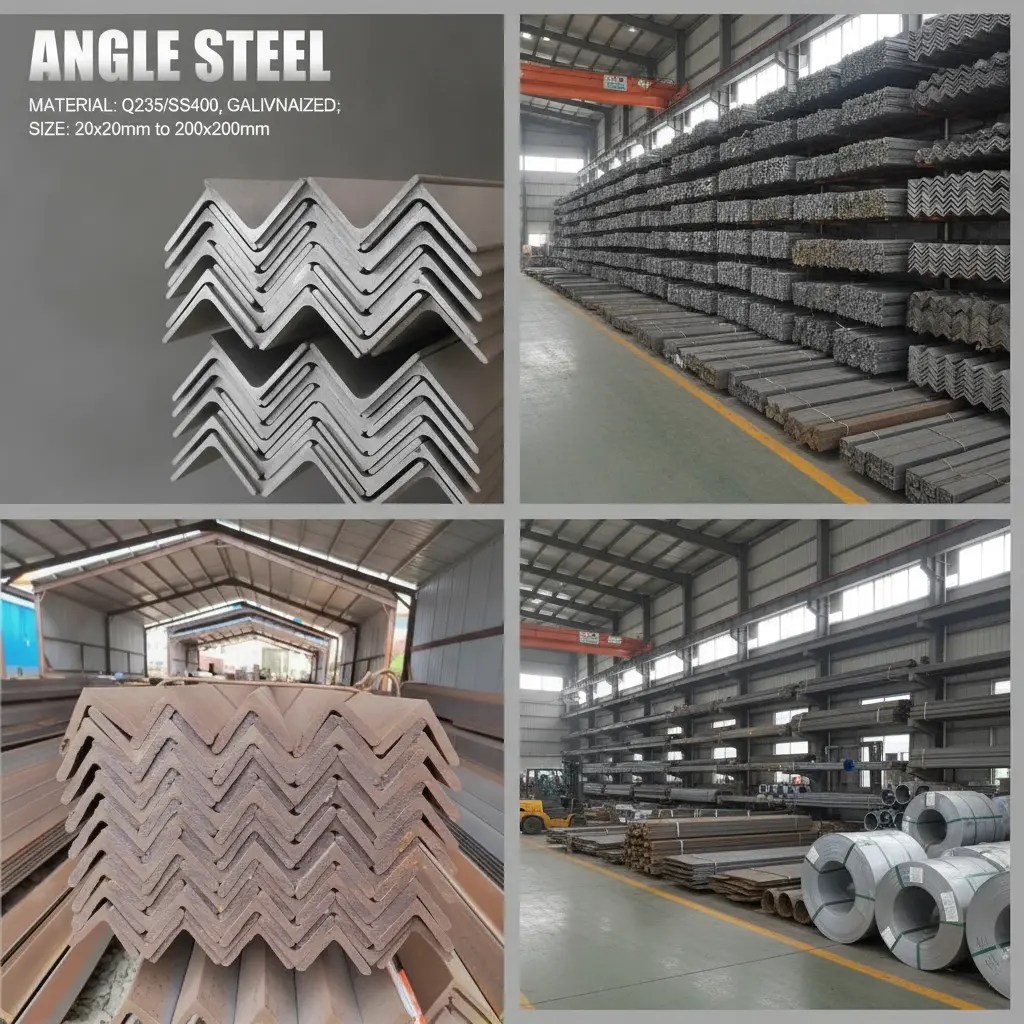
| Manufacturing Process | Hot Rolled or Cold Formed |
| Leg Width | 20–250 mm or customized |
| Thickness | 3–35 mm or customized |
| Standard Length | 6 m, 9 m, 12 m or customized |
| Surface Treatment | Black, Pickled and Oiled, Hot-Dip Galvanized, Painted, Shot Blasted |
| Dimensional Tolerance | According to applicable ASTM, EN, JIS or GB standard |
| Testing and Inspection | Chemical Analysis, Tensile Test, Dimensional Inspection, Surface Inspection |
| Quality Documents | Mill Test Certificate EN 10204 3.1; third-party inspection available |
| Typical Applications | Structural Frames, Steel Towers, Bridges, Machinery, Shelving, Bracing and General Fabrication |
| Processing Services | Cutting, Drilling, Punching, Welding, Bending and Galvanizing |
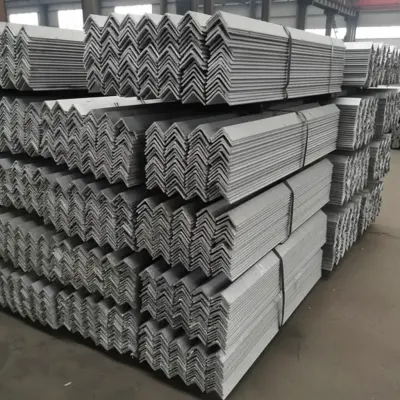
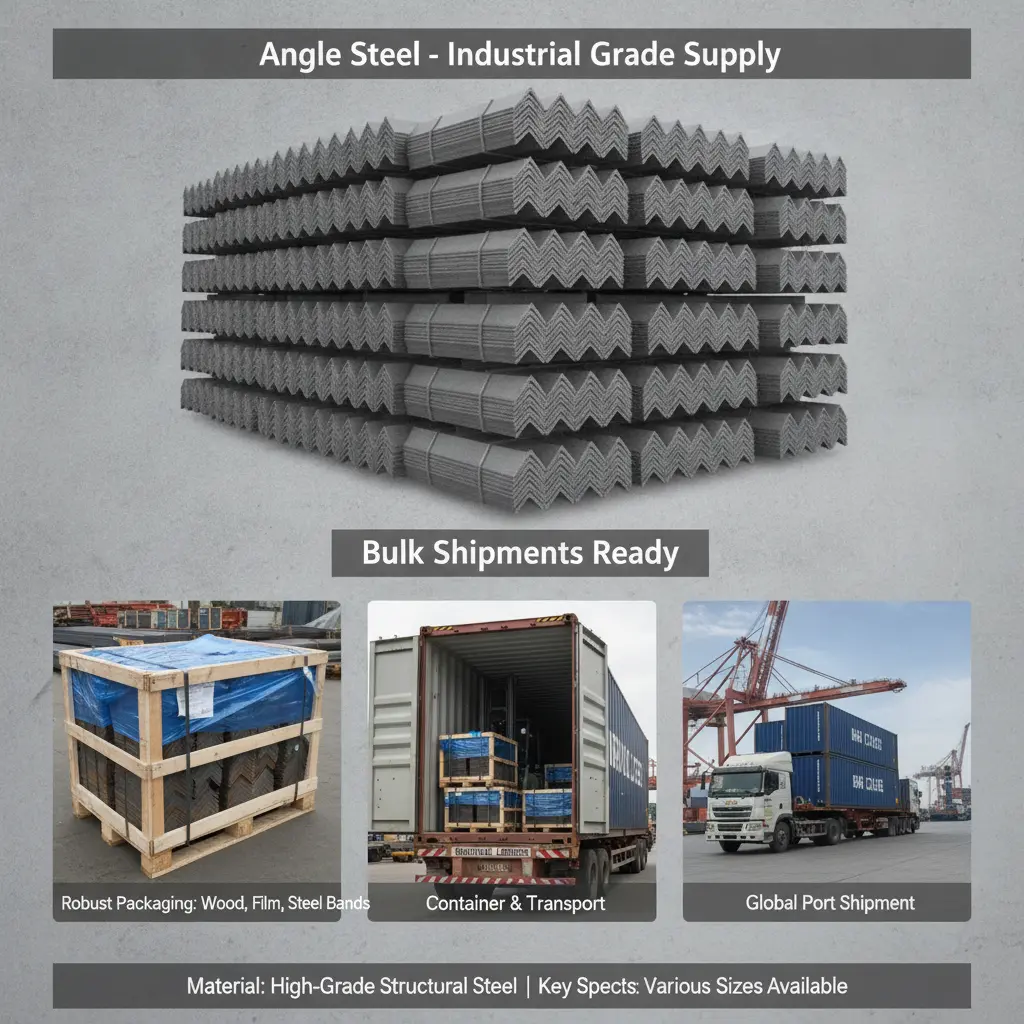
| Packaging | Steel Bundles with Straps; export seaworthy packing available |
| Customization | Grade, dimensions, length, coating and fabrication can be supplied to project requirements |
Angle Steel Supplier | Hot Rolled Carbon Steel Angles for Construction
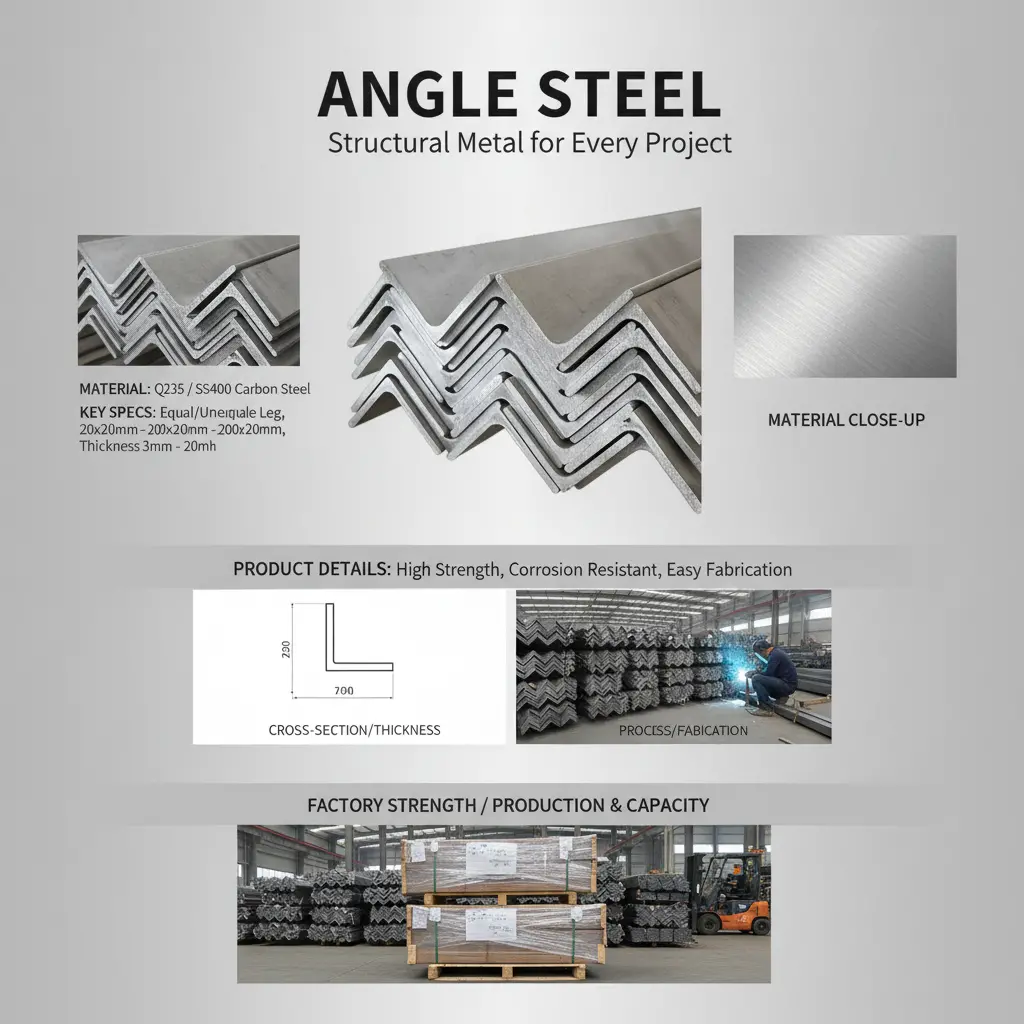
Angle steel is a hot-rolled structural section with two perpendicular legs that provides an efficient combination of load-bearing capacity, connection flexibility, and economical material use. It is widely sourced by construction contractors, steel fabricators, infrastructure developers, equipment manufacturers, and international distributors for frames, bracing, supports, platforms, and general fabrication. Available as equal or unequal angles, the product can be supplied in different dimensions, structural grades, surface conditions, and processing states. Overseas procurement teams can specify the required standard, grade, leg dimensions, thickness, length, tolerances, inspection documents, and corrosion-protection treatment to match their engineering and import requirements.
Angle Steel Product Overview
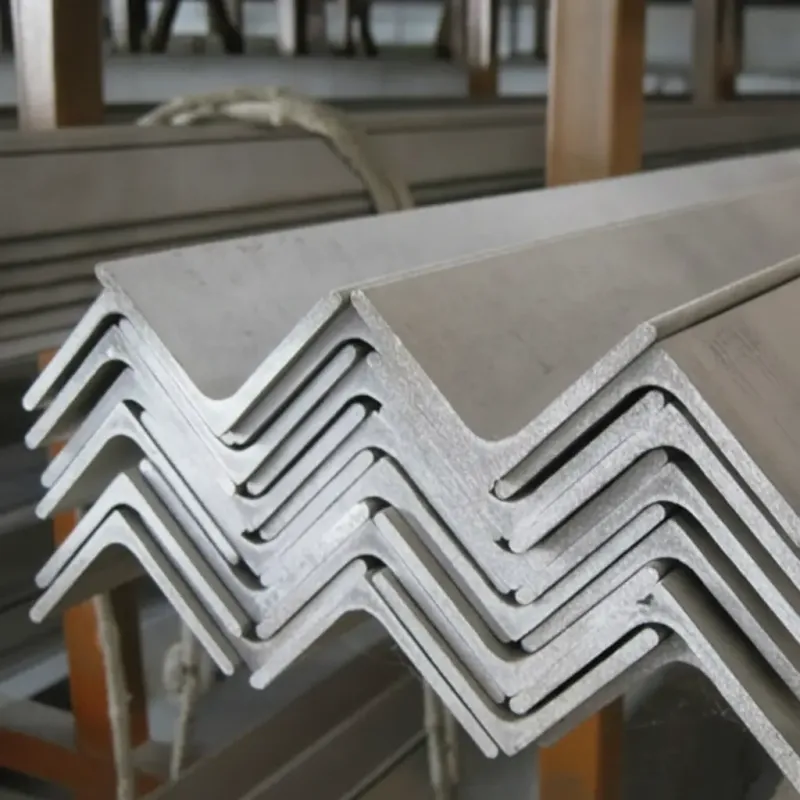
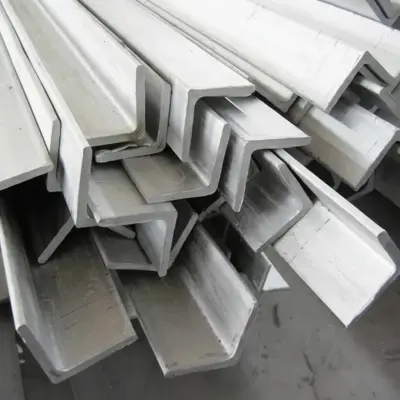
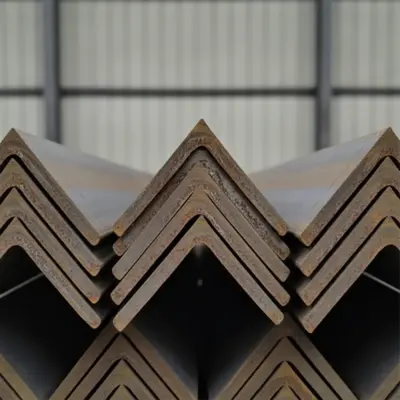
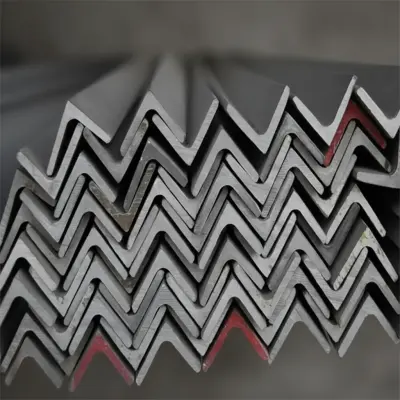
Angle steel, also called steel angle, angle iron, or an L-section, consists of two flat legs positioned at approximately 90 degrees to each other. Its geometry makes it suitable for resisting tension, compression, shear, and bending in structural assemblies. The section is commonly produced by hot rolling carbon structural steel billets through shaped rolls until the specified leg dimensions, thickness, and profile are achieved.
There are two principal configurations. Equal angle steel has legs of the same nominal width, while unequal angle steel has one leg wider than the other. Equal angles are frequently selected for symmetrical connections, frames, bracing, and general fabrication. Unequal angles can be more suitable where loads, connection surfaces, or available installation space are asymmetrical. Buyers comparing these configurations should assess the section properties and connection design rather than choosing only by unit weight. Related structural products and selection resources are available through [[INTERNAL_LINK]].
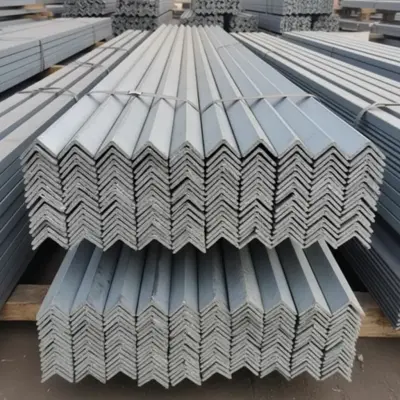
Hot-rolled carbon steel angles are normally supplied with a mill finish, which may include an adherent oxide scale produced during rolling. Depending on the project, angle steel may also be ordered shot-blasted, primed, painted, or hot-dip galvanized. Surface treatment must be stated in the purchase order because coating type, coating thickness, surface preparation, and packaging can affect fabrication, corrosion resistance, delivery time, and total landed cost.
Key purchasing characteristics include structural efficiency, straightforward cutting and drilling, compatibility with bolted or welded connections, and availability under several recognized standards. Weldability and forming behavior depend on the selected grade, chemical composition, thickness, and welding procedure. Fabricators should therefore review the applicable mill test certificate and qualified welding requirements before production. Guidance on carbon structural steel grades can be found at [[INTERNAL_LINK]].
Angle Steel Specifications & Standards
Angle steel specifications should identify the governing material standard and the required dimensional standard. A grade designation alone is not sufficient because identical-looking angles may have different chemical limits, mechanical properties, dimensional tolerances, and testing requirements. International orders commonly refer to ASTM A36/A36M for carbon structural steel, EN 10025-2 for hot-rolled structural steel grades, JIS G 3101 for rolled steels for general structures, or GB/T 700 for carbon structural steels.
Dimensions and tolerances may be controlled separately. Relevant references include ASTM A6/A6M for general requirements applicable to rolled structural steel bars, plates, shapes, and sheet piling; EN 10056-1 for dimensions of structural steel equal and unequal leg angles; EN 10056-2 for tolerances on shape and dimensions; JIS G 3192 for dimensions, mass, and permissible variations of hot-rolled steel sections; GB/T 706 for dimensions, shape, weight, and tolerances of hot-rolled section steel; and ISO 657 series documents for hot-rolled steel angle dimensions and tolerances where contractually applicable.
| Specification Item | Available Purchasing Options | What the Buyer Should Confirm |
|---|---|---|
| Section type | Equal-leg or unequal-leg angle | Nominal leg widths, orientation in drawings, and required section properties |
| Dimensions | Leg width, leg width combination, and section thickness | Applicable dimensional standard and permitted deviations |
| Length | Mill length, fixed length, or cut-to-length supply | Length tolerance, end condition, and bundle limitations |
| Material | Carbon structural steel or another specified structural grade | Full grade designation and governing material standard |
| Surface | Mill finish, blast-cleaned, primed, painted, or galvanized | Preparation grade, coating system, thickness requirement, and repair method |
| Processing | Cutting, drilling, punching, marking, or fabrication when available | Approved drawings, hole tolerances, cut tolerances, and inspection criteria |
| Documentation | Commercial documents and material inspection certificates | Certificate type, traceability level, and third-party inspection requirements |
The following table summarizes several commonly referenced grade families. Values are intentionally presented as standard-dependent rather than interchangeable. Mechanical requirements can change with thickness, section form, test orientation, and the edition of the standard. The final purchase specification and current official standard take precedence.
| Standard and Example Grade | Typical Standard Classification | Mechanical Property Framework | Important Procurement Note |
|---|---|---|---|
| ASTM A36/A36M, Grade A36 | Carbon structural steel | Minimum yield strength is generally specified at 250 MPa; tensile strength is generally specified at 400-550 MPa, subject to product requirements | Confirm section size, thickness, supplementary requirements, and ASTM A6/A6M dimensional provisions |
| EN 10025-2, S235JR | Non-alloy structural steel with specified impact-quality designation | Nominal minimum yield strength begins at 235 MPa for applicable lower thickness ranges and decreases as thickness increases; tensile requirements are thickness-dependent | “JR” denotes an impact-energy test category under EN 10025-2; verify delivery condition and inspection document |
| JIS G 3101, SS400 | Rolled steel for general structures | Tensile strength is specified at 400-510 MPa; minimum yield or proof strength depends on thickness | Do not treat SS400 as automatically identical to A36 or S235JR; review chemistry, testing, and design approval |
| GB/T 700, Q235 series | Carbon structural steel | Yield, tensile, elongation, and impact requirements depend on grade quality designation and thickness | State the complete grade suffix and required delivery documentation instead of ordering only “Q235” |
Chemical composition limits also vary by standard, grade, product form, and thickness. Carbon, manganese, phosphorus, sulfur, silicon, and other reported elements influence strength, weldability, and fabrication behavior. For welding-critical work, the purchaser may request the heat analysis and calculate or specify a carbon-equivalent limit where permitted by the governing standard and project specification. More information about mill certificates and heat traceability is available at [[INTERNAL_LINK]].
Theoretical weight should be calculated from the ordered geometry and the mass conventions of the relevant dimensional standard. Actual bundle weight can differ because hot-rolled sections are produced within permitted dimensional and mass tolerances. Procurement teams should clarify whether invoicing is based on theoretical weight or actual scale weight, especially for large-volume shipments.
Angle Steel Applications
Angle steel supports a broad range of structural and industrial applications, but the grade and dimensions must always be verified against the design loads, connection details, exposure environment, and local building regulations.
- Building construction: Equal and unequal angles are used in roof trusses, wall framing, lintels, edge members, bracing systems, stair structures, and secondary steelwork. Engineers select the section according to axial loads, bending, slenderness, and connection geometry.
- Infrastructure and utility projects: Angle steel can be incorporated into transmission structures, communication towers, support frames, walkways, guard structures, and other bolted assemblies. Such projects often impose detailed requirements for hole positioning, galvanizing, traceability, and trial assembly. See related galvanized structural products at [[INTERNAL_LINK]].
- Industrial platforms and supports: Processing plants, warehouses, and factories use steel angles for equipment bases, pipe supports, maintenance platforms, handrail frames, and cable-support structures. Coating selection should reflect humidity, chemicals, temperature, and maintenance access.
- Machinery and transport equipment: Fabricators use angle sections in chassis components, racks, guards, brackets, conveyor frames, and general equipment structures. Dimensional consistency is particularly important where pieces are cut, drilled, and assembled in repeatable batches.
- General metal fabrication: Workshops purchase angle steel for shelving, gates, fencing frames, worktables, storage systems, and customized welded products. Smaller fabrication orders may combine angles with channels, beams, plates, or hollow sections from [[INTERNAL_LINK]].
How to Choose Angle Steel / Buying Guide
Angle steel purchasing should begin with the approved bill of materials or engineering drawing. State whether the section is equal or unequal, followed by both leg dimensions, thickness, required length, quantity, material grade, and applicable standard. For unequal angles, keep the dimension order consistent across the inquiry, drawing, quotation, and packing list to avoid manufacturing or installation errors.
Check whether the design requires ordinary mill lengths or fixed-length cutting. Fixed lengths can reduce site waste and processing time, but tighter tolerances may require additional production or cutting operations. If holes, slots, coping, welding, or assemblies are required, provide controlled drawings with units, revision numbers, datum points, hole diameters, and allowable tolerances. Fabrication services are discussed further at [[INTERNAL_LINK]].
Certification requirements should be agreed before order confirmation. Depending on the material standard and contract, buyers may request a manufacturer’s test certificate or an inspection document aligned with EN 10204, such as type 3.1 where applicable. The certificate should be checked for heat number, grade, dimensions, chemical analysis, mechanical test results, and reference standard. If an independent inspection agency must witness loading, review documents, or conduct dimensional checks, include that requirement in the inquiry because it affects scheduling and cost.
MOQ is supplier-, dimension-, grade-, and processing-dependent. Stocked sizes may support lower order quantities, while non-stock dimensions, uncommon grades, dedicated rolling, special coatings, or project-specific fabrication can require a larger production lot. A practical request for quotation should separate the required quantity by size and identify which items may be consolidated. This allows the supplier to evaluate stock, rolling plans, and bundle optimization without making unsupported assumptions.
Lead time depends on stock availability, mill scheduling, testing, cutting, surface treatment, inspection, documentation, and vessel or inland transport arrangements. Ask the supplier to distinguish production time from estimated shipping time. For galvanized angle steel, allow for preparation, galvanizing, coating inspection, drainage considerations, and possible touch-up after processing. Buyers can review surface-protection considerations at [[INTERNAL_LINK]].
Logistics planning should address bundle weight, lifting method, corrosion protection, identification tags, and container or break-bulk suitability. Long sections need suitable handling equipment and secure loading to minimize bending, abrasion, and transit movement. Export packaging should match the transport route and discharge method. The commercial quotation should also state the Incoterms rule and named place, shipment tolerance, weight basis, document set, and any restrictions on partial shipments.
Finally, compare offers on technical compliance rather than price per tonne alone. Confirm that each offer covers the same standard, grade, dimensions, tolerances, certificate, coating, processing scope, packing method, and delivery term. A lower unit price can be offset by excess fabrication, unsuitable certificates, coating rework, or avoidable freight costs.
Angle Steel Frequently Asked Questions
Q: What is the difference between equal and unequal angle steel?
A: Equal angle steel has two legs with the same nominal width, while unequal angle steel has legs of different widths. Equal angles are convenient for symmetrical bracing and general connections. Unequal angles provide different section properties and connection areas in each direction, which can suit offset loads or restricted layouts. The selection should follow structural calculations and approved drawings.
Q: Are ASTM A36, S235JR, SS400, and Q235 angle steel equivalent?
A: No. These grades may overlap in some strength ranges, but they are governed by different standards: ASTM A36/A36M, EN 10025-2, JIS G 3101, and GB/T 700. Their chemical limits, thickness-dependent properties, impact-test provisions, dimensional references, and certification practices are not identical. Substitution requires approval from the responsible engineer or end user.
Q: Which certificates can be supplied with angle steel?
A: Available documentation depends on the material, mill, standard, and order agreement. Buyers commonly request a mill test certificate showing heat identification, chemical analysis, and mechanical results. Where contractually applicable, an EN 10204 type 3.1 inspection certificate may be requested. Third-party inspection must be specified before production or shipment.
Q: What is the minimum order quantity for angle steel?
A: There is no universal MOQ. It depends on whether the requested size and grade are in stock, whether a dedicated rolling lot is needed, and whether the order includes cutting, drilling, galvanizing, or special packing. Send a size-by-size quantity list so the supplier can confirm the practical MOQ for each item or propose order consolidation.
Q: How long does an angle steel order take to produce?
A: Lead time depends on inventory, rolling schedules, total quantity, processing, coating, testing, inspection, and documentation. Stock material with no additional processing is generally simpler to schedule than custom-rolled or galvanized products. The confirmed quotation should state the estimated production period separately from inland transport and ocean freight time.
Q: Can angle steel be cut, drilled, welded, or galvanized before export?
A: These services may be available subject to the supplier’s processing capabilities and the order specifications. Buyers should provide approved drawings and define dimensional tolerances, hole locations, weld requirements, coating standard, and inspection method. Welding procedures and galvanizing details must be compatible with the selected steel grade and final application.
Q: What payment methods are available for international angle steel orders?
A: Payment terms are negotiated according to order value, production status, destination, credit assessment, and commercial agreement. Common international methods may include bank transfer or a letter of credit, but availability and exact conditions must be confirmed in the formal quotation or sales contract. Buyers should verify bank details through an authenticated communication channel before remittance.
Q: How should angle steel be specified in an RFQ?
A: Include the section type, leg dimensions, thickness, length, quantity per size, complete grade, material standard, dimensional standard, surface condition, processing requirements, certificate type, inspection requirements, packing method, destination, and preferred Incoterms rule. Attach drawings for fabricated parts and identify the required delivery date. An RFQ checklist is available at [[INTERNAL_LINK]].
Q: Is theoretical weight the same as actual shipment weight?
A: Not always. Theoretical weight is calculated from nominal dimensions or standard mass tables, while actual weight reflects permitted rolling variations and scale measurement. The sales contract should state which basis is used for invoicing and the applicable quantity tolerance. This distinction can affect the commercial total and freight planning.
Send your angle steel size list, required standard and grade, quantities, lengths, surface treatment, processing drawings, certificate requirements, destination, and delivery schedule to request a technically aligned quotation. Our export team will review the specification, identify any missing purchasing details, and prepare an offer based on the confirmed production and logistics scope.
Ratings & Reviews

Know your supplier
Supplier's customization ability
- Drawing-based customization
- Sample-based customization
- Full customization
Minimum order quantity: 5 ton
Shipping total: To be negotiated
- Lead time:
- confirmed with the quotation
- Packaging:
- standard export packing
- Samples:
- available on request