 English
 Español
 Français
 Deutsch
 Português (Brasil)
 Русский
 العربية

Gantry Hoist: Heavy-Duty Lifting Solutions for Industrial Applications

 China


Supplier's customization ability
- Drawing-based customization
- Sample-based customization
- Full customization
Minimum order quantity: 1 pieces
Shipping total: To be negotiated
- Lead time:
- confirmed with the quotation
- Packaging:
- standard export packing
- Samples:
- available on request

Product details
Gantry Hoist Technical Specifications
| Parameter | Specification |
|---|---|
| Product Type | Gantry hoist system |
| Rated Lifting Capacity | 1-100 tonnes, configurable to project requirements |
| Lifting Height | 6-30 m, customizable |
| Hoisting Speed | 0.8-8 m/min, with variable-frequency control available |
| Travel Speed | 10-40 m/min, adjustable |
| Power Supply | 380 V, 50 Hz, 3-phase; other voltages available |
| Control Method | Pendant control, radio remote control, or cabin operation |
| Duty Class | FEM 2m-4m or ISO M5-M7, selected according to workload |
| Operating Temperature | -20°C to +40°C standard; special configurations available |
| Safety Features | Overload limiter, emergency stop, limit switches, anti-collision protection, and travel buffers |
| Application | Steel plants, fabrication yards, warehouses, ports, construction sites, and outdoor material handling |
Gantry Hoist: Heavy-Duty Lifting Solutions for Industrial Applications
A gantry hoist is a lifting system that combines a hoisting mechanism with a travelling trolley and a freestanding gantry frame, allowing industrial teams to move loads where a permanent overhead crane is unavailable or impractical. The equipment is commonly considered by machinery distributors, steel fabricators, maintenance contractors, warehouses, shipyards, construction companies, and plant operators purchasing for overseas projects. A properly specified gantry hoist can support controlled material handling, flexible installation, and efficient use of floor space. Its suitability depends on the required safe working load, lifting height, span, travel arrangement, duty cycle, power supply, operating environment, and applicable compliance documentation.
Product Overview
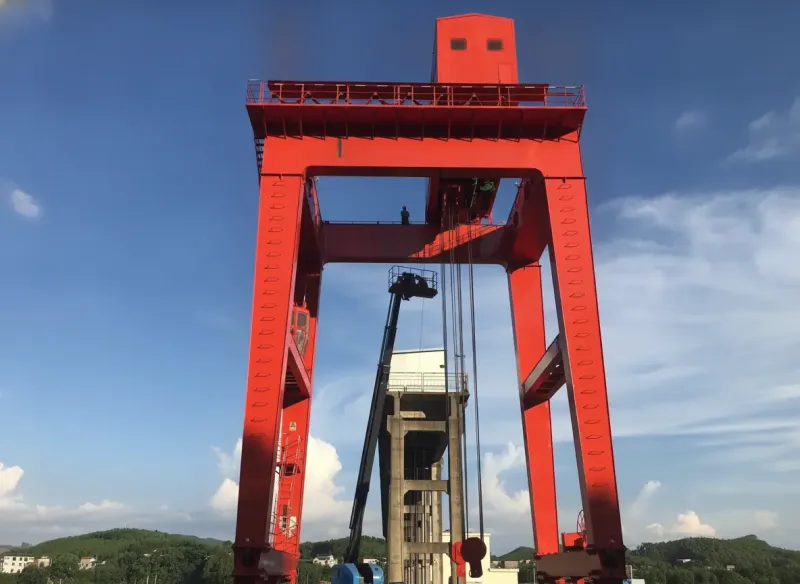
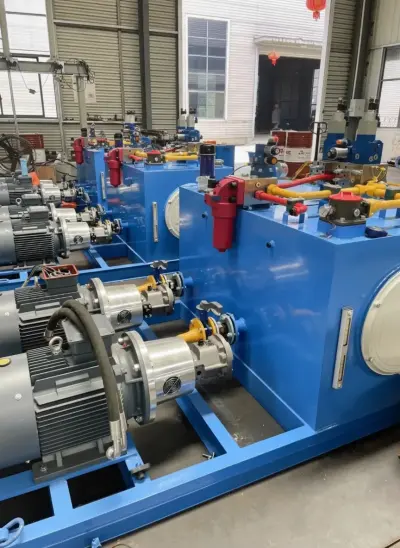
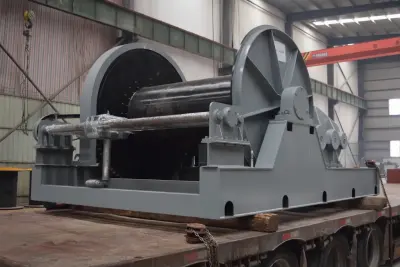
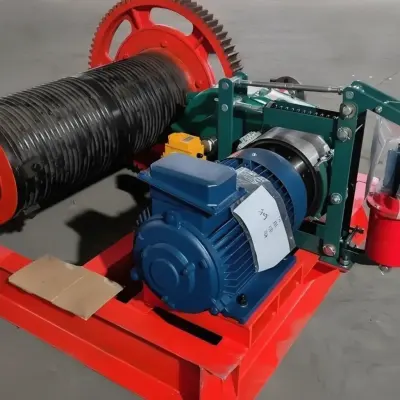
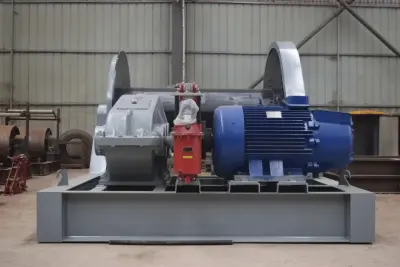
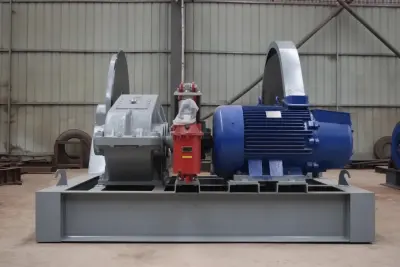
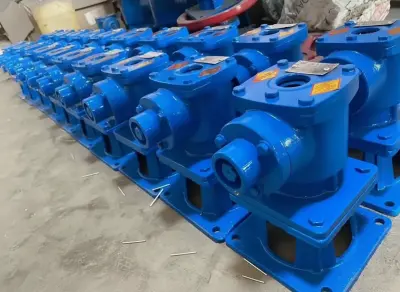
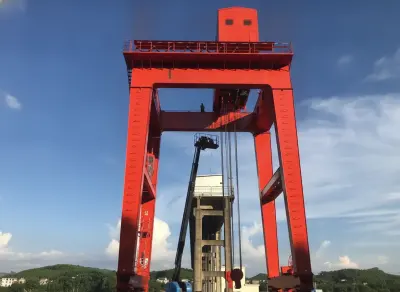
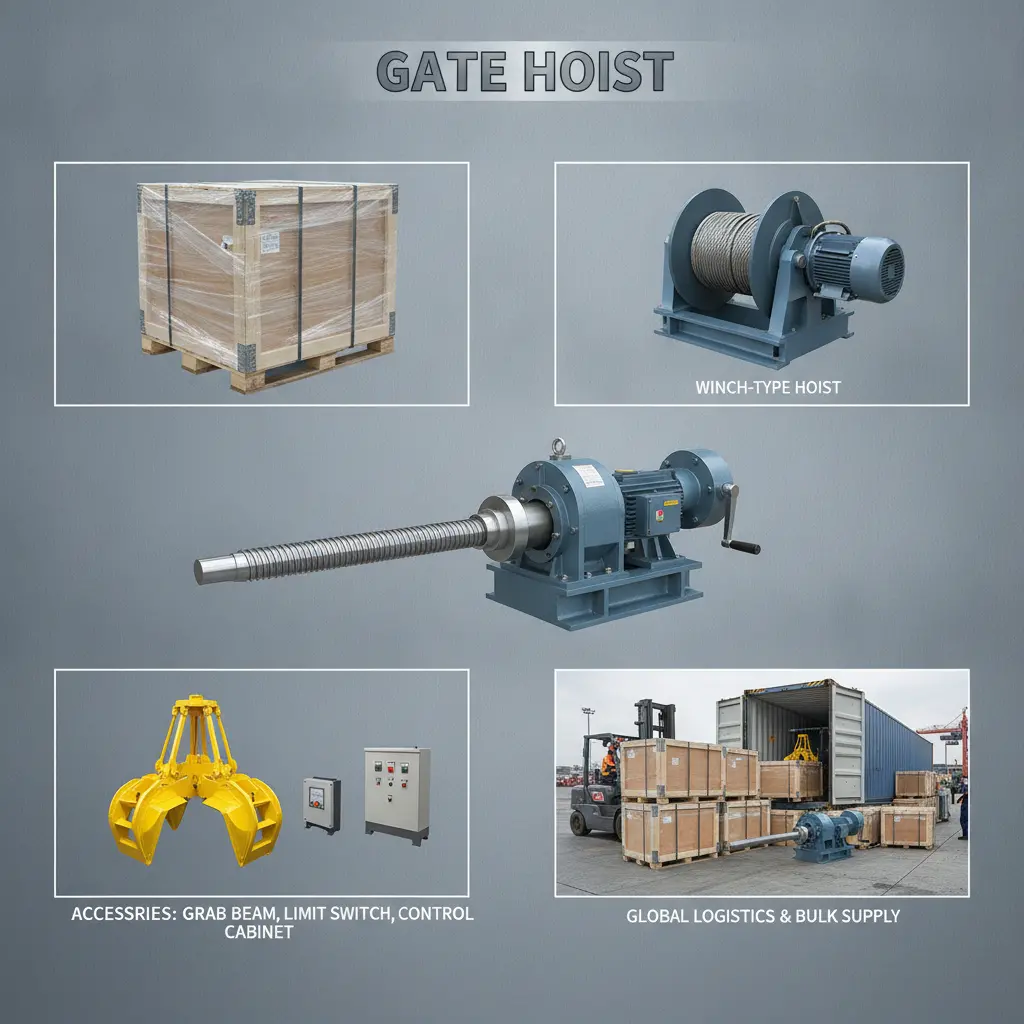
A gantry hoist is typically made up of a steel gantry structure, one or two supporting legs or end frames, a top beam or rail, a hoist, and a trolley that positions the load along the beam. Depending on the design, the gantry may be fixed, rail-mounted, rubber-tyred, or mobile on casters. The hoist can be supplied as a wire rope hoist, chain hoist, electric chain hoist, or another configuration selected for the load and working conditions. Buyers reviewing related industrial lifting equipment should compare the complete working system rather than evaluating the hoist motor alone.
The frame is generally fabricated from structural steel and protected with a coating system appropriate to the installation environment. The exact steel grade, welding procedure, corrosion protection, and component configuration should be stated in the supplier's technical offer. These details are important for projects involving outdoor storage yards, humid production areas, coastal exposure, dust, or temperature variation.
Typical functional features may include electric lifting, electric or manual trolley travel, powered or manual gantry travel, pendant control, radio remote control, emergency stop functions, overload protection, upper and lower limit devices, brakes, and mechanical travel stops. Not every gantry hoist includes every feature as standard. A purchasing specification should identify which functions are required and which are optional.
One practical advantage of a gantry hoist is installation flexibility. A freestanding system can serve a loading zone, fabrication bay, maintenance area, or outdoor work position without requiring the building columns and roof structure needed by an overhead bridge crane. For smaller service tasks, a portable gantry with a manual or electric chain hoist may be adequate. For repeated production lifting, a heavier engineered system with powered travel and a defined crane duty classification may be more appropriate. See also the relevant wire rope hoist selection guide when comparing lifting mechanisms.
Specifications & Standards
Gantry hoist specifications should be reviewed as a coordinated set. The rated capacity is only one part of the selection. The offer should also state the maximum lifting height, effective span, headroom, trolley travel, gantry travel, lifting speed, travel speed, control method, electrical supply, duty classification, ambient conditions, and approximate overall dimensions. Where the product is designed for a particular project, the supplier should confirm wheel loads, foundation requirements, rail requirements, anchoring, and any limits on wind or outdoor operation.
International standards depend on the equipment type, destination, and contractual requirements. Common references that may be relevant include EN 14492-2 for power-driven winches and hoists, EN 15011 for bridge and gantry cranes, EN 13157 for manually powered cranes and hoists, and EN 60204-32 for electrical equipment of lifting machines. In the United States, ASME B30.16 is commonly referenced for overhead hoists, while ASME B30.17 covers cranes and monorail systems with top-running or under-running bridge configurations. OSHA requirements may also apply to workplace use in the United States, but regulatory acceptance must be confirmed for the specific installation. For projects requiring European conformity, the machinery risk assessment, technical file, declaration, and CE-related documentation should be clarified with the supplier. A purchaser should request the exact standard edition and scope rather than relying on a general statement such as “international standard.”
Relevant structural design and material standards may include EN 10025 for hot-rolled structural steel products, ASTM A36 or ASTM A572 where those material specifications are contractually required, and JIS G3101 or GB/T 700 for projects using Japanese or Chinese material designations. These references are not interchangeable automatically. The supplier should identify the material standard, grade, inspection document, and any permitted equivalent in the quotation. Buyers can also compare the overhead crane technical specification with the gantry hoist proposal to verify that terminology and performance data are aligned.
A typical specification schedule may be organized as follows:
| Item | What the buyer should confirm |
|---|---|
| Rated capacity | Maximum permitted lifted load, including the intended load-handling attachment where applicable |
| Lifting height | Hook travel and required clear height above the working area |
| Span and travel | Beam span, trolley movement, gantry movement, and usable operating envelope |
| Hoist type | Wire rope, electric chain, manual chain, or another specified mechanism |
| Controls | Pendant, radio remote, local control, emergency stop, and control voltage |
| Electrical data | Voltage, frequency, phases, motor ratings, ingress protection, and cable arrangement |
| Duty and environment | Operating frequency, load spectrum, indoor or outdoor use, temperature, dust, and humidity |
| Documentation | Manuals, drawings, test records, certificates, inspection reports, and conformity documents |
Mechanical and electrical performance should be supported by a test and inspection plan. Depending on the contract, this may include dimensional inspection, no-load operation, brake testing, limit switch testing, electrical testing, overload or load testing, weld inspection, and final documentation review. The acceptance criteria should be agreed before production. A product page for lifting inspection and testing services may help procurement teams define the records required at delivery.
Applications
Gantry hoist systems serve applications where loads must be lifted and positioned across an open working area. The actual configuration should be selected from the load path, frequency of use, available foundation, and required operator access.
Steel fabrication and metalworking
Fabrication shops use gantry equipment to move plates, sections, welded assemblies, molds, and finished frames between workstations. A trolley with controlled positioning can support fit-up and repair work, provided the load attachment points and lifting accessories are rated for the task.
Machinery maintenance
Maintenance departments may install a gantry hoist above pumps, motors, gearboxes, dies, or other serviceable components. A portable or semi-mobile design can be useful where lifting points change between maintenance areas. The working area must still be isolated and checked for floor capacity, overhead obstructions, and safe access.
Warehouses and logistics areas
Warehouses can use a gantry hoist to load and unload heavy components, position equipment for inspection, or transfer goods between vehicles and staging zones. Outdoor units may require weather protection, drainage planning, corrosion control, and a defined policy for operation in high wind.
Construction and infrastructure projects
Construction contractors may use mobile gantry systems for equipment installation, precast component handling, or service work where a fixed crane cannot be justified. The contractor should confirm whether the equipment is intended for temporary works and establish a documented inspection and lifting plan for each site.
Shipyards and repair facilities
Shipbuilding and repair operations often need flexible lifting over open bays, modules, tools, and machinery. Salt exposure, abrasive dust, irregular ground, and demanding duty cycles can materially affect the required coating, enclosure, drive arrangement, and maintenance program. The supplier should review these conditions before finalizing the design.
How to Choose / Buying Guide
Choosing a gantry hoist begins with the load, but a procurement manager should document the entire operating scenario. Start with the heaviest planned load, the load dimensions, the center of gravity, the lifting accessories, and whether the load will be lifted vertically or moved while suspended. Do not use a nominal capacity as a substitute for a complete risk assessment. The supplier should confirm the rated load at the relevant hook position and operating configuration.
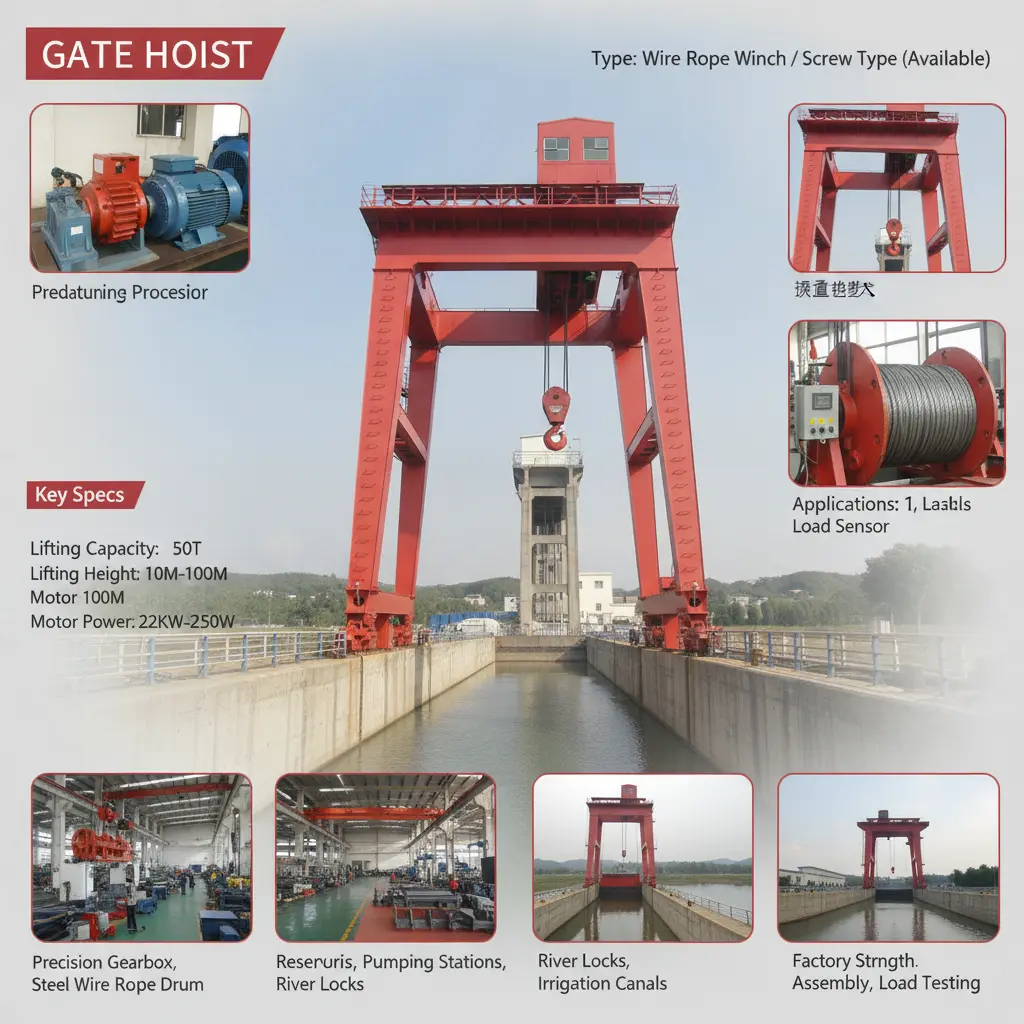
Next, define the geometry. Measure the required span, hook approach, lifting height, trolley travel, and gantry travel. Check door openings, columns, ventilation equipment, racks, floor joints, vehicle routes, and maintenance clearances. Portable frames may offer flexibility, while rail-mounted systems can provide more predictable travel and positioning. A portable gantry crane comparison can be useful when the equipment must serve multiple work zones.
Match the hoist mechanism to the duty. Electric chain hoists are often considered for compact indoor work and moderate handling frequency. Wire rope hoists may be selected for greater lifting heights, higher capacities, or applications requiring a particular drum and reeving arrangement. Manual hoists can suit infrequent lifting where electrical power is unavailable, but manual effort, travel speed, and operator ergonomics must be assessed honestly.
Ask for a clear duty classification and operating assumption. The correct classification depends on the load spectrum and number of lifting cycles, not simply the maximum load. Request motor data, brake details, protection rating, control architecture, spare parts information, and recommended inspection intervals. For explosive, high-temperature, corrosive, clean-room, or cold-weather environments, state the condition at the inquiry stage because standard components may not be suitable.
Certification should be treated as a deliverable package. Confirm the applicable design standard, material certificates where required, welding and inspection records, factory test report, operating manual, nameplate information, declaration of conformity or other destination-specific documents, and third-party inspection requirements. If the product will be integrated into a larger lifting installation, establish which party is responsible for the final system assessment. Related crane certification documents should be listed in the purchase order instead of discussed only after manufacturing.
Commercial terms require the same precision. Ask the supplier to identify the exact scope of supply, exclusions, packing method, spare parts, commissioning support, installation responsibility, warranty basis, and payment milestones. Minimum order quantity is not universal for engineered gantry hoists: a standard portable unit may be available as a single-machine purchase, while a custom system may require engineering approval before production. Request the applicable MOQ or project quantity directly rather than assuming one.
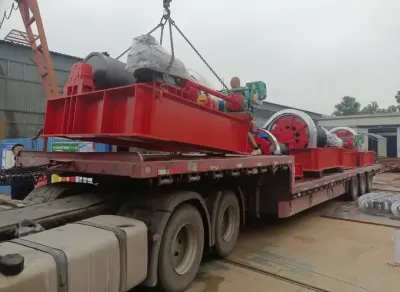
Lead time also varies with design complexity, capacity, customization, testing, and document review. A reliable inquiry should include the requested delivery location and target date, but the supplier should confirm the schedule after reviewing drawings and specifications. For international logistics, clarify whether the quotation is EXW, FOB, CIF, or another Incoterm, and confirm packing dimensions, gross weight, lifting points, container suitability, customs documents, and destination unloading arrangements. The buyer may also need to coordinate import duties, local installation, and site acceptance. See the industrial equipment export checklist before issuing a purchase order.
Frequently Asked Questions
Q: What is the difference between a gantry hoist and an overhead crane?
A: A gantry hoist uses a hoist mounted on a freestanding structure supported by legs, while an overhead crane generally runs on elevated runway beams attached to the building or supporting columns. A gantry arrangement can reduce dependence on the building structure, but it needs adequate floor support, travel clearance, and controls for the selected operating environment.
Q: How do I choose the correct gantry hoist capacity?
A: Begin with the heaviest intended load and include the planned lifting attachment where the applicable rating requires it. Confirm the load's center of gravity, lifting points, dynamic conditions, hook position, and any limits imposed by the frame, trolley, wheels, rails, or floor. The supplier should verify the complete system rating rather than quoting the hoist rating alone.
Q: What certifications should I request for an exported gantry hoist?
A: Request the applicable standard references, technical drawings, operating and maintenance manuals, factory inspection or test records, material and welding documents where required, nameplate data, and the conformity or third-party inspection documents required in the destination market. The exact package depends on the country, project contract, and whether the equipment is supplied as a complete machine or integrated into a larger system.
Q: What is the usual minimum order quantity for a gantry hoist?
A: There is no single industry-wide MOQ. A standard portable model may be quoted for one unit, whereas a custom engineered gantry may involve design, inspection, and production conditions that the supplier confirms case by case. State the quantity, configuration, and delivery location in the inquiry so the supplier can provide a binding commercial response.
Q: Which payment methods are available for international orders?
A: Payment terms depend on the supplier, order value, customization, destination, and contract risk. Common arrangements may include a deposit with the balance before shipment, documentary arrangements, or another mutually agreed method. Confirm the currency, bank details through an appropriate verification process, payment milestones, and the documents released at each stage before signing the order.
Q: How long does delivery take?
A: Delivery time depends on capacity, span, hoist type, customization, raw material availability, testing, documentation, and shipping route. A supplier should provide an estimated manufacturing period after reviewing the technical requirements and then identify the shipping lead time separately. Ask when the delivery period starts and which approval events can affect it.
Q: Can a gantry hoist be used outdoors?
A: It can be designed for outdoor use, but the specification must address rain, humidity, corrosion, wind, temperature, drainage, electrical enclosure protection, and ground conditions. Operation may need to stop above a defined wind limit. Outdoor suitability should be explicitly stated by the supplier and supported by the relevant design and operating instructions.
Q: Does the supplier provide installation and commissioning?
A: Installation scope varies. Some suppliers provide drawings and manuals for local installation, while others can quote supervision, commissioning, training, or a complete installation service. Confirm who supplies foundations, rails, power cabling, lifting accessories, test weights, local permits, and final acceptance testing.
Request a Gantry Hoist Quote
Send your required capacity, lifting height, span, travel distance, duty cycle, environment, power supply, control preference, destination, quantity, and documentation requirements for a focused gantry hoist quotation. Include drawings or photographs of the intended work area when available. The engineering team can then clarify the suitable configuration, identify necessary options, confirm inspection documents, and prepare a commercial offer aligned with your installation and logistics requirements. [[INTERNAL_LINK]]
Ratings & Reviews

Know your supplier
Supplier's customization ability
- Drawing-based customization
- Sample-based customization
- Full customization
Minimum order quantity: 1 pieces
Shipping total: To be negotiated
- Lead time:
- confirmed with the quotation
- Packaging:
- standard export packing
- Samples:
- available on request