 English
 Español
 Français
 Deutsch
 Português (Brasil)
 Русский
 العربية

Aluzinc Steel Coil Manufacturer | Wholesale AZ Steel Coil
 China
Supplier's customization ability
- Drawing-based customization
- Sample-based customization
- Full customization
Minimum order quantity: 10 ton
Shipping total: To be negotiated
- Lead time:
- confirmed with the quotation
- Packaging:
- standard export packing
- Samples:
- available on request
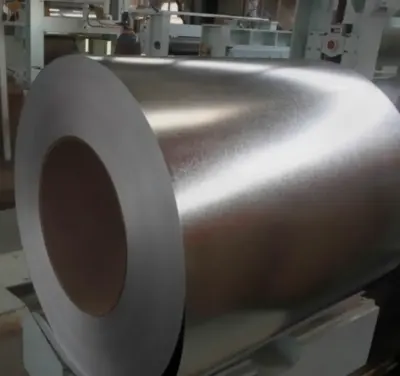
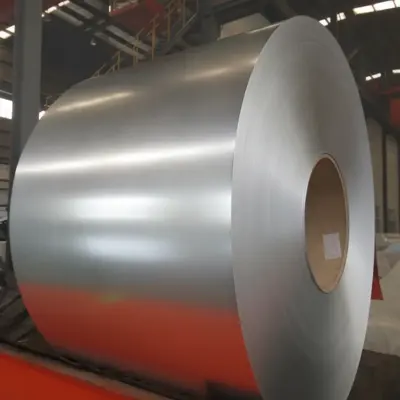
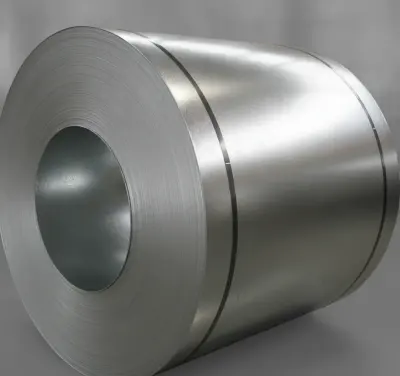
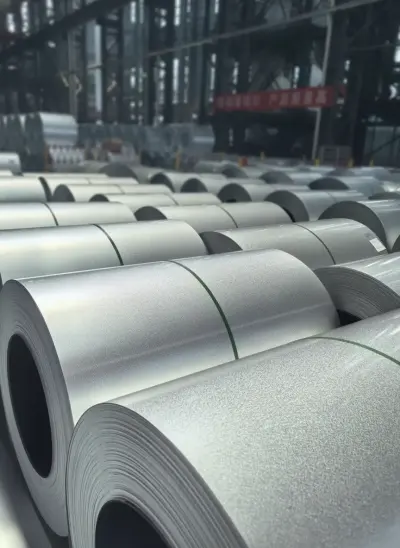
Product details
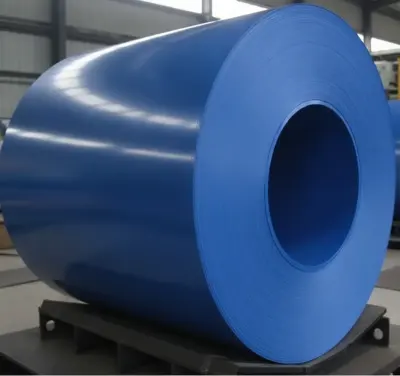
Aluzinc Steel Coil Technical Specifications
| Product Attribute | Technical Specification |
|---|---|
| Product Name | Aluzinc Steel Coil |
| Alternative Names | Galvalume Steel Coil, Aluminum-Zinc Coated Steel Coil, GL Steel Coil |
| Applicable Standards | ASTM A792/A792M, EN 10346, JIS G3321, AS 1397, GB/T 14978 |
| Base Metal | Cold-Rolled Steel |
| Coating Composition | Approximately 55% Aluminum, 43.4% Zinc and 1.6% Silicon |
| Steel Grades | DX51D+AZ, DX52D+AZ, DX53D+AZ, S250GD+AZ, S280GD+AZ, S320GD+AZ, S350GD+AZ, S550GD+AZ, CS Type B, SS Grade 33–80 |
| Thickness | 0.12–2.00 mm (custom sizes available) |
| Width | 600–1,500 mm (custom widths available) |
| Aluzinc Coating Weight | AZ30–AZ200 g/m², total coating on both sides |
| Surface Finish | Regular Spangle, Minimized Spangle, Anti-Fingerprint, Chromated, Oiled or Dry |
| Surface Quality | Normal Surface, Improved Surface or High-Quality Finished Surface |
| Yield Strength | Approximately 140–550 MPa, depending on steel grade and standard |
| Tensile Strength | Approximately 270–570 MPa, depending on steel grade and standard |
| Coil Inner Diameter | 508 mm or 610 mm |
| Coil Weight | 2–10 metric tons or according to customer requirements |
| Edge Condition | Mill Edge or Slit Edge |
| Surface Protection | Chromium-Free Passivation, Chromated Passivation, Anti-Fingerprint Treatment or Oiling |
| Key Properties | Excellent corrosion resistance, heat reflectivity, formability, dimensional stability and long service life |
| Typical Applications | Roofing sheets, wall cladding, building panels, HVAC systems, household appliances, automotive components, solar structures, silos and industrial fabrication |
| Processing Services | Slitting, cut-to-length, leveling, profiling and custom coil packaging |
| Inspection and Certification | Mill Test Certificate available; third-party inspection by SGS, BV or other agencies upon request |
| Packaging | Seaworthy export packing with moisture-proof paper, protective steel sheets, edge guards and steel straps |
| Customization | Steel grade, thickness, width, coating weight, surface treatment, coil weight and packaging can be customized |
Aluzinc Steel Coil Manufacturer | Wholesale AZ Steel Coil
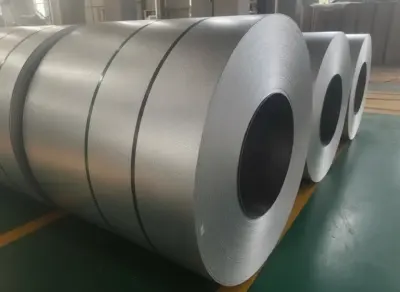
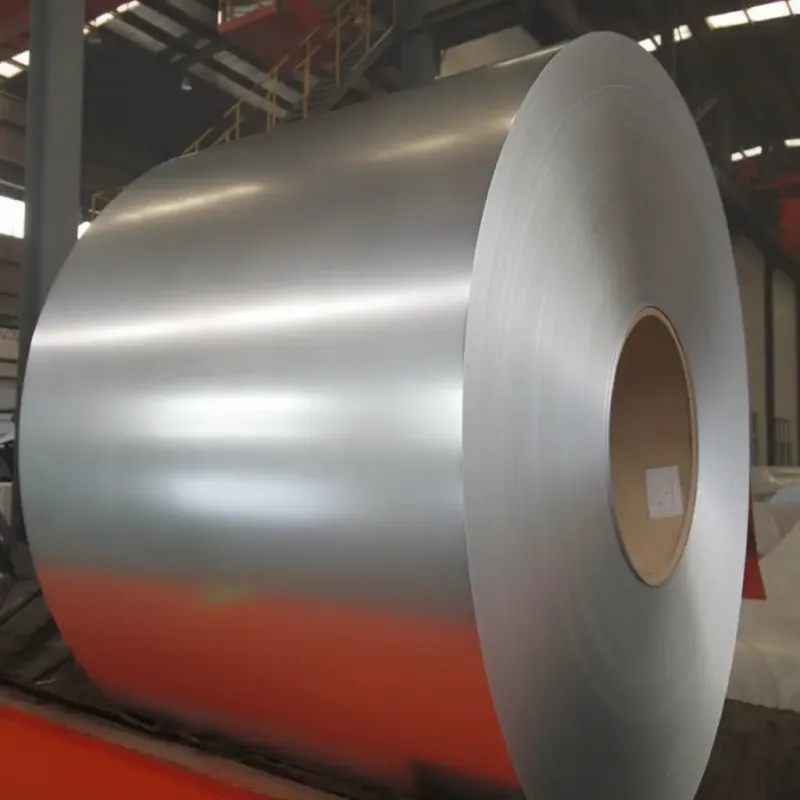
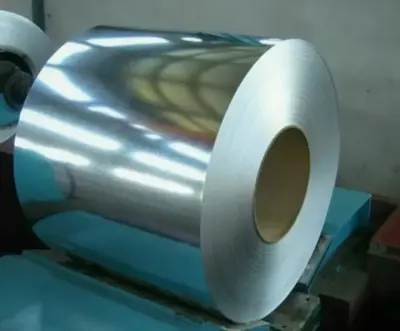
Aluzinc Steel Coil is a continuously hot-dip coated steel product designed for roofing, cladding, appliances, ductwork, and general fabrication exposed to demanding service conditions. It serves overseas distributors, roll formers, construction-material suppliers, OEM manufacturers, and project procurement teams that need the formability of sheet steel with durable corrosion protection. Its aluminum-zinc-silicon alloy coating provides a practical balance of barrier protection, sacrificial protection, heat reflectivity, and surface stability. Buyers can specify the substrate grade, coating mass, thickness, width, surface treatment, coil dimensions, and applicable inspection standard to match their processing equipment and end-use requirements.
Aluzinc Steel Coil Product Overview
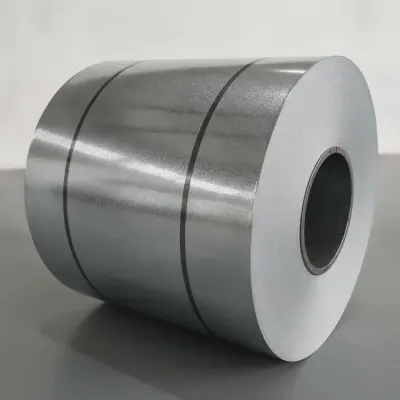
Aluzinc Steel Coil, also called aluminum-zinc alloy-coated steel coil, AZ steel coil, or Galvalume-type steel coil, is produced by passing a prepared steel strip through a molten aluminum-zinc-silicon alloy bath. The coating is metallurgically bonded to the substrate and applied continuously to both sides of the strip. The commonly recognized nominal bath composition is approximately 55% aluminum, 43.4% zinc, and 1.6% silicon by mass, as associated with products covered by ASTM A792/A792M and comparable international specifications.
The aluminum-rich portion of the coating forms a stable barrier that slows the movement of moisture and corrosive agents toward the steel substrate. Zinc contributes galvanic, or sacrificial, protection around exposed edges and minor damaged areas. Silicon primarily supports coating formation and adhesion during the hot-dip process. The resulting material is particularly useful where bare carbon steel would require more maintenance, yet stainless steel would be commercially unnecessary for the intended environment.
The performance of Aluzinc Steel Coil depends on more than the nominal alloy composition. Substrate chemistry, steel strength, coating mass, coating uniformity, surface treatment, passivation, oiling, storage conditions, fabrication method, and installation details all affect service life. Cut edges, tight bends, scratches, contact with incompatible metals, standing water, and aggressive chemicals should therefore be evaluated during product selection. For a comparison with other metallic-coated products, procurement teams can consult [[INTERNAL_LINK]].
Available supply configurations are normally agreed through the purchase order rather than assumed. These may include commercial-quality or structural substrates, regular or minimized spangle appearances, passivated or non-passivated surfaces, oiled or dry finishes, and products prepared for subsequent painting. If Aluzinc Steel Coil will be roll formed, stamped, profiled, or painted, the intended process should be declared before production so that mechanical properties and surface treatment can be reviewed. Related coated steel options are available through [[INTERNAL_LINK]].
Aluzinc Steel Coil Specifications & Standards
Aluzinc Steel Coil should be ordered against a clearly identified standard, grade, coating designation, and dimensional tolerance. Relevant standards include ASTM A792/A792M for steel sheet coated by the hot-dip process with 55% aluminum-zinc alloy; EN 10346 for continuously hot-dip coated steel flat products for cold forming; JIS G 3321 for hot-dip 55% aluminum-zinc alloy-coated steel sheet and strip; and GB/T 14978 for continuously hot-dip aluminum-zinc alloy-coated steel sheet and strip. The current edition, amendments, grade scope, and contractual requirements should be confirmed at the time of inquiry.
These standards are not automatically interchangeable. Their grade names, coating designations, test methods, tolerances, sampling rules, and certification language may differ. A purchaser should not substitute an EN grade for an ASTM or JIS grade solely because the products have similar descriptions. The supplier must review the complete specification, including any project-specific technical schedule. Guidance on reading mill documentation can be found at [[INTERNAL_LINK]].
| Technical Item | Typical Ordering Options | Procurement Note |
|---|---|---|
| Base metal | Cold-reduced carbon steel substrate in forming or structural quality | Select the grade according to forming severity, yield strength, and final load requirements. |
| Nominal coating alloy | Approximately 55% aluminum, 43.4% zinc, and 1.6% silicon by mass | Associated with the 55% aluminum-zinc alloy coating system covered by ASTM A792/A792M and comparable specifications. |
| Coating mass | Specified by the designation system of the selected standard | Do not compare designation numbers across standards without checking units, total coating basis, and test method. |
| Thickness | Specified nominal steel or coated-product thickness, subject to the agreed standard | State whether the quoted thickness includes or excludes the metallic coating. |
| Width | Mill width or slit width, subject to production capability | Provide the finished width tolerance and slit-edge requirements. |
| Surface condition | Passivated, oiled, passivated and oiled, or another agreed treatment | Confirm compatibility with painting, bonding, food-contact restrictions, or local environmental rules. |
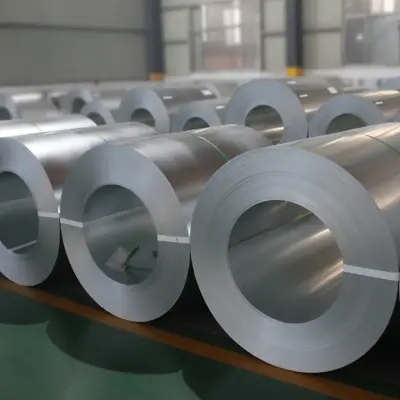
| Coil parameters | Agreed coil weight, inside diameter, outside diameter, and winding orientation | Match the receiving line, decoiler capacity, lifting equipment, and transport limits. |
Mechanical requirements vary by substrate grade and governing standard. They should not be inferred from the coating name alone. The following table identifies the values that buyers should place on the inquiry and verify on the material certificate, without assigning unsupported universal figures to Aluzinc Steel Coil.
| Property | How It Should Be Specified | Why It Matters |
|---|---|---|
| Yield strength | Minimum or range according to the ordered grade in ASTM A792/A792M, EN 10346, JIS G 3321, or GB/T 14978 | Affects structural capacity, springback, and roll-forming behavior. |
| Tensile strength | Minimum or range required by the ordered substrate grade | Supports design verification and forming-process control. |
| Elongation | Minimum value with the applicable gauge length and specimen orientation | Indicates suitability for bending, profiling, or deeper forming. |
| Coating mass | Minimum triple-spot and/or single-spot result as required by the selected standard | Influences corrosion resistance, cost, and forming response. |
| Dimensional tolerance | Thickness, width, flatness, camber, and edge condition under the agreed specification | Determines whether the coil will run consistently through downstream equipment. |
Inspection documents should identify the manufacturer, standard, grade, dimensions, coating designation, coil or heat traceability, and reported test results where required. An EN 10204 type 3.1 inspection certificate may be requested when contractually applicable, but it should not be assumed to accompany every order. Third-party inspection, coating-mass testing, dimensional checks, and packaging verification can also be arranged by agreement. More information on steel coil tolerances is available at [[INTERNAL_LINK]].
Aluzinc Steel Coil Applications
Aluzinc Steel Coil is used where continuous production, corrosion resistance, and economical fabrication are important. Product suitability must still be checked against the actual atmosphere, forming method, expected service life, and maintenance plan.
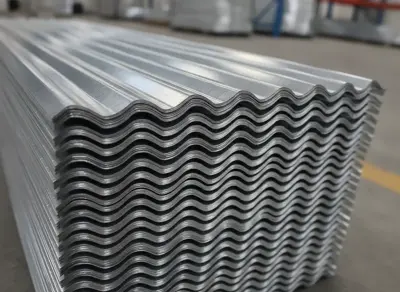
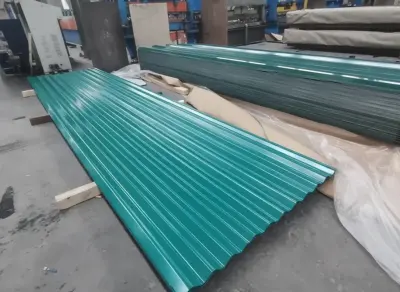
- Roofing and wall cladding: Roll formers convert the coil into corrugated sheets, standing-seam panels, roof tiles, flashings, gutters, and wall profiles. Designers should account for roof pitch, water drainage, cut-edge exposure, fastener compatibility, and local wind or structural requirements. Roofing profile options can be reviewed at [[INTERNAL_LINK]].
- Light steel construction: Structural grades may be formed into purlins, framing components, decking, and non-primary building elements, subject to engineering approval. The ordered mechanical grade must correspond to the design calculation rather than merely matching the required thickness.
- HVAC and ventilation equipment: Fabricators use Aluzinc Steel Coil for ducts, housings, panels, and equipment components where heat reflectivity and atmospheric corrosion resistance are useful. Joining methods and sealants should be tested for compatibility with the metallic coating.
- Appliances and equipment enclosures: The material can be formed into internal or external panels, cabinets, heater components, and protective housings. Surface appearance, fingerprint resistance, paint adhesion, and forming severity should be defined before ordering.
- General industrial fabrication: Typical fabricated parts include cable-management products, storage components, partitions, panels, and agricultural or workshop equipment. For severe marine, acidic, alkaline, or continuously wet exposure, a corrosion specialist should verify whether another coating system is more suitable.
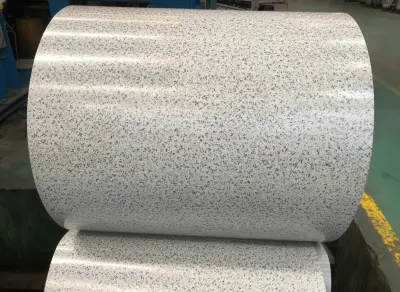
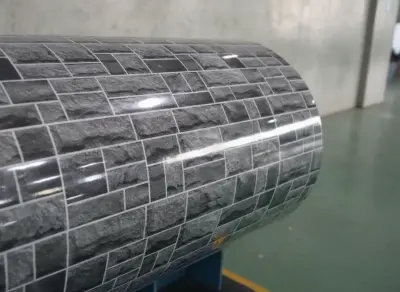
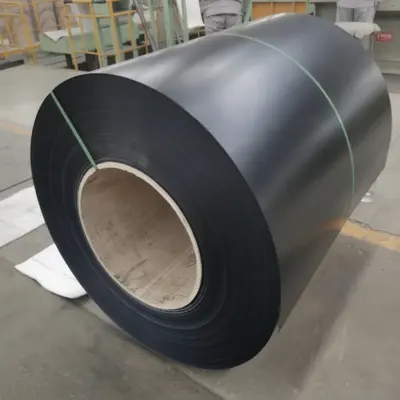
Aluzinc Steel Coil is also used as a substrate for prepainted products. In that case, pretreatment, primer, topcoat, back coat, color, gloss, and coating performance become separate purchasing variables. Buyers sourcing finished color-coated material should review [[INTERNAL_LINK]].
How to Choose Aluzinc Steel Coil / Buying Guide
Aluzinc Steel Coil procurement should begin with the end product and production line. A complete inquiry reduces technical ambiguity, prevents unsuitable substitutions, and allows suppliers to calculate realistic production and logistics terms.
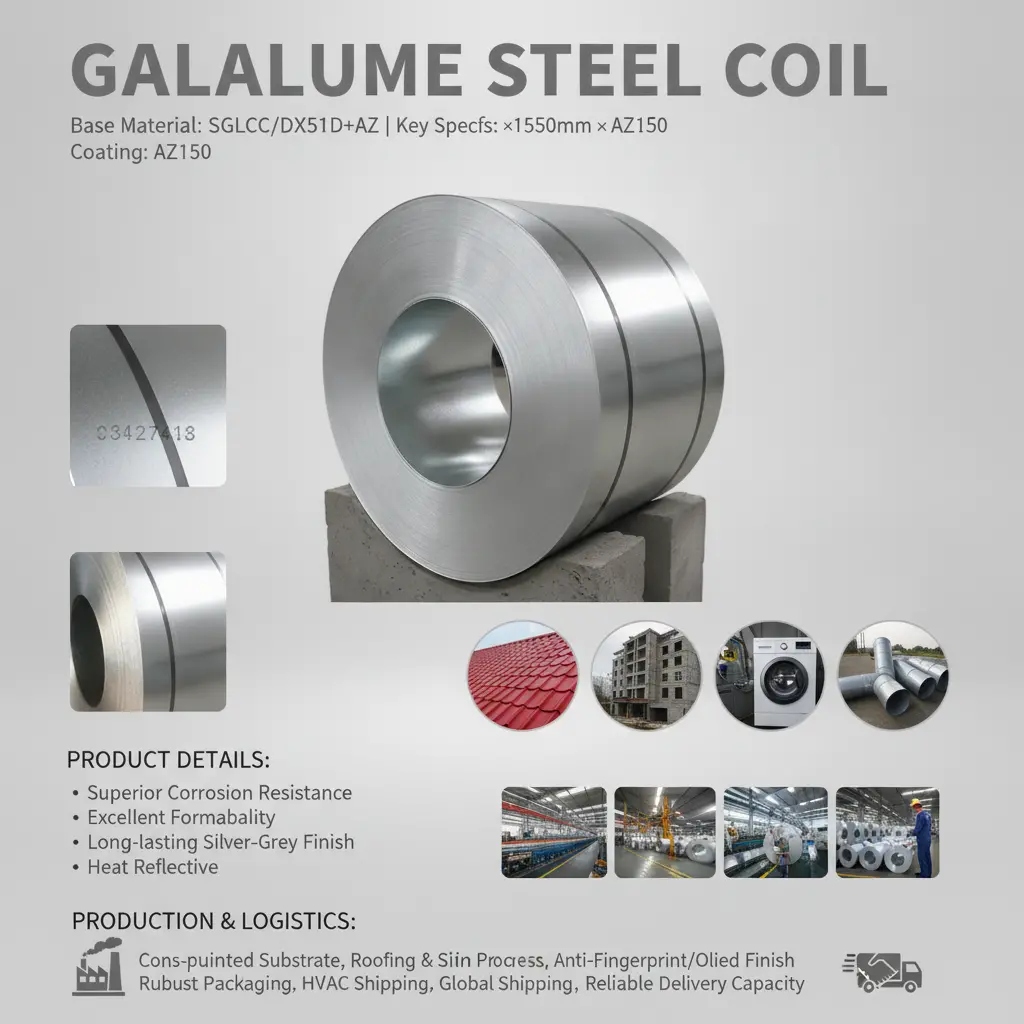
- Define the governing specification. State ASTM A792/A792M, EN 10346, JIS G 3321, GB/T 14978, or another required specification, including the edition if the project documents mandate one. Add the exact substrate grade and coating designation. “AZ coil” alone is not a complete material specification.
- Confirm dimensions and tolerances. Provide nominal thickness, width, edge condition, and required tolerance. Clarify whether thickness refers to the steel base or the finished coated product. Slitting tolerances, burr direction, camber, flatness, and telescoping limits may be important for automated lines.
- Select coating and surface treatment. The coating designation should reflect the service environment and applicable standard. State whether the surface must be passivated, oiled, dry, fingerprint resistant, or suitable for painting. Chemical-treatment restrictions should be communicated before quotation because regional compliance requirements can affect available finishes.
- Match the mechanical grade to fabrication. Share whether the coil will undergo simple profiling, tight-radius bending, stamping, or structural roll forming. A stronger grade is not necessarily easier to process; excessive strength can increase springback and tooling loads. Trial material may be appropriate for a new profile or a demanding forming operation.
- Specify certification and inspection. List the required material certificate, traceability level, test reports, marking, photographs, or independent inspection. If an EN 10204 type 3.1 certificate or third-party witness is mandatory, put it in the inquiry rather than requesting it after production.
- Discuss MOQ and production allocation. Minimum order quantity depends on specification, width, thickness, coating mass, surface treatment, slitting plan, and current mill schedule. Ask the supplier to confirm the MOQ for each line item. Combining compatible sizes may improve production efficiency, but feasibility requires mill review.
- Confirm lead time at order stage. Lead time varies with raw-material availability, production scheduling, testing, inspection, packing, and shipping arrangements. Request separate estimates for manufacturing and transport, and allow time for document approval or third-party inspection where applicable.
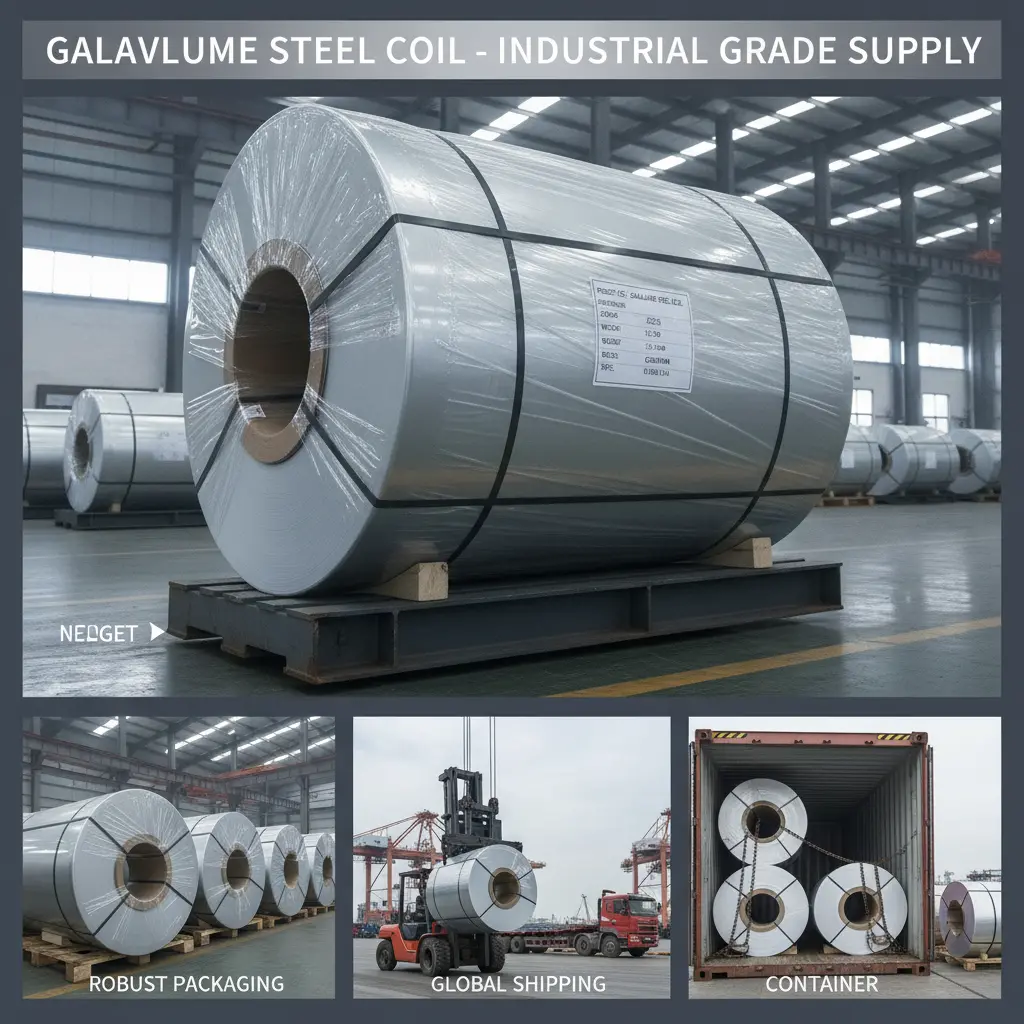
- Plan coil handling and logistics. Provide maximum coil weight, accepted inside diameter, outside-diameter limit, unloading method, and destination requirements. Export packaging should address moisture ingress, edge damage, coil movement, and lifting safety. Container loading or breakbulk shipment should be selected according to coil dimensions, weight, route, and receiving facilities. See [[INTERNAL_LINK]] for general coil storage and handling guidance.
Before approving a commercial offer, compare quotations on the same technical basis. Differences in substrate grade, coating mass, thickness basis, tolerances, certification, packing, and Incoterms can materially change both price and usability. A low unit quotation is not commercially useful if the Aluzinc Steel Coil cannot run on the buyer’s equipment or satisfy the project specification.
Frequently Asked Questions About Aluzinc Steel Coil
Q: What is the difference between Aluzinc Steel Coil and galvanized steel coil?
A: Aluzinc Steel Coil uses an aluminum-zinc-silicon alloy coating, while conventional galvanized steel is primarily zinc-coated. The aluminum-zinc coating provides strong barrier protection, heat reflectivity, and atmospheric corrosion resistance, while zinc contributes sacrificial protection. Galvanized steel may behave differently at cut edges and in certain forming or chemical environments. Selection should be based on the exposure condition, fabrication process, coating mass, design life, and governing project standard. A material comparison is available at [[INTERNAL_LINK]].
Q: Are Aluzinc Steel Coil and Galvalume coil the same product?
A: The terms are often used commercially for steel coated with a nominal 55% aluminum-zinc alloy. However, “Galvalume” has been used as a trade or licensed product name in some markets, while “aluzinc” is widely used as a generic description. Buyers should rely on the stated standard, grade, coating designation, dimensions, and certificate rather than assuming that commercial names guarantee identical properties.
Q: Which standards can be specified for Aluzinc Steel Coil?
A: Common references include ASTM A792/A792M, EN 10346, JIS G 3321, and GB/T 14978. Each standard has its own grade system, coating designations, dimensional rules, and testing requirements. The correct standard normally depends on the destination market, engineering specification, customer drawing, and regulatory framework. Equivalence should be confirmed technically and contractually before substitution.
Q: Can a material test certificate be supplied?
A: Certification can generally be discussed according to the selected standard and order terms. The buyer should specify whether a manufacturer’s certificate, an EN 10204 type 3.1 inspection document, or independent third-party inspection is required. The certificate scope should also be defined, including mechanical properties, coating mass, dimensions, chemical information, and coil traceability where applicable.
Q: What is the minimum order quantity for Aluzinc Steel Coil?
A: There is no universal MOQ. It depends on the ordered grade, thickness, width, coating designation, finish, coil weight, slitting requirement, and production schedule. Standard production combinations may have different minimums from uncommon widths or special surface treatments. Send a complete size and quantity list so the manufacturer can confirm the practical MOQ for each specification.
Q: What payment methods are available for wholesale orders?
A: Payment terms depend on the supplier’s commercial policy, order value, customer credit assessment, destination, and trade-finance arrangement. Common international methods may include bank transfer or letter of credit, but no method should be assumed until it appears in the accepted quotation or sales contract. Buyers should verify beneficiary details through an established channel before transferring funds.
Q: How long is the production lead time?
A: Lead time is order-specific and begins only after the agreed commercial and technical conditions are satisfied. Material availability, mill scheduling, coating requirements, slitting, testing, inspection, packaging, and shipment booking can all affect timing. The supplier should provide an estimated production window with the quotation and reconfirm it after order acceptance.
Q: Can Aluzinc Steel Coil be painted or supplied as prepainted coil?
A: Yes, but paint adhesion depends on surface condition, pretreatment, coating system, storage history, and production controls. A surface treatment intended only for bare use may not be suitable for later painting. Inform the supplier if the material will be painted, bonded, laminated, or supplied as finished prepainted steel so that compatible processing can be evaluated.
Q: What information is needed for an accurate quotation?
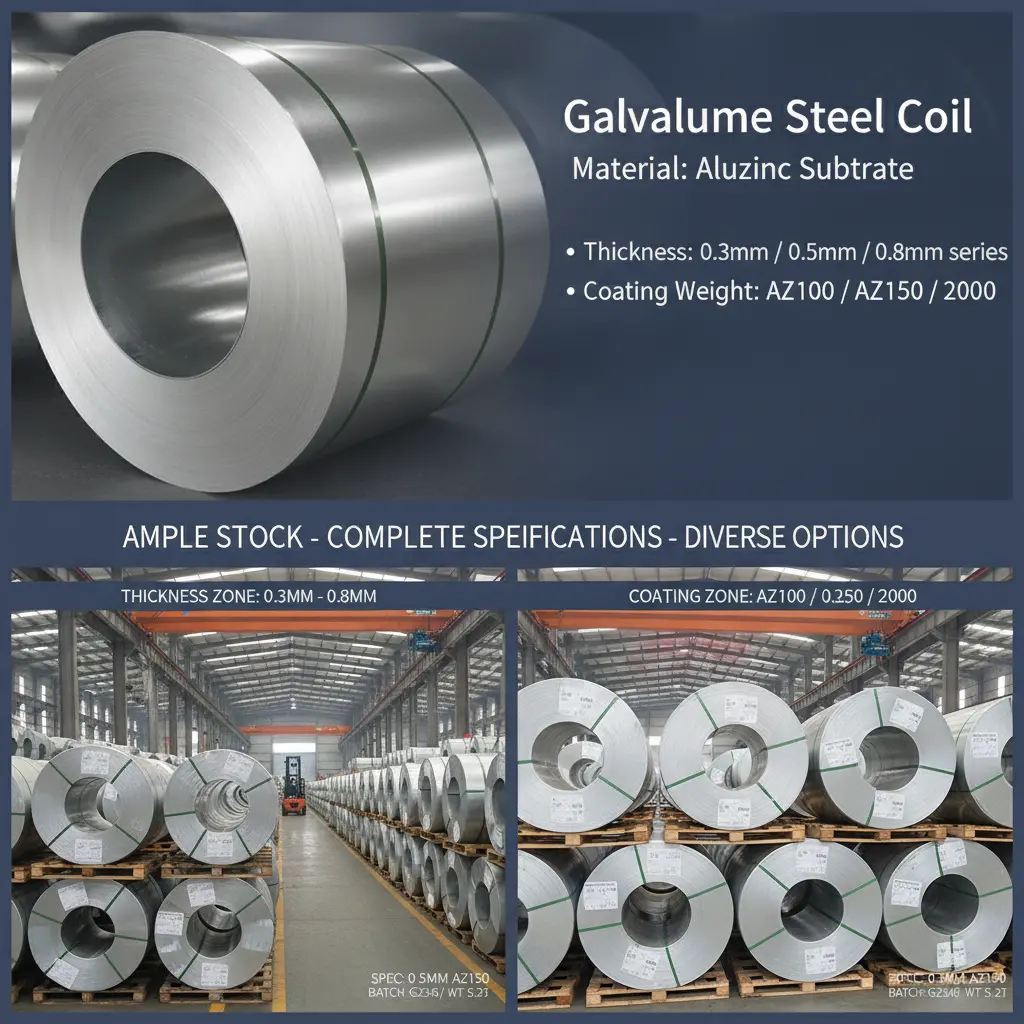
A: Provide the standard, substrate grade, coating designation, thickness, width, surface treatment, edge condition, coil inside diameter, preferred coil weight, total quantity, certification, packing, destination, and requested Incoterm. Also state the final application and forming process. These details allow the Aluzinc Steel Coil manufacturer to identify technical conflicts before pricing and recommend clarifications where necessary.
Q: How should Aluzinc Steel Coil be stored after delivery?
A: Store coils indoors in a dry, ventilated area, protected from rain, condensation, salt, chemicals, and rapid temperature changes. Keep packaging intact until use, but inspect promptly if moisture exposure is suspected. Use suitable coil supports and lifting equipment, avoid direct floor contact, and process older stock first. Prolonged trapped moisture can cause surface staining even when the underlying metallic coating remains present.
Send your Aluzinc Steel Coil specification, required standard, grade, coating designation, dimensions, coil parameters, quantity, certification needs, destination, and delivery schedule to request a technical review and itemized quotation. Including the intended application and forming process will help the manufacturer confirm material suitability, production feasibility, packaging, and logistics before the order is finalized.
Ratings & Reviews

Know your supplier
Supplier's customization ability
- Drawing-based customization
- Sample-based customization
- Full customization
Minimum order quantity: 10 ton
Shipping total: To be negotiated
- Lead time:
- confirmed with the quotation
- Packaging:
- standard export packing
- Samples:
- available on request