 English
 Español
 Français
 Deutsch
 Português (Brasil)
 Русский
 العربية

Wood Grain Printed Steel Coil Manufacturer | Custom Colors & Durable Finish
 China
Supplier's customization ability
- Drawing-based customization
- Sample-based customization
- Full customization
Minimum order quantity: 10 ton
Shipping total: To be negotiated
- Lead time:
- confirmed with the quotation
- Packaging:
- standard export packing
- Samples:
- available on request
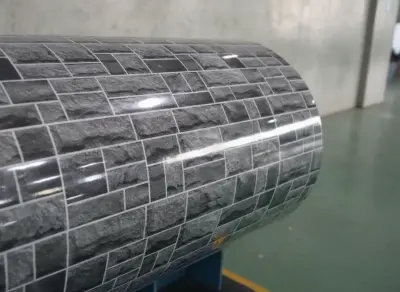
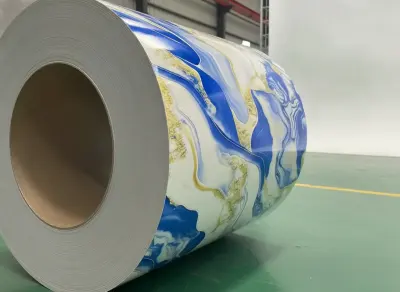
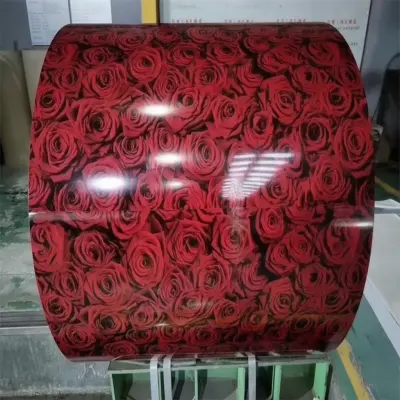
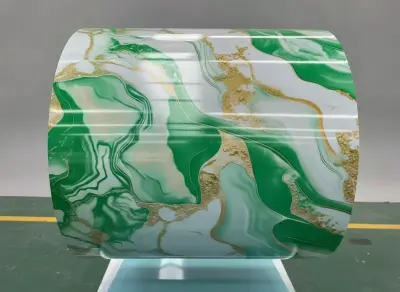
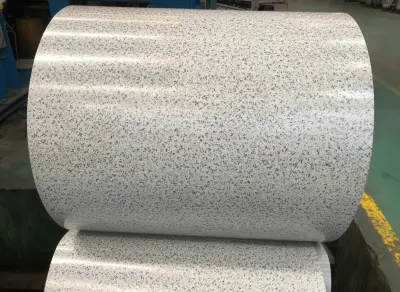
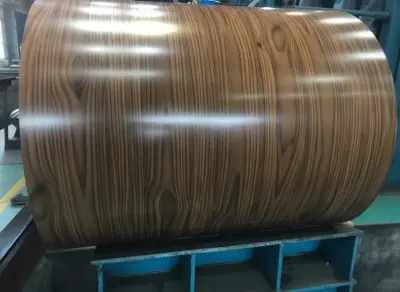
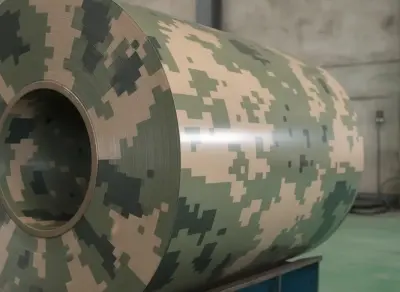
Product details
Wood Grain Printed Steel Coil Technical Specifications
| Technical Parameter | Specification |
|---|---|
| Product Name | Wood Grain Printed Steel Coil |
| Product Type | Prepainted and decorative printed steel coil |
| Base Metal | Cold-rolled steel, galvanized steel (GI), or galvalume steel (GL) |
| Applicable Standards | ASTM A755, EN 10169, JIS G3312, or equivalent |
| Steel Grade | DX51D, DX52D, SGCC, SGLCC, or customized |
| Thickness | 0.20–1.20 mm; custom thickness available |
| Width | 600–1,250 mm; slit widths available on request |
| Zinc Coating | Z30–Z275 g/m² |
| Al-Zn Coating | AZ30–AZ150 g/m² |
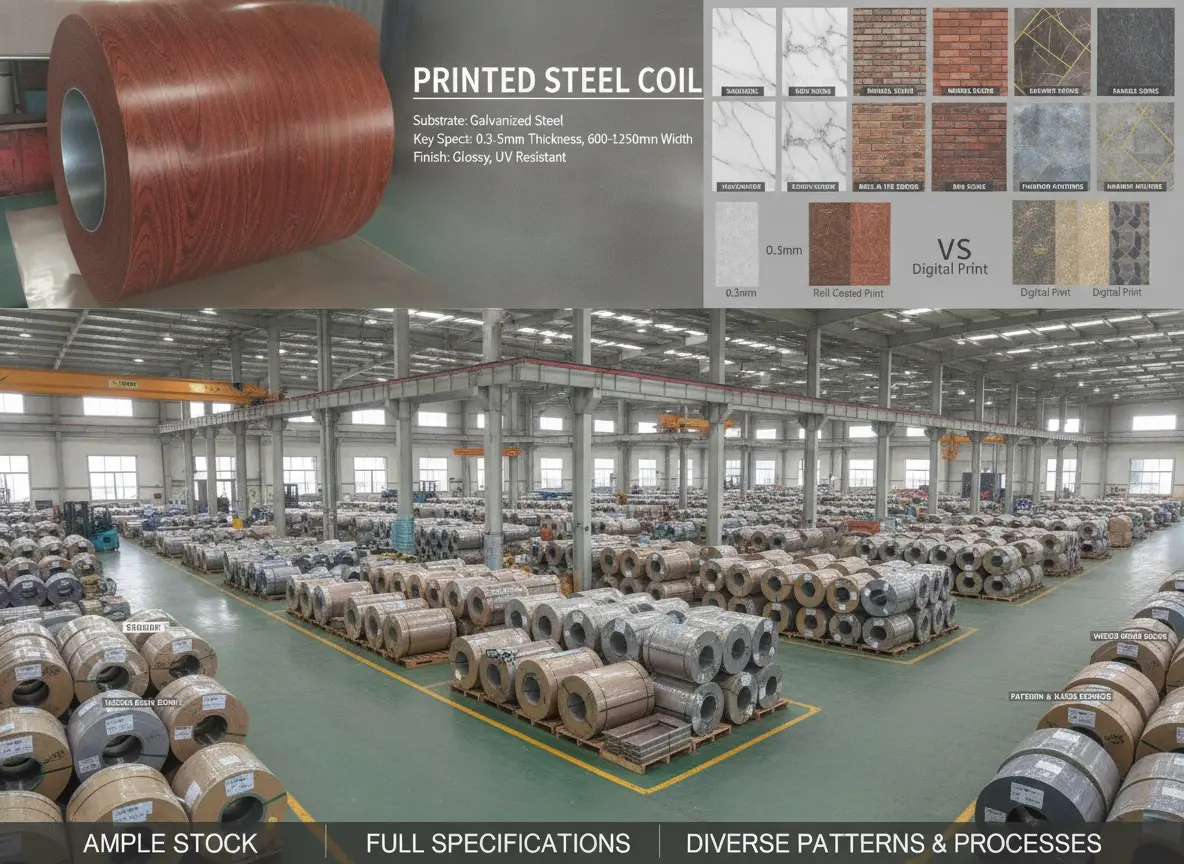
| Surface Pattern | Oak, walnut, pine, maple, cherry, teak, or customized wood grain |
| Top Coating | Polyester (PE), high-durability polyester (HDP), SMP, or PVDF |
| Back Coating | Epoxy or polyester primer; service coating available |
| Top Paint Thickness | 15–25 μm; customized coating systems available |
| Back Paint Thickness | 5–15 μm |
| Surface Finish | Glossy, matte, textured, embossed, or protective-film laminated |
| Gloss Level | 5–80 GU; selectable according to design requirements |
| Printing Technology | Multi-layer roller printing with protective clear coating |
| Color and Pattern Matching | Standard samples, RAL colors, or customer-supplied designs |
| Coil Inner Diameter | 508 mm or 610 mm |
| Coil Weight | 2–5 metric tons; customized |
| Key Properties | Decorative wood appearance, corrosion resistance, formability, scratch resistance, and easy maintenance |
| Typical Applications | Wall panels, roofing, ceilings, doors, garage doors, furniture, cabinets, appliance panels, and interior decoration |
| Packaging | Export-standard waterproof paper, protective film, steel sheet wrapping, edge guards, and steel straps |
| Customization | Thickness, width, substrate, coating mass, paint system, gloss, pattern, color, and coil weight can be customized |
Wood Grain Printed Steel Coil Manufacturer | Custom Colors & Durable Finish
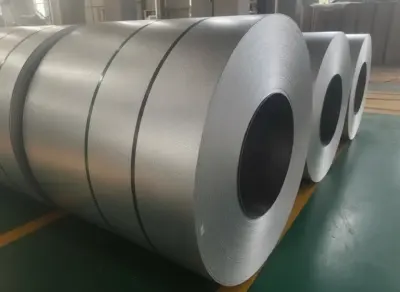
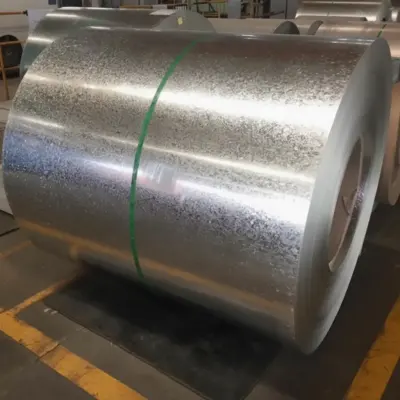
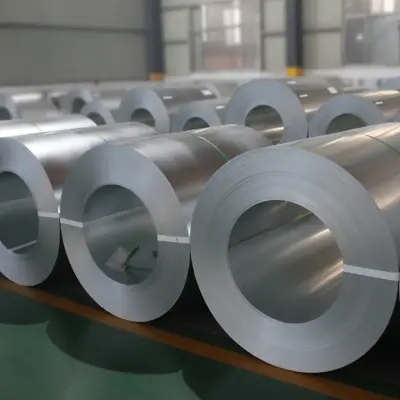
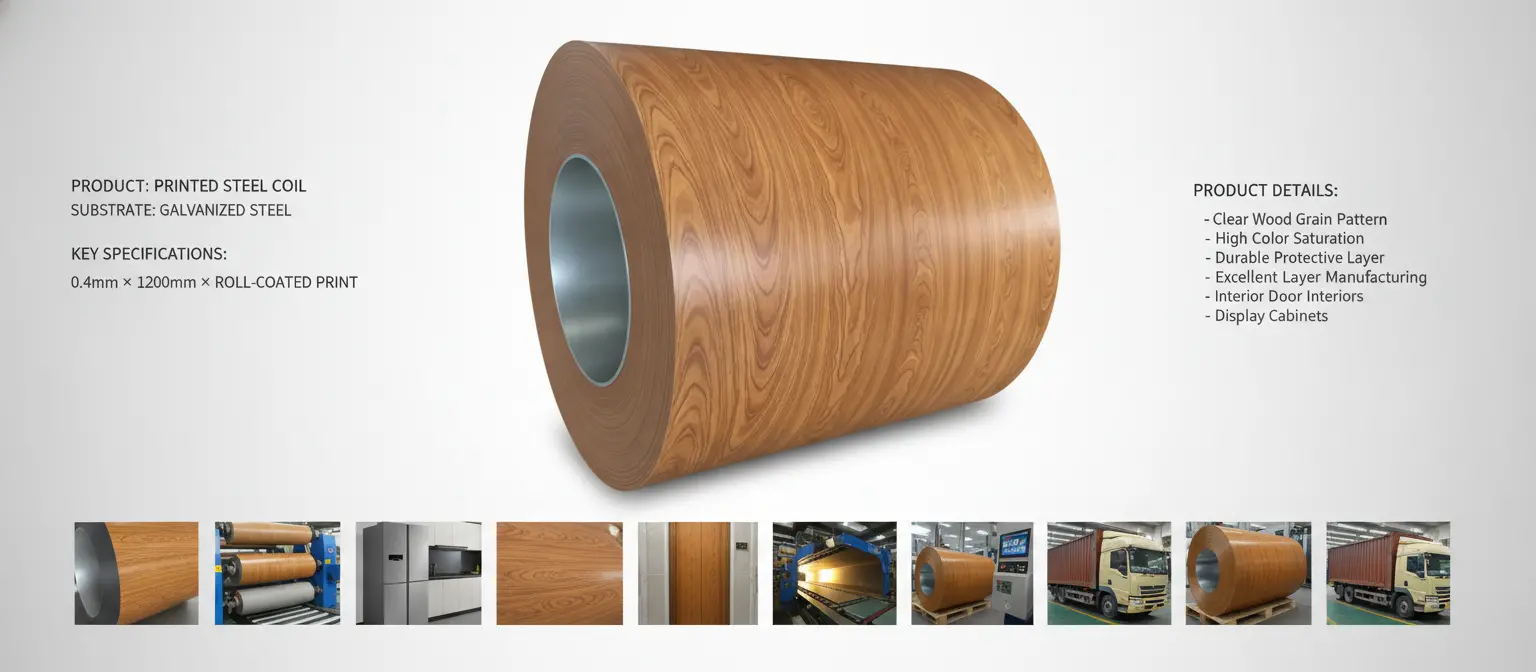
Wood Grain Printed Steel Coil is a decorative, factory-coated steel material that reproduces the appearance of natural timber while retaining the formability, dimensional consistency, and production efficiency of metal. It is designed for overseas distributors, building-material suppliers, appliance manufacturers, furniture producers, and fabricators seeking a repeatable wood-look surface for volume manufacturing. Available patterns, colors, gloss levels, substrate types, and protective films can be matched to project and processing requirements. For procurement teams, the principal value lies in combining visual consistency with scalable coil processing, reduced finishing work, and easier maintenance compared with many natural wood components.
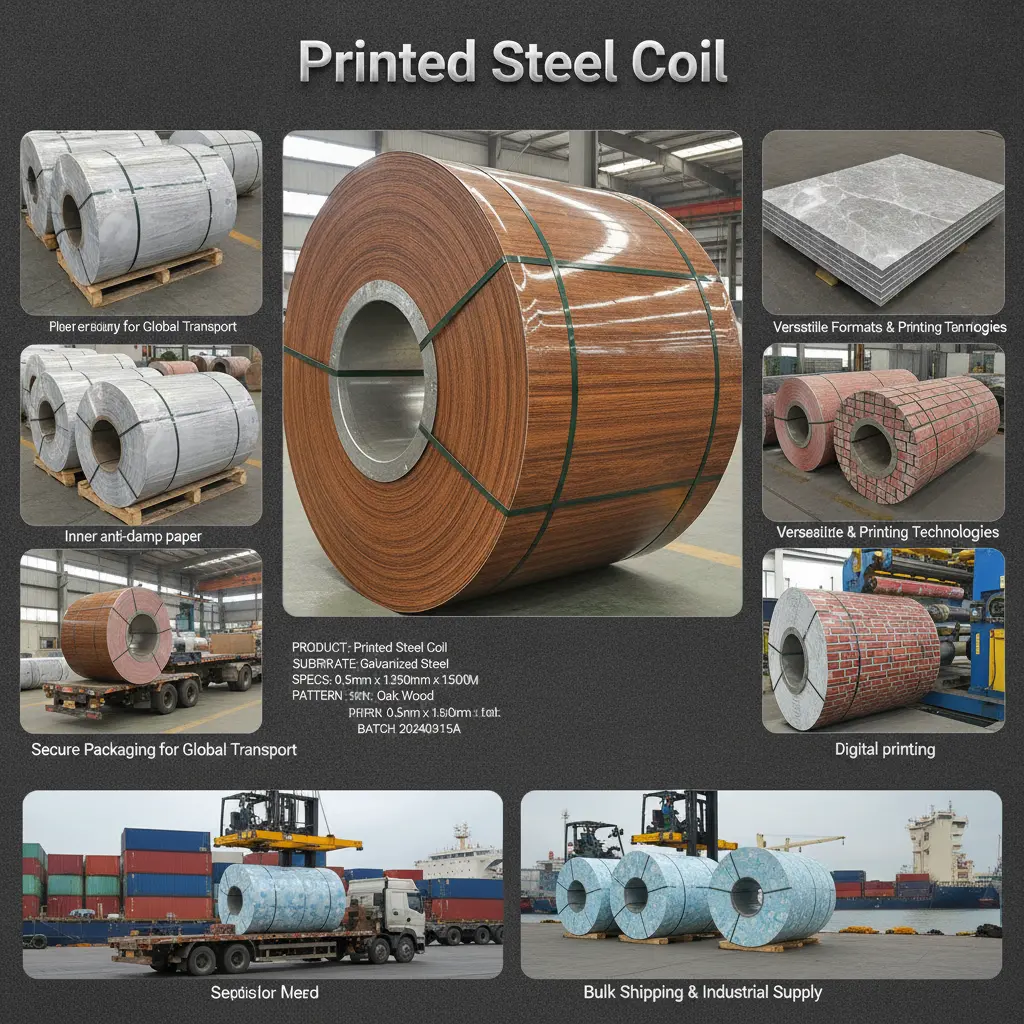
Wood Grain Printed Steel Coil Product Overview
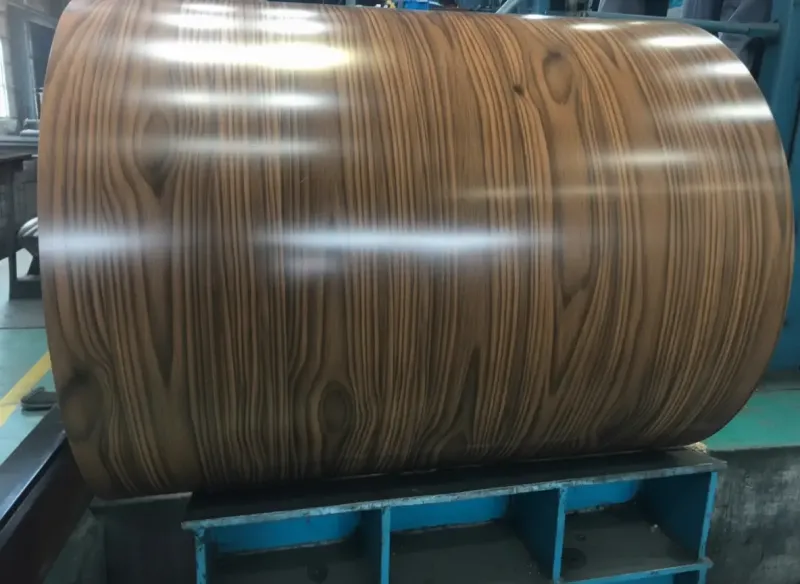
Wood Grain Printed Steel Coil is produced by applying coating and printed decorative layers to a metallic-coated steel substrate. The printed pattern may simulate oak, walnut, pine, teak, cherry, or another wood appearance, subject to the supplier’s available printing cylinders, color-matching capability, and order requirements. Unlike a solid timber product, the coil can be slit, cut to length, roll-formed, pressed, bent, or laminated using suitable equipment and processing parameters.
A typical coating system includes a steel base, a zinc or aluminum-zinc alloy metallic coating, chemical pretreatment, primer, printed decorative layer, and clear protective topcoat. The reverse side normally receives a backing coating appropriate to the intended environment or fabrication method. Layer configuration varies by manufacturer, application, warranty conditions, and required corrosion resistance; therefore, buyers should confirm the complete coating structure rather than comparing products only by the visible pattern. Related coated-metal options can be reviewed through [[INTERNAL_LINK]].
Common substrate categories include hot-dip zinc-coated steel and aluminum-zinc alloy-coated steel. The appropriate substrate depends on corrosion conditions, forming requirements, service environment, local building rules, and cost targets. A protective film may be applied to the finished face to reduce scratching during slitting, profiling, fabrication, and installation. Film type and peel strength should be selected carefully because an unsuitable film can leave residue or become difficult to remove after prolonged storage.
Key commercial and technical features of Wood Grain Printed Steel Coil include:
- Consistent grain direction and color across continuous production runs.
- Compatibility with automated coil processing and repetitive component manufacturing.
- Customizable wood patterns, base tones, gloss levels, surface textures, and back-coat systems where production capability permits.
- A clear topcoat that helps protect the printed layer against handling wear and routine cleaning.
- Lower natural variation than real timber, supporting standardized architectural and industrial components.
- Potential compatibility with roll forming, bending, stamping, shearing, and lamination after process validation.
Wood Grain Printed Steel Coil is not a universal substitute for natural wood. It does not reproduce the depth, tactile variation, or structural behavior of solid timber. Its advantage is a controlled decorative finish on an engineered steel substrate. Buyers comparing decorative steel with other surface materials should evaluate both appearance and end-use performance through [[INTERNAL_LINK]].
Wood Grain Printed Steel Coil Specifications & Standards
Wood Grain Printed Steel Coil specifications should be documented in a purchase specification covering substrate standard, steel grade, metallic coating designation, nominal thickness, width, coil mass, internal diameter, coating system, color reference, pattern direction, gloss, protective film, tolerances, and packing method. Because no project-specific technical sheet has been supplied, the following table presents procurement parameters rather than claiming fixed manufacturing values.
| Parameter | Common Purchasing Options | Points to Confirm |
|---|---|---|
| Base metal | Zinc-coated steel or aluminum-zinc alloy-coated steel | Grade, metallic coating designation, and applicable substrate standard |
| Thickness | Specified according to forming load and component design | Whether the order thickness includes or excludes coating layers |
| Width | Mill width or slit width | Width tolerance, edge condition, and slitting burr limit |
| Wood pattern | Supplier pattern library or custom development | Approved physical sample, grain scale, direction, and repeat interval |
| Color | Standard shade or custom color matching | Master sample, instrument method, and permitted batch variation |
| Gloss | Low, medium, or application-specific finish | Measurement angle and agreed acceptance range |
| Topcoat | Clear protective coating selected for the end use | Resin system, durability expectations, and cleaning limitations |
| Back coat | Standard backing coat or application-specific system | Color, adhesion, lamination compatibility, and corrosion requirements |
| Protective film | Optional, depending on fabrication and transport needs | Film thickness, tack, removal period, and storage conditions |
| Coil packaging | Eye-to-sky or eye-to-wall, subject to logistics needs | Coil mass, bore diameter, pallet design, moisture protection, and handling method |
The substrate may be ordered to recognized standards such as ASTM A653/A653M for hot-dip zinc-coated or zinc-iron alloy-coated steel sheet, ASTM A792/A792M for 55% aluminum-zinc alloy-coated steel sheet, EN 10346 for continuously hot-dip-coated steel flat products, JIS G 3302 for hot-dip zinc-coated steel sheet and strip, JIS G 3321 for hot-dip 55% aluminum-zinc alloy-coated steel sheet and strip, or relevant GB/T requirements agreed in the contract. Standards are not automatically interchangeable: grade names, coating designations, test methods, and tolerances must be converted and approved before ordering.
Depending on the agreed inspection plan, Wood Grain Printed Steel Coil coating evaluation may reference ASTM D3359 for adhesion by tape test, ASTM D2794 for resistance to rapid deformation by impact, ASTM D522/D522M for mandrel-bend testing of attached organic coatings, ASTM D523 for specular gloss, and ASTM D2244 for calculation of color tolerances from instrumentally measured color coordinates. These methods define how a property is tested; they do not establish one universal passing value for every wood grain product. Acceptance criteria should be stated in the purchase order or approved technical agreement. Guidance on coated steel inspection can be linked through [[INTERNAL_LINK]].
| Inspection Item | Possible Reference Method | Recommended Contract Detail |
|---|---|---|
| Visual appearance | Approved master sample under agreed lighting | Pattern clarity, shade, defects, viewing distance, and inspection area |
| Color difference | ASTM D2244 | Instrument geometry, illuminant, color space, and permitted tolerance |
| Gloss | ASTM D523 | Measurement angle and acceptable range |
| Coating adhesion | ASTM D3359 | Test procedure, rating requirement, and specimen conditioning |
| Bend performance | ASTM D522/D522M or agreed forming test | Bend radius, temperature, orientation, and acceptance criteria |
| Impact resistance | ASTM D2794 | Impact level and evaluation of cracking or loss of adhesion |
| Dimensions | Applicable substrate standard and purchase specification | Thickness, width, camber, edge, and coil geometry tolerances |
Chemical composition and mechanical properties are primarily determined by the selected steel grade rather than by the decorative print. Buyers should request a mill test certificate or inspection document that identifies the ordered substrate grade, heat or coil traceability, mechanical results where applicable, and metallic coating designation. Do not accept an attractive surface sample as a substitute for substrate documentation.
Wood Grain Printed Steel Coil Applications
Wood Grain Printed Steel Coil is used where manufacturers need a wood appearance with the processing advantages of coated sheet metal. Suitability must be confirmed for the actual exposure, forming severity, joining method, fire requirements, and expected service life.
Architectural Interior Panels
The material can be formed into wall panels, ceiling elements, partitions, column covers, elevator surrounds, and decorative trim. It supports repeatable panel dimensions and coordinated surfaces across larger interior projects. For public or commercial buildings, procurement teams should additionally verify applicable fire, smoke, indoor-air, and local code requirements. Explore related architectural finishes through [[INTERNAL_LINK]].
Doors, Frames, and Shutter Components
Door manufacturers may use Wood Grain Printed Steel Coil for skins, frame covers, garage-door sections, rolling shutters, and associated profiles. The selected steel grade and coating system must withstand the required bending and profiling operations without unacceptable cracking, whitening, or delamination. Trial forming is recommended before mass production.
Furniture and Storage Systems
Steel cabinets, lockers, shelving, office furniture, retail fixtures, and storage units can use wood grain surfaces to combine a warmer visual character with metal construction. Buyers should specify scratch expectations, edge treatment, joining method, and cleaning conditions because furniture components often experience frequent handling. Additional fabrication ideas are available at [[INTERNAL_LINK]].
Appliance and Equipment Panels
Selected decorative coils may be used for appliance housings, control cabinets, display equipment, and non-structural equipment covers. The coating must be evaluated for forming, adhesive compatibility, operating temperature, chemical exposure, and cleaning agents. Electrical or appliance compliance applies to the finished product and should not be inferred solely from the coil specification.
Modular and Prefabricated Construction
Wood-look coated steel may be incorporated into modular interiors, prefabricated rooms, decorative sandwich panels, and transportable building components. For laminated panels, confirm adhesive selection, curing conditions, surface energy, back-coat compatibility, and flatness. Relevant panel-system information may be placed at [[INTERNAL_LINK]].
How to Choose Wood Grain Printed Steel Coil / Buying Guide
Purchasing Wood Grain Printed Steel Coil begins with the finished component, not merely with a pattern photograph. A procurement manager should provide drawings, forming details, exposure conditions, target appearance, estimated annual demand, and required documentation. This allows the supplier to recommend a workable combination of substrate, coating, print, and packaging.
Define the Substrate and End-Use Environment
Specify whether the product will be used indoors, outdoors, in a humid area, near industrial pollutants, or in contact with insulation and adhesives. Select the steel grade for strength and formability, then choose the metallic coating and paint system for the expected environment. If exterior use is intended, request written confirmation that the proposed decorative system is designed for that exposure; an interior decorative coating should not be assumed suitable outdoors.
Approve a Physical Color and Pattern Standard
Digital screens and emailed images cannot reliably represent coating color, gloss, metallic effects, or wood grain scale. Approve a physical sample showing the grain direction and repeat. The commercial agreement should explain how production lots will be compared with that sample and whether adjacent installation areas must come from the same batch. For color-control considerations, see [[INTERNAL_LINK]].
Match the Coil to the Fabrication Process
Tell the supplier whether the coil will be slit, roll-formed, deeply drawn, folded, punched, laminated, welded, riveted, or adhesively bonded. Include minimum bend radius and tooling information when available. Pattern orientation is especially important: a wood grain running in the wrong direction can make otherwise acceptable components unusable. A production trial using the intended tooling is the most reliable way to confirm compatibility.
Verify Certification and Inspection Documents
Request the substrate standard, grade, metallic coating designation, dimensional tolerances, and applicable inspection certificate before placing the order. If third-party inspection is required, define the inspection scope, sampling plan, acceptance criteria, and responsible party in the contract. Product claims related to restricted substances, building codes, fire performance, or environmental programs should be supported by documents applicable to the exact product supplied, not by an unrelated factory certificate.
Confirm MOQ and Customization Conditions
Minimum order quantity depends on factors such as substrate availability, coil width, print-cylinder setup, paint preparation, custom color development, and production scheduling. Standard patterns may have different minimums from exclusive designs. Ask the supplier to separate the MOQ for trial orders, standard production, custom printing, and each width or color. No universal MOQ should be assumed without a written quotation.
Agree on Lead Time and Batch Planning
Lead time can vary according to raw-material status, sample approval, custom ink matching, production queue, inspection, packing, and shipping arrangements. Build approval time into the procurement schedule. For projects requiring visual continuity, order sufficient material from one planned batch and consider spare quantity for installation damage or later replacement.
Plan Logistics and Storage
Provide maximum acceptable coil mass, unloading equipment, bore requirements, and preferred coil orientation. Export packing should address seawater exposure, condensation, edge damage, telescoping, and movement in transit. After delivery, coils should be stored in a dry, ventilated location and protected from rapid temperature changes that may cause condensation. Protective film should be removed within the supplier’s specified period. More coil-handling guidance can be inserted through [[INTERNAL_LINK]].
Wood Grain Printed Steel Coil Frequently Asked Questions
Q: What is the difference between Wood Grain Printed Steel Coil and prepainted steel coil?
A: Prepainted steel coil is a broad category of steel coated with organic paint before fabrication. Wood Grain Printed Steel Coil is a decorative type within that category, featuring a printed pattern and normally a clear protective layer over the design. The substrate, primer, topcoat chemistry, and performance can differ between products, so the complete coating specification should be compared.
Q: Is Wood Grain Printed Steel Coil suitable for outdoor applications?
A: It may be suitable if the substrate, metallic coating, pretreatment, ink system, clear coat, and warranty terms are specifically designed for exterior exposure. Buyers should provide the location and environmental conditions and obtain written confirmation. A decorative product intended for indoor furniture or panels should not automatically be used for exterior cladding.
Q: Can the wood pattern and color be customized?
A: Customization may include base color, grain style, print scale, gloss, pattern direction, and coating structure, depending on manufacturing capability. Custom designs usually require technical review, physical sample approval, minimum production quantities, and additional development time. Buyers should supply a reference sample or a clearly controlled color target.
Q: Which certifications should an overseas buyer request?
A: Request documents relevant to the order, such as a mill test certificate or inspection document for the substrate, coating and dimensional inspection records, and any compliance declarations required by the destination market. ISO management-system certificates describe factory systems but do not replace product-specific test reports. Certification requirements should be listed in the inquiry.
Q: What is the minimum order quantity for Wood Grain Printed Steel Coil?
A: MOQ is supplier- and specification-dependent. Standard patterns and stocked substrates may permit different quantities from custom colors or new print designs. Width, thickness, coating system, and coil weight can also affect the minimum. Ask for a written MOQ by specification and clarify whether trial quantities are available.
Q: How long does production and delivery take?
A: Lead time depends on substrate availability, pattern status, sample approval, order volume, factory scheduling, inspection, packing, and transportation. Custom printing generally requires more preparation than a repeat order of an approved pattern. The supplier should confirm both the estimated production date and shipping basis in the quotation.
Q: What payment methods are normally available?
A: Payment terms vary by supplier, order value, customer history, destination, and trade-risk assessment. Common international arrangements may include bank transfer or documentary instruments, but the exact deposit, balance timing, banking charges, and document-release conditions must be stated in the sales contract. Buyers should verify beneficiary details through an established communication channel before payment.
Q: Can Wood Grain Printed Steel Coil be roll-formed or bent?
A: Many products are designed for forming, but performance depends on steel grade, thickness, coating flexibility, bend radius, tooling, temperature, and grain orientation. Submit the component drawing and conduct a trial with production tooling. Acceptance standards for cracking, color change, and coating adhesion should be agreed before mass production.
Q: How should color consistency be controlled between orders?
A: Retain an approved physical master sample and record the agreed measurement method. For visually connected areas, use material from the same production batch where practical. Repeat orders should reference the original specification and sample, although reasonable production variation must still be addressed through an agreed tolerance.
Q: How should the coils be stored after arrival?
A: Store them indoors in a clean, dry, ventilated area, away from corrosive chemicals and sources of condensation. Keep packaging intact until processing, but inspect promptly for transit damage or moisture. Follow the supplier’s instructions for stacking, handling, and protective-film removal. Storage recommendations should also be coordinated with the applicable product warranty.
Q: What information is required for an accurate quotation?
A: Provide the intended application, substrate standard and grade, metallic coating designation, thickness, width, coil mass, wood pattern, color sample, gloss, topcoat and back-coat needs, protective film, order quantity, destination, packing preference, inspection requirements, and requested trade terms. Drawings or forming details can prevent incorrect material selection.
Send your Wood Grain Printed Steel Coil specification, application details, target pattern, dimensions, order quantity, and destination to request a technical review and quotation. If your design is still being developed, provide the finished-component requirements so the substrate, coating system, sample approval process, packaging, and delivery plan can be evaluated before production.
Ratings & Reviews

Know your supplier
Supplier's customization ability
- Drawing-based customization
- Sample-based customization
- Full customization
Minimum order quantity: 10 ton
Shipping total: To be negotiated
- Lead time:
- confirmed with the quotation
- Packaging:
- standard export packing
- Samples:
- available on request