 English
 Español
 Français
 Deutsch
 Português (Brasil)
 Русский
 العربية

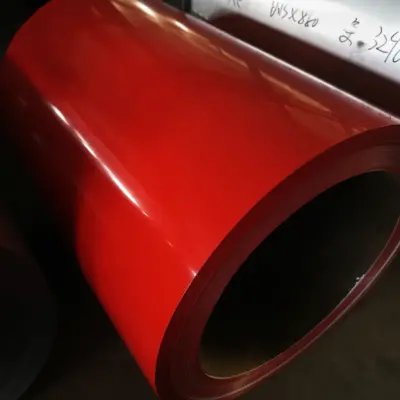
GI Steel Coil Supplier For Construction And Industrial Use
 China
Supplier's customization ability
- Drawing-based customization
- Sample-based customization
- Full customization
Minimum order quantity: 1 ton
Shipping total: To be negotiated
- Lead time:
- confirmed with the quotation
- Packaging:
- standard export packing
- Samples:
- available on request
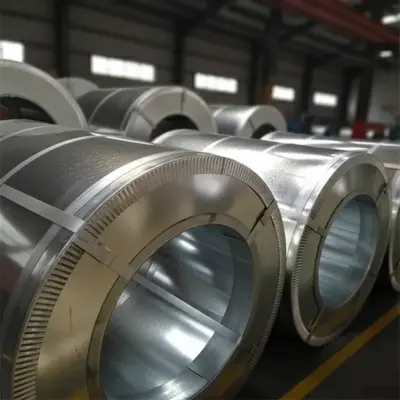
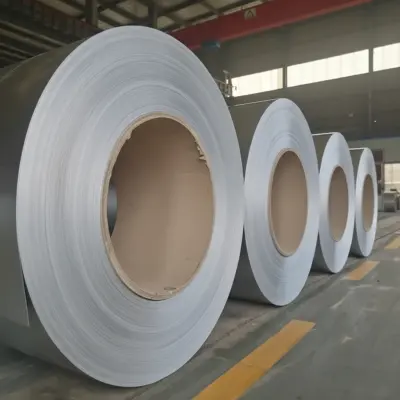
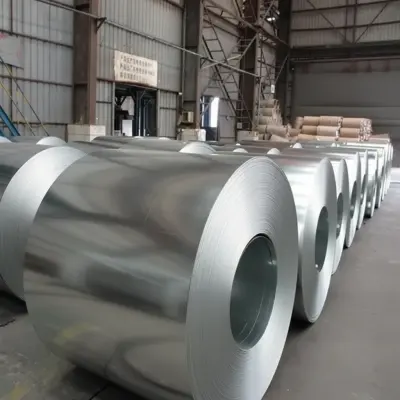
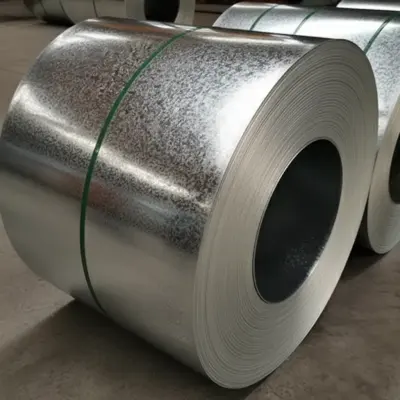
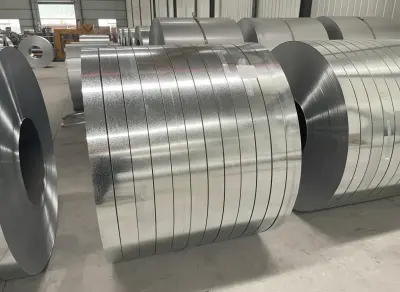
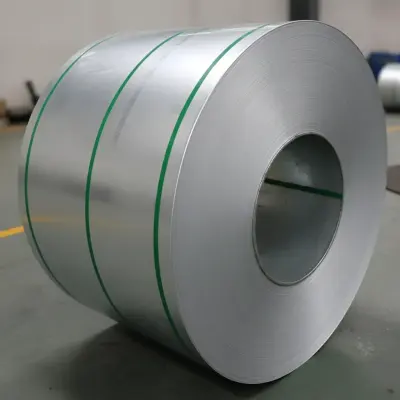
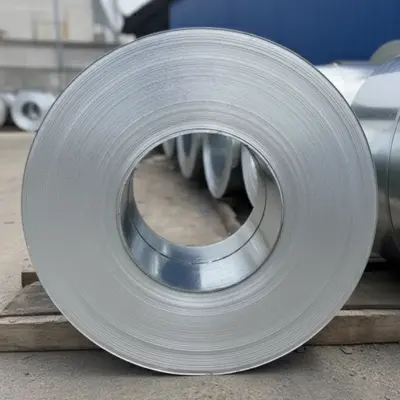
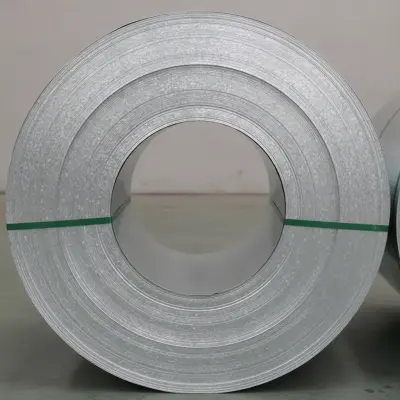
Product details
Technical Specifications of GI Steel Coil
| Property | Parameter | Description |
|---|---|---|
| Product Name | GI Steel Coil | Hot-dip galvanized steel coil with a corrosion-resistant zinc coating |
| Material Grade | ASTM CS Type B / SS Grade 33; EN DX51D+Z / S220GD+Z; JIS SGCC / SGH340; GB DX51D+Z / S220GD+Z | Commercial-quality and structural grades are available; equivalent designations are approximate and must be confirmed against the ordered standard |
| Standard Compliance | ASTM A653/A653M; EN 10346; JIS G 3302; GB/T 2518 | Manufactured and tested according to the specified galvanized steel standard |
| Chemical Composition | C ≤ 0.12%, Mn ≤ 0.60%, Si ≤ 0.50%, P ≤ 0.10%, S ≤ 0.045%, Ti ≤ 0.30% | Representative maximum values for EN DX51D substrate; Cr, Ni and Mo are not normally specified and composition varies by grade |
| Tensile Strength | 270-500 MPa | Representative range for EN 10346 DX51D+Z; structural grades are supplied according to their specified strength class |
| Yield Strength | 140-300 MPa | Typical proof/yield strength range for DX51D+Z; requirements depend on grade, thickness and governing standard |
| Elongation | ≥ 22% | Representative minimum elongation for applicable DX51D+Z thickness ranges under EN 10346 |
| Thickness | 0.12-4.00 mm | Commercial thickness range; tighter tolerances can be specified at ordering |
| Width | 600-1,500 mm | Standard slit or mill-edge coil widths, subject to production capability |
| Zinc Coating | 30-600 g/m² | Total coating mass on both surfaces; common designations include ASTM G30-G235 and EN Z100-Z600 |
| Spangle Type | Regular, minimized or zero spangle | Selected according to appearance, painting and forming requirements |
| Surface Finish | Chromated, non-chromated, oiled, unoiled or anti-fingerprint | Surface treatment helps improve storage protection, paintability and handling performance |
| Coil ID | 508 mm or 610 mm | Inside diameter can be selected to match customer processing equipment |
| Coil Weight | 2-15 metric tons | Typical coil weight range, adjustable according to thickness, width and handling limits |
| Dimensional Tolerance | Per ASTM A653/A653M, EN 10143, JIS G 3302 or GB/T 2518 | Thickness, width, flatness and camber tolerances follow the ordered specification |
| Application | Roofing, wall panels, HVAC ducts, appliances, automotive parts and general fabrication | Suitable for roll forming, bending, profiling, stamping and painted products |
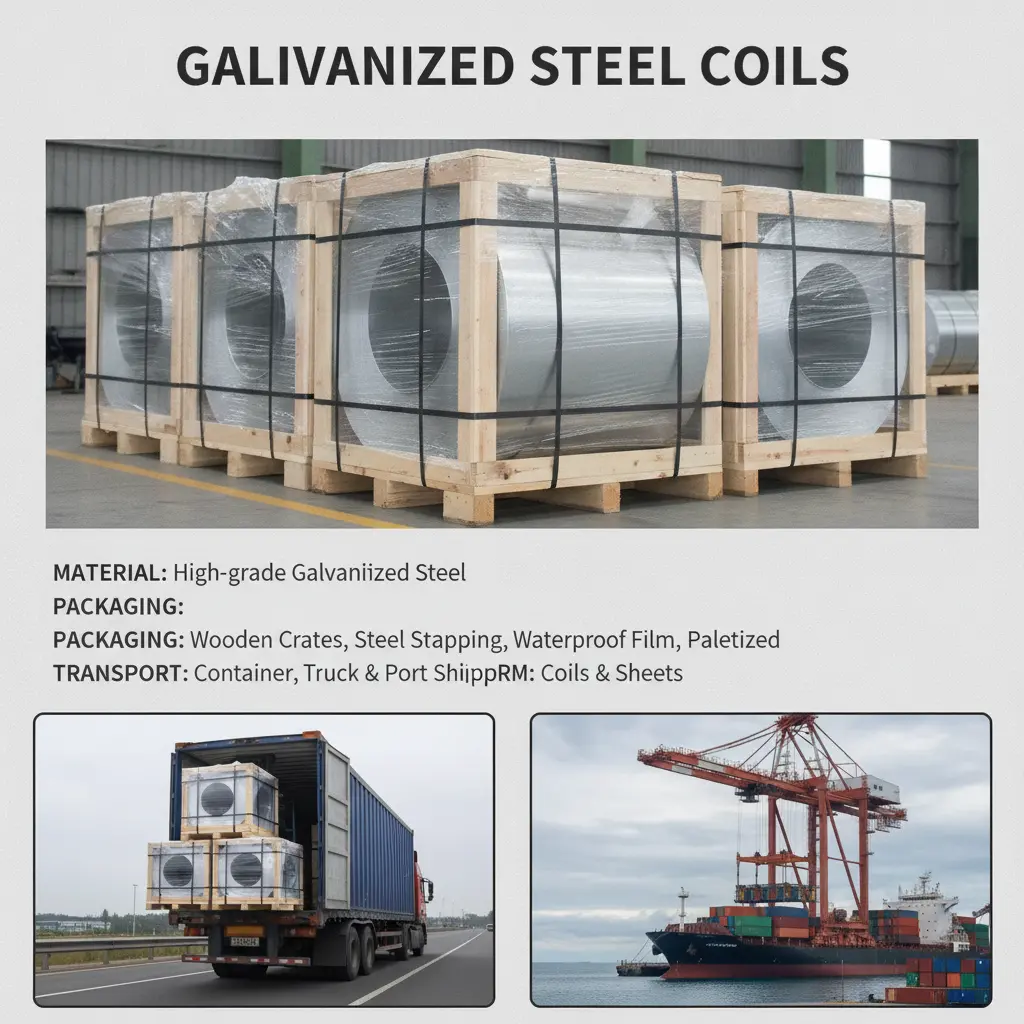
| Packaging | Waterproof paper, protective steel sheet, edge guards and steel straps | Export-grade eye-to-sky or eye-to-wall packaging selected according to shipment method |
| MOQ | Typically 5 metric tons per size | Minimum order quantity may vary by grade, coating mass, dimensions and production schedule |
GI Steel Coil Supplier for Construction and Industrial Use
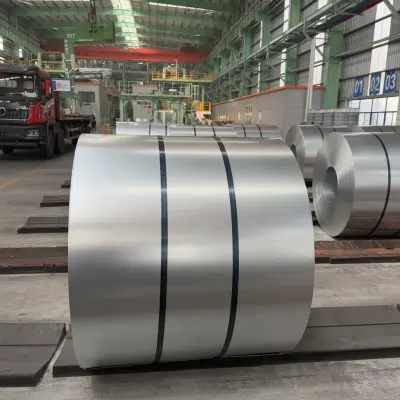
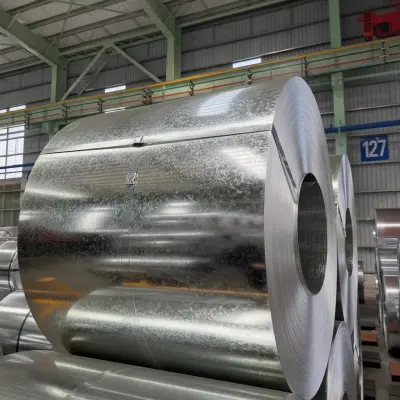
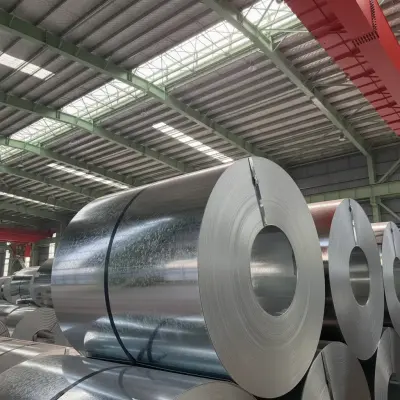
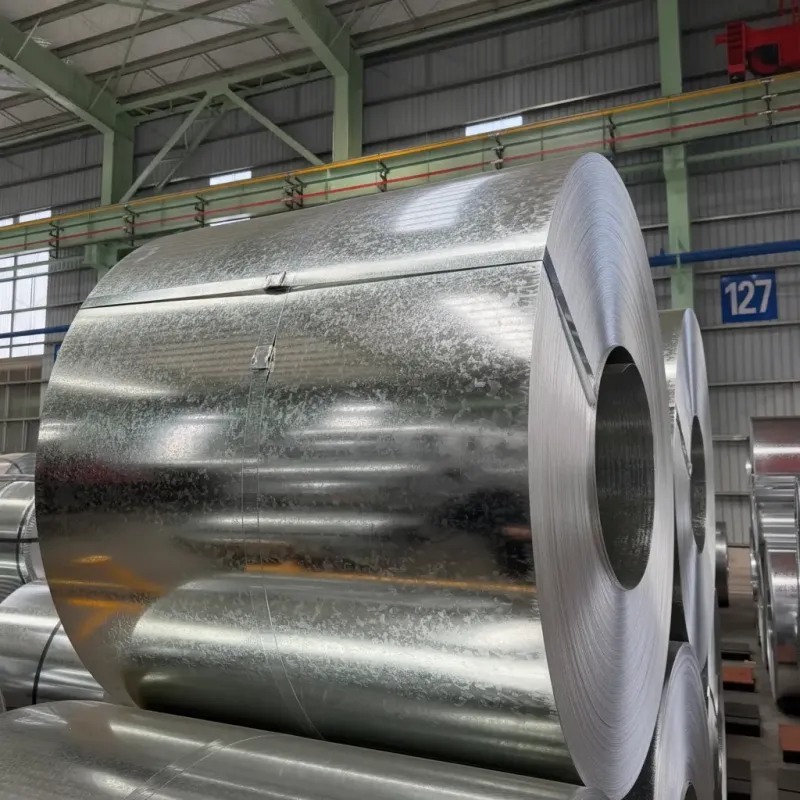
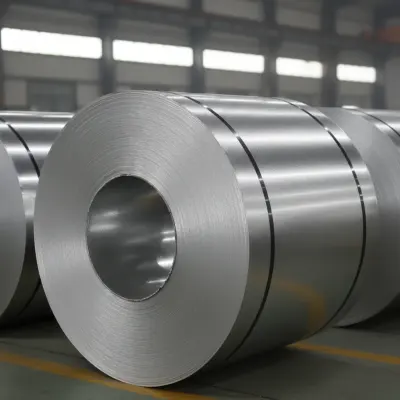
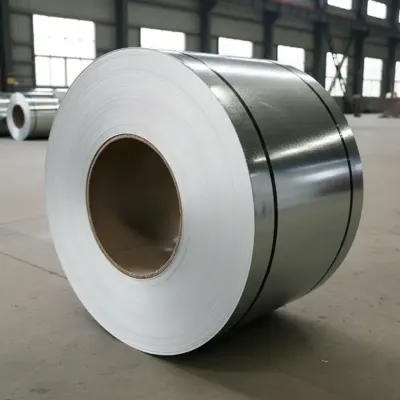
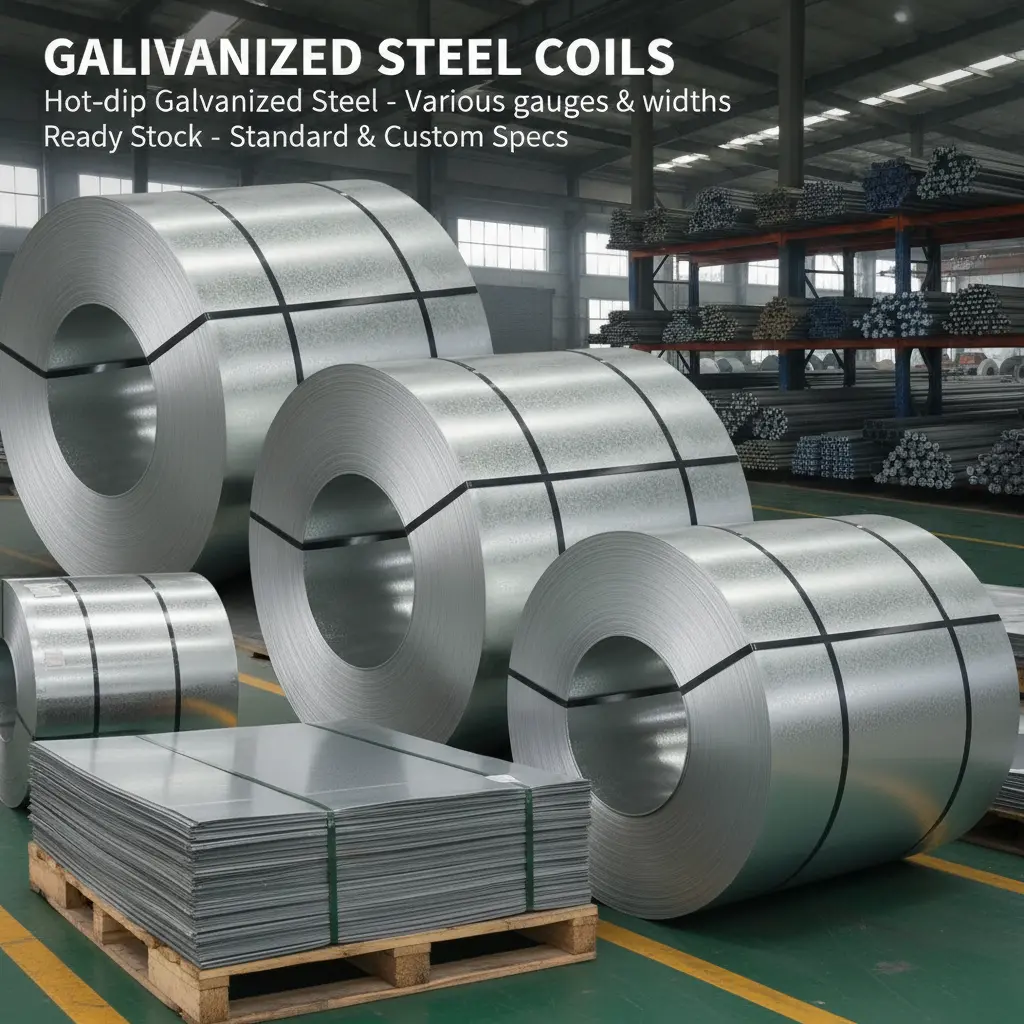
GI Steel Coil is a zinc-coated carbon steel product engineered for corrosion resistance, efficient fabrication, and consistent performance in construction and industrial manufacturing. It is purchased by roofing manufacturers, building-material distributors, HVAC fabricators, appliance producers, and general metalworking companies that require reliable coil feedstock for forming, stamping, cutting, or profiling. Compared with uncoated carbon steel, the galvanized surface provides a sacrificial zinc barrier that helps protect exposed steel from atmospheric corrosion. Buyers can specify the substrate grade, thickness, width, zinc coating designation, surface finish, coil weight, and applicable international standard to match production equipment and end-use requirements.
Product Overview: GI Steel Coil
GI Steel Coil is produced by applying a protective zinc coating to a cold-rolled or hot-rolled steel substrate, most commonly through a continuous hot-dip galvanizing process. The cleaned steel strip passes through a molten zinc bath, after which air knives control the coating thickness. The strip is then cooled, surface-treated, inspected, and wound into coils for shipment or further processing.
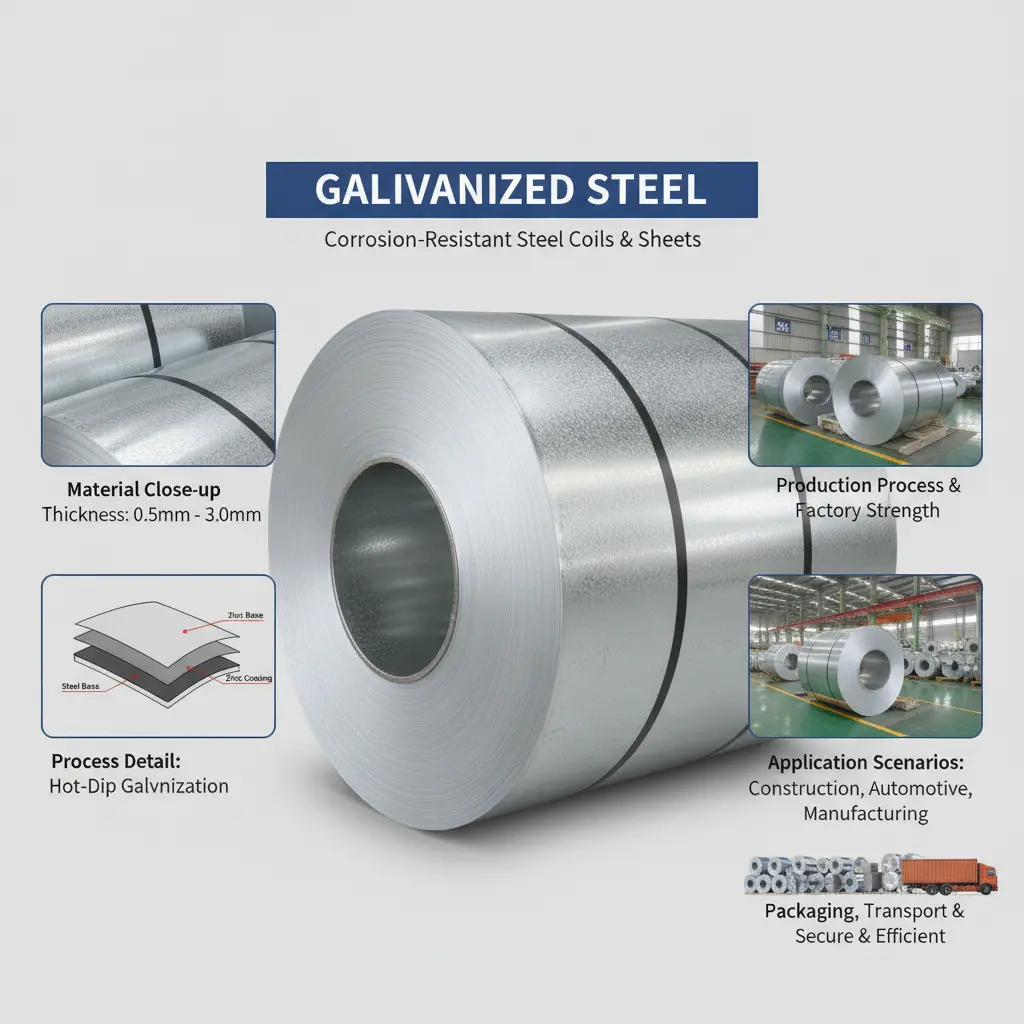
The zinc layer protects the underlying steel in two ways. First, it creates a physical barrier between the steel and the surrounding environment. Second, zinc provides sacrificial protection at small scratches or cut edges. This combination makes galvanized coil suitable for components exposed to humidity, condensation, and normal outdoor conditions. It does not, however, replace project-specific corrosion engineering for marine, chemical, or continuously wet environments.
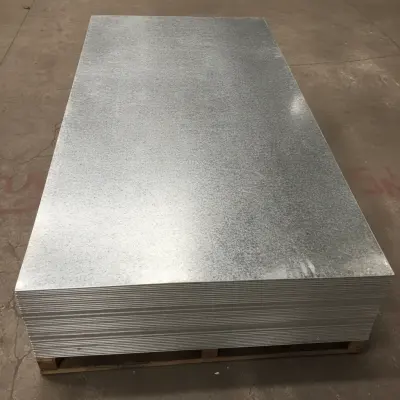
Commercial GI Steel Coil may be supplied with regular spangle, minimized spangle, or a smooth skin-passed surface, subject to the selected standard and production route. Surface treatments can include passivation, oiling, or other specified anti-fingerprint or temporary corrosion-protection systems. Availability and terminology should be confirmed in the supplier’s technical offer. Related galvanized sheet and downstream processing options can be reviewed through [[INTERNAL_LINK]] and [[INTERNAL_LINK]].
Important purchasing characteristics include formability, coating adhesion, dimensional consistency, surface appearance, flatness, and compatibility with roll-forming or stamping equipment. The required combination depends on whether the coil will become roofing panels, ductwork, structural profiles, enclosures, or visible appliance parts.
GI Steel Coil Specifications & Standards
GI Steel Coil specifications should be stated on the purchase order rather than described only as “galvanized coil.” Thickness, width, steel grade, coating mass, surface finish, treatment, edge condition, inside diameter, and coil weight all affect production efficiency and final-part performance. Exact manufacturing ranges are supplier-dependent, so buyers should request a signed technical data sheet before placing an order.
| Specification Item | Common Ordering Options | Procurement Consideration |
|---|---|---|
| Steel substrate | Cold-rolled or hot-rolled carbon steel | Select according to strength, surface, thickness, and forming requirements. |
| Thickness | Specified nominal thickness with agreed tolerance | Confirm whether the quoted value includes the metallic coating. |
| Width | Mill width, slit coil, or project-specific width | Match roll-forming lines and control edge scrap. |
| Zinc coating | Standard-specific coating designation | State coating mass and whether it is measured as total coating on both surfaces. |
| Surface | Regular, minimized, or skin-passed finish where available | Visible components may require tighter appearance criteria. |
| Treatment | Passivated, oiled, passivated and oiled, or another agreed treatment | Check compatibility with painting, bonding, storage, and environmental rules. |
| Edge | Mill edge or slit edge | Slit-edge tolerances and burr direction matter for automated lines. |
| Coil packaging | Eye-to-sky or eye-to-wall, subject to agreement | Coordinate with unloading equipment, container limits, and warehouse handling. |
Applicable standards vary by destination market and application. Buyers should identify both the standard and the exact grade or coating designation. Common references include:
| Standard | Scope Relevant to GI Steel Coil | Typical Buying Use |
|---|---|---|
| ASTM A653/A653M | Steel sheet, zinc-coated or zinc-iron alloy-coated by the hot-dip process | Commercial, forming, and structural applications using ASTM designations |
| EN 10346 | Continuously hot-dip coated steel flat products for cold forming | European construction and manufacturing specifications |
| JIS G 3302 | Hot-dip zinc-coated steel sheet and strip | Projects and production lines using Japanese grade conventions |
| GB/T 2518 | Continuously hot-dip zinc-coated steel sheet and strip | Orders based on Chinese national-standard requirements |
Grades under these standards are not automatically interchangeable. Chemical composition, yield strength, tensile strength, elongation, coating tests, and dimensional tolerances must be verified against the applicable edition of the selected standard. A mill test certificate should report the ordered grade and relevant results rather than relying on an informal cross-reference. See [[INTERNAL_LINK]] for steel-grade selection guidance and [[INTERNAL_LINK]] for coating terminology.
Applications of GI Steel Coil
GI Steel Coil supports high-volume fabrication because it combines corrosion protection with coil-processing efficiency. Typical applications include the following:
- Roofing and wall cladding: Roll-formed corrugated sheets, roofing profiles, siding, flashing, gutters, and building trim. Coating selection should reflect the local climate and expected service life.
- Light steel construction: Studs, tracks, ceiling channels, purlins, cable supports, and other formed sections. Structural components require an appropriate strength grade and documented mechanical properties.
- HVAC and ventilation: Air ducts, housings, plenums, equipment panels, and fittings where formability, coating adhesion, and clean surfaces are important.
- Appliances and electrical products: Internal panels, equipment cabinets, back plates, and non-cosmetic components produced by stamping or bending.
- General industrial fabrication: Storage systems, partitions, enclosures, furniture components, and parts requiring economical atmospheric corrosion protection.
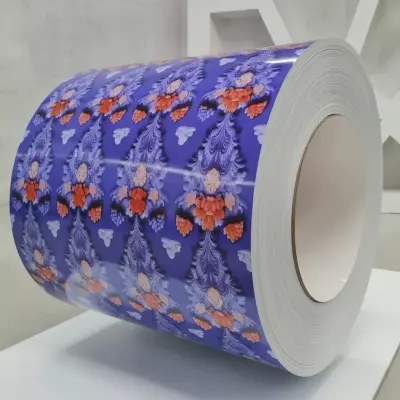
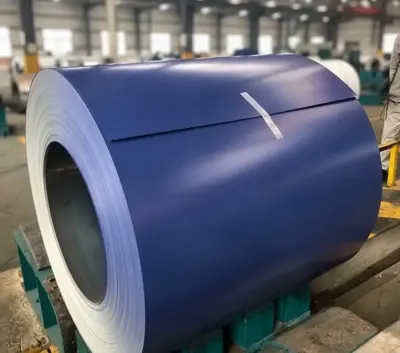
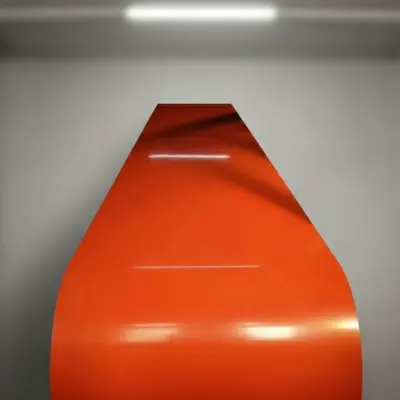
For pre-painted products, buyers should consider whether [[INTERNAL_LINK]] is more suitable than bare galvanized coil. Projects involving highly corrosive exposure may also require a different metallic coating system, protective paint specification, or stainless steel assessment.
How to Choose GI Steel Coil: Buying Guide
GI Steel Coil procurement should begin with the finished component, not only a target price per tonne. A roofing profile, deep-drawn housing, and structural channel place different demands on the substrate and coating. Procurement managers should align the following points with engineering and production teams:
- Define the forming requirement. Specify whether the material will be cut, bent, roll-formed, stamped, welded, or painted. Select a commercial, forming, deep-drawing, or structural grade under the chosen standard as appropriate.
- Confirm dimensions and tolerances. Provide nominal thickness, width, allowable tolerances, edge type, coil inside diameter, outside-diameter limit, and acceptable coil-weight range. These details must match the receiving line and lifting equipment.
- Specify the zinc coating correctly. Use a recognized coating designation from ASTM A653/A653M, EN 10346, JIS G 3302, or GB/T 2518. Avoid assuming that similarly named coatings under different systems are identical.
- Set surface and treatment requirements. State spangle preference, skin-pass requirement, oiling, passivation, and any restrictions on treatment chemistry. Samples may be necessary for exposed or paint-critical parts.
- Request documentation. Depending on the contract, this may include a mill test certificate, certificate of conformity, inspection report, packing list, and country-of-origin documentation. Third-party inspection should be agreed before production.
- Check MOQ and lead time. Minimum order quantity depends on grade, dimensions, coating, mill campaign, and whether slitting is required. Lead time should distinguish production, inspection, inland transport, and international transit.
- Plan logistics and storage. Confirm seaworthy packaging, rust-prevention measures, coil orientation, lifting method, container or breakbulk suitability, and maximum handling weight. Review practical coil-storage guidance at [[INTERNAL_LINK]].
Quotations should use the same specification template so that coating, tolerances, certification, packaging, and freight terms can be compared consistently. For Incoterms and shipment planning, consult [[INTERNAL_LINK]].
GI Steel Coil Frequently Asked Questions
Q: What is the difference between GI Steel Coil and cold-rolled steel coil?
A: Cold-rolled steel coil is an uncoated substrate with a smooth surface and controlled dimensions. GI Steel Coil has an additional zinc coating for corrosion protection. The galvanized product may use cold-rolled steel as its substrate, but its surface behavior, thickness definition, welding conditions, and painting preparation differ.
Q: Is GI Steel Coil the same as galvanized iron?
A: “Galvanized iron” is a traditional commercial term, but modern GI coil is generally zinc-coated steel rather than pure iron. Buyers should specify the steel grade, galvanizing process, and standard instead of relying on the abbreviation alone.
Q: Which certificate should accompany a GI Steel Coil shipment?
A: Buyers commonly request a mill test certificate identifying the heat or coil, ordered standard, grade, dimensions, coating designation, and applicable test results. The precise certificate format and any third-party inspection requirement must be written into the purchase contract.
Q: How do I choose the correct zinc coating?
A: Consider exposure conditions, component design, expected service life, fabrication severity, and the relevant product standard. A heavier coating may improve corrosion reserve but can affect forming behavior, welding, surface appearance, and cost. Project engineers should approve the final designation.
Q: What is the minimum order quantity?
A: MOQ varies with the mill, grade, thickness, width, coating, and production schedule. Standard specifications may be available in smaller commercial lots, while custom widths, uncommon coatings, or special treatments can require a larger production quantity. Request confirmation for the exact specification.
Q: What payment methods are available for international orders?
A: Payment terms are supplier- and contract-specific. Common B2B arrangements may include bank transfer or documentary letter of credit, subject to credit review, order value, destination, and banking requirements. The quotation should state currency, deposit terms, balance timing, and bank charges.
Q: How long does GI Steel Coil production and delivery take?
A: Lead time depends on raw-material availability, mill scheduling, coating requirements, slitting, inspection, and shipment route. Buyers should obtain separate estimates for manufacturing and transit, then allow time for export documentation and destination customs clearance.
Q: Can galvanized coil be painted or welded?
A: Yes, provided the surface treatment, preparation method, paint system, and welding procedure are compatible with galvanized steel. Welding generates zinc fumes and requires appropriate extraction and safety controls. Trial fabrication is advisable before mass production. Additional fabrication information is available at [[INTERNAL_LINK]].
Send your required GI Steel Coil standard, grade, thickness, width, zinc coating, surface treatment, coil weight, quantity, destination, and documentation requirements to request a technically aligned quotation and delivery proposal.
Ratings & Reviews

Know your supplier
Supplier's customization ability
- Drawing-based customization
- Sample-based customization
- Full customization
Minimum order quantity: 1 ton
Shipping total: To be negotiated
- Lead time:
- confirmed with the quotation
- Packaging:
- standard export packing
- Samples:
- available on request