 English
  Español
  Français
  Deutsch
  Português (Brasil)
  Русский
  العربية
Short Distance Multi-Mode Fiber Cables Supplier
 China
China



Supplier's customization ability
- Drawing-based customization
- Sample-based customization
- Full customization
Minimum order quantity: 1 kilometers
Shipping total: To be negotiated
- Lead time:
- confirmed with the quotation
- Packaging:
- standard export packing
- Samples:
- available on request

Product details
Technical Specifications of Short Distance Multi-Mode Fiber
| Property | Parameter | Description |
|---|---|---|
| Optical Fiber Product Name | Short Distance Multi-Mode Fiber | Multimode optical fiber optimized for short-reach data transmission in LAN, data center, and campus network environments |
| Fiber Grade & ITU-T Classification | OM3 / OM4 / OM5 (IEC 60793-2-10) | Compliant with ITU-T G.651.1; OM3/OM4 for 10G–100G, OM5 for SWDM wideband applications |
| Core & Cladding Diameter Range | Core: 50 µm or 62.5 µm; Cladding: 125 µm ± 1 µm | Standard 50/125 µm preferred for high-bandwidth short-distance links; 62.5/125 µm for legacy systems |
| Attenuation Coefficient at 850 nm | ≤ 2.3 dB/km (OM3/OM4); ≤ 2.5 dB/km (62.5 µm) | Primary operating wavelength for VCSEL-based multimode transceivers |
| Attenuation Coefficient at 1310 nm | ≤ 0.6 dB/km | Secondary wavelength; lower attenuation supports extended short-distance links |
| Attenuation Coefficient at 1550 nm | ≤ 0.4 dB/km | Reference parameter; not primary for multimode but verified for full-spectrum quality assurance |
| Macrobending Loss Performance | ≤ 0.5 dB at R = 15 mm (100 turns, 850 nm) | Meets IEC 60793-1-47 bend test; suitable for tight-routing installations in cabinets and trays |
| Chromatic Dispersion Coefficient | Zero-dispersion wavelength: 850 nm ± 30 nm; Dispersion slope ≤ 0.11 ps/(nm²·km) | Optimized for 850 nm VCSEL sources; modal bandwidth dominates over chromatic dispersion at short distances |
| Modal Bandwidth (Overfilled Launch) | OM3: ≥ 1500 MHz·km; OM4: ≥ 3500 MHz·km at 850 nm | Effective Modal Bandwidth (EMB): OM3 ≥ 2000 MHz·km; OM4 ≥ 4700 MHz·km for laser-optimized performance |
| Batch Qualification Rate | ≥ 99.5% | Each production batch undergoes 100% end-face geometry, attenuation, and bandwidth screening before shipment |
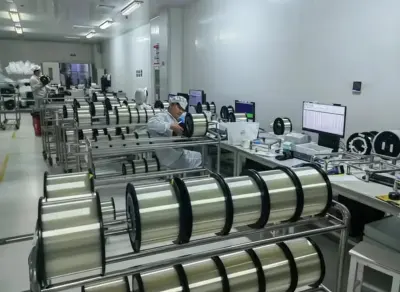
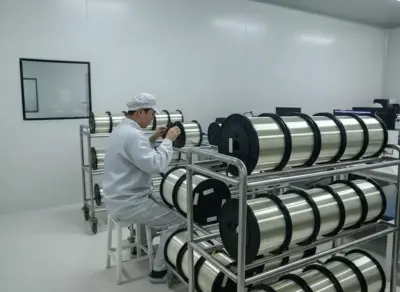
| Manufacturing Environment Standards | ISO Class 7 (ISO 14644-1) cleanroom; temperature 23 ± 2 °C; humidity 45%–55% RH | Controlled drawing and coating environment ensures consistent optical and mechanical performance |
| Core Raw Material Source | High-purity silica preform (SiO₂ purity ≥ 99.999%); MCVD / OVD / VAD process | Graded-index germanium-doped silica core; fluorine-doped silica cladding for precise refractive index profile |
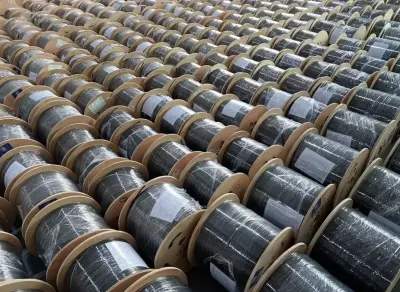
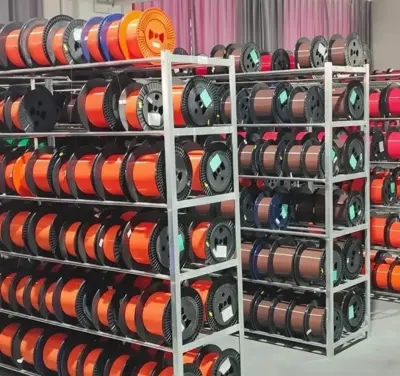
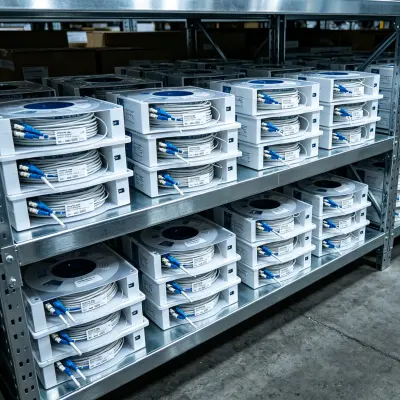
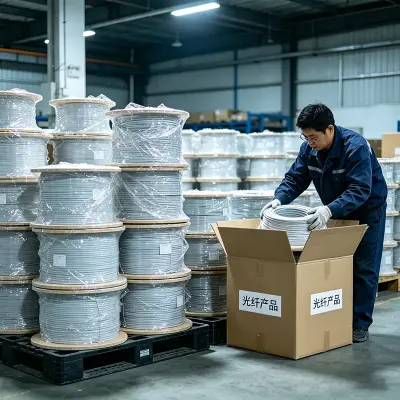
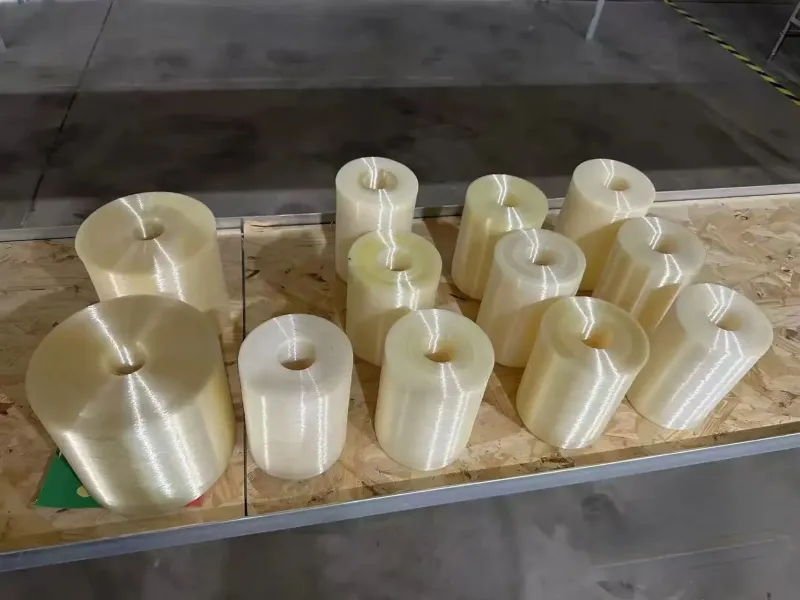
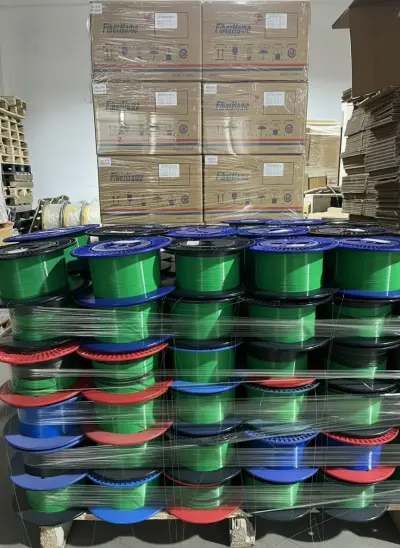
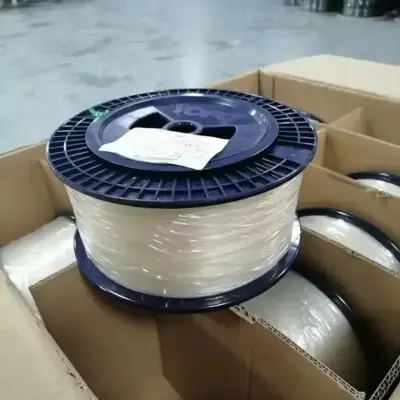
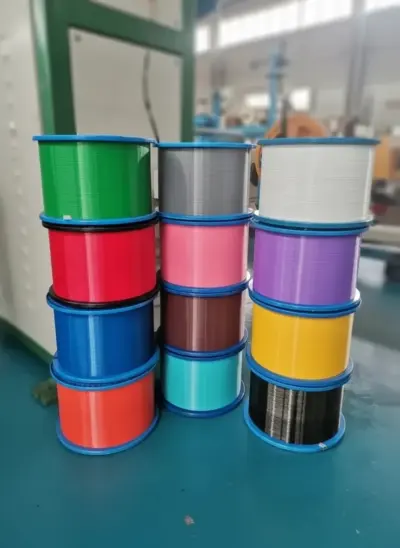
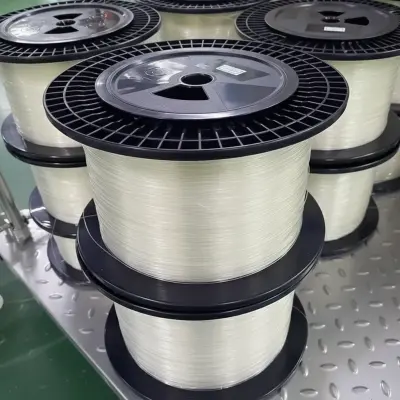
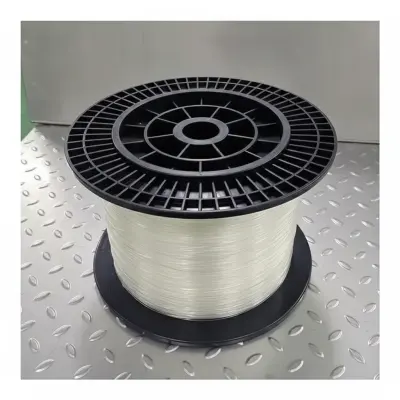
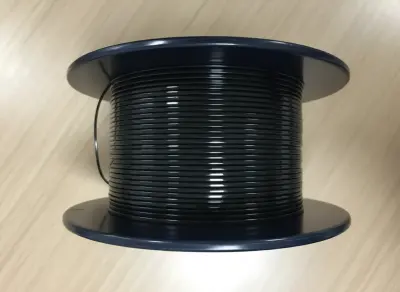
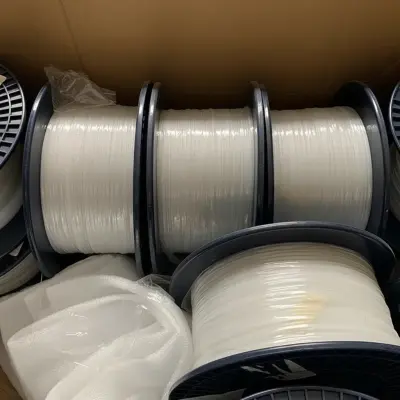
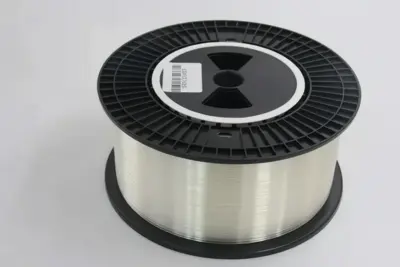
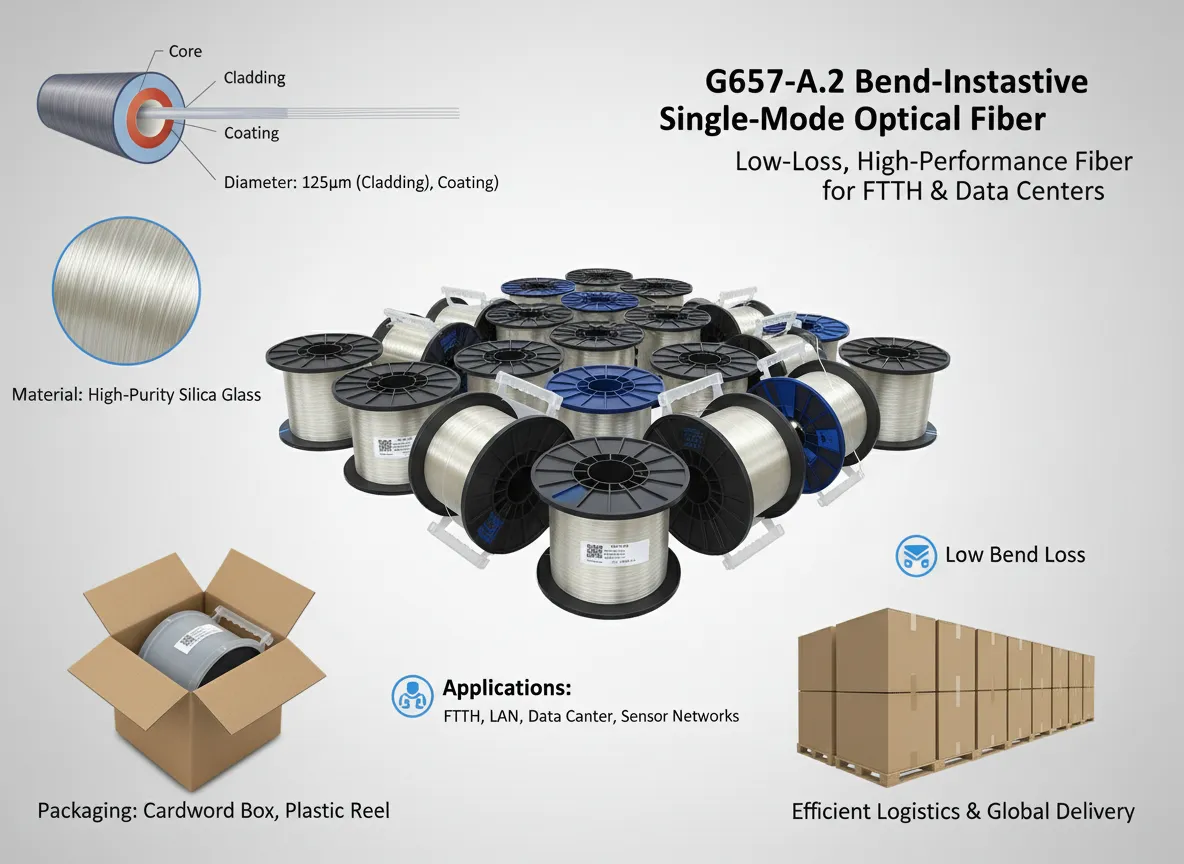
| Packaging Specification | Standard reel: 500 m, 1000 m, 2000 m, 5000 m per spool; custom lengths available | Wooden or plastic bobbin with moisture-proof PE film wrapping; labeled with fiber type, length, and lot number |
| Storage Conditions | Temperature: -20 °C to +60 °C; Relative Humidity: ≤ 85% RH (non-condensing) | Store away from direct sunlight, corrosive gases, and mechanical stress; keep in original sealed packaging |
| Valid Shelf Life | ≥ 20 years under recommended storage conditions | Coating and optical properties remain stable; periodic inspection recommended for long-term warehouse stock |
| Application Scenarios | Data centers (10G/25G/40G/100G), LAN backbone, campus networks, FTTD, medical imaging, industrial automation | Supports IEEE 802.3 Ethernet standards; link distances up to 300 m (OM3) and 400 m (OM4) at 10G |
| Compliance & Certification | IEC 60793-2-10, IEC 60794-1, TIA-492AAAC (OM3), TIA-492AAAD (OM4), RoHS 2011/65/EU, REACH | Third-party test reports available; UL listing and CE declaration provided upon request |
| Minimum Order Quantity (MOQ) | 5,000 m (single fiber type per order) | Mixed-type orders accepted with combined MOQ ≥ 10,000 m; sample reels (500 m) available for qualification testing |
| Monthly Supply Capacity | ≥ 500,000 m / month | Scalable to 2,000,000 m/month with advance scheduling; OEM and private-label services available |
Short Distance Multi-Mode Fiber Cables Supplier
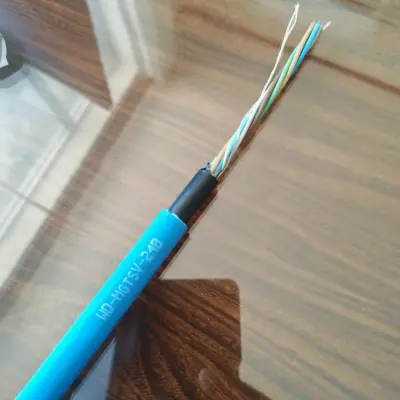
Short distance multi-mode fiber is the backbone of high-speed local area networks, data centers, and enterprise campus connectivity solutions worldwide. As demand for reliable, high-bandwidth intra-building and inter-building communication continues to surge, multimode optical fiber has established itself as the preferred transmission medium for distances typically ranging from 2 meters to 550 meters. Its ability to support parallel light transmission through a larger core diameter makes it exceptionally well-suited for structured cabling systems, storage area networks (SANs), and high-density server interconnects. Industries including finance, healthcare, education, and cloud computing rely on short distance multi-mode fiber to deliver consistent, low-latency data throughput. As a dedicated supplier, we provide rigorously tested multimode fiber cables that meet the most demanding performance standards, ensuring seamless integration into modern network infrastructures across global markets.
What is Short Distance Multi-Mode Fiber?
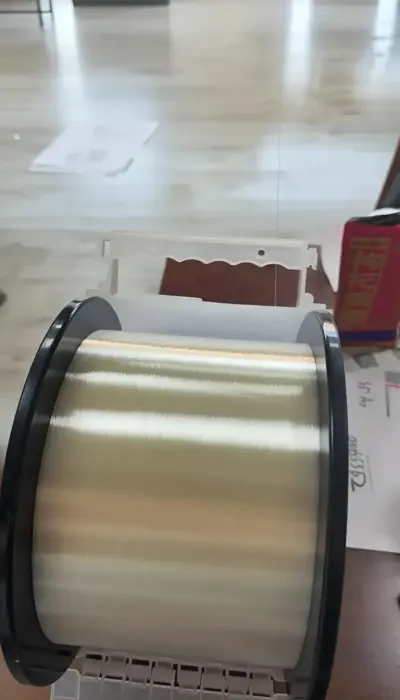
Short distance multi-mode fiber is an optical fiber type featuring a large core diameter — typically 50 µm or 62.5 µm — designed to carry multiple light modes simultaneously over shorter transmission distances. Governed by ITU-T G.651 and IEC 60793-2-10 standards, multimode fiber is classified into OM1, OM2, OM3, OM4, and OM5 categories, each offering progressively higher bandwidth and modal bandwidth performance optimized for 1G, 10G, 25G, 40G, and 100G Ethernet applications.
Short Distance Multi-Mode Fiber Manufacturing and Production Process
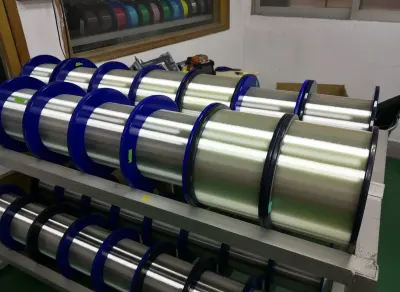
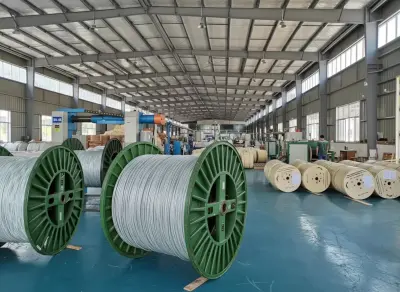
Our multimode optical fiber is manufactured in ISO 9001-certified cleanroom facilities using the Modified Chemical Vapor Deposition (MCVD) and Outside Vapor Deposition (OVD) processes. Precision preform fabrication ensures uniform core-cladding geometry and controlled refractive index profiling. Every production batch undergoes automated dimensional inspection, attenuation testing, and bandwidth verification. Finished cables comply with RoHS, REACH, and UL certifications, guaranteeing consistent quality across large-volume orders.
Short Distance Multi-Mode Fiber Technical Specifications
Our short distance multimode fiber cables deliver outstanding performance across key parameters. Core/cladding diameter: 50/125 µm (OM3/OM4/OM5) and 62.5/125 µm (OM1/OM2). Attenuation: ≤3.5 dB/km at 850 nm and ≤1.5 dB/km at 1300 nm. Effective Modal Bandwidth (EMB): up to 4700 MHz·km (OM4) and 28,000 MHz·km (OM5 at 953 nm). Maximum transmission distance: 550 m at 10G; 150 m at 100G. Operating temperature: -20°C to +70°C. Numerical aperture: 0.200 ± 0.015.
Get a Competitive Quote for Short Distance Multi-Mode Fiber
Partner with a trusted short distance multi-mode fiber supplier to secure premium quality cables at industry-leading wholesale prices. We offer flexible MOQ policies, fast global logistics with full export documentation, and dedicated technical support to ensure your projects are delivered on time and within specification.
- 24/7 expert optical communication engineer support
- Full ITU-T, ISO, RoHS compliance guarantee for all batches
- Exclusive wholesale discounts for bulk telecom, FTTH and data center orders
- Complete technical data sheets and on-site deployment guidance included
Contact us today to get your free quote and full specification sheet within 24 hours!