 English
 Español
 Français
 Deutsch
 Português (Brasil)
 Русский
 العربية

Embedded Penstock Manufacturer | Custom Stainless Steel Water Control Gates

 China

Supplier's customization ability
- Drawing-based customization
- Sample-based customization
- Full customization
Minimum order quantity: 1 ton
Shipping total: To be negotiated
- Lead time:
- confirmed with the quotation
- Packaging:
- standard export packing
- Samples:
- available on request
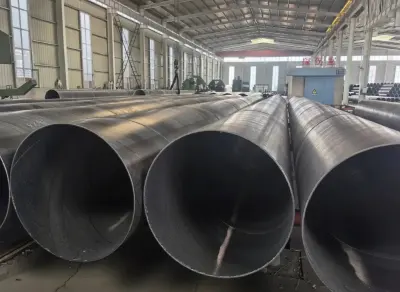
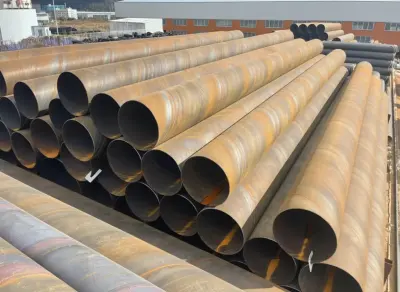
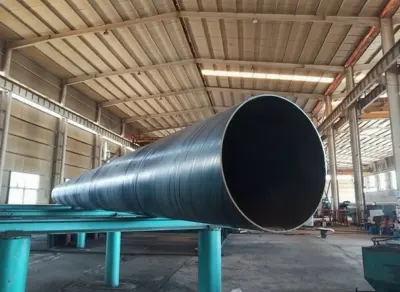
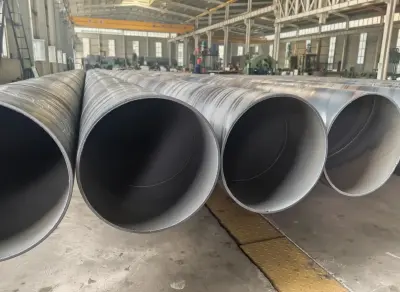
Product details
Embedded Penstock Technical Specifications
| Parameter | Specification |
|---|---|
| Product Name | Embedded Penstock |
| Product Type | Embedded slide gate for open channels, water treatment structures and hydraulic control systems |
| Application | Flow isolation, level control, drainage regulation and channel water management |
| Installation Type | Wall-embedded, channel-embedded or flush-mounted installation |
| Gate Frame | Fabricated steel frame with embedded side guides and bottom sill |
| Gate Plate | Flat sliding plate designed for reliable opening and closing under hydraulic load |
| Materials | Carbon steel, stainless steel 304 or stainless steel 316 according to operating conditions |
| Surface Treatment | Hot-dip galvanizing, epoxy coating, polyurethane coating or stainless steel finish |
| Sealing System | Replaceable EPDM, NBR or other elastomer seals for low-leakage shut-off |
| Operating Mode | Manual handwheel, rising spindle, non-rising spindle, electric actuator or hydraulic actuator |
| Water Flow Direction | Bi-directional or uni-directional operation according to design requirements |
| Nominal Opening | Customizable width and height based on channel or wall opening dimensions |
| Head Rating | Designed for specified upstream and downstream water head; final rating confirmed by engineering calculation |
| Leakage Performance | Low leakage performance subject to seal configuration, installation accuracy and applicable project standard |
| Drive Component | Stainless steel or galvanized carbon steel spindle with bronze, stainless steel or engineered polymer nut |
| Connection Method | Embedded anchor connection, cast-in-place installation or bolted structural connection |
| Control Compatibility | Suitable for local manual control, remote electric control and wastewater automation systems |
| Typical Industries | Municipal wastewater treatment, irrigation, flood control, hydroelectric power and industrial water systems |
| Customization | Available with customized dimensions, materials, coatings, actuator systems and sealing arrangements |
| Inspection Standard | Dimensional inspection, welding inspection, coating inspection, operational testing and leakage testing as required |
Embedded Penstock Manufacturer | Custom Stainless Steel Water Control Gates
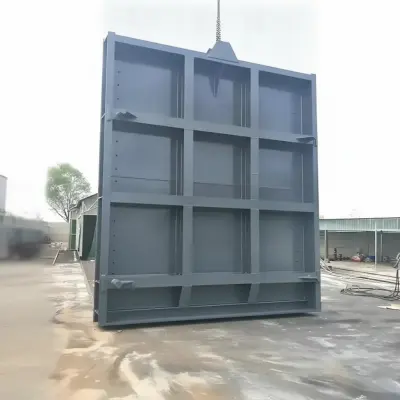
Embedded Penstock systems are permanently integrated into concrete channels or wall openings to isolate, regulate, or divert water and wastewater flows. They are specified by municipal utilities, treatment plant contractors, engineering companies, irrigation authorities, hydropower developers, and industrial facility buyers who require a compact gate without a projecting wall-mounted frame. A correctly engineered embedded design provides controlled seating, accessible operation, corrosion-resistant wetted components, and predictable interface dimensions for civil construction. Customization is normally based on the clear opening, design head, flow direction, operating frequency, leakage requirement, concrete recess, actuator arrangement, material grade, and applicable project standard.
Embedded Penstock Product Overview
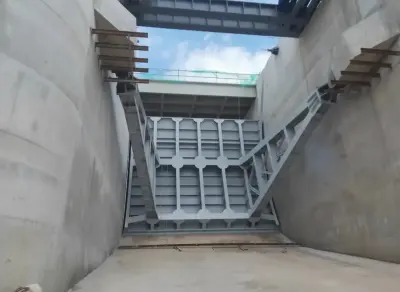
An Embedded Penstock, also called an embedded slide gate or embedded water control gate, consists of a sliding door, guide frame, sealing system, stem, stem nut, yoke or operating platform, and a manual or powered actuator. Unlike a surface-mounted penstock that is anchored to the face of an existing wall, the embedded frame is positioned within a prepared concrete recess or cast into the surrounding structure. This arrangement can reduce obstruction around the opening and create a clean hydraulic profile, but it requires close coordination between gate fabrication and civil construction.
The gate leaf and frame may be fabricated from stainless steel where resistance to wastewater, treated water, humid environments, or selected industrial media is required. Commonly specified material families include austenitic stainless steels such as 304/304L and 316/316L, subject to the water chemistry and project specification. Stainless steel selection should not be based on grade name alone. Chloride concentration, temperature, pH, immersion time, crevice conditions, cleaning chemicals, and the possibility of galvanic contact all affect service performance. Buyers can review related stainless steel material guidance at [[INTERNAL_LINK]].
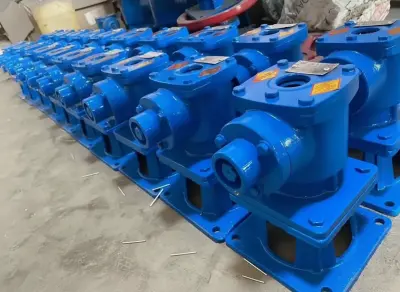
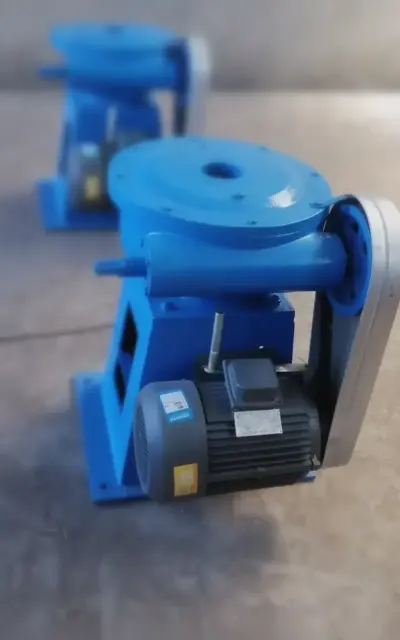
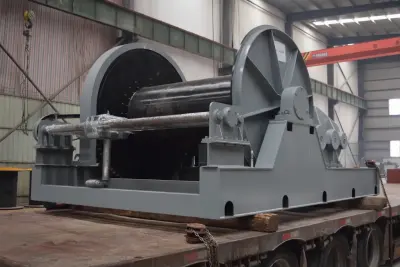
During operation, the door travels vertically inside the frame guides. Resilient seals are compressed against the seating surfaces to control leakage in the specified flow direction. Depending on the civil layout, the Embedded Penstock may use a rising stem, non-rising stem, extension spindle, floor stand, wall bracket, gearbox, electric actuator, or other project-approved operating arrangement. The stem must be checked for tension, compression, buckling, torque, and alignment under the maximum design head.
Key characteristics of an engineered embedded gate include:
- A frame geometry designed for installation inside a concrete recess or formed opening.
- A clear opening matched to the required hydraulic passage rather than only the nominal channel width.
- Gate leaf reinforcement selected for the specified static head and seating direction.
- Replaceable or maintainable sealing components where required by the project.
- Controlled guide clearances that allow movement without excessive gate deflection or binding.
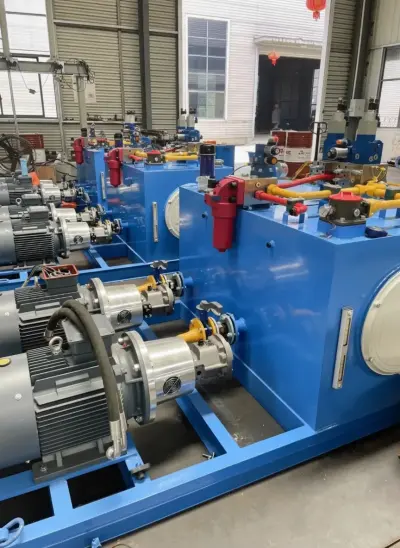
- Manual, gearbox, pneumatic, hydraulic, or electric operation selected according to gate size and duty cycle.
- Defined interfaces for grout, anchors, embedded plates, stem guides, operating floors, and access platforms.
Embedded construction is most suitable for new works or planned structural modifications. For retrofit projects where cutting a deep recess is impractical, a wall-mounted slide gate may be more appropriate. A comparison of installation configurations is available through [[INTERNAL_LINK]].
Embedded Penstock Specifications & Standards
Embedded Penstock specifications should be developed from the hydraulic duty and structural interface, not from opening dimensions alone. The enquiry should identify the clear width and height, maximum water level on each side, normal operating level, on-seating or off-seating pressure, possible reverse head, installation elevation, water composition, operating frequency, and required actuator location. Dimensional tolerances for the concrete recess and finished opening should also be agreed before fabrication.
| Specification Item | Information Required from the Buyer | Engineering Significance |
|---|---|---|
| Clear opening | Width × height and opening shape | Defines the hydraulic passage and principal gate dimensions |
| Design head | Maximum differential head and water level | Determines door reinforcement, stem load, guide design, and actuator torque |
| Flow direction | On-seating, off-seating, or bidirectional | Affects seal arrangement, allowable leakage, and structural loading |
| Installation interface | Recess dimensions, wall thickness, invert level, and grout allowance | Controls frame fit, alignment, and coordination with concrete work |
| Operating method | Handwheel, gearbox, floor stand, hydraulic, pneumatic, or electric actuator | Determines stem arrangement, operating speed, controls, and access requirements |
| Service medium | Water analysis, solids content, temperature, pH, and chemicals | Supports stainless steel, seal, lubricant, and fastener selection |
| Leakage criterion | Applicable standard or project-specific allowable rate | Defines seal design and acceptance testing |
| Documentation | Drawings, material certificates, inspection plan, and test records | Establishes the manufacturing and acceptance evidence required |
For fabricated stainless steel components, ASTM A240/A240M is commonly referenced for chromium and chromium-nickel stainless steel plate, sheet, and strip. ASTM A276/A276M covers stainless steel bars and shapes that may be relevant to stems, shafts, or machined structural parts. Stainless steel fasteners can be specified under ASTM F593 and ASTM F594 where their scope and grade requirements suit the assembly. Equivalent European procurement may refer to EN 10088-2 for stainless steel sheet, plate, and strip and EN 10088-3 for semi-finished products, bars, rods, wire, sections, and bright products.
| Component | Possible Material Option | Relevant Material Standard | Procurement Note |
|---|---|---|---|
| Gate leaf and fabricated frame | 304L or 316L stainless steel, subject to service assessment | ASTM A240/A240M or EN 10088-2 | Confirm grade, product form, thickness, surface condition, and certificate requirement |
| Stem or spindle | Stainless steel bar selected for strength and corrosion conditions | ASTM A276/A276M or EN 10088-3 | Final grade and diameter require load and buckling calculations |
| Bolts, nuts, and washers | Compatible stainless steel fasteners | ASTM F593 and ASTM F594, where applicable | Check strength, galling risk, environmental exposure, and material compatibility |
| Resilient seals | EPDM, NBR, or another project-approved elastomer | Specified by project requirements and service compatibility | Confirm potable-water approval, chemical resistance, temperature, and solids exposure |
For slide-gate design and leakage requirements, project specifications may reference AWWA C561, Fabricated Stainless-Steel Slide Gates, when the proposed gate falls within its scope. EN 12266-1 provides pressure-test procedures and acceptance criteria for industrial valves, but it should only be applied to an Embedded Penstock when the contract expressly identifies it as relevant; it is not an automatic substitute for a slide-gate standard. EN 10204 is frequently used to define inspection document types, including 3.1 inspection certificates for metallic products.
Material standards do not by themselves establish a complete gate design. The approved data sheet, structural calculations, fabrication drawings, welding procedures, leakage criteria, actuator requirements, and inspection and test plan must be read together. Project engineers should also specify whether testing is required at the factory, after installation, or at both stages. Information about inspection documentation can be found at [[INTERNAL_LINK]], while actuator selection considerations are covered at [[INTERNAL_LINK]].
Embedded Penstock Applications
Embedded Penstock equipment is used where a gate must become an integral part of a concrete hydraulic structure. The following applications represent common engineering uses, although the final configuration depends on water chemistry, head, solids loading, civil access, and operating duty.
Municipal Water and Wastewater Treatment
Embedded gates can isolate inlet channels, screening channels, aeration process sections, settlement tanks, filter galleries, and sludge-handling areas. Wastewater applications require attention to rags, grit, fibrous solids, hydrogen-sulfide exposure, and the ability to clean the guides and seals. The gate should be located so maintenance personnel can reach the actuator, stem guides, and sealing area safely. Related wastewater flow-control products are available at [[INTERNAL_LINK]].
Stormwater and Flood-Control Structures
An Embedded Penstock may control water between stormwater chambers, detention basins, culverts, pumping stations, and flood-management channels. Procurement specifications should define whether the gate normally remains open or closed, how rapidly it must operate, and whether differential pressure can occur in either direction. Debris accumulation and infrequent operation should be considered when choosing the actuator and guide arrangement.
Irrigation and Raw-Water Distribution
Irrigation networks use embedded gates at canal divisions, intake structures, balancing reservoirs, and distribution channels. In these installations, practical issues include sediment, seasonal shutdown, remote locations, manual operating effort, and the availability of electrical power. Gate dimensions should be coordinated with the hydraulic engineer to avoid an unintended restriction in the channel. Additional channel-gate configurations can be reviewed at [[INTERNAL_LINK]].
Hydropower and Industrial Water Systems
Hydropower auxiliary systems and industrial facilities may use an Embedded Penstock to isolate cooling-water channels, intake passages, drainage systems, process-water basins, or non-pressurized transfer structures. These projects often require documented calculations, defined corrosion allowances or material grades, actuator interlocks, and project-specific inspection points. An embedded slide gate should not be treated as a substitute for a pressure pipeline valve unless it has been expressly designed and verified for that duty.
Marine and Coastal Water-Control Works
Coastal drainage, tidal control, and seawater-adjacent structures can expose stainless steel to elevated chlorides and persistent crevices. Grade 316L may offer improved resistance compared with 304L in some chloride environments, but it is not universally resistant to seawater corrosion. A materials specialist should evaluate chloride level, temperature, oxygenation, deposits, cleaning regime, and expected service life before the material is finalized.
How to Choose an Embedded Penstock: Buying Guide
Embedded Penstock procurement should begin with a complete duty schedule. A purchasing manager can obtain more comparable quotations by issuing the same hydraulic, dimensional, material, documentation, and commercial requirements to every supplier. A nominal size without design-head information is insufficient because two gates with the same opening may require different leaf reinforcement, stem diameter, seal geometry, and operating torque.
Confirm Dimensions and Civil Interfaces
Provide the clear opening, channel width, wall thickness, invert elevation, recess depth, installation orientation, operating-floor elevation, and available headroom. State whether the concrete is new or existing and identify any embedded plates, anchors, reinforcement conflicts, or grout zones. Request a general arrangement drawing for civil approval before production. The drawing should clearly identify the frame envelope, opening, stem centerline, actuator position, travel, anchor locations where applicable, and required installation tolerances.
Define Hydraulic and Operating Conditions
State the maximum differential head rather than only the water depth. Confirm on-seating, off-seating, and reverse-head conditions, including abnormal or emergency cases. Specify the normal number of operations, required opening or closing time, and whether modulating service is expected. Frequent throttling can produce vibration, uneven seal wear, and flow conditions that differ from simple isolation duty, so it must be disclosed during selection.
Select Materials and Seals from Service Data
Give the supplier representative water-analysis data and identify disinfectants, chlorides, oils, hydrocarbons, solids, temperature, and cleaning chemicals. EPDM is often considered for water service, while NBR may be considered where resistance to certain oils is relevant, but the actual elastomer must be verified against the complete medium and temperature range. For potable-water projects, request the approval or compliance documentation mandated by the destination market. Seal-selection guidance is available at [[INTERNAL_LINK]].
Specify Certification and Inspection
State whether EN 10204 type 3.1 inspection certificates are required for metallic materials and whether certificates must be traceable to component markings. Define expectations for welding procedure qualification, welder qualification, dimensional inspection, surface examination, passivation records, assembly checks, and leakage testing. Third-party inspection should be agreed before order placement because witness and hold points can affect both cost and production scheduling.
Clarify MOQ, Lead Time, and Commercial Terms
Embedded gates are commonly engineered against project dimensions, so the applicable minimum order quantity depends on size, material, actuator, documentation, and manufacturing arrangement. Buyers should request the actual MOQ in the formal quotation rather than assume a standard quantity. Lead time should be confirmed after drawing approval requirements, raw-material availability, actuator supply, inspection points, and order volume are known.
Payment terms are also supplier- and order-specific. The purchase contract should identify the deposit or agreed payment instrument, balance-payment milestone, inspection rights, document-release conditions, currency, bank charges, and any letter-of-credit requirements. Avoid relying on informal wording when project approval or shipment depends on specific certificates and test records.
Plan Packing and International Logistics
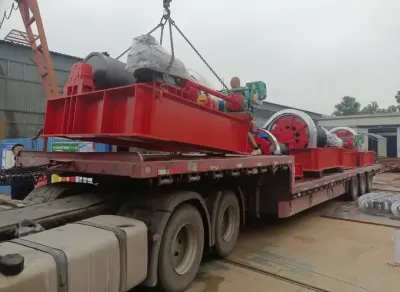
Confirm whether the gate will be shipped assembled or partially disassembled. Large frames may require transport supports, lifting points, moisture protection, and clearly marked loose components. The packing list should identify the gate, actuator, stem sections, couplings, stem guides, seals, fasteners, installation tools, and documentation. Buyers should verify package dimensions and weights before selecting containerized, breakbulk, or other suitable transport. Shipping advice for fabricated steel equipment is available at [[INTERNAL_LINK]].
Embedded Penstock Frequently Asked Questions
Q: What is the difference between an Embedded Penstock and a wall-mounted penstock?
A: An Embedded Penstock has a frame designed to sit within a formed concrete recess or to be integrated into new concrete work. A wall-mounted penstock is fixed to the face of a wall around an existing opening. Embedded construction can provide a less obstructed profile, but it demands earlier civil coordination and accurate recess dimensions. Wall-mounted construction is often more practical for retrofit work where forming a new recess would be disruptive.
Q: Should I specify 304L or 316L stainless steel?
A: The decision should be based on water chemistry and exposure conditions. Type 316L contains molybdenum and generally provides better resistance to localized corrosion than 304L in many chloride-bearing environments. However, 316L is not automatically suitable for every coastal, seawater, chemical, or high-chloride application. Provide chloride concentration, temperature, pH, immersion conditions, cleaning chemicals, and expected deposits for a project-specific material review.
Q: Which standards can be specified for an Embedded Penstock?
A: AWWA C561 may be specified for fabricated stainless-steel slide gates that fall within its scope. Stainless steel plate can be ordered to ASTM A240/A240M or EN 10088-2, while bar products may be specified to ASTM A276/A276M or EN 10088-3. EN 10204 can define the required inspection document type. The contract must identify the applicable edition, leakage requirement, testing method, and any project deviations.
Q: Can material certificates and inspection records be supplied?
A: Certification availability depends on the agreed order scope and the traceability maintained through procurement and fabrication. Buyers requiring EN 10204 type 3.1 certificates, welding records, dimensional reports, material traceability, passivation records, or leakage-test reports should list each document in the enquiry and purchase order. Requirements introduced after production begins may be impossible to reconstruct or may cause additional cost and delay.
Q: What is the minimum order quantity for a custom Embedded Penstock?
A: There is no universal MOQ for custom water-control gates. It depends on opening size, material grade, actuator type, documentation level, production routing, and whether several units share the same design. Submit the quantity and technical schedule for a confirmed commercial offer. For multi-gate projects, identify which units are identical and which have different heads, openings, or actuator arrangements.
Q: What payment methods are available for international orders?
A: Payment methods are agreed commercially for each order and may depend on contract value, buyer credit arrangements, destination, production duration, and banking requirements. Ask for the accepted options in the formal quotation. The final agreement should define payment milestones, currency, bank charges, inspection conditions, and the documents required before payment or shipment.
Q: How long does production and delivery take?
A: Lead time cannot be established from the product name alone. It depends on technical clarification, drawing approval, stainless steel and seal availability, actuator procurement, order quantity, inspection hold points, and packing requirements. International transit is additional to manufacturing time. For a reliable schedule, confirm separate dates for drawing submission, approval, production, factory inspection, dispatch, and estimated transport.
Q: Can an Embedded Penstock seal against pressure from both directions?
A: Bidirectional sealing may be engineered, but it must be stated in the enquiry. A gate designed mainly for on-seating head can behave differently under off-seating pressure because the water load acts away from the seating face. Provide the maximum differential head in both directions so the manufacturer can evaluate seal geometry, guide restraint, leaf deflection, stem loading, and the applicable leakage criterion.
Q: Can the gate be supplied with an electric actuator?
A: Electric operation can be specified when power, controls, access, and duty conditions are defined. Required inputs include power supply, enclosure and environmental conditions, control voltage, operating speed, open-close or modulating duty, local controls, remote signals, limit switches, torque protection, and any plant-control interface. The actuator should be sized from calculated gate thrust and operating torque, including an appropriate service allowance.
Q: What information is needed to prepare an accurate quotation?
A: Provide the clear opening, maximum differential head, flow direction, installation drawing, concrete-recess dimensions, operating-floor elevation, service medium, preferred stainless steel grade, seal requirements, actuator type, quantity, destination, certification needs, inspection plan, and requested delivery schedule. Photographs and measured drawings are useful for retrofit work, but critical dimensions should be verified on site before manufacture.
Q: How should an Embedded Penstock be installed and commissioned?
A: The frame must be positioned plumb, level, square, and free from twist before grouting or final concrete placement. Temporary supports should hold the specified geometry without distorting the guides. After curing, installers should clean the opening, verify stem alignment, check fasteners and guides, operate the gate through its full travel, and perform the specified site leakage test. The approved installation manual and project method statement remain the controlling documents.
Send your Embedded Penstock opening dimensions, design head, flow direction, civil interface drawing, service conditions, actuator preference, quantity, and certification requirements to request a technical review and itemized quotation. Supplying complete project data at the enquiry stage allows the proposed stainless steel water control gate, documentation package, production schedule, and shipping arrangement to be evaluated on the same basis.
Ratings & Reviews

Know your supplier
Supplier's customization ability
- Drawing-based customization
- Sample-based customization
- Full customization
Minimum order quantity: 1 ton
Shipping total: To be negotiated
- Lead time:
- confirmed with the quotation
- Packaging:
- standard export packing
- Samples:
- available on request