 English
 Español
 Français
 Deutsch
 Português (Brasil)
 Русский
 العربية

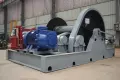
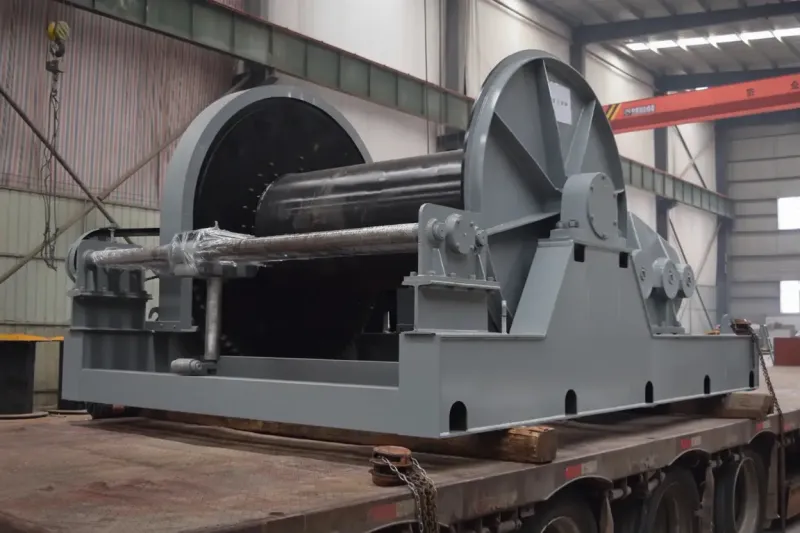
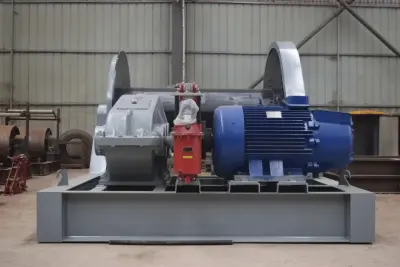
Single Drum Hoist for Reliable Heavy-Duty Material Handling

 China
Supplier's customization ability
- Drawing-based customization
- Sample-based customization
- Full customization
Minimum order quantity: 1 pieces
Shipping total: To be negotiated
- Lead time:
- confirmed with the quotation
- Packaging:
- standard export packing
- Samples:
- available on request
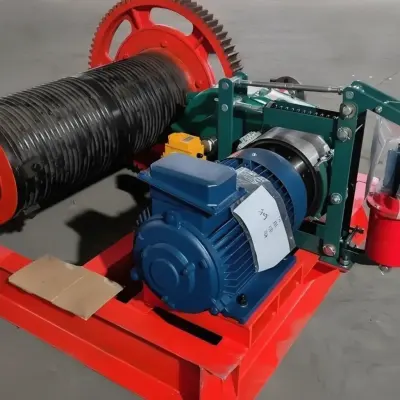
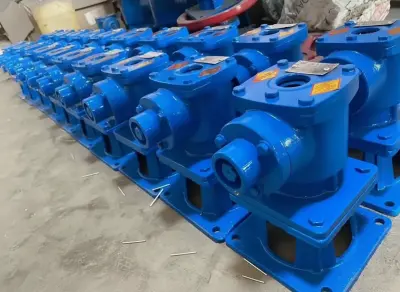
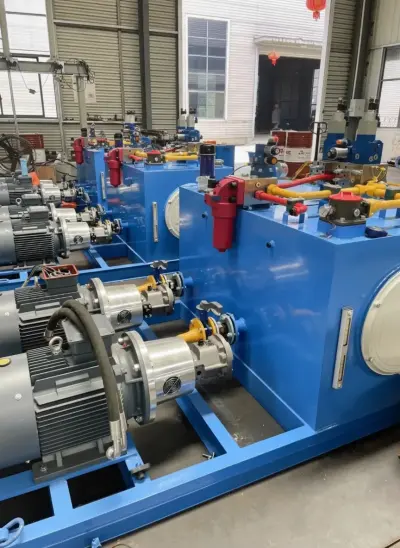
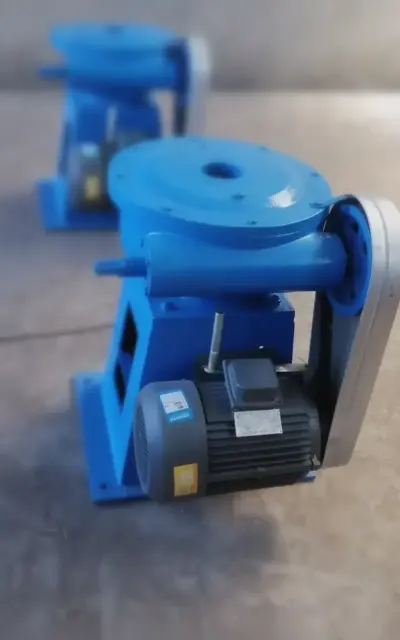
Product details
Single Drum Hoist Technical Specifications
| Attribute | Specification |
|---|---|
| Product Name | Single Drum Hoist |
| Equipment Type | Single-drum mine hoist for vertical lifting and lowering operations |
| Application | Mine shaft hoisting, material handling, personnel transportation, skip hoisting and cage hoisting |
| Drum Configuration | Single cylindrical winding drum |
| Hoisting Load | Customized according to lifting capacity, shaft depth and operating conditions |
| Rated Lifting Speed | Configured according to payload, hoisting depth and mine production requirements |
| Maximum Hoisting Depth | Designed according to shaft depth, rope arrangement and hoisting cycle |
| Drum Diameter | Selected according to wire rope diameter, lifting load and applicable safety standards |
| Drum Width | Customized according to wire rope length, rope winding layers and drum capacity |
| Wire Rope Type | Steel wire rope; diameter and construction selected according to the hoisting system design |
| Drive Motor | AC electric motor with power rating matched to the required hoisting torque and speed |
| Drive Control | Variable frequency drive or other configurable electric control system for smooth acceleration and deceleration |
| Braking System | Hydraulic or electro-hydraulic safety brake system with fail-safe braking function |
| Brake Control | Automatic braking control with emergency stop and overspeed protection interfaces |
| Transmission | Gear transmission or direct-drive configuration according to model and duty requirements |
| Guide System | Compatible with shaft guide rails, guide ropes or cage and skip guidance systems |
| Control Mode | Manual, semi-automatic or automatic operation according to the control cabinet configuration |
| Safety Protection | Overspeed protection, over-winding protection, slack-rope detection, emergency stop, limit switches and brake monitoring |
| Electrical Supply | Customized to the installation site power supply, typically three-phase industrial AC power |
| Installation | Surface-mounted or underground installation with foundation and alignment requirements |
| Operating Environment | Suitable for industrial and mining environments; ambient temperature, humidity and altitude to be confirmed before ordering |
| Manufacturing Standard | Manufactured and tested according to applicable mine hoist, lifting equipment and electrical safety requirements |
| Customization Options | Hoisting capacity, drum size, motor power, lifting speed, brake type, control system, rope specification and installation layout |
| Typical Industries | Coal mining, metal mining, non-metallic mining, construction shaft projects and industrial vertical lifting |
| After-Sales Support | Technical design, installation guidance, commissioning support, operator training and spare parts service |
| Quotation Information | Provide lifting capacity, hoisting depth, rated speed, shaft dimensions, wire rope data, power supply and duty cycle for accurate selection |
Single Drum Hoist for Reliable Heavy-Duty Material Handling
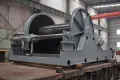
A single drum hoist is a powered lifting unit that winds wire rope onto one grooved drum to raise, lower, position, or pull industrial loads. The equipment serves overseas distributors, crane integrators, mining contractors, steel plants, shipyards, workshops, and maintenance teams that require controlled material handling in demanding working environments. Its single-drum configuration offers a practical balance between lifting performance, installation simplicity, and service access. Buyers can specify the hoist according to rated load, lifting height, duty cycle, lifting speed, power supply, control method, rope arrangement, and installation layout. Correct specification helps reduce downtime, improve operator control, and ensure that the hoist works as part of a safe, compliant lifting system.
Product Overview: Single Drum Hoist
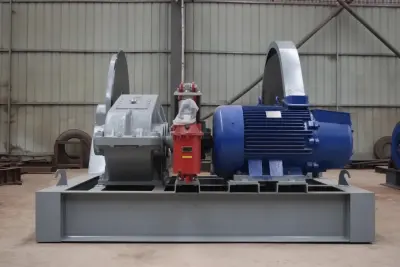
A single drum hoist uses a rotating drum, wire rope, rope guide or rope anchorage, drive system, braking arrangement, and control equipment to perform vertical lifting or controlled pulling. Unlike a double-drum arrangement, the rope is stored and operated on one drum. This design is suitable for applications where one independent lifting line is sufficient and where the installation benefits from a relatively straightforward mechanical layout.
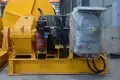
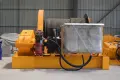
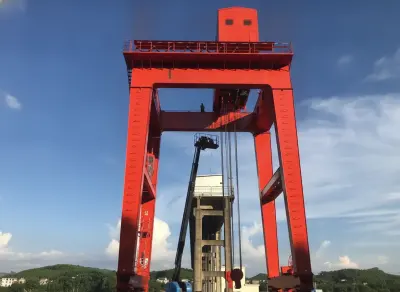
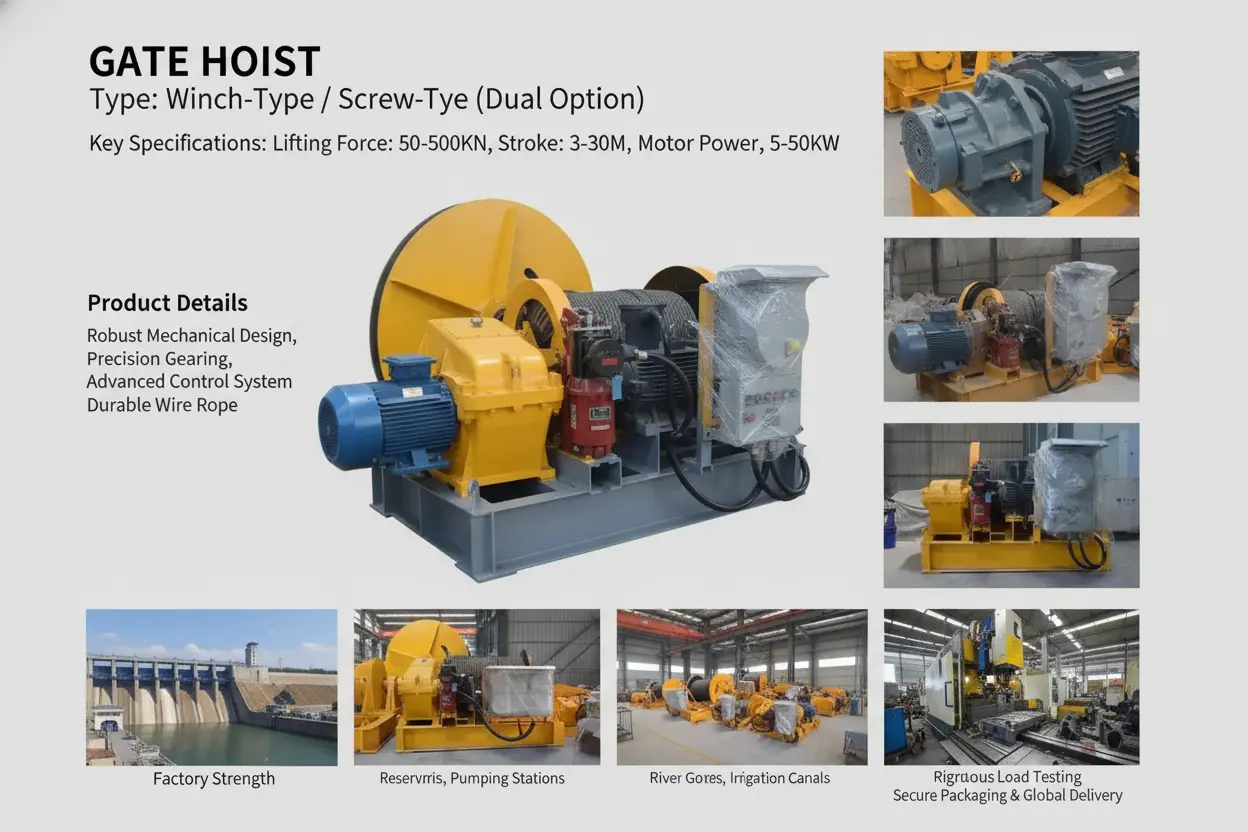
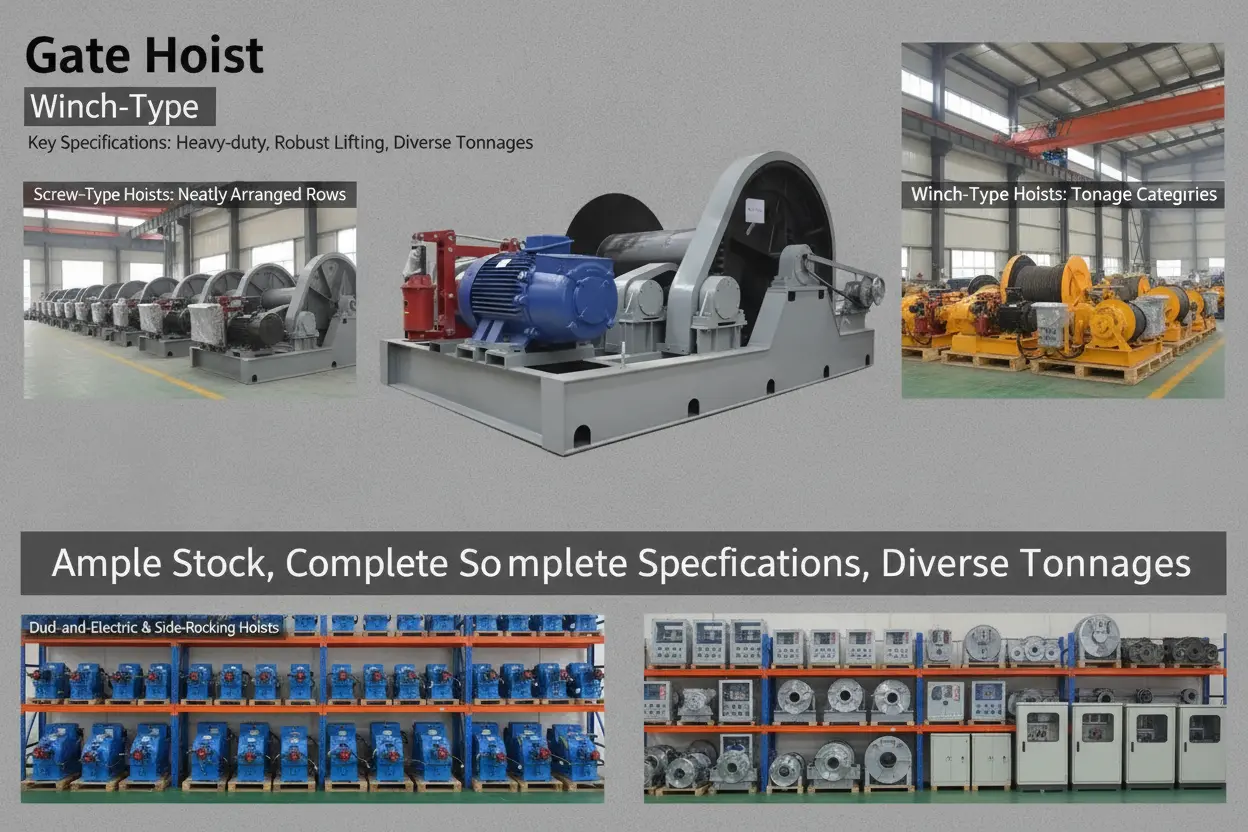
The main structural and functional elements generally include a fabricated or machined drum, a geared motor or other drive assembly, a service brake, bearings, a frame or base, an electrical control panel, and protective guards. Depending on the project, the unit may be supplied as a standalone hoist, a winch-style lifting mechanism, or a component integrated into an overhead crane, gantry crane, jib crane, monorail system, platform, or custom lifting structure. See the related wire rope hoist product range when comparing drum-based lifting configurations.
Material selection depends on the load path and design duty. Structural parts are commonly produced from weldable carbon steel or low-alloy structural steel, while the drum requires suitable surface quality and dimensional control to support orderly rope winding. The wire rope, sheaves, hooks, shackles, and other lifting accessories must be selected as a coordinated system. A hoist should never be evaluated only by motor power or drum size; the complete load-bearing arrangement determines the safe working capability.
Typical features of a project-specified single drum hoist may include:
- One grooved drum for organized wire-rope winding and controlled rope tracking.
- Geared electric drive or another drive method selected for the available power and duty requirements.
- Mechanical or electromagnetic braking designed to hold the load when lifting motion stops.
- Pendant, push-button, radio, or integrated control arrangements, subject to the project specification.
- Limit devices, emergency-stop provisions, overload protection, guards, and other safety functions where required.
- Base-mounted, trolley-mounted, crane-mounted, or custom support configurations.
- Documentation suitable for engineering review, installation, inspection, and maintenance.
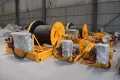
For buyers comparing equipment, the distinction between a single drum hoist and a double drum hoist is primarily functional. A single drum unit is generally chosen for one lifting point or one rope path. A double drum solution may be needed where two synchronized rope paths, independent lifting actions, or a wider load arrangement is required. The correct choice depends on the load geometry, reeving system, available headroom, control logic, and applicable local regulations.
Specifications & Standards for a Single Drum Hoist
Single drum hoist specifications should be confirmed from the approved technical drawing and quotation rather than inferred from the product name. Capacity, lift, speed, duty classification, rope diameter, drum dimensions, motor data, and controls can vary substantially between projects. The following table lists the principal parameters that should be defined during inquiry.
| Specification | What the buyer should confirm |
|---|---|
| Rated capacity | Maximum working load, including the intended lifting arrangement and any reeving or hook-block configuration. |
| Lift height or rope travel | Required vertical travel, lower hook position, upper hook position, and any reserve rope requirements. |
| Lifting speed | Single speed, two speed, or variable-speed operation; acceleration and stopping behavior should also be reviewed. |
| Duty cycle | Operating hours, starts per hour, load spectrum, ambient conditions, and the intended classification or service group. |
| Wire rope | Rope construction, nominal diameter, length, termination, minimum breaking force, and compatibility with the drum and sheaves. |
| Drum | Groove profile, pitch, winding direction, usable rope capacity, flange dimensions, and rope-layer arrangement. |
| Drive and power supply | Motor rating, voltage, frequency, enclosure, insulation class, starting method, and site electrical requirements. |
| Installation | Base or support interface, anchor arrangement, headroom, access for maintenance, and environmental exposure. |
| Controls and protection | Control station, emergency stop, upper and lower limits, overload protection, guarding, and system interlocks. |
| Surface protection | Preparation grade, coating system, dry-film requirement, corrosion category, and any marine or outdoor exposure requirement. |
Applicable international standards
The applicable standard depends on the hoist design, installation, country of use, and whether the equipment is treated as a crane hoist, winch, or a component of a complete lifting machine. For overhead and underhung hoists, ASME B30.16, Overhead Underhung and Stationary Hoists, is a commonly referenced safety standard in North American projects. Where the equipment is designed as a power-driven winch or hoist, EN 14492-2, Cranes - Power Driven Winches and Hoists, may be relevant for European projects. These standards address safety-related design, operation, inspection, or equipment provisions within their defined scope; the supplier should confirm the exact edition and applicability for the project.
For crane-related classification and design review, ISO 4301-1, Cranes - Classification - Part 1: General, can be used to define the utilization class and load spectrum framework. In China, GB/T 3811, Design Rules for Cranes, is a major reference for crane design. A project may also require local occupational safety rules, electrical standards, machinery directives or regulations, and site-specific inspection requirements. A buyer should identify the governing market and compliance route before ordering. Related information on crane design standards can support the initial technical review.
Wire rope selection and retirement criteria should be addressed separately. ISO 4309, Cranes - Wire Ropes - Care and Maintenance, Inspection and Discard, is widely used as a reference for inspection and discard decisions on crane wire ropes. EN 12385 is a relevant European wire-rope standard series, while ASTM A1023/A1023M covers stranded carbon steel wire ropes for general purposes in its defined scope. The selected rope must match the drum groove, sheave dimensions, termination method, operating environment, and design factor specified by the responsible engineer.
Certificates should be tied to the actual supplied equipment. Depending on the destination and contract, the documentation package may include a general arrangement drawing, load or capacity data, motor and brake information, material certificates for specified components, inspection records, test reports, operation and maintenance instructions, spare-parts information, and a declaration or certificate required by the governing regulation. Standards should never be presented as a blanket approval without checking the full system and the required conformity assessment route.
Applications of a Single Drum Hoist
A single drum hoist can be used wherever one controlled rope path is adequate for the lifting or pulling task. Its suitability still depends on engineering calculations, support design, load stability, and the operating environment.
- Steel service centers and fabrication plants: The hoist can support the handling of dies, tooling, fabricated assemblies, maintenance components, and other heavy items around production or repair areas.
- Mining and bulk-material facilities: A suitably protected unit may be used for maintenance lifting, equipment replacement, access systems, or controlled handling around processing equipment. Dust, temperature, corrosion, and inspection requirements must be assessed.
- Shipyards and marine workshops: Single-drum lifting equipment can be integrated into workshop cranes, service platforms, or machinery-handling systems where the structure and coating system are designed for the exposure conditions.
- Warehouses and industrial maintenance departments: The hoist may lift motors, pumps, gearboxes, valves, molds, and other service items when a fixed overhead or gantry support is available.
- Construction and infrastructure projects: Project-specific lifting or pulling systems may use a single drum arrangement for positioning components, subject to engineered anchorage, rated capacity, and local site safety rules.
For applications involving hazardous areas, outdoor exposure, high temperatures, corrosive atmospheres, or frequent impact loading, the inquiry should identify these conditions explicitly. Buyers may need special motors, brakes, enclosures, coatings, cables, limit devices, or inspection procedures. A custom lifting equipment solution is more appropriate when standard dimensions do not match the site layout.
How to Choose / Buying Guide for a Single Drum Hoist
1. Start with the real load case
Define the maximum lifted load, not merely the average load. Include hooks, slings, spreader beams, lifting beams, buckets, grabs, and other attachments that remain supported by the hoist. Confirm whether the stated capacity refers to the hook load, the rope pull, or the complete lifting arrangement. Also identify whether loads are balanced, guided, suspended freely, or exposed to side loading. A hoist designed for vertical lifting should not be used for uncontrolled dragging or side pulling unless the manufacturer and responsible engineer approve that operating mode.
2. Match utilization and duty
Two hoists with the same rated capacity may require different motors, brakes, drums, bearings, and thermal designs because their operating patterns differ. Provide expected daily operating hours, lifting frequency, average load spectrum, peak load frequency, starts per hour, and required design life. Classification should be selected using the relevant project framework, such as ISO 4301-1 or the applicable national standard. This information is essential for avoiding both under-specification and unnecessary over-sizing. Buyers can compare a heavy-duty electric hoist against a lighter-duty option after the duty profile is documented.
3. Check the rope and drum as a matched pair
The drum must provide adequate rope storage for the required lift while maintaining the minimum number of retained wraps specified by the design. Groove geometry, winding direction, rope layers, flange height, and fleet angle influence rope life and operation. The rope termination must be suitable for the intended load and inspection method. Do not substitute a different rope diameter or construction without confirming drum and sheave compatibility. If the equipment will operate outdoors or near saltwater, corrosion protection and rope lubrication requirements should be included in the purchase specification.
4. Review installation and controls
Obtain the general arrangement drawing before final approval. Verify base dimensions, anchor points, reaction loads, maintenance clearances, access to the brake and rope termination, lifting points for installation, and the position of the control panel. Confirm the site voltage and frequency, cable routing, grounding, control location, emergency stop arrangement, and any required communication with the crane or plant control system. A hoist that fits the load calculation but cannot be inspected or serviced safely is not a complete procurement solution.
5. Specify certificates and inspection documents
State the required standards and documents in the request for quotation. Depending on the market, this may include design calculations, factory test records, dimensional inspection, electrical test results, brake testing, material traceability for specified parts, and a manual in the required language. Ask the supplier to identify which documents are included as standard and which require separate review or witnessing. Certification requirements should be agreed before production because late changes can affect design, testing, and delivery.
6. Confirm MOQ, lead time, and shipment terms in writing
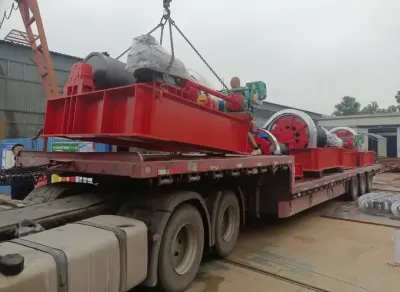
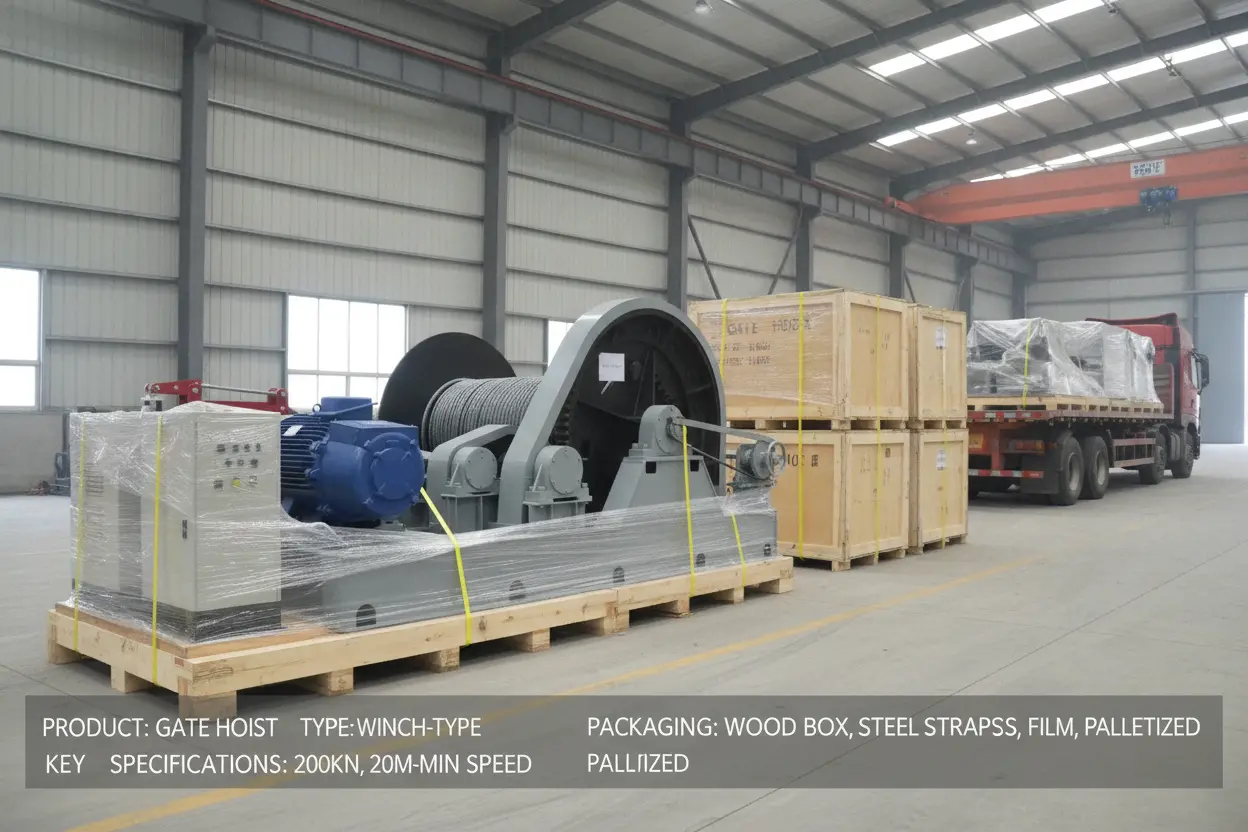
There is no universal minimum order quantity for a single drum hoist. It may depend on the configuration, degree of customization, production schedule, and supplier policy. Similarly, lead time can change according to motor, brake, control, coating, testing, and documentation requirements. Request a written schedule covering drawing approval, manufacturing, inspection, packing, and dispatch. Confirm the agreed Incoterm, packing method, lifting points, gross dimensions, net and gross weight, spare parts, and export documents. Freight planning should be based on the final packed dimensions rather than an early estimate.
Frequently Asked Questions About a Single Drum Hoist
Q: What is the difference between a single drum hoist and a double drum hoist?
A: A single drum hoist uses one drum and one primary rope-storage path, making it suitable for many one-point lifting or pulling applications. A double drum hoist uses two drums and may support two independent or synchronized rope paths. The decision depends on load geometry, required control functions, reeving, lifting points, and the design of the complete machine. A double-drum arrangement is not automatically more suitable simply because it has more drums.
Q: Can the single drum hoist be supplied with different lifting capacities and speeds?
A: Capacity and speed are normally project-specific. They depend on the design load, reeving, rope selection, drum dimensions, motor, gearbox, brake, duty cycle, and power supply. Buyers should provide the required hook load, lift, speed, operating pattern, and installation arrangement so the supplier can propose a technically compatible configuration rather than selecting only by nominal motor power.
Q: Which standards should be specified for an international order?
A: The correct standard depends on the destination and equipment scope. ASME B30.16 may be relevant for overhead, underhung, or stationary hoists in North American projects. EN 14492-2 may apply to power-driven winches and hoists in European-oriented specifications. ISO 4301-1 supports crane classification, and GB/T 3811 is a key reference for crane design in China. The buyer should identify the governing regulation and ask the supplier to confirm the exact standard edition and scope before quotation.
Q: Does the supplier provide a certificate of conformity?
A: Certificate requirements vary by destination, application, and contract. The supplier may provide test records, drawings, manuals, material documents, and a declaration or certificate required by the agreed compliance route. However, the exact document package should be written into the purchase order. A general product certificate cannot replace site-specific approval, installation verification, or inspection required by local law.
Q: What information is needed to request a quotation?
A: Provide rated load, maximum and minimum hook positions, lifting speed, duty cycle, power supply, control method, installation type, wire-rope requirements if known, ambient temperature, indoor or outdoor use, corrosion or hazardous-area conditions, applicable standard, delivery destination, and documentation requirements. A drawing, photograph, or sketch of the support structure is useful when the hoist will replace existing equipment or fit into a restricted space.
Q: Is there a standard MOQ for a single drum hoist?
A: No universal MOQ should be assumed. The minimum order may depend on the supplier’s commercial policy and the amount of engineering or customization involved. Some projects are handled as individual units, while larger programs may be quoted as a batch. Ask for the MOQ, sample or prototype policy, and any engineering charges together with the formal quotation.
Q: What payment methods are available?
A: Payment terms are commercial conditions that must be confirmed with the supplier for each order. Common international arrangements may include a deposit with the balance before shipment, documentary arrangements, or other agreed methods subject to company approval and trade-risk controls. The quotation should state currency, payment milestones, bank charges, document release conditions, and whether inspection or testing affects the final payment.
Q: How long is the delivery time?
A: Delivery time depends on the approved design, component availability, motor and brake selection, control panel, coating, testing, documentation, and shipping arrangement. It is more reliable to request a schedule with drawing approval and manufacturing milestones than to rely on a generic lead-time statement. The final dispatch date should be linked to technical approval and receipt of the agreed commercial conditions.
Q: What maintenance should be planned after installation?
A: Maintenance should follow the manufacturer’s manual and the applicable safety standard. The program commonly includes checks of the wire rope, drum grooves, rope termination, hook and lifting accessories, brake performance, fasteners, bearings, controls, limit devices, guards, and electrical connections. Inspection frequency should reflect utilization, environment, and local regulations. Rope discard decisions should be based on documented inspection criteria such as those referenced in ISO 4309, not on appearance alone.
Q: Can the hoist be customized for outdoor or corrosive service?
A: Customization may be possible, but it must be defined during engineering. Relevant items can include motor and control enclosure, coating system, stainless or protected components where justified, rope lubrication, drainage, heaters, weather guards, and electrical protection. Outdoor service also affects inspection access and support-structure design. Provide the environmental conditions and requested corrosion category so the supplier can review the complete equipment package. More options are described in the industrial hoist customization guide.
Send the required load, lift, speed, duty cycle, power supply, installation drawing, destination, applicable standard, and documentation expectations to request a single drum hoist quotation. The technical team can then review the rope-and-drum arrangement, drive and brake selection, controls, inspection scope, packing dimensions, and commercial terms before issuing a project-specific proposal. Use the request-for-quotation form or contact the export sales team to begin the specification review.
Ratings & Reviews

Know your supplier
Supplier's customization ability
- Drawing-based customization
- Sample-based customization
- Full customization
Minimum order quantity: 1 pieces
Shipping total: To be negotiated
- Lead time:
- confirmed with the quotation
- Packaging:
- standard export packing
- Samples:
- available on request