 English
 Español
 Français
 Deutsch
 Português (Brasil)
 Русский
 العربية

Hydraulic Gate Hoist Manufacturer | Reliable Hydraulic Steel Gate Lifting System

 China


Supplier's customization ability
- Drawing-based customization
- Sample-based customization
- Full customization
Minimum order quantity: 1 pieces
Shipping total: To be negotiated
- Lead time:
- confirmed with the quotation
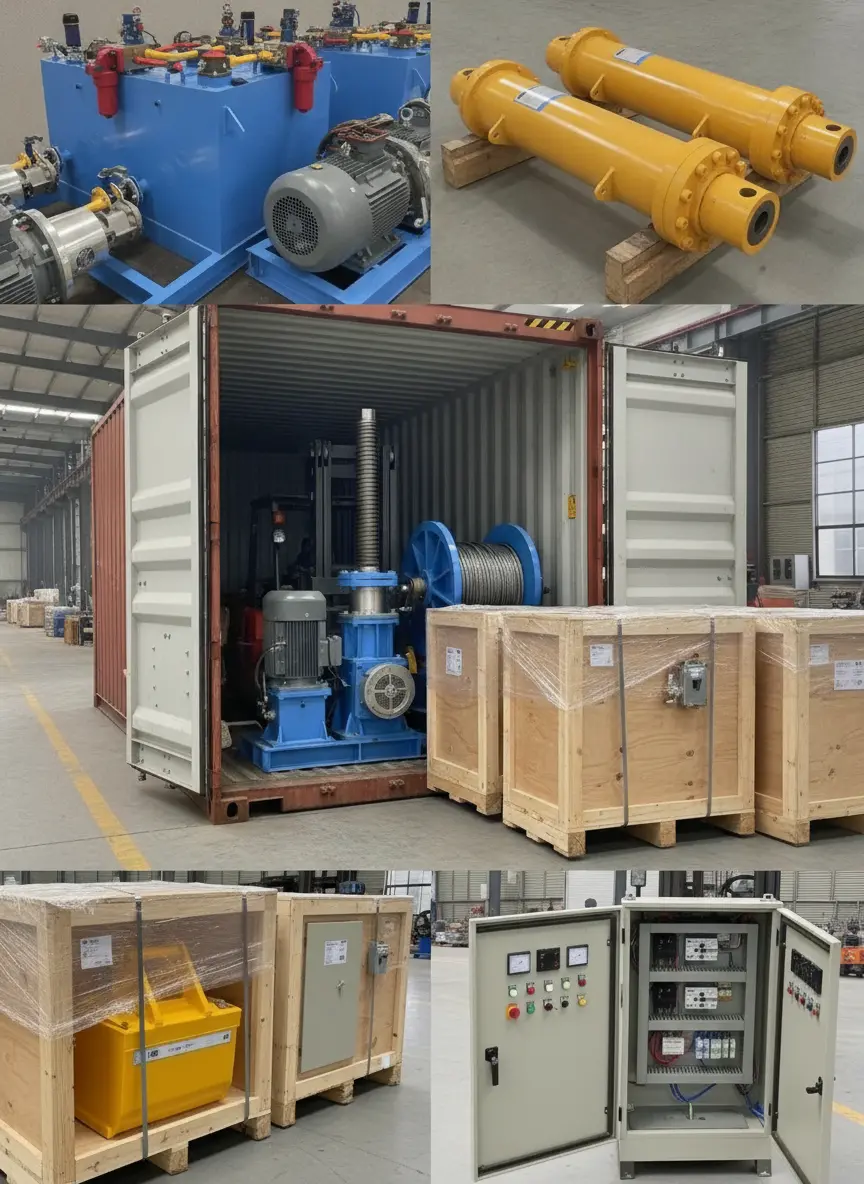
- Packaging:
- standard export packing
- Samples:
- available on request
Product details
Hydraulic Gate Hoist Technical Parameters
| Parameter | Specification |
|---|---|
| Product Type | Hydraulic gate hoist for water conservancy, hydropower, irrigation, flood control and industrial sluice gates |
| Hoisting Capacity | Available in customized configurations according to gate weight, water pressure, friction resistance and operating conditions |
| Rated Hydraulic Pressure | Typically 16 MPa or 20 MPa; configurable according to system design requirements |
| Hydraulic Cylinder | Double-acting or single-acting hydraulic cylinder with carbon steel or stainless steel construction options |
| Stroke Length | Customized according to gate opening height and installation layout |
| Control Mode | Local manual control, electric hydraulic control, remote control or PLC automatic control |
| Synchronization Accuracy | Hydraulic synchronization system supports stable and balanced gate lifting; accuracy configurable for multi-point hoisting |
| Power Supply | Common options include 380 V, 50 Hz, 3-phase; other voltages and frequencies available upon request |
| Operating Speed | Adjustable lifting and lowering speed according to hydraulic flow rate and project requirements |
| Protection Grade | Outdoor control cabinets and electrical components commonly available with IP55 or higher protection |
| Working Temperature | Generally -20°C to +50°C; low-temperature and high-temperature configurations available |
| Material | Hydraulic power unit and structural components manufactured from high-strength carbon steel; corrosion-resistant coatings available |
| Surface Treatment | Shot blasting, epoxy primer and polyurethane topcoat, or hot-dip galvanizing according to environmental requirements |
| Safety Features | Hydraulic pressure relief, overload protection, mechanical locking, emergency stop and position limit protection |
| Installation | Floor-mounted, embedded or customized support-frame installation according to civil structure and gate design |
| Standards | Designed and manufactured according to applicable water conservancy, hydraulic machinery, electrical safety and customer project standards |
| Customization | Hoisting force, cylinder quantity, stroke, control system, corrosion protection and installation dimensions can be customized |
Hydraulic Gate Hoist Manufacturer | Reliable Hydraulic Steel Gate Lifting System
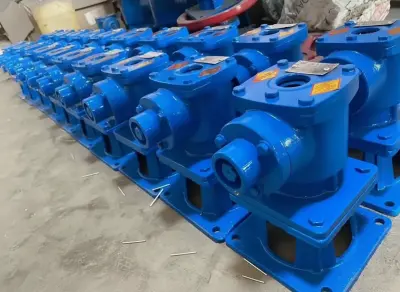
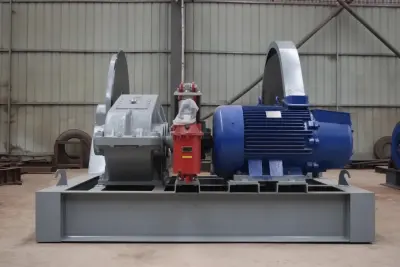
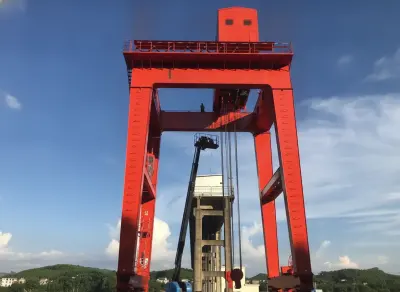
Hydraulic gate hoists provide controlled lifting, lowering, and positioning for water-control gates in dams, hydropower stations, irrigation works, flood-control facilities, and industrial water systems. This hydraulic gate hoist solution is intended for overseas EPC contractors, hydraulic engineering companies, equipment distributors, government water authorities, and maintenance teams that need dependable gate operation under demanding site conditions. A properly engineered system combines a steel lifting structure, hydraulic cylinders, power units, control equipment, guides, and safety devices to deliver accurate movement and stable holding performance. Configuration can be matched to gate type, lifting load, stroke, operating frequency, installation environment, and project-specific standards. Explore related [[INTERNAL_LINK]] equipment to coordinate the complete water-control system.
Product Overview
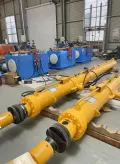
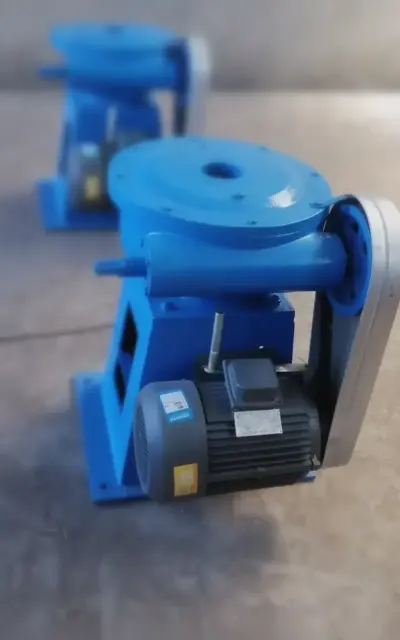
A hydraulic gate hoist is a mechanical and hydraulic lifting system designed to operate a vertical, radial, flap, stoplog, or other water-control gate. Instead of relying on a manually operated screw or a conventional wire-rope arrangement, the system uses hydraulic pressure generated by a power unit to extend or retract one or more cylinders. The cylinders transfer force to the gate through a pin, clevis, lifting beam, or connection assembly designed for the project.
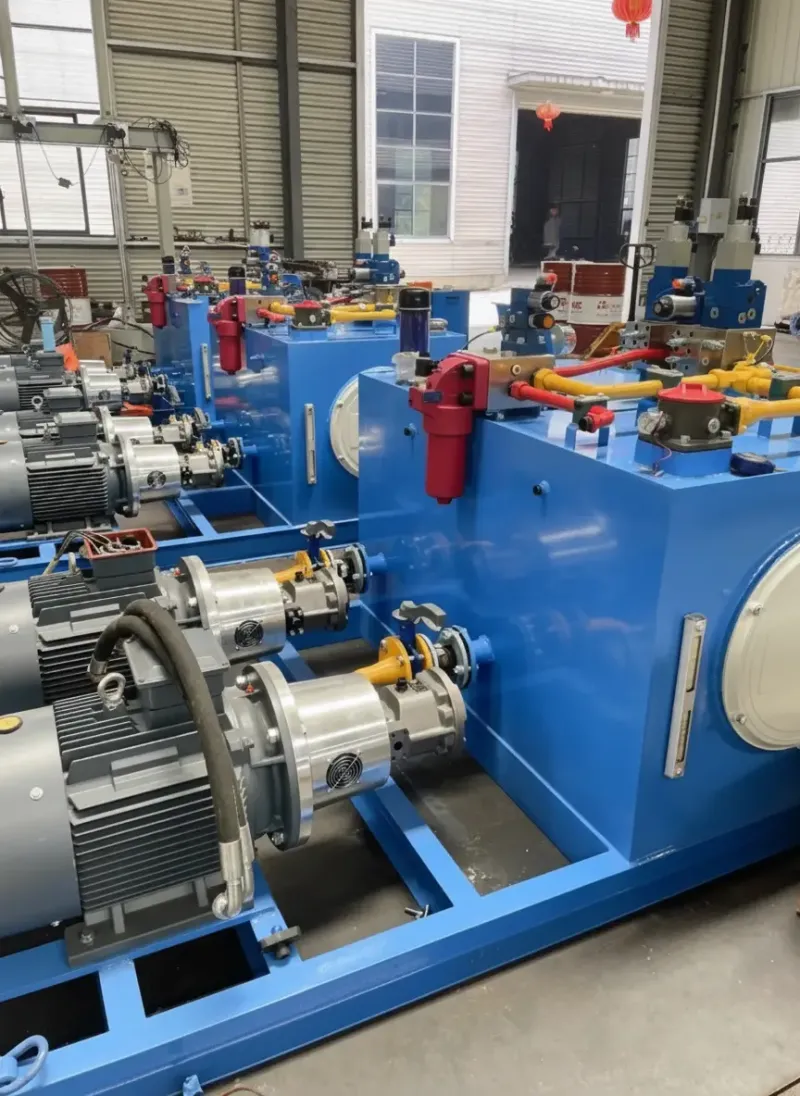
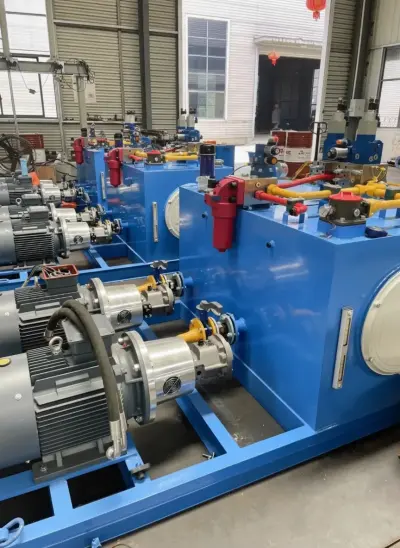
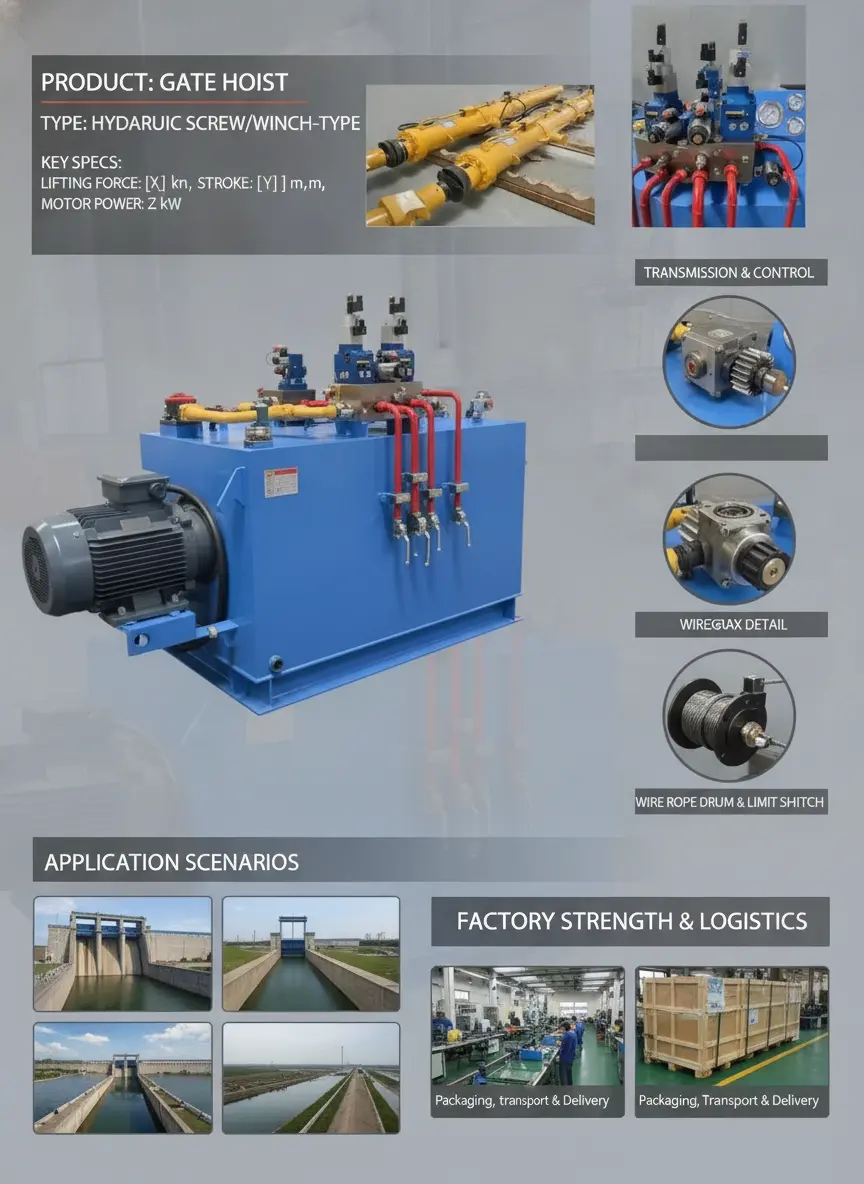
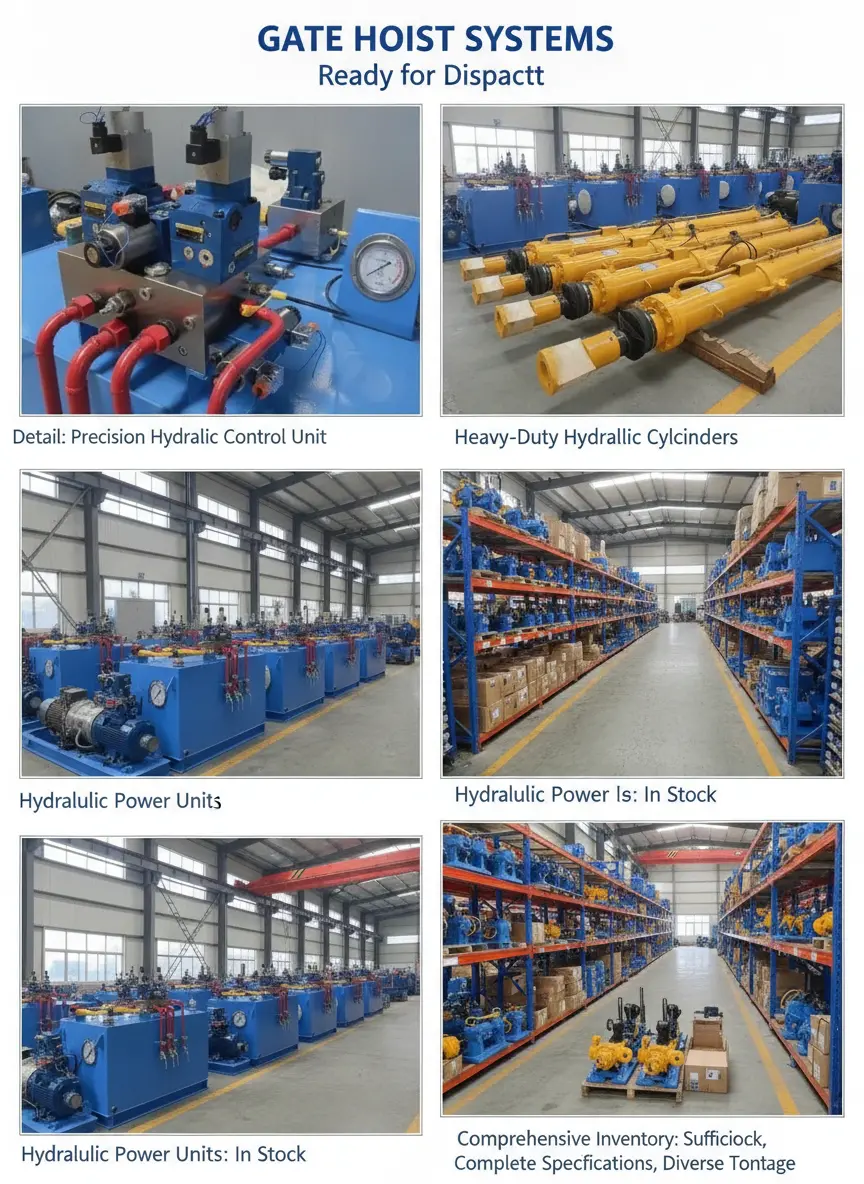
The complete hydraulic gate hoist normally includes a hydraulic cylinder, hydraulic power unit, oil reservoir, pump, motor, directional control valves, pressure-control valves, piping or hoses, electrical control cabinet, local operating station, position indication, and protective devices. Depending on the installation, the package may also include a lifting frame, embedded parts, access platforms, maintenance supports, weather protection, and a remote monitoring interface. The final scope should be confirmed against the approved general arrangement drawing and the owner's technical specification.
The steel parts are selected according to the structural design, environmental exposure, fabrication requirements, and local or international project standards. The cylinder barrel, piston rod, seals, mounting components, and hydraulic accessories are selected according to rated thrust, working pressure, stroke, duty cycle, corrosion risk, temperature range, and compatibility with the hydraulic fluid. Surface treatment may include coating systems suitable for indoor, outdoor, humid, splash-zone, or marine-influenced environments. The required coating specification should be stated clearly because paint system, dry-film thickness, surface preparation, and inspection requirements vary by project.
Key operating characteristics of a hydraulic gate hoist include controllable speed, adjustable stopping position, stable low-speed movement, and the ability to hold or secure a gate when designed with suitable hydraulic locking and mechanical safety provisions. A pressure relief arrangement protects the circuit from excessive pressure, while filters, gauges, isolation valves, and maintenance access support practical operation. For a complete gate lifting arrangement, buyers may also review [[INTERNAL_LINK]] hydraulic cylinders and [[INTERNAL_LINK]] industrial hydraulic power units.
Hydraulic operation does not remove the need for engineering verification. Gate weight, hydrostatic pressure, friction, debris impact, unbalanced loading, emergency conditions, and possible differential water levels must be evaluated before selecting cylinder force and power-unit capacity. The hoist should be treated as part of the complete gate and civil structure, with interface responsibilities defined between the hoist supplier, gate manufacturer, civil contractor, and electrical integrator.
Specifications & Standards
Hydraulic gate hoist specifications are project-dependent. A responsible quotation should therefore identify confirmed values separately from values that require engineering approval. Typical design inputs include gate mass, required lifting force, cylinder quantity, effective stroke, operating speed, operating frequency, hydraulic working pressure, holding requirements, ambient temperature, installation elevation, corrosion category, control voltage, and available electrical supply.
| Specification Item | Typical Selection Basis | Information Required for Quotation |
|---|---|---|
| Gate type and dimensions | Vertical lift, radial, flap, stoplog, or special gate arrangement | Approved drawings, gate weight, width, height, and lifting points |
| Hydraulic cylinder | Rated thrust, stroke, mounting geometry, rod protection, and sealing arrangement | Required force, stroke, operating speed, duty cycle, and installation space |
| Hydraulic power unit | Pump flow, motor capacity, reservoir volume, filtration, valves, and redundancy | Operating time, simultaneous-cylinder requirements, power supply, and control philosophy |
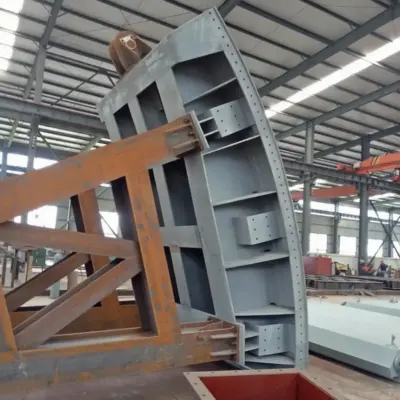
| Structural steelwork | Load path, deflection limits, connection design, access, and corrosion protection | Support reactions, anchor details, foundation interfaces, and applicable steel specification |
| Controls and instrumentation | Local, remote, automatic, or emergency operation with position and pressure feedback | Control voltage, communication protocol, alarm requirements, and site integration data |
| Operating environment | Indoor or outdoor installation, humidity, water splash, dust, temperature, and access conditions | Site location, environmental classification, enclosure requirements, and maintenance provisions |
For the hydraulic circuit, ISO 4413, Hydraulic fluid power — General rules and safety requirements for systems and their components, is a relevant reference for system design, safety, installation, and documentation. It addresses practical considerations such as pressure control, guarding, stored energy, hose and piping arrangements, cleanliness, and maintenance. Buyers should request confirmation of the applicable edition and any project amendments during technical clarification.
For machinery risk assessment and protective design, ISO 12100, Safety of machinery — General principles for design — Risk assessment and risk reduction, can be used as a design reference where the hydraulic gate hoist is supplied as machinery. Electrical control panels and machine electrical equipment may require consideration of IEC 60204-1, subject to the project electrical specification and the legal requirements of the destination market.
Steel fabrication and execution requirements may be addressed through EN 1090-2 for the execution of steel structures and aluminium structures where that standard is specified by the project. Welding quality requirements may also refer to ISO 3834, while welding qualification and procedure requirements should be agreed according to the contract. Where a carbon-steel material is specified by ASTM or another national standard, the actual grade must be stated in the purchase order and supported by the corresponding material certificate. A supplier should not substitute ASTM A36, EN 10025 grades, JIS grades, or GB/T grades without written approval because strength, weldability, inspection, and traceability requirements may differ.
There is no universal chemical composition or mechanical-property table for every hydraulic gate hoist because the hoist can contain several material categories and the steel grade is selected by the approved design. The following compliance table shows the documents that may be requested; it does not replace a project-specific material schedule.
| Document or Standard | Purpose | Availability and Application |
|---|---|---|
| ISO 4413 | Hydraulic system safety and engineering principles | Applicable to the hydraulic circuit and its components |
| ISO 12100 | Machinery risk assessment and risk reduction | Applicable where the hoist is treated as a machinery assembly |
| IEC 60204-1 | Electrical equipment of machines | Applicable when included in the project electrical specification |
| EN 1090-2 | Execution of steel structures | Applicable to steel fabrication when required by the contract |
| Material certificates | Traceability of steel, cylinder, and purchased components | To be defined by the approved material and inspection plan |
Inspection and testing may include dimensional inspection, weld visual examination, non-destructive testing where specified, hydraulic pressure testing, no-load operation, loaded operation, emergency-stop verification, leakage inspection, position-control verification, and review of manufacturing records. The acceptance test procedure should be agreed before production. For supporting steel products, see [[INTERNAL_LINK]] structural steel fabrication services and [[INTERNAL_LINK]] hydraulic gate components.
Applications
Hydropower Stations and Dams
Hydraulic gate hoists are used to operate intake gates, spillway gates, outlet gates, emergency closure gates, and maintenance gates. These locations often require reliable remote or local control, clear position feedback, and a defined emergency operating method. The design must account for water pressure, gate inertia, possible debris, and access limitations during inspection.
Irrigation and Water-Diversion Projects
Irrigation canals, diversion weirs, regulating structures, and reservoir outlets use lifting systems to manage water levels and flow distribution. A hydraulic gate hoist can provide repeatable gate positioning, which is useful where operators need to adjust discharge according to seasonal demand or changing upstream conditions.
Flood-Control and Stormwater Infrastructure
Flood barriers, drainage channels, pumping stations, and retention basins may require rapid or controlled gate movement during severe weather. The hydraulic system can be configured for standby operation, manual override, backup power, and remote status indication when these features are included in the project requirements.
Industrial Water and Process Facilities
Power plants, steel mills, mining sites, wastewater plants, and other industrial facilities use gates to isolate channels, cooling-water systems, settling basins, and discharge structures. Material selection and coating requirements are especially important where water contains chemicals, suspended solids, saline content, or process contaminants.
Navigation and Marine Waterworks
Locks, tide-control structures, shipyard water systems, and coastal drainage facilities may use hydraulic gate lifting systems for large gates and frequent operating cycles. Marine exposure can increase corrosion demands, so buyers should define coating systems, stainless or protected rod arrangements, enclosure ratings, drainage, and inspection access at the tender stage.
How to Choose / Buying Guide
Purchasing a hydraulic gate hoist should begin with the gate and site conditions rather than with a catalogue model. Ask the engineering team to provide the gate drawings, lifting points, operating positions, design water levels, maximum differential head, gate mass, friction assumptions, and required operating time. These inputs determine the cylinder force, stroke, mounting arrangement, hydraulic flow, and structural reactions. A supplier that receives only gate width and height cannot responsibly finalize the hoist.
Confirm the Operating Duty
Clarify whether the gate moves occasionally for maintenance, several times per day, or repeatedly as part of process control. Duty cycle affects cylinder seals, pump selection, motor heating, oil cooling, filtration, and component life. Also confirm whether cylinders must operate together, whether synchronization is required, and whether the gate must stop at intermediate positions. For complex installations, a proportional or closed-loop control arrangement may be considered, but it should be justified by the required positioning accuracy and control architecture.
Review Safety and Holding Requirements
Ask how the gate will be held in position during normal operation, power loss, hose failure, maintenance, and emergency conditions. Possible provisions include pilot-operated check valves, counterbalance valves, hydraulic locks, mechanical supports, isolation valves, alarms, and backup power. The correct combination depends on the risk assessment and the consequences of unintended gate movement. Safety provisions should be shown on the hydraulic schematic and included in the functional description.
Define Materials, Coatings, and Certification
Request a bill of materials or material schedule identifying the steel standard, cylinder materials, sealing materials, fastener requirements, coating system, and corrosion-protection method. Require mill certificates, welding records, inspection reports, calibration records, and test documentation when these are part of the inspection and test plan. CE marking, UKCA marking, local pressure-equipment obligations, or other conformity documents should be discussed according to the destination country and the actual scope of supply. Certification cannot be assumed from the product name alone.
Clarify Commercial Scope and MOQ
Minimum order quantity is usually influenced by customization, engineering hours, cylinder fabrication, control-panel requirements, and the number of gates in one project. There is no universal MOQ for a hydraulic gate hoist. Ask the supplier to state whether the quotation covers one complete system, a batch of identical units, spare parts, commissioning support, drawings, packing, and documentation. If a single replacement unit is required, state that clearly so the supplier can assess manufacturing feasibility and component availability.
Plan Lead Time and Logistics
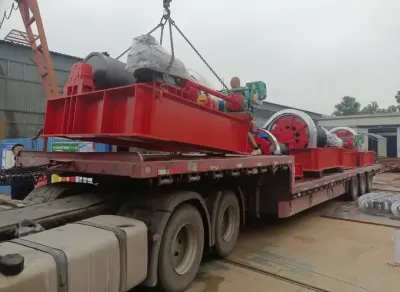
Lead time normally depends on drawing approval, procurement of cylinders and valves, steel fabrication, coating, assembly, testing, and inspection release. The contract should separate engineering approval time from manufacturing time and identify the point at which the schedule begins. For export shipments, confirm packing dimensions, gross weight, lifting points, moisture protection, container or breakbulk suitability, export documents, and delivery terms. A hydraulic gate hoist may include long cylinders or oversized frames, so transport restrictions should be reviewed before the design is frozen. Buyers can compare related [[INTERNAL_LINK]] water gate systems and [[INTERNAL_LINK]] export packing options during project planning.
Frequently Asked Questions
Q: What is the difference between a hydraulic gate hoist and a wire-rope hoist?
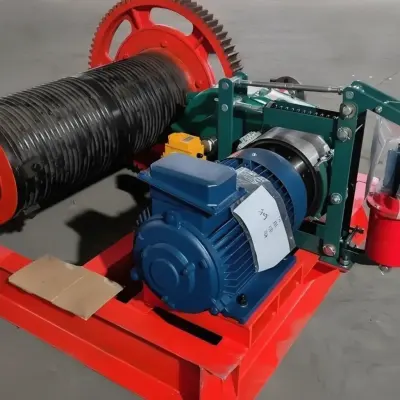
A: A hydraulic gate hoist moves the gate through hydraulic cylinders and a pressurized fluid circuit, while a wire-rope hoist uses drums, ropes, sheaves, and a mechanical drive. Hydraulic systems are often selected where direct linear force, controlled movement, compact cylinder mounting, or independent cylinder operation is useful. Wire-rope systems may be more suitable where the lifting arrangement, tower geometry, or maintenance practice is already based on ropes. The correct choice depends on load, stroke, duty cycle, gate geometry, safety requirements, and site conditions.
Q: Can the hydraulic gate hoist be designed for different gate materials and sizes?
A: Yes. The hoist is normally engineered around the gate mass, lifting points, required force, stroke, water load, and support structure. Gate material may include carbon steel, stainless steel, or other project-specified construction, but the hoist interface must be checked for pin loads, alignment, deflection, corrosion, and access. Provide approved drawings and operating data before requesting a final quotation.
Q: Which standards should be specified for a hydraulic gate hoist?
A: ISO 4413 is a central reference for hydraulic fluid-power systems and safety requirements. ISO 12100 may support machinery risk assessment, IEC 60204-1 may apply to electrical equipment of machines, and EN 1090-2 may apply to steel fabrication and execution when required by the contract. The purchaser should also list the applicable material, welding, coating, inspection, and local conformity requirements. A standards list should be agreed during technical clarification rather than inferred from a general product description.
Q: What certificates and inspection documents can an overseas buyer request?
A: Depending on the approved inspection plan, buyers may request material certificates, welding procedure and welder qualification records, dimensional inspection reports, non-destructive testing reports, hydraulic pressure-test records, electrical test reports, calibration certificates, factory acceptance test results, coating inspection records, operation manuals, spare-parts lists, and as-built drawings. The exact document package should be stated in the purchase order because inspection scope and third-party witnessing requirements vary between projects.
Q: Is there a standard MOQ for hydraulic gate hoists?
A: No universal MOQ applies. A project may require one customized hoist, several identical units, or a complete package for multiple gates. MOQ can be affected by engineering work, cylinder production, control-panel configuration, and the need for dedicated fabrication or testing. Ask for the supplier's project-specific commercial terms instead of relying on a generic quantity assumption.
Q: What payment methods are commonly available?
A: Payment terms depend on the supplier, contract value, country, credit assessment, and project risk. Common structures may include a deposit with the balance against inspection or shipment, a documentary letter of credit, staged payments linked to drawing approval and production milestones, or another agreed trade-finance arrangement. The final terms should be written into the pro forma invoice and sales contract, including the documents required for each payment stage.
Q: How long is the delivery time for a hydraulic gate hoist?
A: Delivery time cannot be confirmed from the product name alone. It depends on design complexity, approval cycles, cylinder and valve availability, steel fabrication, coating, testing, inspection, and shipping arrangements. Request a schedule showing drawing submission, approval, procurement, fabrication, assembly, factory testing, packing, and dispatch. This makes it easier to identify whether a delay originates in technical approval, production, or logistics.
Q: Can the system operate during a power failure?
A: It can be designed with an emergency operating method, but the solution must be defined by the risk assessment and project specification. Options may include an accumulator, standby power unit, manual hydraulic pump, emergency generator connection, mechanical locking arrangement, or a controlled fail-safe position. The required emergency stroke, response time, and number of operations should be stated before the hydraulic circuit is finalized.
Q: What information should be included in an inquiry?
A: Include gate drawings, gate weight, dimensions, lifting points, design head or water levels, required stroke and speed, operating frequency, number of cylinders, site environment, power supply, control requirements, applicable standards, coating requirements, inspection level, delivery destination, and desired documentation. Photos or civil-interface drawings are also useful for replacement projects. Complete information enables a more accurate technical and commercial offer.
Send your gate drawings, operating data, applicable standards, and delivery requirements to request a project-specific hydraulic gate hoist quotation. Our engineering team can review the lifting arrangement, hydraulic circuit, control scope, inspection documentation, and export packaging requirements, then prepare a technical proposal for your dam, hydropower, irrigation, flood-control, or industrial water project. Use [[INTERNAL_LINK]] to review the related product range or contact us for a formal offer and engineering clarification.
Ratings & Reviews

Know your supplier
Supplier's customization ability
- Drawing-based customization
- Sample-based customization
- Full customization
Minimum order quantity: 1 pieces
Shipping total: To be negotiated
- Lead time:
- confirmed with the quotation
- Packaging:
- standard export packing
- Samples:
- available on request