 English
 Español
 Français
 Deutsch
 Português (Brasil)
 Русский
 العربية

Intake Trash Rack | Custom Galvanized Steel Water Intake Screens Manufacturer

 China
Supplier's customization ability
- Drawing-based customization
- Sample-based customization
- Full customization
Minimum order quantity: 1 pieces
Shipping total: To be negotiated
- Lead time:
- confirmed with the quotation
- Packaging:
- standard export packing
- Samples:
- available on request
Product details
Intake Trash Rack Technical Specifications
| Product Name | Intake Trash Rack |
|---|---|
| Product Type | Fixed or removable water intake debris screen |
| Primary Function | Intercepts logs, branches, leaves, plastics, aquatic vegetation, and other debris before water enters intake channels, pumps, turbines, or treatment systems |
| Typical Applications | Hydropower plants, pumping stations, reservoirs, dams, irrigation systems, drainage works, municipal water intakes, and industrial cooling-water systems |
| Rack Bar Material | Carbon steel, low-alloy structural steel, or stainless steel; material grade selected according to project requirements |
| Frame Material | Welded structural steel sections or stainless steel sections |
| Common Material Grades | ASTM A36, ASTM A572 Grade 50, EN 10025 S235JR/S355JR, stainless steel 304/304L or 316/316L |
| Bar Profile | Flat bar, rectangular bar, round bar, or hydrodynamic streamlined bar |
| Clear Bar Spacing | Typically 20–150 mm; custom spacing available based on debris size and hydraulic requirements |
| Rack Inclination | Vertical or inclined installation; typically 60°–90° to the horizontal |
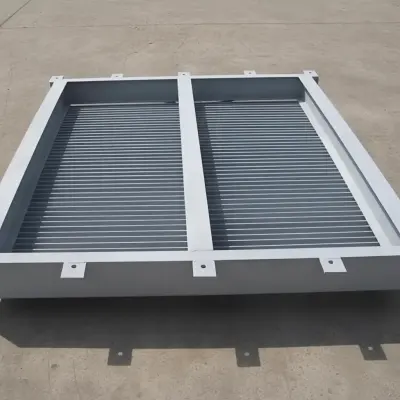
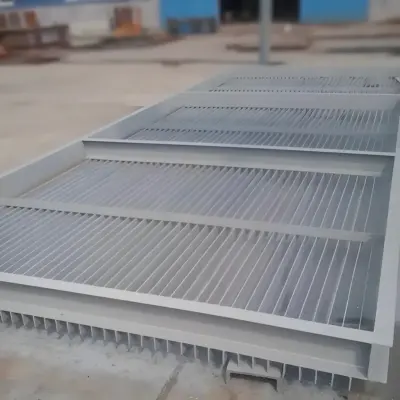
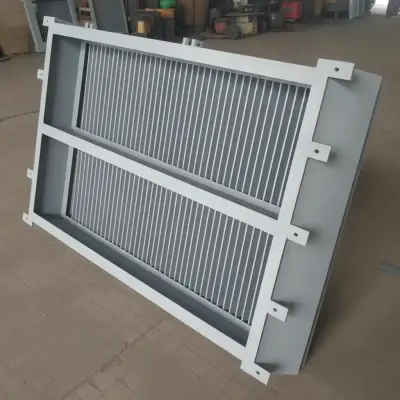
| Panel Construction | Heavy-duty welded steel frame with parallel screening bars and reinforcing cross members |
| Panel Dimensions | Custom manufactured according to intake opening, design drawings, and site lifting restrictions |
| Design Load | Engineered for differential water pressure, debris impact, self-weight, cleaning loads, and site-specific operating conditions |
| Cleaning Method | Manual raking, mechanical rake, traveling screen cleaner, grab system, or automated trash rack cleaning machine |
| Installation Method | Embedded guide rails, bolted frame, welded support, removable panel, or lifting-beam arrangement |
| Corrosion Protection | Hot-dip galvanizing, epoxy coating, zinc-rich primer with marine coating system, or stainless steel construction |
| Surface Preparation | Abrasive blast cleaning up to Sa 2.5 where a protective coating system is specified |
| Fabrication Process | CNC cutting, forming, fixture welding, dimensional inspection, surface treatment, and trial assembly as required |
| Welding | Welded in accordance with approved WPS and applicable AWS, EN ISO, or project standards |
| Quality Inspection | Material verification, weld inspection, dimensional inspection, coating thickness testing, and final visual examination |
| Applicable Standards | ASTM, AWS D1.1, EN 1090, ISO 12944, or customer-specified hydraulic steel structure standards |
| Customization Options | Bar spacing, panel size, steel grade, frame profile, inclination, lifting points, guide system, coating system, and cleaning-machine interface |
| Documentation | Material certificates, fabrication drawings, inspection reports, welding records, and coating reports available upon request |
Intake Trash Rack | Custom Galvanized Steel Water Intake Screens Manufacturer
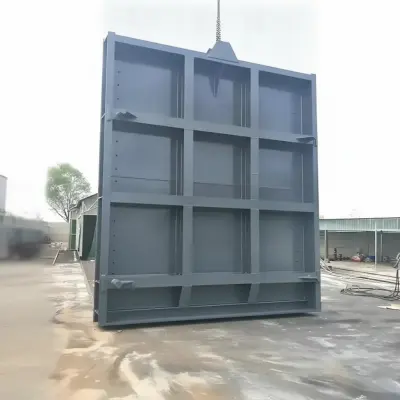
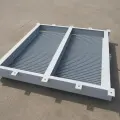
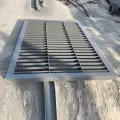
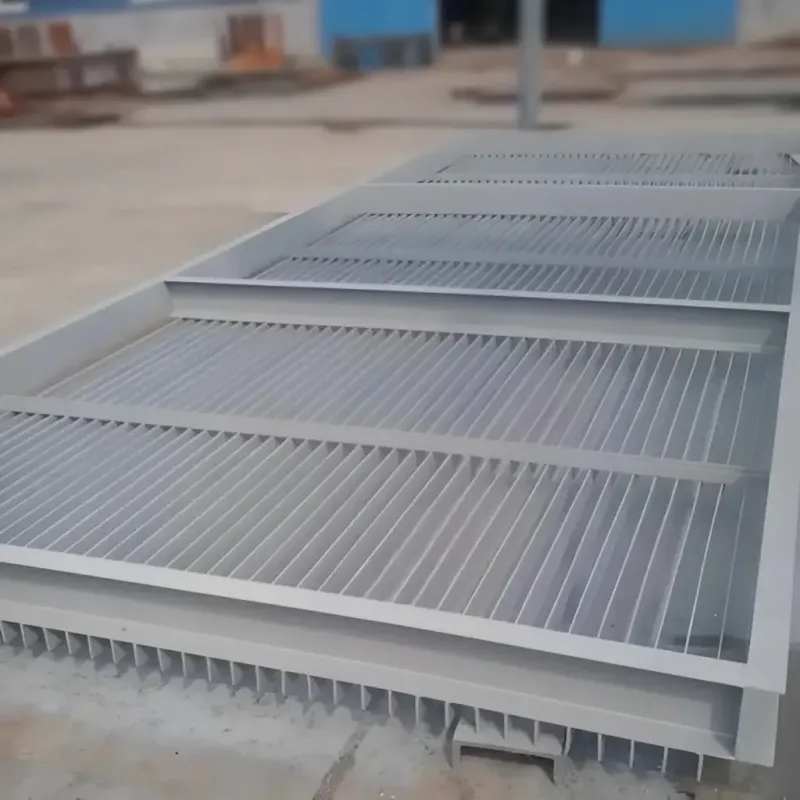
Intake trash racks are fabricated steel screening assemblies installed at water intake structures to intercept logs, branches, vegetation, plastics, and other floating or submerged debris before it reaches pumps, turbines, valves, or treatment equipment. They serve municipal water authorities, hydropower developers, irrigation contractors, industrial utilities, EPC companies, and marine infrastructure buyers. A custom galvanized steel intake trash rack combines structural resistance, corrosion protection, maintainable geometry, and compatibility with the civil opening. Properly specified, it helps protect downstream equipment, reduce unplanned cleaning, and support reliable water flow under changing site conditions. Buyers can also review related steel water intake screens and custom fabricated steel structures when planning a complete intake package.
Product Overview: Intake Trash Rack
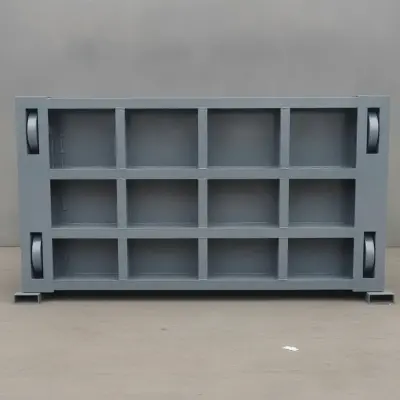
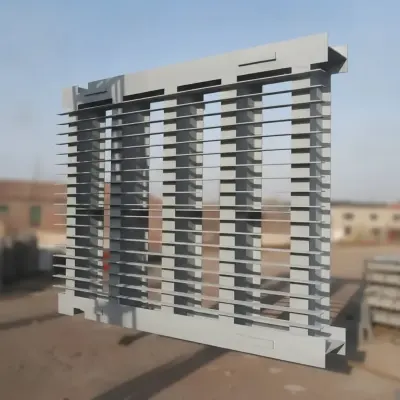
An intake trash rack is a fixed or removable barrier made from parallel bars, flat bars, structural sections, frames, supports, and connection components. It is positioned across or in front of a water intake opening. The rack allows water to pass while retaining debris that could damage or obstruct downstream equipment. Depending on the project, the assembly may be installed vertically, horizontally, or at an inclined angle to support manual raking, mechanical cleaning, or lifting and removal.
The main material is commonly carbon steel selected according to the required structural design and operating environment. Galvanized steel is frequently specified because a zinc coating provides a barrier against moisture and offers sacrificial protection when the steel is exposed. For projects involving severe immersion, brackish water, seawater, chemicals, or unusually aggressive water chemistry, the coating system and base material should be confirmed through an engineering review rather than selected from a general catalogue description.
A custom intake trash rack normally includes the following elements:
- Screen bars: Parallel bars or sections retain debris while maintaining the required effective flow area.
- Perimeter frame: A rigid frame transfers hydraulic and impact loads into embedded plates, guides, or the surrounding concrete.
- Stiffeners and supports: Intermediate members limit deflection and help the rack withstand differential pressure and debris loading.
- Lifting or handling features: Lifting eyes, hooks, or removable sections may be incorporated where maintenance access requires rack removal.
- Guides and fasteners: Side guides, sill details, bolts, clips, and other interfaces are designed around the intake structure.
Screen opening, bar size, clear spacing, rack angle, water velocity, design head loss, debris type, cleaning method, and access conditions must be evaluated together. A narrow opening may improve debris exclusion but can increase blockage risk and cleaning frequency. A wider opening may reduce hydraulic resistance but allow larger material to pass toward the equipment. The correct arrangement therefore depends on the intake duty, not on a universal bar spacing.
Manufacturing may include material cutting, forming, drilling, welding, dimensional assembly, surface preparation, hot-dip galvanizing, inspection, and packing for shipment. Buyers requiring a complete intake solution may also compare galvanized steel bar screens, hydraulic steel gates, and water control equipment.
Specifications & Standards for Intake Trash Rack
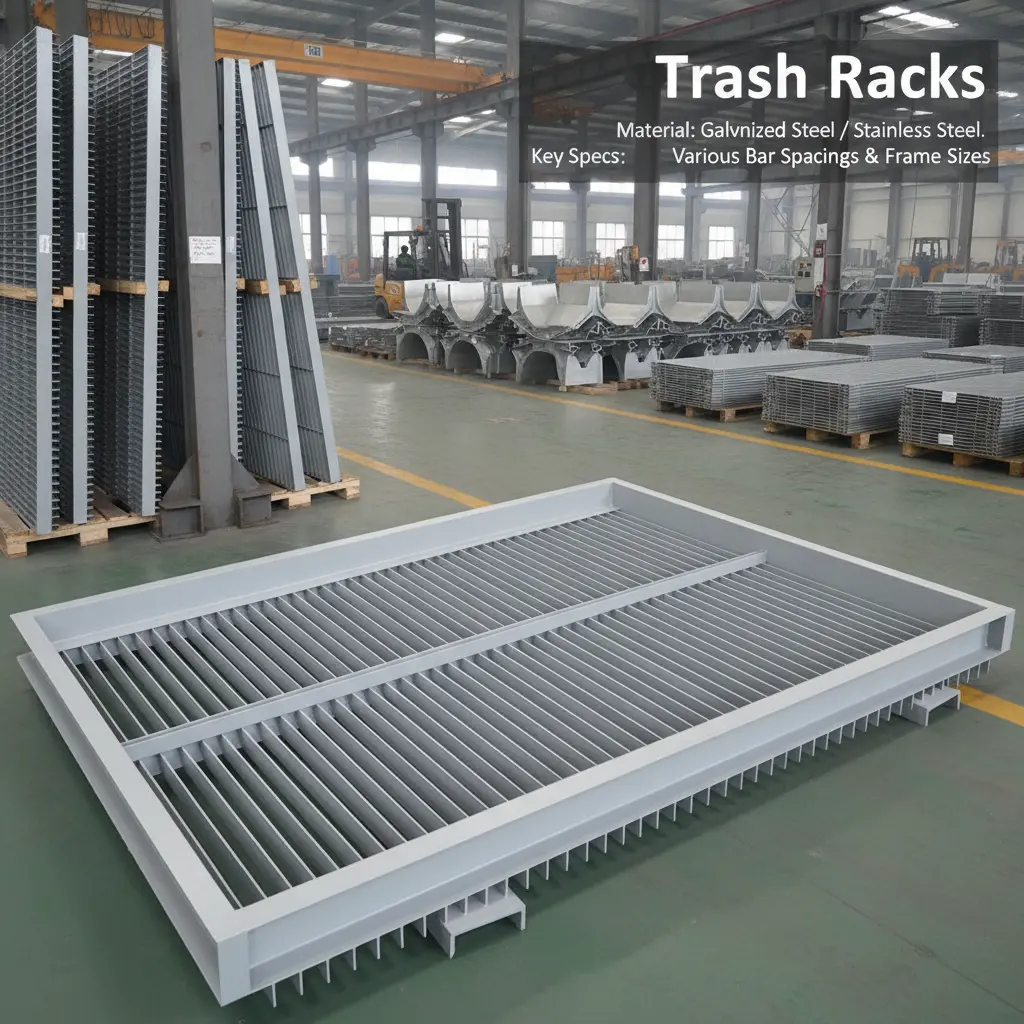
Every intake trash rack should be produced from an approved drawing or technical data sheet. Typical project specifications define the clear opening, overall dimensions, bar orientation, bar spacing, design water level, differential head, debris loading, support conditions, coating system, lifting arrangement, inspection requirements, and delivery configuration. Because these values are site-dependent, they should be confirmed before fabrication rather than assumed from a standard size.
| Specification item | What the buyer should confirm | Why it matters |
|---|---|---|
| Overall rack dimensions | Width, height, thickness, opening geometry, and installation tolerance | Ensures the assembly fits the civil structure and can be installed without rework |
| Screen bar arrangement | Bar profile, orientation, clear spacing, quantity, and unsupported span | Controls debris retention, hydraulic resistance, stiffness, and cleaning access |
| Design loads | Hydrostatic differential pressure, debris impact, blockage condition, and handling loads | Determines structural member sizes, weld design, and support requirements |
| Surface protection | Hot-dip galvanizing, paint system, duplex coating, or another approved treatment | Provides a defined corrosion-control approach for the operating environment |
| Connection and lifting details | Embedded parts, bolts, guides, lifting points, and removable sections | Supports safe installation, inspection, and future maintenance |
Applicable material and galvanizing standards
For structural carbon steel components, ASTM A36/A36M may be specified where its material requirements match the engineering design. Other steel grades may be required for higher strength, low-temperature service, welding performance, or local code compliance. The exact grade should appear on the approved material list and mill documentation.
For hot-dip galvanized steel, ASTM A123/A123M covers zinc coatings on iron and steel products, including fabricated structural items. ASTM A153/A153M is commonly associated with zinc coating on iron and steel hardware, such as certain bolts, nuts, washers, and fittings. In European projects, EN ISO 1461 specifies requirements and testing for hot-dip galvanized coatings on fabricated iron and steel articles. GB/T 13912 may be used for hot-dip galvanized coatings on fabricated iron and steel products in projects following Chinese standards. The governing standard should be identified in the purchase order because coating thickness, appearance, repair, sampling, and acceptance procedures may differ by specification and product category.
Welding requirements should be linked to the project code and the fabricator’s qualified procedures. AWS D1.1/D1.1M may be applicable to structural welding in projects using American practice, while EN 1090-2 can be relevant to the execution of steel structures under European requirements. These references do not automatically replace the buyer’s project specification. Weld size, weld continuity, inspection level, distortion control, and repair procedures should be agreed before production.
Typical documentation package
International buyers may request an approved general arrangement drawing, fabrication drawings, bill of materials, material certificates, galvanizing certificates, dimensional inspection records, weld inspection reports, coating inspection results, packing photographs, and a certificate of conformity. Some projects also require a manufacturing quality plan, inspection and test plan, traceability records, lifting calculations, or third-party inspection. Document requirements should be stated at quotation stage to avoid changes after production has started.
Applications of Intake Trash Rack
Intake trash racks are used in a range of water infrastructure environments:
- Municipal and industrial water intakes: They protect raw-water pumps, screening equipment, and treatment processes from branches, litter, and other floating debris.
- Hydropower stations: They are installed upstream of turbines and penstocks to reduce the risk of damage or blockage caused by logs, aquatic growth, and transported material.
- Irrigation and drainage systems: They help protect pump stations, canals, sluices, and distribution equipment where seasonal vegetation and sediment-related debris are present.
- Cooling-water systems: Industrial plants may use them at seawater, river-water, lake-water, or process-water intakes before pumps and heat exchangers.
- Reservoir, dam, and flood-control structures: They can be integrated with intake towers, outlet works, culverts, and other hydraulic structures requiring debris exclusion.
The rack should be matched to the intended cleaning method. Manual raking may suit accessible, low-flow installations, while large or remote intakes may require a mechanical rake, grab, traveling screen, or lifting system. A rack manufacturer can coordinate the steel assembly with mechanical bar screen systems and custom water intake equipment when the project requires more than a passive barrier.
How to Choose / Buying Guide for Intake Trash Rack
1. Start with the civil opening and operating data
Provide the clear opening, finished concrete dimensions, embedded plate locations, access limitations, normal and maximum water levels, flow rate, and expected water velocity. Include drawings or photographs of the existing structure when replacing an old rack. A dimensional mismatch can create costly site modifications, so the fabrication drawing should be approved before material cutting.
2. Define debris and blockage conditions
Describe the debris expected at the site: timber, reeds, plastic waste, leaves, ice, aquatic plants, or industrial refuse. The largest expected item and the possibility of a fully or partially blocked screen influence the structural design. Buyers should also state whether the rack is intended to stop large debris only or to provide finer protection for pumps and turbines.
3. Select the coating for the actual environment
Hot-dip galvanizing is a practical option for many freshwater and atmospheric exposures, but the coating specification must reflect whether the rack is continuously immersed, intermittently wetted, exposed to abrasion, or installed in saline water. Ask for the proposed standard, surface preparation method, coating inspection procedure, and repair method for damaged areas. Where additional paint is required over zinc, request a compatible duplex coating system and surface preparation procedure.
4. Confirm standards, inspection, and certification
State the governing steel, welding, galvanizing, dimensional, and documentation standards in the request for quotation. If the project requires ASTM A123/A123M, EN ISO 1461, GB/T 13912, or another standard, identify it clearly and avoid combining requirements without checking compatibility. Certification needs may include material test certificates, coating thickness readings, weld inspection, third-party inspection, and a final dimensional report.
5. Clarify MOQ, lead time, and delivery scope
There is no universal minimum order quantity or standard production lead time for a custom intake trash rack. These depend on the number of assemblies, dimensions, steel availability, galvanizing capacity, drawing approval, inspection requirements, and whether accessories are included. Ask the supplier to separate engineering time, fabrication time, galvanizing time, inspection, packing, and estimated transport time. Confirm whether the quotation covers one rack, a complete set, spare parts, guides, fasteners, lifting devices, or embedded components.
6. Plan packaging and logistics
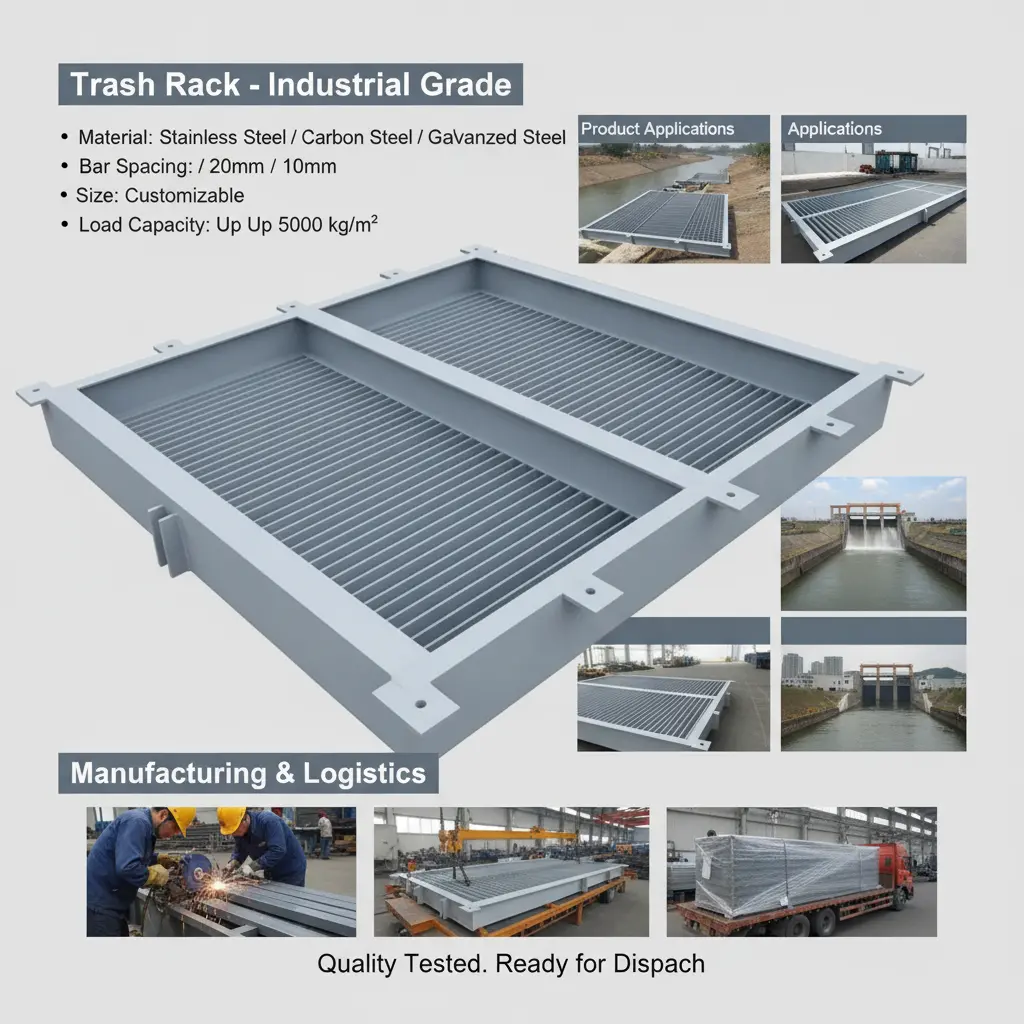
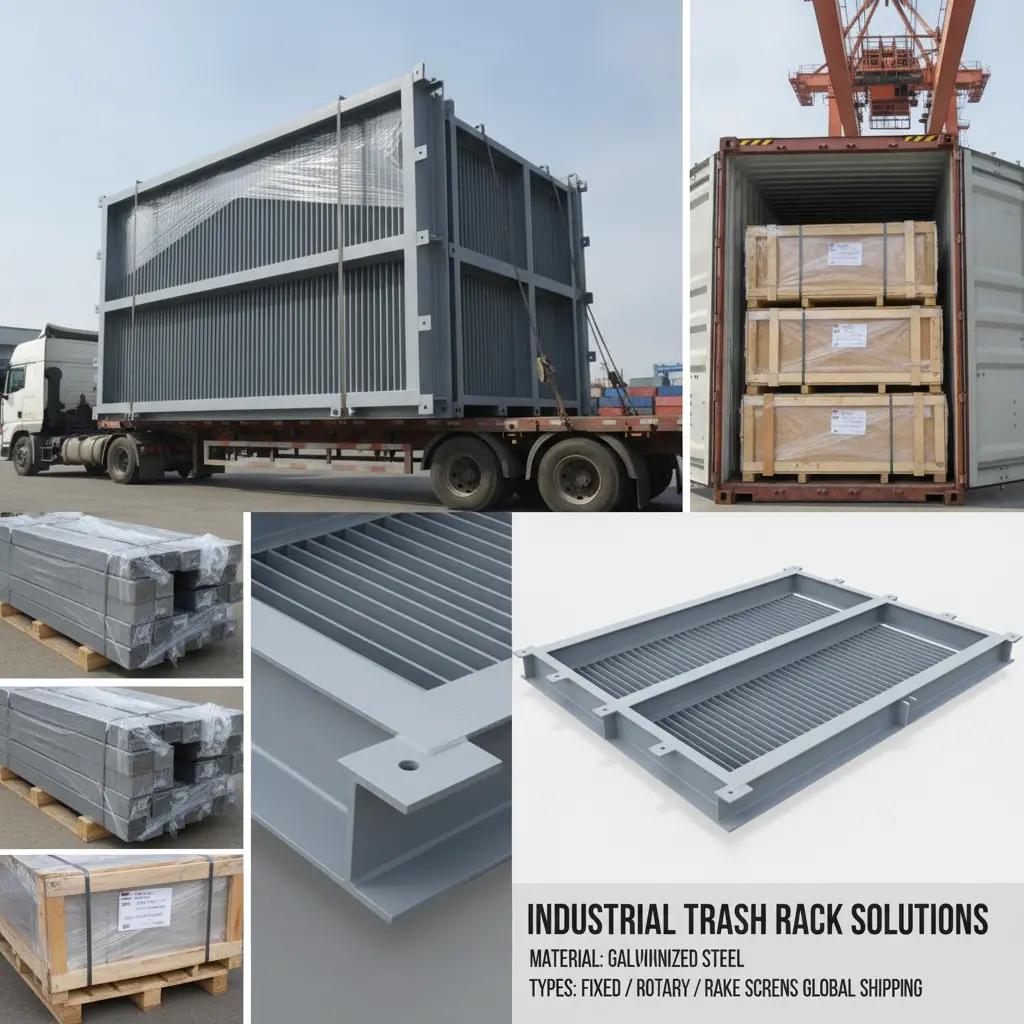
Large welded frames can be vulnerable to distortion, coating damage, and handling problems during transport. The purchase specification should address lifting points, support frames, corrosion protection during storage, export packing, marking, packing lists, and container or breakbulk limitations. The supplier should receive the destination, delivery terms, unloading constraints, and any required export documents before finalizing the commercial offer.
For a structured procurement process, buyers can use a steel fabrication RFQ checklist and request a quotation based on an approved technical data sheet. This makes offers easier to compare and reduces the risk that apparently similar intake trash racks contain different assumptions about coating, inspection, or accessories.
Frequently Asked Questions About Intake Trash Rack
Q: What material is normally used for an intake trash rack?
A: Fabricated carbon steel is commonly used for the frame, bars, and stiffeners, with the grade selected according to the structural calculation and project code. Hot-dip galvanized steel is often specified for corrosion protection. Stainless steel or a duplex coating system may be considered for more aggressive environments, but the final choice should be based on water chemistry, immersion conditions, abrasion, design life, and budget.
Q: How is an intake trash rack different from a fine screen?
A: An intake trash rack generally uses robust bars with relatively open spacing to retain large debris and protect downstream equipment. A fine screen has smaller openings and is intended to remove smaller particles or aquatic organisms. A trash rack may be used as the first protective stage before a finer screening or filtration system, depending on the process design.
Q: Can the rack be manufactured to a custom size?
A: Yes. Custom fabrication is normally required because intake openings, embedded parts, water levels, bar spacing, access, and cleaning equipment vary from site to site. The buyer should provide approved dimensions, interface drawings, loading information, and installation orientation. A supplier should issue fabrication drawings for review before production.
Q: Which galvanizing standard should be specified?
A: ASTM A123/A123M is commonly used for hot-dip galvanized fabricated steel products, while EN ISO 1461 and GB/T 13912 may apply under European or Chinese project requirements. ASTM A153/A153M is generally relevant to galvanized iron and steel hardware rather than the main fabricated rack. The contract should identify the governing standard and any project-specific coating, inspection, and repair requirements.
Q: What is the minimum order quantity for a custom intake trash rack?
A: The MOQ is not universal. It depends on the supplier’s production policy, rack dimensions, material purchasing requirements, and whether the order contains one custom assembly or multiple standardized units. Buyers should request the MOQ, tooling or engineering charges, sample policy, and whether mixed sizes can be combined in one order.
Q: What is the usual delivery time?
A: Delivery time must be confirmed against the approved drawings, material availability, fabrication workload, galvanizing schedule, inspection plan, and destination. A custom rack generally requires more coordination than an off-the-shelf item. Request a stage-by-stage schedule covering drawing approval, fabrication, surface treatment, final inspection, packing, and dispatch.
Q: What payment methods can overseas buyers use?
A: Payment terms are agreed commercially between the buyer and supplier. Common arrangements in international steel fabrication include a deposit with the balance before shipment, documentary arrangements, or other terms subject to company approval and project risk. The quotation should state currency, payment milestones, bank charges, validity period, and the documents required for balance payment.
Q: What information is needed for an accurate quotation?
A: Send the rack quantity, overall and clear-opening dimensions, bar spacing, material or coating requirement, water type, design water levels, flow data, estimated differential head, expected debris, cleaning method, lifting requirements, delivery destination, required standards, inspection documents, and target delivery date. Drawings, photographs, and existing equipment details are especially useful for replacement projects.
Q: Can the intake trash rack include installation accessories?
A: It can be supplied as a rack assembly with agreed accessories such as guides, frames, bolts, lifting eyes, clips, or embedded interface components. The scope must be listed line by line because some projects provide guides or embedded plates separately. Confirm whether installation, site measurement, mechanical cleaning equipment, and commissioning are included or excluded.
Send your intake opening drawings, operating conditions, required standards, coating expectations, quantity, and delivery destination to request a technical review and quotation for a custom galvanized steel intake trash rack. A clear inquiry allows the fabrication scope, inspection documents, MOQ, payment terms, production schedule, and logistics plan to be confirmed before order placement.
Ratings & Reviews

Know your supplier
Supplier's customization ability
- Drawing-based customization
- Sample-based customization
- Full customization
Minimum order quantity: 1 pieces
Shipping total: To be negotiated
- Lead time:
- confirmed with the quotation
- Packaging:
- standard export packing
- Samples:
- available on request