 English
 Español
 Français
 Deutsch
 Português (Brasil)
 Русский
 العربية

Movable Trash Rack Manufacturer | Heavy-Duty Steel Trash Rack for Water Intake Systems

 China
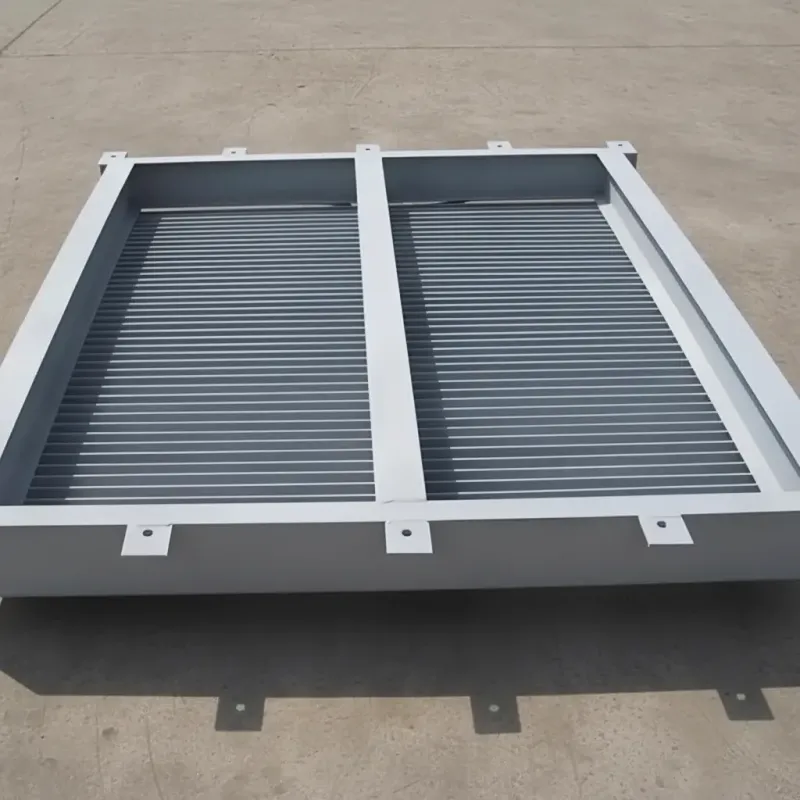
Supplier's customization ability
- Drawing-based customization
- Sample-based customization
- Full customization
Minimum order quantity: 1 pieces
Shipping total: To be negotiated
- Lead time:
- confirmed with the quotation
- Packaging:
- standard export packing
- Samples:
- available on request
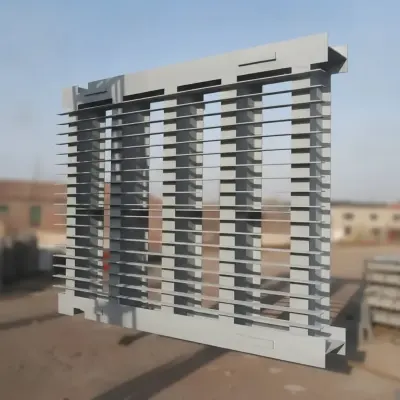
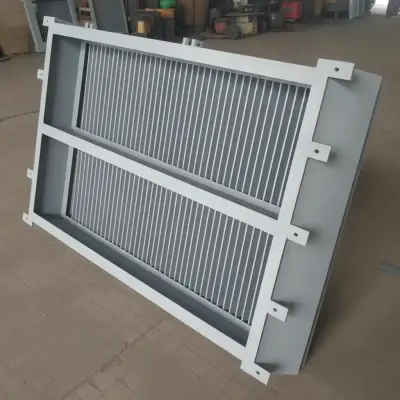
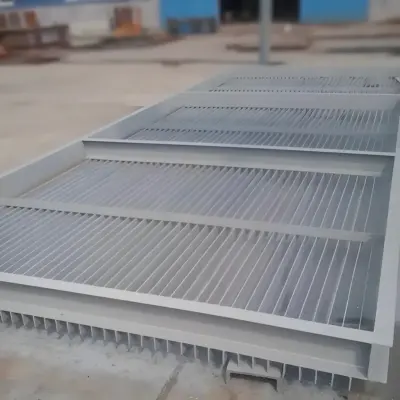
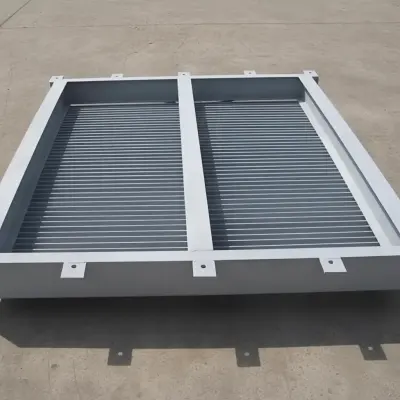
Product details
Movable Trash Rack Technical Specifications
| Product Name | Movable Trash Rack |
|---|---|
| Product Type | Mobile Steel Trash Rack / Debris Screen |
| Primary Application | Interception of floating debris, branches, leaves, plastics and solid waste in water intake systems |
| Installation Location | Hydropower stations, pumping stations, irrigation channels, reservoirs, drainage systems and wastewater facilities |
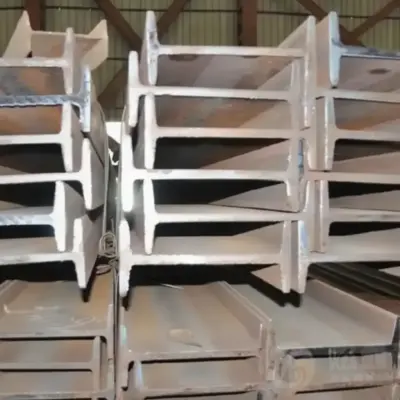
| Rack Structure | Welded or bolted steel frame with vertical trash bars and reinforced cross members |
| Mobility System | Guide rail, roller, wheel, trolley or lifting-hoist operated design |
| Material Options | Carbon steel, low-alloy structural steel or stainless steel |
| Typical Steel Grades | ASTM A36, ASTM A572 Grade 50, EN S235JR, EN S355JR, Q235B, Q355B, SS304 or SS316L |
| Overall Dimensions | Custom manufactured according to channel opening, intake geometry and project drawings |
| Trash Bar Profile | Flat bar, rectangular bar, round bar or hydrodynamic profile |
| Clear Bar Spacing | 10-200 mm or customized according to debris size and hydraulic requirements |
| Design Water Head | Engineered according to operating water level, differential pressure and structural load requirements |
| Cleaning Method | Manual rake, mechanical rake, grab, screen cleaner or lifting for off-line cleaning |
| Lifting Arrangement | Lifting lugs, wire-rope connection, chain hoist interface or crane lifting beam |
| Surface Preparation | Shot blasting to Sa 2.5 or project-specified preparation grade |
| Protective Coating | Hot-dip galvanizing, zinc-rich primer with epoxy coating, polyurethane topcoat or project-specified coating system |
| Corrosion Resistance | Coating thickness and material grade selected for fresh water, wastewater, marine or industrial environments |
| Fabrication Process | CNC cutting, forming, precision welding, dimensional inspection and trial assembly |
| Welding Standards | AWS D1.1, EN ISO 3834 or applicable project standard |
| Inspection Options | Material certificate, dimensional inspection, weld visual inspection, NDT and coating thickness test |
| Applicable Standards | ASTM, AWS, EN, ISO, DIN, GB or customer-specified engineering standards |
| Customization | Bar spacing, frame size, steel grade, load capacity, guide system, lifting points and coating are customizable |
| Supply Scope | Trash rack panel, movable frame, guide components, rollers or wheels, lifting accessories and installation hardware as specified |
Movable Trash Rack Manufacturer | Heavy-Duty Steel Trash Rack for Water Intake Systems
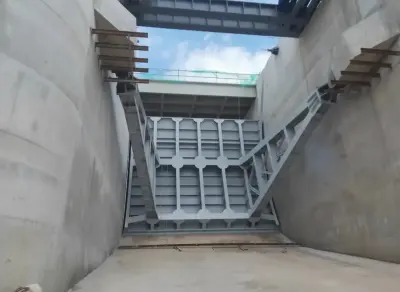
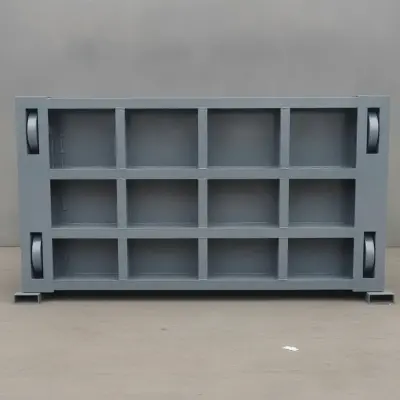
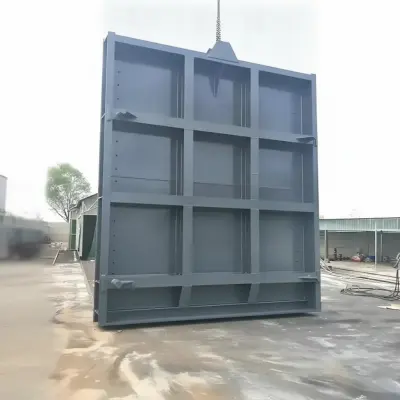
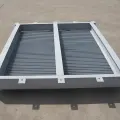
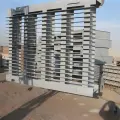
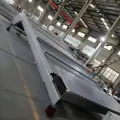
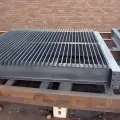
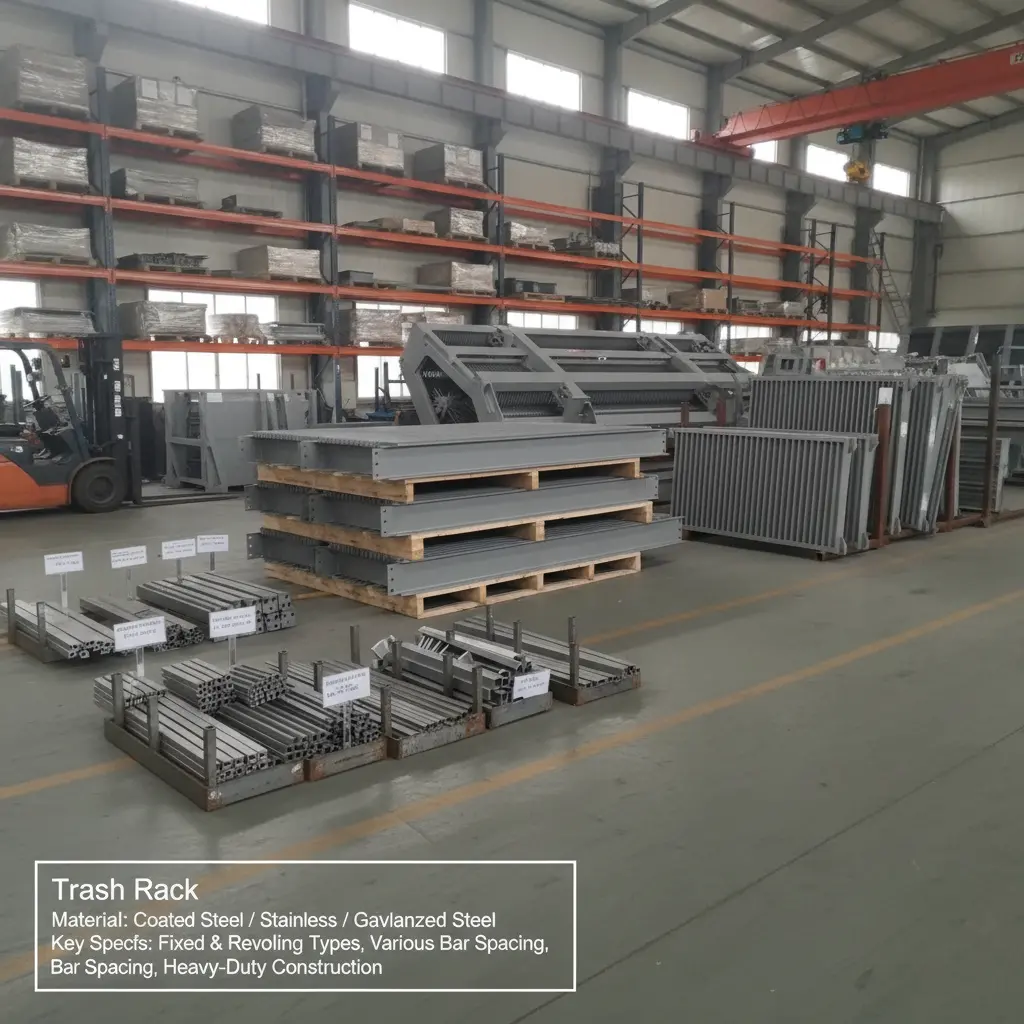
A movable trash rack is a steel debris-screening assembly designed to protect water intake systems, pump stations, hydropower facilities, irrigation channels, and industrial cooling-water infrastructure from logs, branches, vegetation, floating waste, and other large solids. It is intended for overseas EPC contractors, water authorities, mechanical contractors, and equipment distributors that require a removable or traveling intake screen rather than a permanently fixed barrier. A properly engineered movable trash rack combines structural strength, controlled debris interception, practical cleaning access, corrosion protection, and compatibility with the intake civil works. Buyers can specify the rack geometry, bar arrangement, lifting method, coating system, and inspection documents according to the operating environment and project standards.
Product Overview: Movable Trash Rack
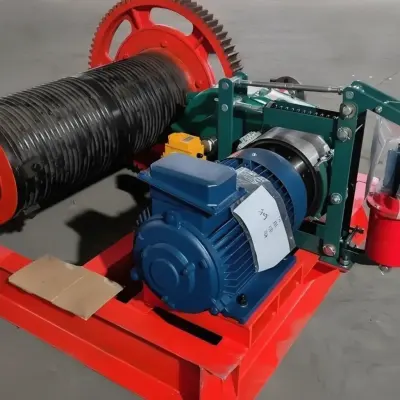
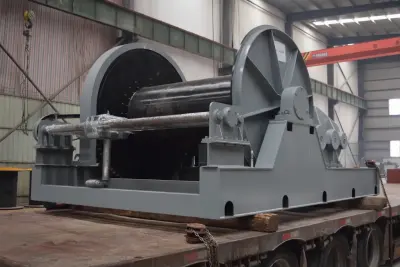
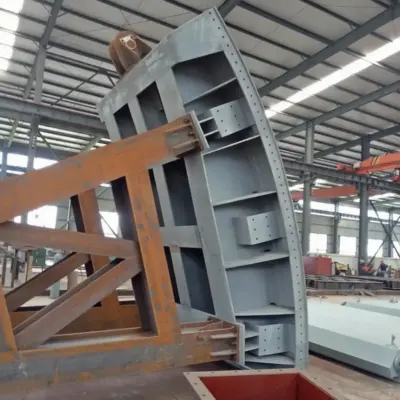
A movable trash rack is a fabricated steel screen installed across or in front of a water passage. Unlike a fixed rack, the movable design can be lifted, withdrawn, shifted, or repositioned to support cleaning, maintenance, seasonal operation, or access to multiple intake openings. The assembly generally consists of vertical or inclined trash bars, horizontal support members, side frames, lifting points, guides, embedded interfaces, and connection hardware. Depending on the project layout, the rack may be handled by a gantry crane, overhead crane, mobile lifting equipment, chain system, winch, or a dedicated trash-rack cleaning machine.
The primary function is to intercept coarse debris before it reaches pumps, turbines, heat exchangers, screens, valves, or other downstream equipment. The rack is not normally intended to provide fine filtration. Its open spacing, bar profile, and hydraulic arrangement should therefore be selected according to the largest debris that must be stopped, the allowable head loss, the design flow, and the cleaning method available at the site.
Typical construction uses carbon structural steel, with stainless steel or corrosion-resistant alloys considered where water chemistry, chlorides, abrasion, or maintenance limitations justify the additional material cost. Steel members may be welded, bolted, or assembled using a combination of both methods. The final configuration is normally developed from the intake opening dimensions, water level range, design velocity, debris load, lifting capacity, and access restrictions. For related intake protection equipment, buyers may also review [[INTERNAL_LINK]] and [[INTERNAL_LINK]].
Key design features may include:
- Removable or repositionable rack panels for cleaning and inspection.
- Heavy structural frames designed for hydrostatic pressure, differential water loading, debris impact, and handling loads.
- Guide shoes, guide rails, rollers, or wear strips to keep the rack aligned during lifting.
- Specified clear spacing between bars to protect downstream equipment without creating unnecessary hydraulic resistance.
- Welded lifting lugs or engineered lifting beams suitable for the approved handling procedure.
- Surface preparation and protective coating selected for immersion, splash-zone, or atmospheric exposure.
- Dimensional tolerances and connection details coordinated with the concrete intake structure.
Specifications & Standards for a Movable Trash Rack
Movable trash rack specifications should be confirmed from the project drawings and hydraulic calculations rather than selected from a generic catalogue dimension. Important inputs include the clear opening width and height, rack inclination, operating and extreme water levels, design flow, expected debris type, bar spacing, maximum permissible head loss, lifting arrangement, and maintenance sequence. A manufacturer should receive these details before preparing a fabrication drawing.
| Specification area | Typical information required for quotation or design review |
|---|---|
| Rack configuration | Single panel, multiple panels, vertically lifted rack, horizontally movable rack, or rack compatible with a cleaning machine |
| Opening dimensions | Clear width, clear height, number of intake bays, sill elevation, top elevation, and guide arrangement |
| Bar arrangement | Bar profile, orientation, clear spacing, bar length, support spacing, and connection to the frame |
| Design loads | Hydrostatic differential, debris accumulation, impact allowance, wind or handling loads where applicable, and lifting load |
| Material and protection | Specified steel grade, weldable material, stainless or carbon-steel components, coating system, and corrosion allowance if required |
| Handling interface | Lifting lugs, spreader beam connection, crane hook arrangement, guide shoes, rollers, stops, and safe removal access |
| Inspection documents | Material certificates, welding records, dimensional inspection, coating inspection, drawings, packing list, and test documentation as required by contract |
Common material references include ASTM A36 for carbon structural steel plate and shapes, ASTM A572/A572M where a higher-strength structural steel is specified, EN 10025-2 for grades such as S275 or S355, JIS G3101 for grades such as SS400, and GB/T 700 for carbon structural steel grades such as Q235B. These standards are not automatically interchangeable: the engineer or purchasing specification must define the accepted grade, thickness range, impact requirements, weldability requirements, and certificate type. A manufacturer should not substitute one grade merely because its nominal strength appears similar.
For fabrication and execution, EN 1090-2 provides requirements relevant to the execution of steel structures, including fabrication and assembly controls. Where the project uses European structural execution classes, the required execution class should be stated in the purchase specification. Welding procedures, welder qualifications, inspection levels, and non-destructive testing should follow the contract requirements and applicable welding standards. Buyers may also request a project-specific inspection and test plan before production begins.
Coating requirements should be defined by exposure category, immersion conditions, water chemistry, and the owner’s maintenance standard. ISO 12944 is commonly referenced for corrosion-protection systems for steel by protective paint systems, while ISO 8501-1 is commonly used to describe visual assessment of surface cleanliness after preparation. For submerged or splash-zone service, the coating manufacturer’s system data, dry-film thickness, curing conditions, stripe-coat requirements, and holiday or adhesion inspection requirements should be agreed in advance. If galvanizing is selected for suitable components, ISO 1461 may be relevant to hot-dip galvanized coatings on fabricated iron and steel articles.
Hydraulic performance is equally important. Bar spacing, rack thickness, inclination, approach velocity, and accumulated debris affect head loss. The supplier should work from the project’s hydraulic criteria and should not guarantee a pressure-loss value without the necessary flow and geometry data. For design coordination, buyers can also consult [[INTERNAL_LINK]] about steel fabrication documentation and [[INTERNAL_LINK]] about corrosion protection for water-control equipment.
Applications of a Movable Trash Rack
Water intake and raw-water pump stations
Municipal and industrial water intakes use a movable trash rack to remove coarse debris before raw-water pumps. The removable arrangement allows operators to isolate or service a rack bay without requiring permanent access through the water channel. It is particularly useful where seasonal vegetation, floating timber, or storm-related debris changes the cleaning workload.
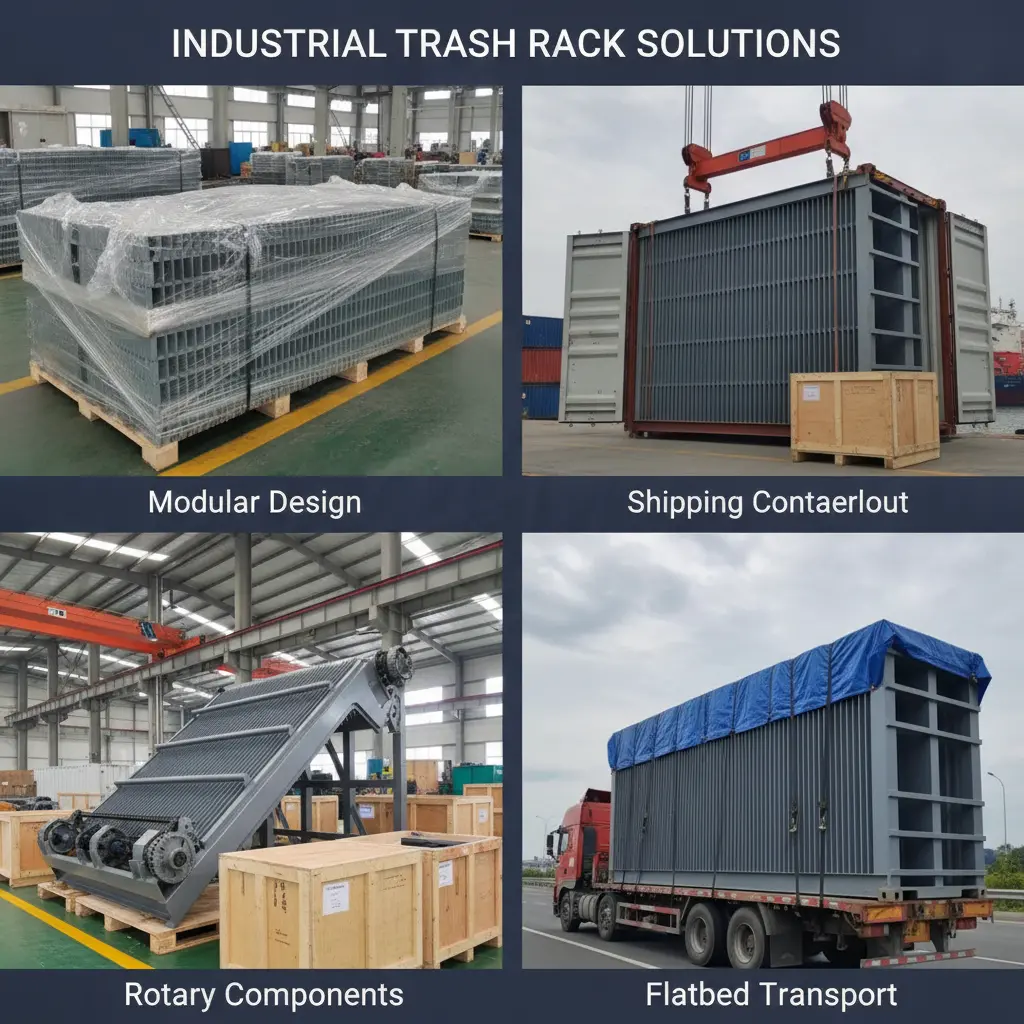
Hydropower and hydroelectric facilities
Hydropower intakes need protection against branches, logs, aquatic plants, and other objects that could damage turbines or reduce flow. A movable rack can be coordinated with a trash-rack cleaning machine or lifting system so that accumulated debris can be removed at planned intervals. The final spacing and structural design must reflect the turbine manufacturer’s protection requirements and the intake’s hydraulic conditions.
Irrigation and agricultural water-control systems
Irrigation canals, diversion structures, and pumping stations often face fluctuating debris loads. A movable trash rack offers a practical way to clear the intake during low-flow periods, seasonal maintenance, or emergency inspection. Rack panels can be arranged to match multiple canal bays or different operating levels.
Industrial cooling-water systems
Power plants, process plants, refineries, and manufacturing sites may install coarse intake screens ahead of cooling-water pumps and heat-exchanger systems. In these applications, material selection and coating performance should account for water temperature, salinity, chlorides, biological growth, and the consequences of unplanned flow restriction.
Stormwater, flood-control, and drainage structures
Movable trash racks can be used at drainage inlets, flood-control channels, detention facilities, and sluice structures where large debris must be intercepted but maintenance access is essential. The design should consider rapid water-level changes, impact from floating objects, safe lifting, and the possibility that debris accumulation may occur during extreme weather.
How to Choose / Buying Guide for a Movable Trash Rack
Procurement managers should treat a movable trash rack as a project-engineered steel component, not simply as a screen purchased by width and height. The following checks help reduce redesign, installation delays, and disputes over scope.
1. Confirm the hydraulic and civil interface
Provide the supplier with approved intake drawings, clear opening dimensions, operating water levels, rack angle, sill details, guide locations, and surrounding concrete tolerances. Identify whether the rack is installed from the top, lowered into guides, moved along rails, or handled from a deck. A small mismatch in guide spacing or lifting height can prevent installation even when the rack panel itself is correctly fabricated.
2. Define debris and loading conditions
Describe the expected debris: branches, timber, reeds, plastic waste, ice, sediment, or industrial solids. State whether the rack must withstand a blocked condition, partial blockage, impact, or a specified differential head. If a cleaning machine will be used, provide its grab dimensions, lifting force, travel path, and interface requirements. These conditions affect bar size, support spacing, frame stiffness, weld details, and lifting lug design.
3. Select the steel grade and corrosion system
Use the grade named in the engineering specification, such as an approved ASTM, EN, JIS, or GB/T equivalent, rather than relying on a general “mild steel” description. Confirm whether the rack is continuously submerged, periodically wetted, exposed to a splash zone, or stored outdoors before installation. Ask for the complete coating schedule, including surface preparation, primer, intermediate and finish coats, dry-film thickness, repair method, and inspection points. Stainless steel wear parts or fasteners may be appropriate in selected areas, but compatibility and galvanic-corrosion risks should be reviewed.
4. Review fabrication and quality records
Request a fabrication drawing for approval before cutting material. The document should show bar spacing, frame members, weld symbols, lifting points, guide components, overall dimensions, and estimated weight. Depending on the project, the inspection package may include material test certificates, welding procedure documentation, welder qualifications, dimensional reports, coating reports, non-destructive testing records, and photographs. For export projects, confirm whether documents must be issued in English and whether third-party inspection is required.
5. Clarify MOQ, lead time, and shipment scope
There is no universal MOQ or standard lead time for a movable trash rack because the quantity, dimensions, steel grade, coating system, drawing-approval cycle, and inspection requirements vary by project. Ask the supplier to state the minimum order basis, production duration after drawing approval, packing method, spare-parts scope, and validity of the quotation. A realistic schedule should separate engineering, material procurement, fabrication, coating, inspection, packing, and dispatch.
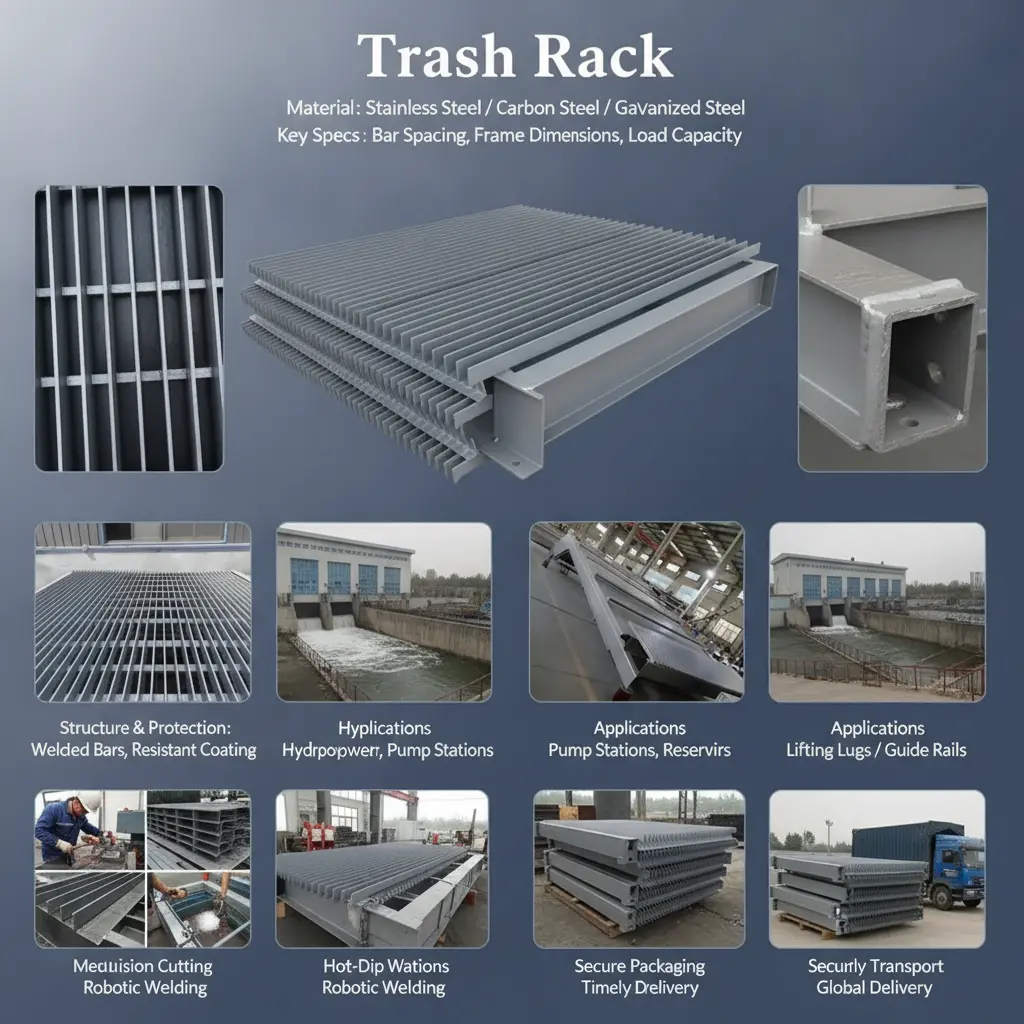
6. Plan lifting, packing, and logistics
Confirm the maximum package dimensions and weight before selecting a transport method. Large rack panels may require reinforced timber or steel supports, lifting marks, moisture protection, and corrosion protection for sea transit. The purchase order should identify the delivery term, destination requirements, export packing standard, shipping documents, and whether guide rails, embedded parts, lifting beams, and fasteners are included. For broader water-intake equipment planning, see [[INTERNAL_LINK]] and [[INTERNAL_LINK]].
7. Establish commercial terms in writing
Payment terms should be agreed in the quotation and purchase contract. Depending on the parties and project risk, arrangements may include a deposit with balance before shipment, a documentary letter of credit, staged payments linked to drawing approval and inspection, or another mutually accepted structure. The contract should also define warranty coverage, exclusions for site damage or incorrect installation, replacement-part responsibility, and the procedure for handling dimensional changes.
Frequently Asked Questions About a Movable Trash Rack
Q: What is the difference between a movable trash rack and a fixed trash rack?
A: A fixed trash rack remains permanently installed in its guide or embedded frame, while a movable trash rack can be lifted, withdrawn, shifted, or repositioned for cleaning and maintenance. The movable design usually requires lifting points, guides, stops, and sufficient access above the intake. The correct choice depends on cleaning equipment, operating water levels, available crane capacity, and maintenance procedures.
Q: Which materials are available for a movable trash rack?
A: Carbon structural steel is commonly considered for the main frame and bars, with the exact grade specified by the project. ASTM A36, ASTM A572/A572M, EN 10025-2, JIS G3101, and GB/T 700 are examples of relevant material standards, but acceptance must be confirmed by the engineer. Stainless steel or corrosion-resistant components may be specified for severe water chemistry, wear locations, fasteners, or areas where coating maintenance is difficult.
Q: Can the rack be manufactured to an existing intake opening?
A: Yes, a project-specific rack can generally be designed around an existing or new opening, provided accurate site measurements and interface drawings are available. The supplier should verify clear dimensions, guide alignment, sill and top elevations, lifting clearance, rack weight, and installation tolerances before fabrication. A site survey may be advisable when existing concrete or steelwork has uncertain dimensions.
Q: What documents should an overseas buyer request?
A: The usual document package may include an approved general arrangement drawing, fabrication details, material certificates, welding and inspection records, dimensional inspection results, coating reports, packing information, and an operation or maintenance note where applicable. The exact package depends on the contract. Buyers should state document language, third-party inspection requirements, applicable standards, and document submission milestones in the purchase order.
Q: Is there a standard MOQ for movable trash racks?
A: No universal MOQ applies. Some projects require one custom rack panel, while others require multiple bays, spare panels, guide components, or related intake equipment. The supplier should confirm the commercial minimum after reviewing the dimensions, engineering effort, material quantity, coating process, and packing requirements. Requesting a quotation with the number of panels and accessories clearly separated improves comparison.
Q: How long is the delivery time?
A: Delivery time depends on design approval, material availability, fabrication complexity, coating specification, inspection, and shipping arrangements. A reliable quotation should identify the lead time starting point, such as receipt of an approved drawing or confirmed advance payment. Buyers should also ask whether the schedule includes coating curing, third-party inspection, export packing, and dispatch.
Q: What payment methods can be used?
A: Payment methods are contract-dependent and may include bank transfer, documentary letter of credit, or staged payment tied to engineering, production, inspection, and shipment milestones. The seller and buyer should agree the currency, bank charges, payment triggers, documents required for release, and any retention or warranty provisions before order confirmation.
Q: How should coating be selected for submerged service?
A: Coating selection depends on immersion duration, water chemistry, temperature, abrasion, biological growth, and maintenance access. The purchase specification should identify the coating standard or approved system, surface-preparation grade, dry-film thickness, curing requirements, repair procedure, and inspection method. ISO 12944 and ISO 8501-1 may provide useful reference points, but the water owner’s technical standard and coating manufacturer’s data should govern the final system.
Q: Can a movable trash rack work with an automatic cleaning machine?
A: It can, provided the rack geometry and machine interface are designed together. The supplier needs the cleaner type, grab or rake dimensions, operating path, lifting force, guide arrangement, bar spacing, and available clearance. The rack should not be ordered independently when automated cleaning is part of the intake system, because bar profile, frame members, and top connections may affect machine operation.
Send your intake drawings, clear opening dimensions, design flow, water conditions, debris description, material preference, coating requirement, and delivery destination to request a movable trash rack quotation. The engineering team can review the interface, prepare a technical proposal, clarify inspection documents and commercial terms, and recommend a fabrication scope suited to your water-intake maintenance plan.
Ratings & Reviews

Know your supplier
Supplier's customization ability
- Drawing-based customization
- Sample-based customization
- Full customization
Minimum order quantity: 1 pieces
Shipping total: To be negotiated
- Lead time:
- confirmed with the quotation
- Packaging:
- standard export packing
- Samples:
- available on request