 English
 Español
 Français
 Deutsch
 Português (Brasil)
 Русский
 العربية

H-Beam Steel for Construction | Factory Direct Supplier & Custom Sizes

 China


Supplier's customization ability
- Drawing-based customization
- Sample-based customization
- Full customization
Minimum order quantity: 1 ton
Shipping total: To be negotiated
- Lead time:
- confirmed with the quotation
- Packaging:
- standard export packing
- Samples:
- available on request
Product details
H-Beam Technical Specifications and Product Properties
| Product Name | H-Beam Structural Steel |
|---|---|
| Product Type | Hot-Rolled H-Beam / Welded H-Beam |
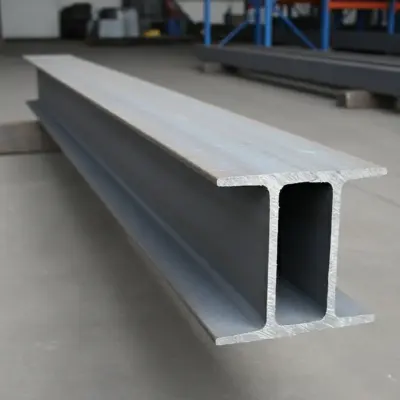
| Cross-Section | H-shaped section with parallel flanges |
| Applicable Standards | ASTM A6/A6M, ASTM A36/A36M, ASTM A572/A572M, EN 10025, EN 10365, JIS G 3192, JIS G 3101, GB/T 11263 |
| Common Steel Grades | ASTM A36, ASTM A572 Grade 50, S235JR, S275JR, S355JR, SS400, SM490, Q235B, Q355B |
| Section Size | 100 × 100 mm to 1000 × 300 mm; other sizes available on request |
| Web Thickness | Approximately 6–21 mm, depending on section size and standard |
| Flange Thickness | Approximately 8–36 mm, depending on section size and standard |
| Standard Length | 6 m, 9 m, 12 m, or customized length |
| Dimensional Tolerance | According to ASTM A6/A6M, EN 10365, JIS G 3192, GB/T 11263, or agreed specification |
| Yield Strength | Typically 235–355 MPa; grade-dependent |
| Tensile Strength | Typically 360–630 MPa; grade-dependent |
| Elongation | Typically 17–26%; grade, thickness, and test-standard dependent |
| Manufacturing Process | Hot rolling or plate welding, straightening, cutting, inspection, and surface treatment |
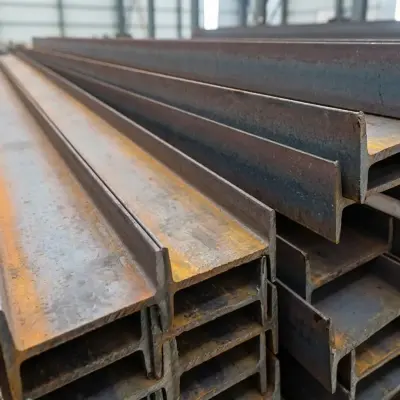
| Surface Condition | Black mill finish, shot-blasted, shop-primed, painted, or hot-dip galvanized |
| Processing Services | Cutting to length, drilling, punching, welding, beveling, galvanizing, and fabrication |
| Inspection and Testing | Dimensional inspection, chemical analysis, tensile testing, impact testing, and ultrasonic testing when specified |
| Certification | EN 10204 3.1 Mill Test Certificate; third-party inspection available on request |
| Main Applications | Steel buildings, bridges, industrial structures, warehouses, platforms, columns, beams, machinery frames, and infrastructure projects |
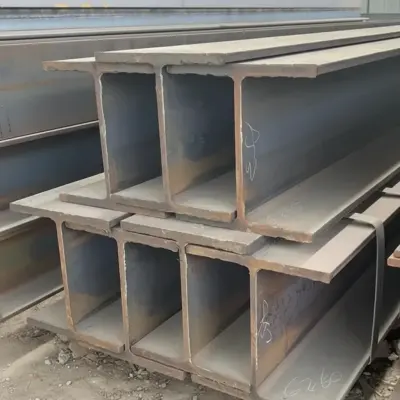
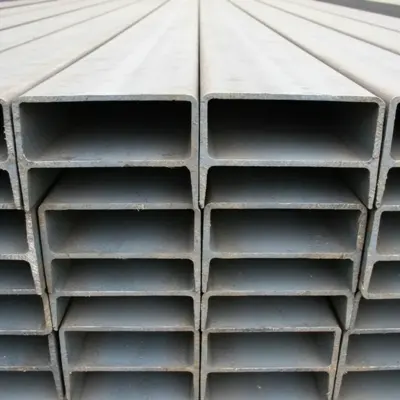
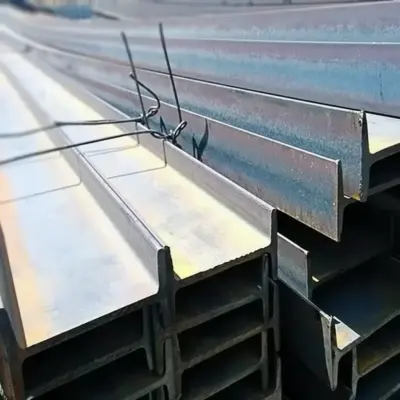
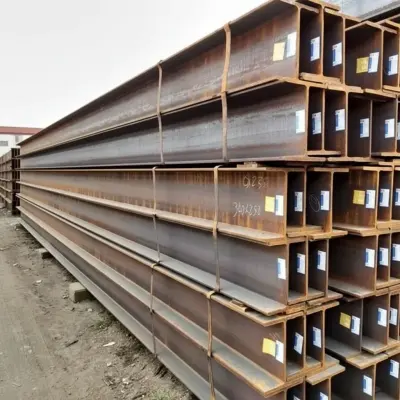
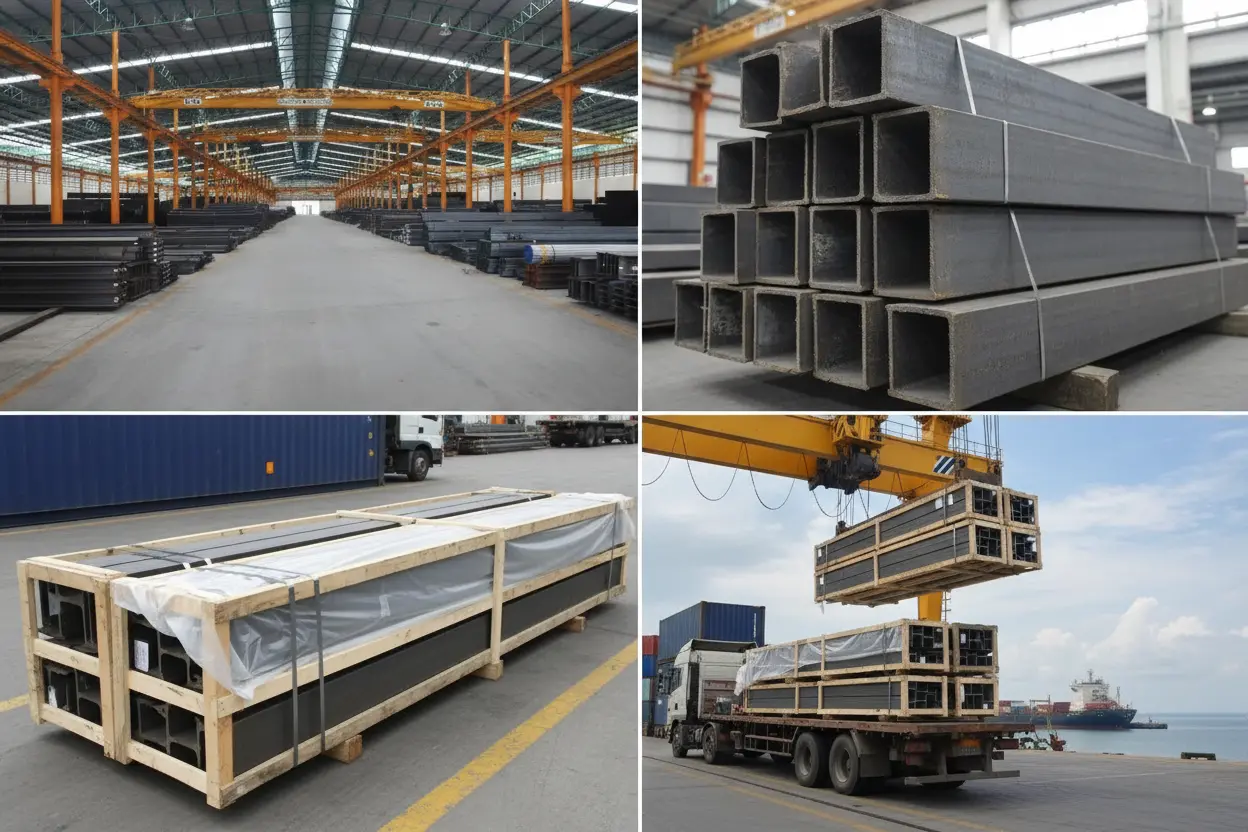
| Packaging | Bundled with steel straps or supplied loose; export seaworthy packing available |
| Customization | Steel grade, section dimensions, length, surface coating, fabrication, marking, and inspection requirements can be customized |
H-Beam Steel for Construction | Factory Direct Supplier & Custom Sizes
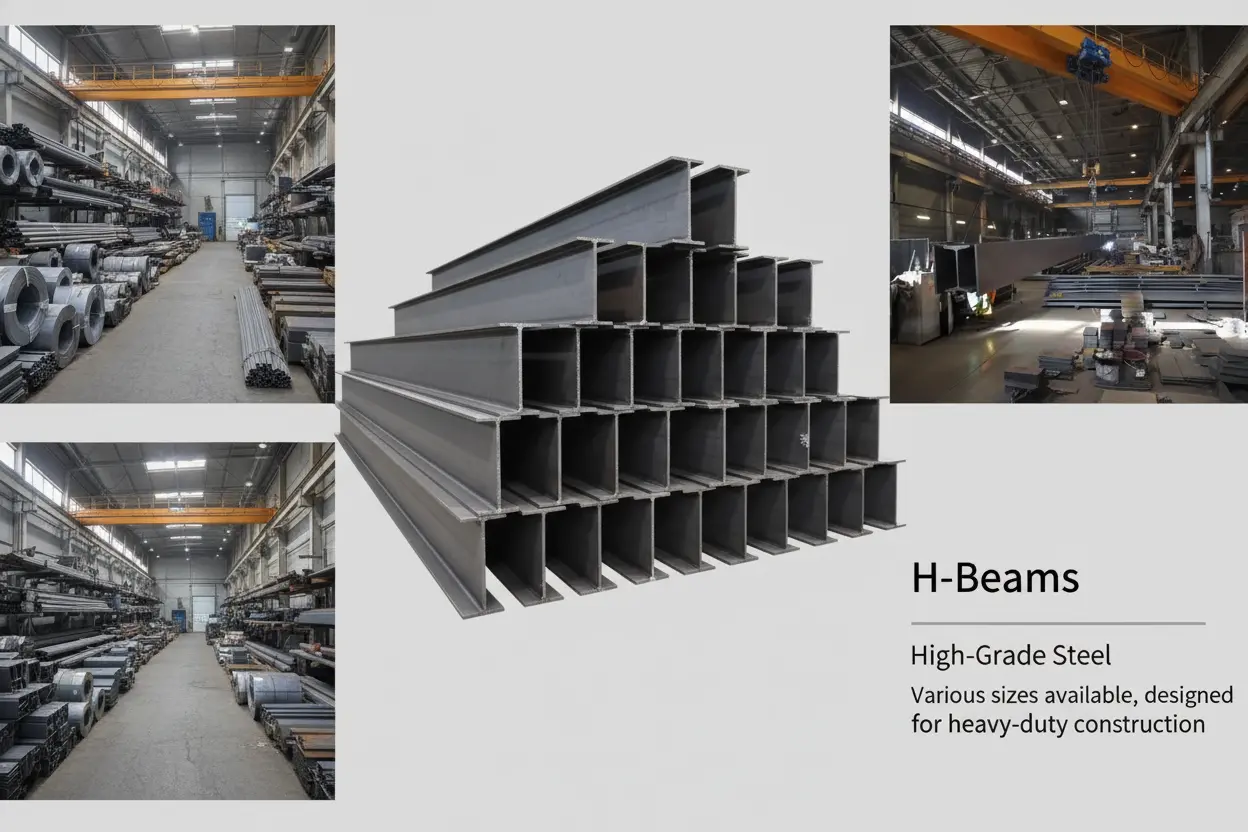
H-beam steel is a structural section with parallel flanges and a central web engineered to carry substantial bending and compressive loads. It serves overseas contractors, steel fabricators, engineering companies, distributors, and project procurement teams that require dependable structural members in standard or project-specific dimensions. Compared with many conventional sections, its balanced geometry supports efficient load transfer, straightforward connection design, and economical fabrication. Buyers can specify the applicable material grade, dimensional standard, length, surface condition, processing requirements, inspection documents, and export packing. Custom sizes and fabrication services remain subject to technical evaluation, production feasibility, and agreed order quantities.
H-Beam Product Overview
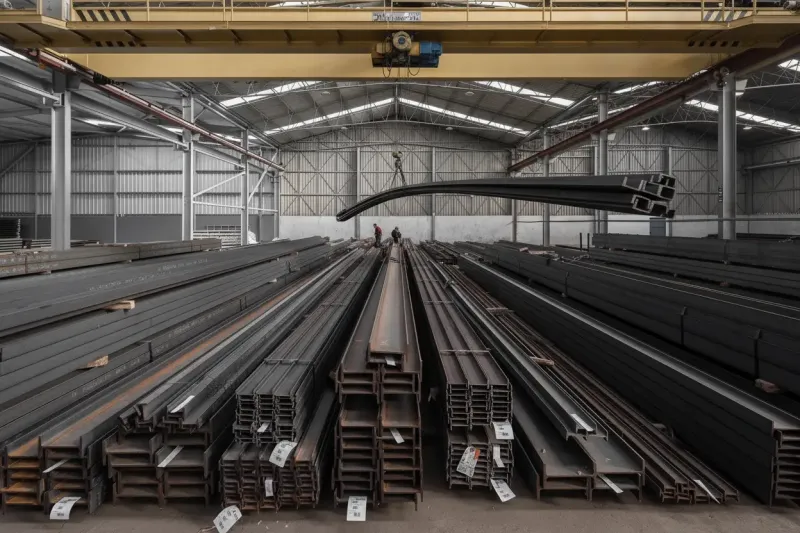
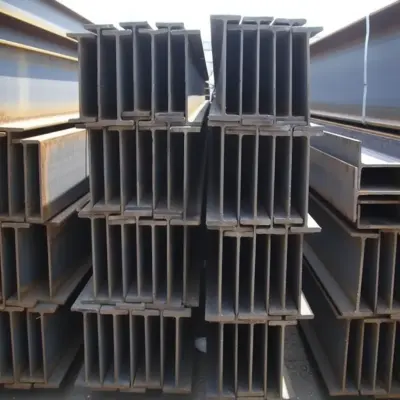
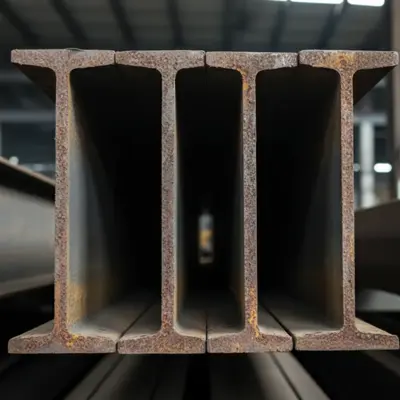
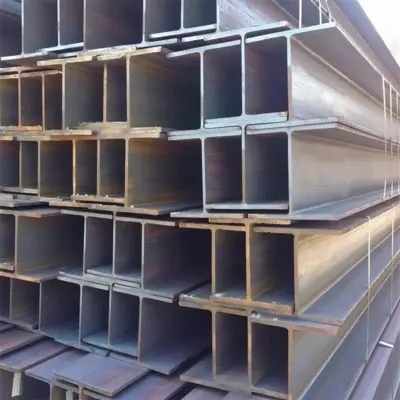
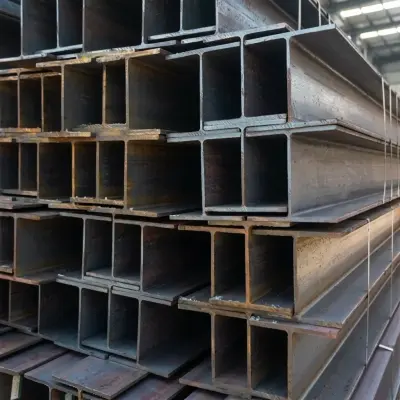
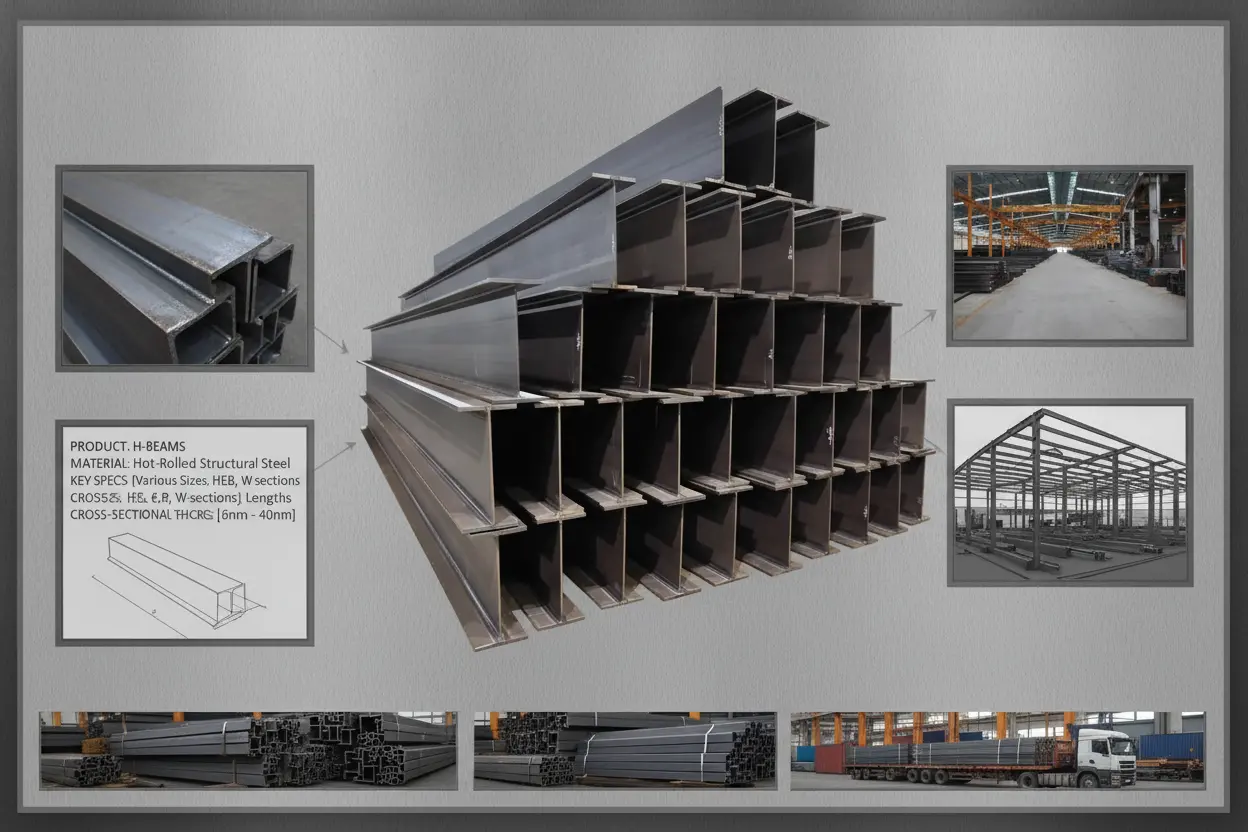
H-beam is a hot-rolled or fabricated structural steel profile identified by its wide, generally parallel flanges and comparatively thin vertical web. The flanges primarily resist bending moments, while the web transfers shear forces between them. This geometry provides favorable section properties for columns, beams, frames, and other load-bearing assemblies.
The product is sometimes grouped with wide-flange beams, universal beams, universal columns, or welded H sections. These terms are related but are not automatically interchangeable. The exact designation depends on the dimensional standard, flange-to-web proportions, manufacturing method, and regional engineering practice. Procurement documents should therefore state a recognized standard and a complete section designation rather than relying only on a general trade name. Buyers comparing other structural profiles can consult [[INTERNAL_LINK]].
Commonly specified materials include carbon structural steel and low-alloy structural steel produced to ASTM, EN, JIS, or GB/T requirements. The selected grade affects yield strength, tensile strength, weldability, toughness, and suitability for the intended service environment. Typical international options include ASTM A36, ASTM A992/A992M, EN 10025-2 grades such as S275JR and S355JR, JIS G 3101 SS400, and corresponding Chinese structural grades ordered under the relevant GB/T specification. Availability must be confirmed for the required section and production route.
Key characteristics of H-beam steel include:
- Wide flanges that provide stable bearing surfaces and useful connection areas.
- Efficient distribution of steel around the neutral axis for structural bending resistance.
- Suitability for bolted, welded, and combined structural connections when properly designed.
- Compatibility with cutting, drilling, coping, welding, shot blasting, painting, and galvanizing processes, subject to grade and size.
- Availability in standard mill lengths or cut-to-length formats, depending on production and order conditions.
Hot-rolled sections are formed as an integrated profile, while welded H sections are assembled from steel plates. Fabricated sections may be considered where unusual depths, flange widths, thickness combinations, or project-specific load requirements cannot be met by standard rolled profiles. Weld quality, dimensional tolerances, straightness, and nondestructive testing requirements should be stated clearly for fabricated products. More information about structural steel fabrication is available at [[INTERNAL_LINK]].
H-Beam Specifications & Standards
H-beam procurement should begin with the governing design and product standard. Dimensions alone do not define an acceptable product: grade, tolerances, testing, inspection documentation, and delivery condition also affect compliance. The following standards are commonly referenced for structural sections, although the project engineer must confirm which edition and grade are applicable.
| Standard | Scope or Common Use | Examples of Relevant Grades or Requirements |
|---|---|---|
| ASTM A6/A6M | General requirements, dimensions, mass, tolerances, testing, and ordering provisions for rolled structural steel shapes | Used together with the applicable ASTM material specification |
| ASTM A36/A36M | Carbon structural steel shapes, plates, and bars for general structural use | ASTM A36 |
| ASTM A992/A992M | Structural steel shapes primarily intended for building framing | ASTM A992 |
| EN 10025-2 | Technical delivery conditions for non-alloy structural steels | S275JR, S355JR and other grades defined by the standard |
| EN 10365 | Dimensions and masses of hot-rolled steel channels, I sections, and H sections | European section series and nominal mass data |
| JIS G 3101 | Rolled steels for general structures | SS400 and other listed grades |
| JIS G 3192 | Dimensions, mass, and permissible variations for hot-rolled steel sections | Dimensional control for Japanese section series |
| GB/T 11263 | Hot-rolled H and cut T section steel | Dimensions, shape, mass, and permissible deviations |
| GB/T 700 | Carbon structural steels | Grades specified according to the current standard and purchase contract |
| GB/T 1591 | High-strength low-alloy structural steels | Grades specified according to required strength and service conditions |
The mechanical values below are representative requirements for several frequently requested grades. They are provided for preliminary comparison, not as a substitute for the complete standard. Actual minimum values can vary with section thickness, product form, test orientation, delivery condition, and the edition of the specification. The purchase order and mill test certificate must identify the governing requirements.
| Material Grade | Referenced Standard | Minimum Yield Strength | Tensile Strength | Important Qualification |
|---|---|---|---|---|
| ASTM A36 | ASTM A36/A36M | Typically 250 MPa for structural shapes | 400-550 MPa | Confirm product form, thickness, and current standard edition |
| ASTM A992 | ASTM A992/A992M | 345 MPa minimum | 450 MPa minimum | Includes additional controls relevant to structural shapes; consult the complete specification |
| S275JR | EN 10025-2 | 275 MPa for nominal thickness up to 16 mm | Generally 410-560 MPa for the applicable lower thickness range | Values change with thickness; JR indicates a specified Charpy impact test category |
| S355JR | EN 10025-2 | 355 MPa for nominal thickness up to 16 mm | Generally 470-630 MPa for the applicable lower thickness range | Strength requirements reduce in defined steps as thickness increases |
| SS400 | JIS G 3101 | 245 MPa minimum for thickness up to 16 mm | 400-510 MPa | Yield requirements vary by thickness |
A complete H-beam inquiry should include section height, flange width, web thickness, flange thickness, required length, quantity, theoretical or actual weight basis, steel grade, dimensional standard, and permissible tolerances. It should also identify whether bare, blasted, primed, painted, or galvanized surfaces are required. For guidance on steel grades and their practical differences, see [[INTERNAL_LINK]].
Inspection documents should be agreed before production. For EN-based orders, buyers often request documentation under EN 10204, such as a 3.1 inspection certificate, where applicable. A certificate request must be included in the contract because document type, test scope, traceability, and third-party witnessing can influence production planning and cost. ASTM-based orders may require a certified material test report showing heat identification, chemical analysis, mechanical test results, and specification compliance.
H-Beam Applications
H-beam steel is used where the structural design requires predictable load-bearing capacity, efficient framing, and practical site connections. Final section selection must be performed or approved by a qualified structural engineer. Common applications include the following:
Industrial and Commercial Buildings
Wide-flange sections are used as columns, primary beams, roof-support members, and frame components in warehouses, factories, logistics centers, workshops, and multistory commercial structures. Their broad flange surfaces facilitate end-plate, base-plate, stiffener, and bracing connections. Related building steel products can be reviewed at [[INTERNAL_LINK]].
Bridges and Transport Infrastructure
H sections may be specified for bridge components, temporary works, access structures, equipment platforms, station facilities, and supporting frames. Infrastructure procurement commonly requires stricter controls for toughness, welding procedures, traceability, coating systems, and third-party inspection. The project specification takes precedence over general commercial requirements.
Energy, Mining, and Heavy Industrial Facilities
Structural frames supporting conveyors, processing equipment, pipe racks, maintenance platforms, and industrial machinery frequently use H-beam members. In these environments, designers must consider dynamic loads, vibration, fatigue, corrosion exposure, fire protection, and maintenance access rather than selecting a section solely by nominal load capacity.
Modular and Prefabricated Steel Structures
Fabricators use H sections in modular buildings, prefabricated frames, mezzanines, and repeatable structural assemblies. Controlled cutting, hole positioning, and member identification can reduce workshop handling and simplify erection. Buyers requiring processed members should provide approved drawings, hole schedules, tolerances, weld details, and marking instructions before manufacturing.
Marine and Coastal Construction
H-beam products may be incorporated into coastal facilities, structural supports, and marine-related civil works where permitted by the design. Material toughness and corrosion protection require particular attention in these environments. Coating selection should be based on the specified exposure category, design life, surface preparation, and maintenance plan. Further information on protective finishes is available at [[INTERNAL_LINK]].
How to Choose H-Beam / Buying Guide
H-beam purchasing decisions should be based on the approved engineering specification, not only on unit price per tonne. A lower-cost section can create substantial downstream expense if its dimensions, grade, tolerances, documentation, or fabrication details do not match the project.
1. Define the Section and Material Grade
State the full designation used by the governing dimensional standard. Include nominal depth, flange width, web and flange thicknesses, or the recognized section series and mass per metre. Specify the material standard and grade separately. Terms such as “mild steel beam” are insufficient for controlled structural procurement because they do not establish mechanical properties or testing requirements.
2. Confirm Design and Substitution Rules
Two sections with similar overall dimensions can have different masses, section moduli, radii, tolerances, and load capacities. A supplier should not substitute a grade or section series without written approval. If an alternative is proposed, the buyer’s engineer should review the mechanical properties, dimensions, weldability, connection geometry, and applicable design code. A structural section comparison guide is available through [[INTERNAL_LINK]].
3. Specify Certification and Inspection
Clarify whether mill test certificates, EN 10204 inspection documents, dimensional reports, coating reports, or independent inspection are required. If third-party inspection is needed, define the inspection agency or acceptance process, hold points, sampling method, and document language before order confirmation. Retrospective certification may not be possible after material has been processed or separated from its original identification.
4. Evaluate MOQ and Production Feasibility
Minimum order quantity is not universal. It depends on the section, grade, length, whether stock is available, mill rolling schedules, processing requirements, and packing method. Standard stock sections may support smaller orders, while nonstandard rolled or welded sizes can require a larger production batch. Procurement teams should send a section-by-section quantity schedule so the supplier can confirm the practical MOQ for each item.
5. Align Lead Time With the Project Schedule
Lead time should be confirmed after reviewing material availability, production route, testing, processing, inspection, and packing. Custom lengths, special grades, fabrication, galvanizing, or third-party witnessing can extend the schedule. Ask for separate milestones covering technical approval, material preparation, production, inspection, packing, and dispatch. Information about export order preparation can be found at [[INTERNAL_LINK]].
6. Plan Packing and International Logistics
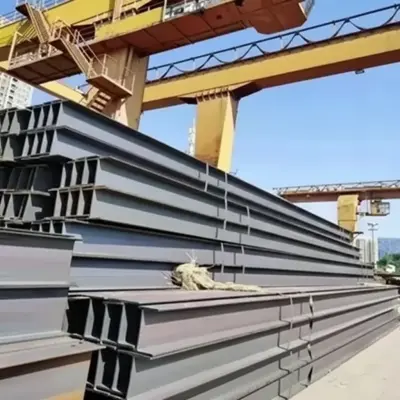
H-beam logistics depend on member length, bundle weight, handling restrictions, container capability, and shipping route. Buyers should identify maximum acceptable lengths and package weights at the destination. Bundling, lifting points, end protection, identification tags, and waterproof protection should be agreed according to the transport method. Long structural members may require specialized loading arrangements, so freight feasibility should be checked before finalizing cut lengths.
7. Compare Quotations on the Same Basis
Confirm whether the quotation uses theoretical weight or actual scale weight, and whether it includes cutting, drilling, blasting, coating, testing, documentation, packing, inland transport, and export charges. The Incoterms rule and named place should be written clearly. Comparing incomplete offers by headline tonne price alone can conceal differences in scope and commercial risk.
H-Beam Frequently Asked Questions
Q: What is the difference between an H-beam and an I-beam?
A: An H-beam generally has wider, more parallel flanges and a profile resembling the letter H. The term I-beam can refer to sections with narrower or tapered flanges, depending on the regional standard. Trade terminology varies, so buyers should compare the exact dimensions, mass per metre, section properties, and governing standard instead of relying on the name alone.
Q: Which H-beam material grade should I choose?
A: The correct grade depends on the structural design, required yield strength, thickness, welding procedure, service temperature, toughness requirements, and local building code. ASTM A36, ASTM A992, EN 10025-2 grades, and JIS G 3101 SS400 are common reference options, but they are not automatically equivalent. Grade substitutions require engineering approval.
Q: Can H-beam steel be supplied with mill certification?
A: Certification can generally be arranged when specified before order confirmation and supported by the selected production route. State whether you need a mill test certificate, an EN 10204 document such as type 3.1, or third-party witnessed inspection. The required heat-number traceability and document content should also be defined in the purchase order.
Q: What is the minimum order quantity for H-beam steel?
A: MOQ varies according to section size, grade, stock status, mill production schedule, cut length, surface treatment, and fabrication requirements. There is no responsible single MOQ for every specification. Send a detailed size and quantity list to receive a project-specific confirmation.
Q: Are custom H-beam sizes and lengths available?
A: Custom lengths and processed members may be available, subject to equipment limits, material availability, production feasibility, and order volume. Nonstandard cross-sections may require welded fabrication rather than hot rolling. Provide approved drawings and dimensional tolerances so the manufacturing route can be evaluated accurately.
Q: What payment methods are available for export orders?
A: Payment terms depend on contract value, production type, commercial history, banking conditions, and destination risk. Common international methods can include bank transfer and letter of credit, but no method should be assumed until it is stated in the signed sales contract. Buyers should verify beneficiary information through an agreed secure channel before payment.
Q: How long does H-beam production and delivery take?
A: Lead time depends on whether the section is in stock, requires a new rolling schedule, or needs cutting, drilling, welding, coating, testing, or external inspection. International delivery time also depends on booking availability, route, customs procedures, and destination handling. A reliable schedule can be issued only after the complete specification and delivery terms are reviewed.
Q: Can H-beam steel be galvanized or painted?
A: Yes, suitable sections can be supplied with specified surface preparation and protective coating when the process is technically compatible with the member dimensions and intended use. The buyer should state the required preparation grade, coating system, dry-film thickness, color, galvanizing standard if applicable, inspection method, and exposure environment.
Q: How should H-beam quantity and weight be calculated?
A: Preliminary weight is commonly calculated from the standard nominal mass per metre multiplied by ordered length and quantity. Contract weight may be based on theoretical mass or actual scale weight, depending on the agreement. Dimensional and mass tolerances in standards such as ASTM A6/A6M, EN 10365, JIS G 3192, or GB/T 11263 should be considered.
Q: What information is required for an accurate quotation?
A: Provide the section designation, dimensions, steel grade, standard, length, quantity, surface condition, processing drawings, inspection document type, packing requirements, destination, and preferred Incoterms rule. Also identify any mandatory delivery date or third-party inspection. A structured inquiry checklist can be reviewed at [[INTERNAL_LINK]].
Send your H-beam schedule, material standard, required grade, lengths, quantities, processing drawings, certification needs, and delivery destination for a technical and commercial review. Request a quotation to confirm available sections, custom-size feasibility, applicable MOQ, production lead time, packing plan, and export delivery terms for your construction or fabrication project.
Ratings & Reviews

Know your supplier
Supplier's customization ability
- Drawing-based customization
- Sample-based customization
- Full customization
Minimum order quantity: 1 ton
Shipping total: To be negotiated
- Lead time:
- confirmed with the quotation
- Packaging:
- standard export packing
- Samples:
- available on request