 English
 Español
 Français
 Deutsch
 Português (Brasil)
 Русский
 العربية

Radial Gate Manufacturer | Custom Steel Tainter Gates for Dams & Spillways

 China

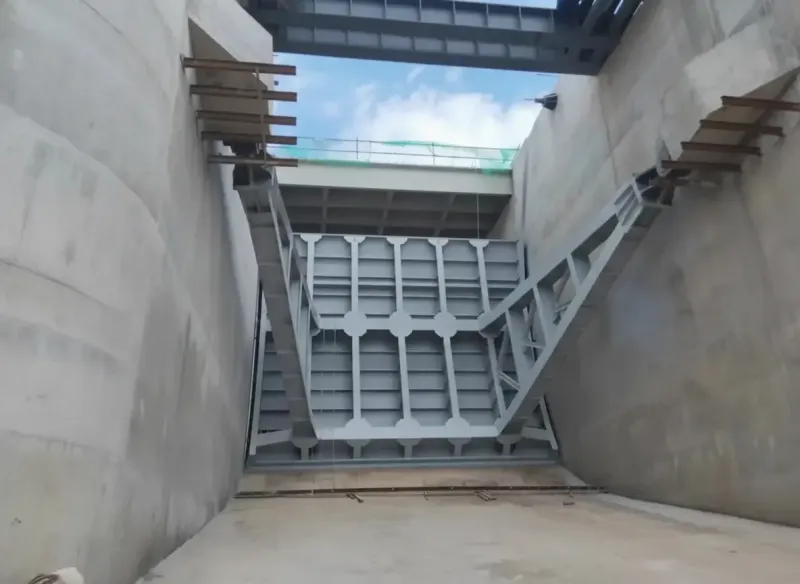
Supplier's customization ability
- Drawing-based customization
- Sample-based customization
- Full customization
Minimum order quantity: 1 pieces
Shipping total: To be negotiated
- Lead time:
- confirmed with the quotation
- Packaging:
- standard export packing
- Samples:
- available on request
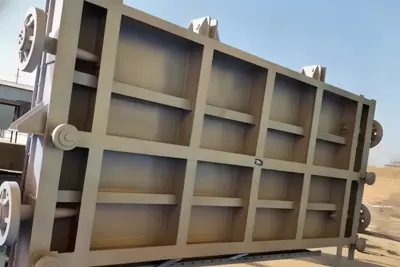
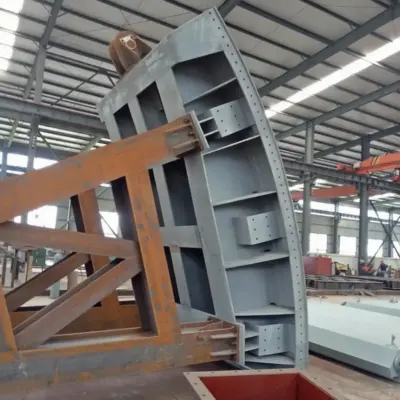
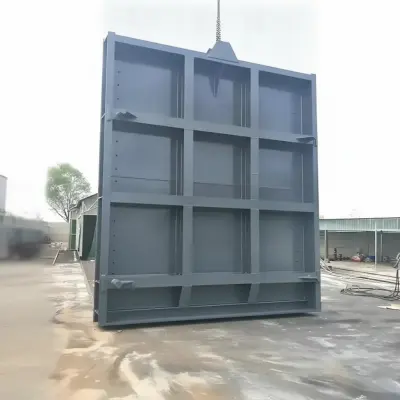
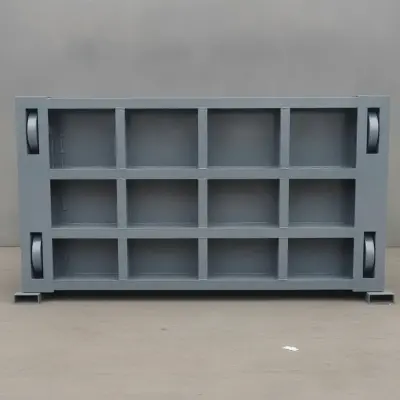
Product details
Radial Gate Technical Specifications
| Parameter | Technical Specification |
|---|---|
| Product Name | Radial Gate |
| Gate Type | Segmental radial gate with curved skin plate and radial arms |
| Primary Function | Flow regulation, discharge control, and water-level management in hydraulic structures |
| Typical Applications | Dams, reservoirs, spillways, irrigation channels, hydropower stations, flood-control projects, and water conservancy systems |
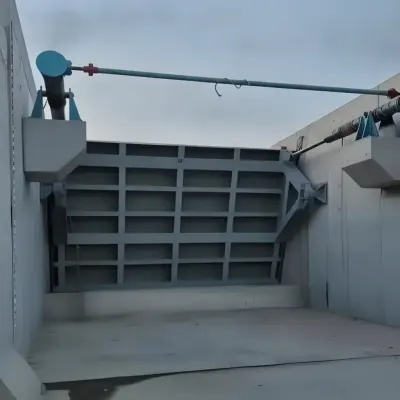
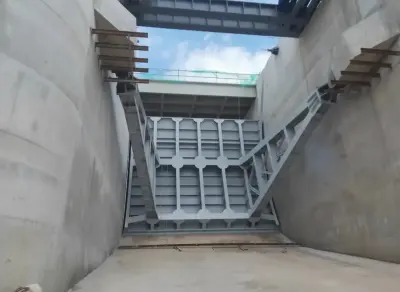
| Operating Principle | Rotation around a fixed trunnion assembly to raise or lower the gate leaf |
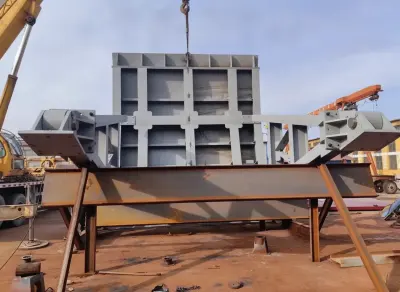
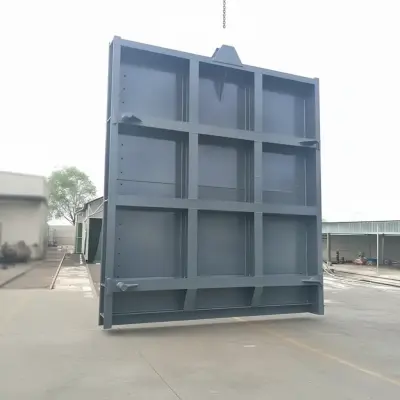
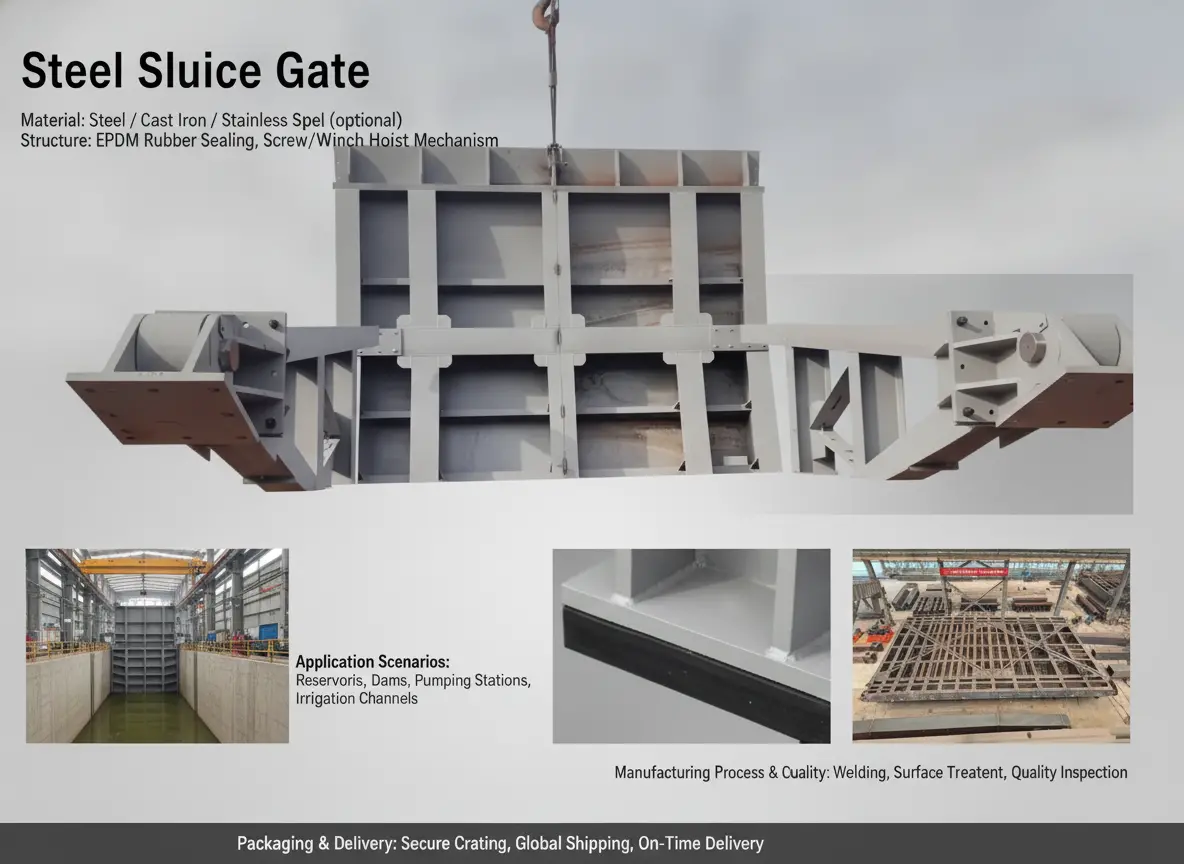
| Gate Leaf | Welded steel structure comprising a curved skin plate, horizontal girders, vertical stiffeners, and radial arms |
| Design Head | Custom-engineered according to upstream water level, downstream water level, operating condition, and project hydraulic requirements |
| Effective Span | Designed according to the clear opening and embedded-part dimensions specified for the project |
| Flow Capacity | Determined by gate opening, hydraulic head, discharge coefficient, and channel geometry |
| Construction Material | Welded carbon steel or low-alloy structural steel; stainless steel may be used for sealing and corrosion-critical components |
| Sealing System | Replaceable side and bottom seals, commonly using EPDM, neoprene, or equivalent water-resistant elastomer |
| Trunnion Assembly | Heavy-duty trunnion hubs, pins, bearings, and anchor components sized for operating and hydrostatic loads |
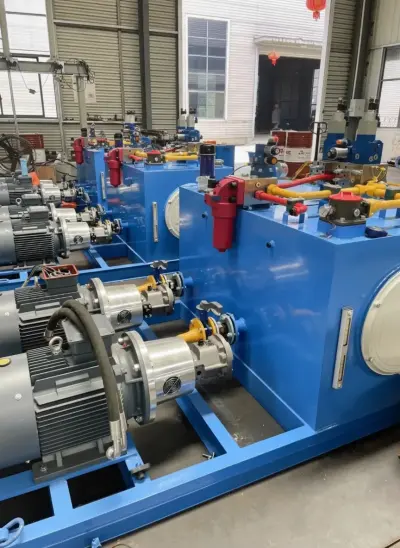
| Operating Equipment | Hydraulic hoist, wire-rope hoist, or electric-mechanical drive selected according to gate size and operating duty |
| Control Mode | Manual, local electric, hydraulic, remote, or PLC-integrated automatic control |
| Corrosion Protection | Surface preparation and protective coating system selected for immersion, splash-zone, atmospheric, and site-specific exposure conditions |
| Fabrication Standard | Manufactured according to applicable project specifications and recognized steel fabrication, welding, inspection, and coating standards |
| Inspection Requirements | Dimensional inspection, weld visual inspection, non-destructive testing, coating-thickness inspection, seal verification, and functional testing |
| Installation | Installed with embedded parts, trunnion supports, hoisting equipment, seals, guides, and commissioning adjustments |
| Maintenance Features | Accessible seals, bearings, hoist components, lubrication points, and replaceable wear parts for serviceability |
| Customization | Opening width, gate radius, design head, seal arrangement, hoist capacity, control system, coating, and material can be customized |
| Supply Scope | Gate leaf, radial arms, trunnion assemblies, seals, embedded parts, hoisting system, control equipment, coating, documentation, and commissioning support as specified |
Radial Gate Manufacturer | Custom Steel Tainter Gates for Dams & Spillways
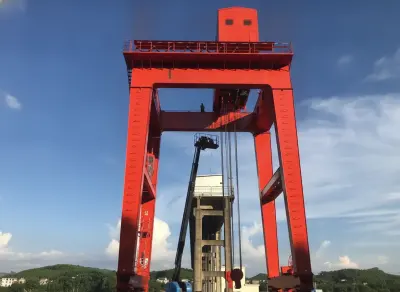
A radial gate is a curved steel water-control structure designed to regulate discharge through dam spillways, barrages, canals, and flood-control works. It is primarily specified by international EPC contractors, hydropower developers, civil engineering consultants, dam operators, and public water authorities that require dependable flow control with manageable operating loads. Also known as a tainter gate, the assembly transfers hydrostatic pressure through radial arms to trunnion bearings embedded in or supported by the concrete structure. Its practical value lies in efficient load transfer, relatively low hoisting demand, and adaptability to project-specific openings, heads, operating systems, and corrosion environments.
Radial Gate Product Overview
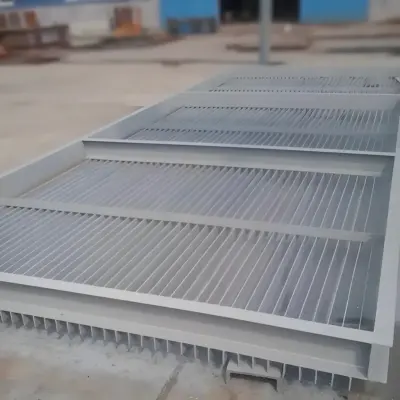
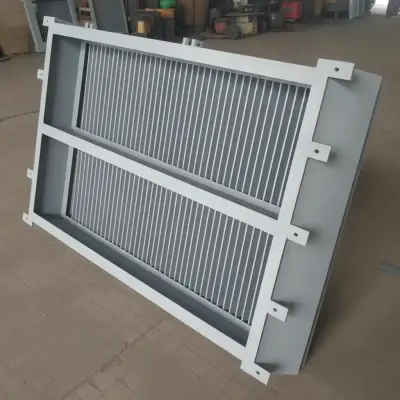
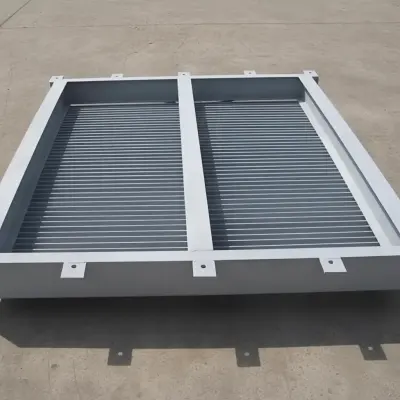
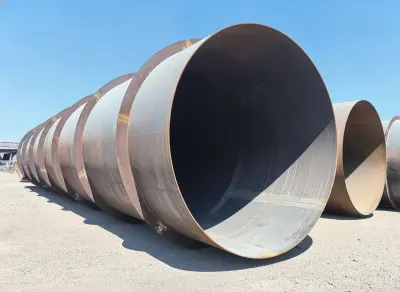
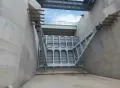
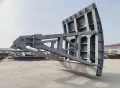
The radial gate consists of a curved skin plate supported by vertical and horizontal stiffeners, structural arms, trunnion hubs, bearings, seals, and an operating connection. The skin plate forms a cylindrical segment whose center of curvature is located near the trunnion axis. This geometry directs much of the water load toward the trunnions, reducing the torque required to open or close the gate compared with some vertically sliding gate configurations.
Carbon structural steel is commonly used for the skin plate, ribs, arms, and other load-bearing components. The exact grade must be selected according to design temperature, calculated stress, fracture considerations, weldability, corrosion allowance, and the governing project specification. Stainless steel may be specified for seal seats, fasteners, pins, or other components exposed to persistent moisture and abrasion, but material selection depends on the water chemistry and lifecycle requirements. Buyers evaluating alternative gate types can consult [[INTERNAL_LINK]] and review compatible embedded parts at [[INTERNAL_LINK]].
A complete radial gate package may include the fabricated gate leaf, trunnion assemblies, side and bottom seals, anchor components, hoist connection points, access provisions, corrosion-protection systems, and an electric or hydraulic operating system. Package boundaries should always be defined in the inquiry because civil works, embedded items, controls, installation supervision, and commissioning are not automatically included in every supply contract.
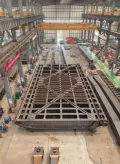
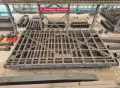
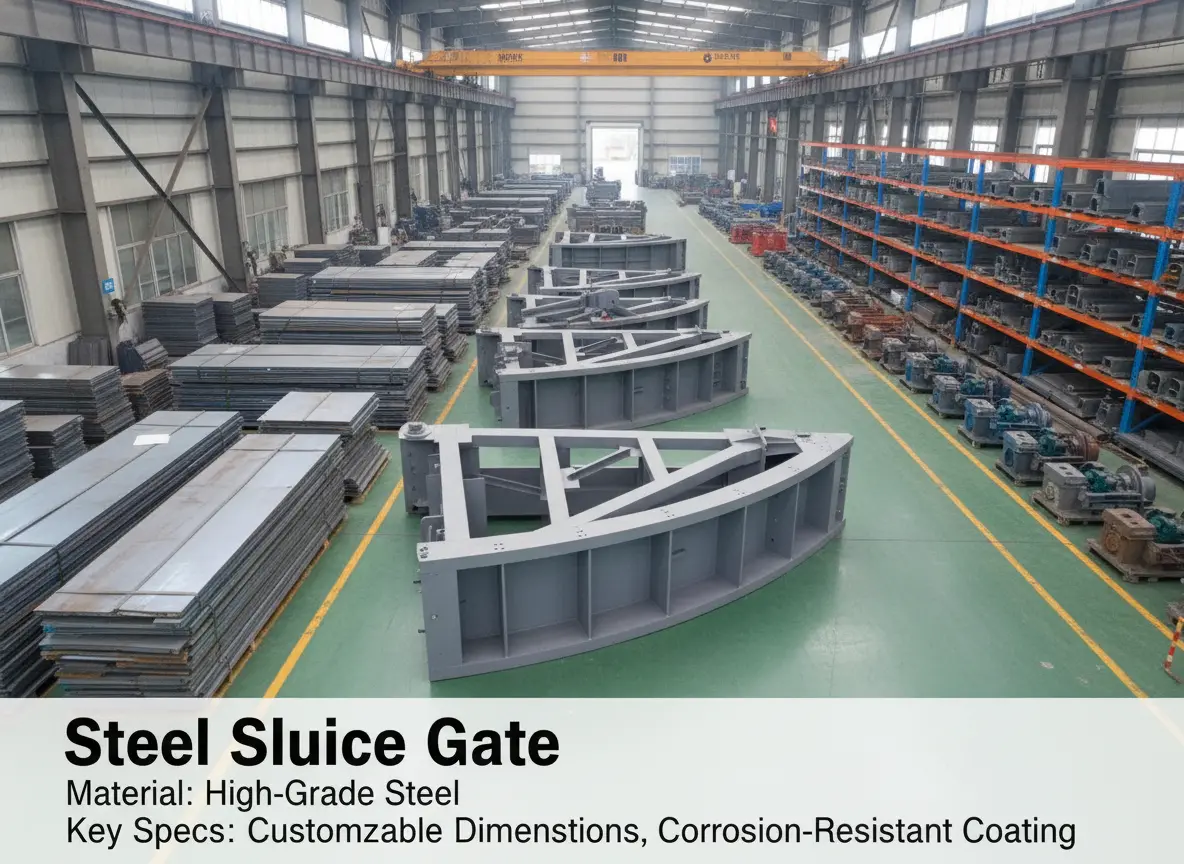
Important characteristics include structural stiffness under hydrostatic loading, controlled fabrication tolerances, reliable sealing, accessible maintenance points, and compatibility between the gate and its hoist. Shop trial assembly, dimensional inspection, weld examination, coating inspection, and functional checks can be incorporated into an inspection and test plan. More information on hydraulic gate fabrication is available at [[INTERNAL_LINK]].
Radial Gate Specifications & Standards
Every radial gate is an engineered product rather than a fixed catalog item. The principal dimensions are determined by the clear opening width, gate height, sill elevation, maximum and normal water levels, design head, upstream or downstream sealing arrangement, required discharge control, and available civil geometry. The purchaser should also identify whether the unit will operate under balanced or unbalanced head and whether it is intended for regulating service, emergency closure, or both.
| Specification Item | Project Information to Confirm | Engineering Significance |
|---|---|---|
| Clear opening | Width, height, sill elevation, and pier geometry | Defines the basic gate envelope and support arrangement |
| Hydraulic conditions | Normal level, maximum level, tailwater level, design head, and flow direction | Determines hydrostatic and operating loads |
| Service duty | Regulating, isolation, flood discharge, emergency closure, and operating frequency | Influences fatigue review, controls, and hoist selection |
| Operating system | Wire-rope hoist, chain hoist, hydraulic cylinder, or project-defined mechanism | Controls lifting capacity, speed, redundancy, and interfaces |
| Sealing arrangement | Side seals, bottom seal, seal direction, allowable leakage, and seat material | Affects leakage performance and opening force |
| Environment | Water chemistry, sediment, temperature range, immersion cycle, and atmospheric exposure | Guides material, corrosion allowance, coating, and seal selection |
| Inspection | NDT scope, witness points, trial assembly, dimensional records, and coating tests | Establishes verifiable acceptance criteria |
Applicable material standards may include ASTM A36/A36M for carbon structural steel and ASTM A572/A572M for high-strength low-alloy structural steel. Where European materials are required, EN 10025-2 covers technical delivery conditions for non-alloy structural steels. JIS G 3101 applies to rolled steels for general structures, while GB/T 700 covers carbon structural steels. These standards are possible procurement bases, not interchangeable grade approvals. The designer must confirm grade equivalency, thickness limits, impact requirements, and permitted substitutions before production.
| Material Framework | Relevant Standard | Typical Scope in a Radial Gate Project |
|---|---|---|
| ASTM | ASTM A36/A36M | Carbon structural steel plates, shapes, and bars where approved by design |
| ASTM | ASTM A572/A572M | High-strength low-alloy structural steel where specified by the engineer |
| EN | EN 10025-2 | European non-alloy structural steel grades and delivery conditions |
| JIS | JIS G 3101 | Rolled steel for general structural applications |
| GB/T | GB/T 700 | Carbon structural steel grades under the Chinese standard system |
Welding procedures, welder qualifications, acceptance levels, and nondestructive examination must follow the contract specification and approved quality plan. AWS D1.1/D1.1M is commonly referenced for welded steel structures when an AWS framework is selected. Dimensional tolerances should be defined on approved fabrication drawings, especially for skin-plate curvature, trunnion alignment, arm geometry, seal-seat straightness, and interfaces with embedded parts.
Surface preparation and protective coating are selected for immersion category, expected maintenance interval, water quality, UV exposure, and abrasion risk. Buyers should request coating product data, dry-film-thickness criteria, holiday-testing requirements where applicable, repair procedures, and inspection records. A general coating comparison can be found at [[INTERNAL_LINK]], while guidance on welding and NDT documentation is available at [[INTERNAL_LINK]]. No material grade, chemical composition, mechanical property, coating life, or leakage class should be accepted without confirmation against the project’s issued technical specification.
Radial Gate Applications
A radial gate is used where controlled water release, compact operating loads, and robust structural load paths are required. Common applications include the following:
- Dam spillways: Gates regulate reservoir discharge, support flood routing plans, and provide controlled releases through gated spillway bays.
- Hydropower projects: A radial gate may serve at spillways, diversion works, intake-related waterways, or other hydraulic structures defined by the plant design. Related hydropower equipment can be reviewed at [[INTERNAL_LINK]].
- Barrages and river regulators: Multiple gates installed between piers manage upstream levels, river flow, and seasonal water allocation.
- Irrigation and navigation canals: Gates control canal levels and discharge at headworks, cross regulators, and water-distribution structures.
- Flood-control and diversion works: A tainter gate can regulate bypass channels, detention facilities, and temporary or permanent diversion structures.
Application suitability depends on hydraulic modeling, structural analysis, sediment conditions, debris exposure, cavitation risk, operating frequency, and access for inspection. The gate manufacturer should work from consultant-approved design inputs rather than infer critical loads from opening dimensions alone. Buyers comparing spillway solutions may also use [[INTERNAL_LINK]].
How to Choose a Radial Gate / Buying Guide
Procurement should begin with a complete data sheet and interface definition. At minimum, provide opening dimensions, design and operating water levels, sill and trunnion elevations, arrangement drawings, duty classification, target opening and closing times, power supply, environmental conditions, and the governing design and fabrication specifications. If some inputs remain under consultant review, identify them as provisional so quotation exclusions and revision risks are visible.
Confirm the design responsibility. Clarify whether the supplier is fabricating to issued-for-construction drawings, completing detailed design from performance requirements, or providing both engineering and manufacturing. Request calculation notes, shop drawings, material lists, weld maps, and interface drawings as contractual deliverables where required.
Evaluate materials by traceability, not grade name alone. The purchase specification should state the governing standard, grade, delivery condition, impact-test requirements if applicable, and required mill certificates. ASTM, EN, JIS, and GB/T grades must not be treated as automatically equivalent. Material traceability from certificate to marked component is particularly important for primary arms, hubs, and heavily loaded connections.
Define inspection and certification. State whether EN 10204 type 3.1 inspection certificates or another documentation format is required. Agree on the inspection and test plan before fabrication, including hold or witness points for material verification, welding procedure approval, NDT, dimensional inspection, trial assembly, coating preparation, dry-film-thickness measurement, and final packing. Third-party inspection should be named in the inquiry if it is a tender requirement.
Review the complete operating system. Gate weight alone is not sufficient for hoist sizing. The calculation should address water loads, seal friction, bearing friction, silt or debris allowances specified by the designer, dynamic effects, operating speed, load combinations, and required safety factors. Controls may also need position indication, limit switches, overload protection, local and remote modes, emergency provisions, and integration with the project’s control system. See [[INTERNAL_LINK]] for related gate-hoist considerations.
Compare MOQ and commercial scope carefully. A radial gate is generally produced against project drawings, so order quantity, tooling, engineering effort, and unit economics are project-specific. Buyers should request separate pricing for gate leaves, embedded parts, hoists, controls, spare seals, special tools, supervision, testing, and documentation. The supplier should confirm the applicable minimum order quantity in its written offer rather than relying on a generic catalog statement.
Build a realistic delivery schedule. Lead time depends on drawing approval, material availability, manufacturing capacity, inspection hold points, trial assembly, coating cure requirements, and shipping method. Ask for a milestone schedule covering design submission, buyer review, material procurement, fabrication, inspection, packing, and dispatch. Approval delays should be addressed explicitly in the contract schedule.
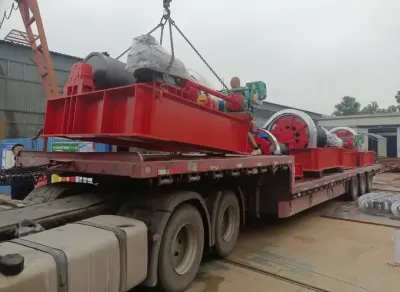
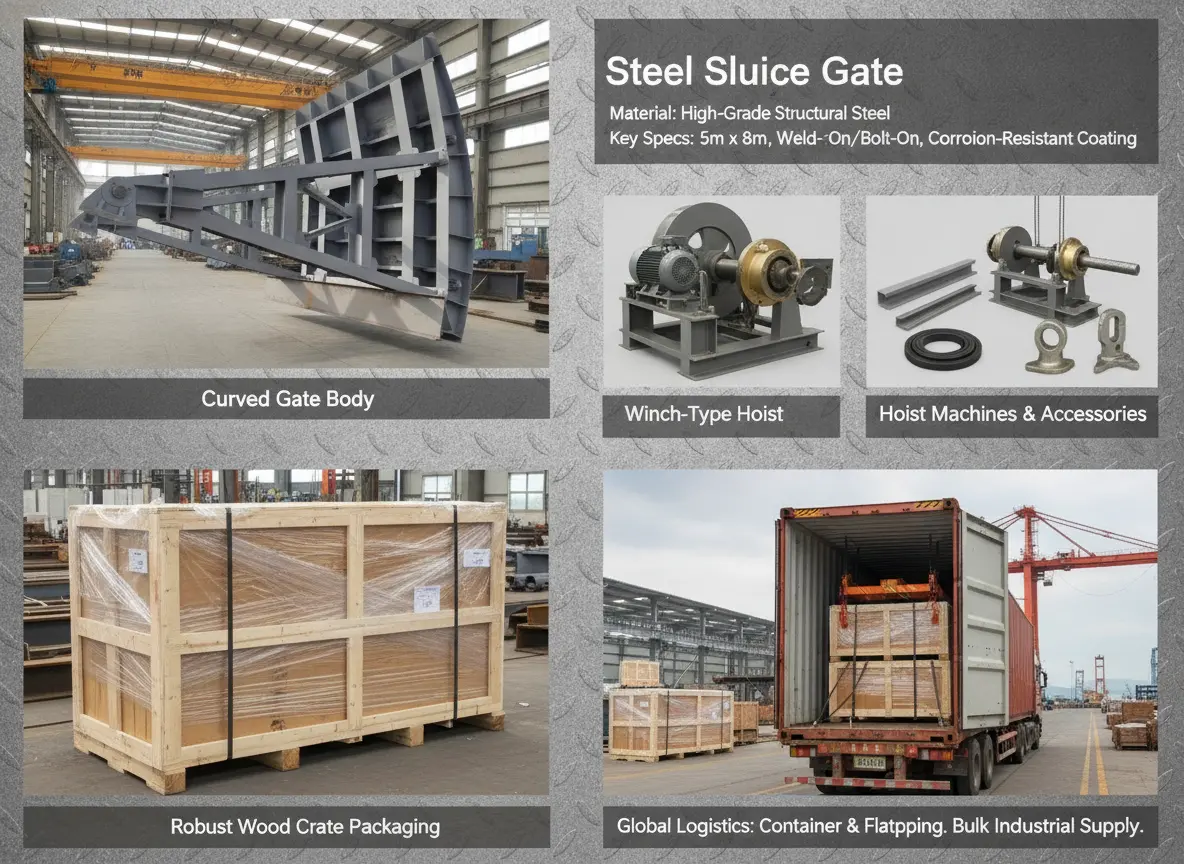
Plan logistics before fabrication is complete. Large gate leaves may require split fabrication, field joints, lifting frames, out-of-gauge transport, or special port and road arrangements. Confirm maximum shipping dimensions and weights, center-of-gravity markings, lifting points, moisture protection, export packing, and responsibility for inland transport. The final packing plan should match the installation sequence and protect machined surfaces, seals, instruments, and coated edges. Export packing guidance is available at [[INTERNAL_LINK]].
Radial Gate Frequently Asked Questions
Q: What is the difference between a radial gate and a vertical lift gate?
A: A radial gate uses a curved skin plate and radial arms that transfer water pressure to trunnions, while a vertical lift gate generally moves in guides and transfers load through its leaf and guide system. The radial configuration can reduce hoisting demand because the gate rotates about the trunnion axis. Final selection depends on civil layout, hydraulic duty, sealing requirements, maintenance access, operating philosophy, and lifecycle cost.
Q: Which steel grade should be specified for a radial gate?
A: There is no universal grade for every project. Structural steel may be specified under ASTM A36/A36M, ASTM A572/A572M, EN 10025-2, JIS G 3101, or GB/T 700, depending on the contract. The responsible engineer must select the grade after considering stress, thickness, design temperature, impact toughness, weldability, corrosion allowance, and local regulatory requirements. Substitution requires documented technical approval.
Q: Can the radial gate be supplied with material and inspection certificates?
A: Certification can be included when it is defined in the purchase order. Buyers should specify the required certificate format, such as EN 10204 type 3.1 where applicable, together with traceability, NDT reports, welding records, dimensional reports, coating reports, and any third-party inspection requirements. The document list should be agreed before material procurement.
Q: What is the minimum order quantity for a custom radial gate?
A: MOQ is supplier- and project-dependent because each unit is engineered around a specific opening, head, trunnion arrangement, and operating system. A single project-specific unit may be commercially possible, while multiple identical bays can reduce repeated engineering and setup costs. The manufacturer must confirm MOQ after reviewing drawings, specifications, package scope, and inspection requirements.
Q: How long does radial gate manufacturing take?
A: Lead time varies with design approval, gate size, material availability, fabrication complexity, NDT scope, trial assembly, coating system, and purchaser witness points. A reliable quotation should provide milestone dates rather than an unsupported standard lead time. Buyers should also reserve time for drawing review, document approval, export packing, ocean or land transport, site assembly, and commissioning.
Q: What payment terms are available for an export order?
A: Payment terms are negotiated according to contract value, project duration, buyer credit review, and the parties’ risk allocation. Common international instruments may include bank transfer tied to milestones or a letter of credit, but availability cannot be assumed. The contract should connect payments to clearly defined deliverables such as advance documentation, approved drawings, material readiness, inspection release, and shipping documents.
Q: Can the gate and hoist be supplied as one package?
A: Yes, an integrated package can be quoted when the required interfaces and supply boundary are defined. The inquiry should identify the preferred hoist type, operating speed, power supply, control philosophy, redundancy, position feedback, local and remote controls, and emergency-operation requirements. Civil supports, embedded components, electrical cabling, hydraulic power units, and installation services must be listed explicitly to prevent scope gaps.
Q: How is leakage performance determined?
A: Leakage depends on seal profile and material, seat finish, installation tolerances, water head, sealing direction, debris, and structural deflection. The purchaser should state an acceptance criterion and test method in the technical specification. A generic claim of “watertight” is not an adequate contractual requirement because hydraulic gates normally require measurable, project-defined limits.
Q: What information is needed for an accurate quotation?
A: Provide general arrangement drawings, clear opening dimensions, design head and water levels, sill and trunnion elevations, duty and operating frequency, steel and coating specifications, seal requirements, hoist preference, power supply, inspection plan, documentation list, destination, delivery terms, and target schedule. Where information is unavailable, the supplier should list assumptions and exclusions for buyer approval.
Send your radial gate drawings, hydraulic design conditions, applicable standards, inspection requirements, destination, and required delivery date to request a technical review and project-specific quotation. A clearly defined inquiry enables the manufacturer to confirm engineering scope, materials, operating equipment, documentation, packing, and commercial terms without relying on unverified assumptions.
Ratings & Reviews

Know your supplier
Supplier's customization ability
- Drawing-based customization
- Sample-based customization
- Full customization
Minimum order quantity: 1 pieces
Shipping total: To be negotiated
- Lead time:
- confirmed with the quotation
- Packaging:
- standard export packing
- Samples:
- available on request