 English
 Español
 Français
 Deutsch
 Português (Brasil)
 Русский
 العربية

Flap Gate Manufacturer | Durable Industrial Flap Gates for Reliable Flow Control

 China

Supplier's customization ability
- Drawing-based customization
- Sample-based customization
- Full customization
Minimum order quantity: 10 pieces
Shipping total: To be negotiated
- Lead time:
- confirmed with the quotation
- Packaging:
- standard export packing
- Samples:
- available on request
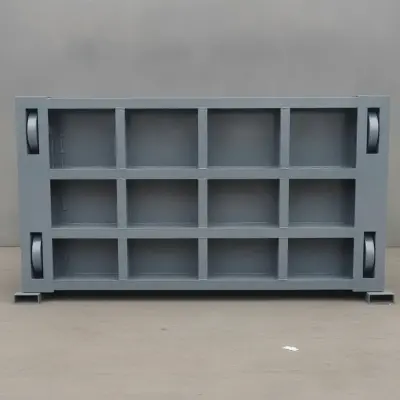
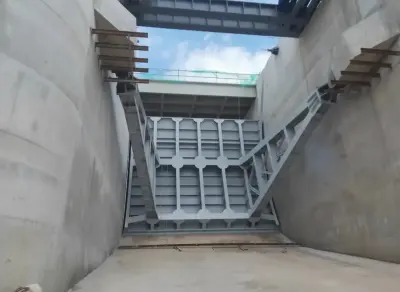
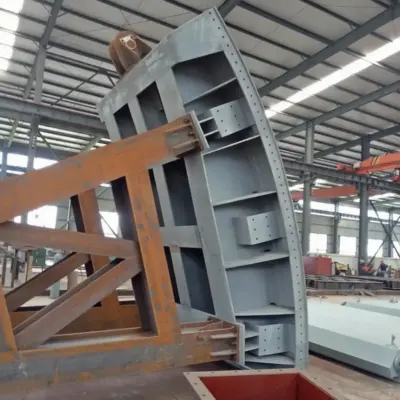
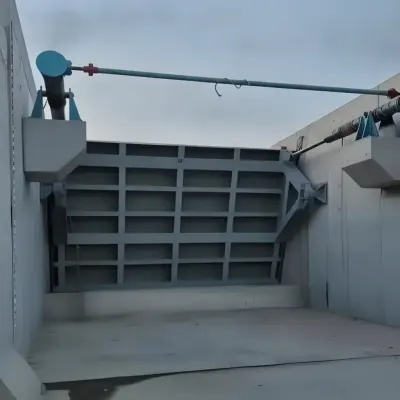
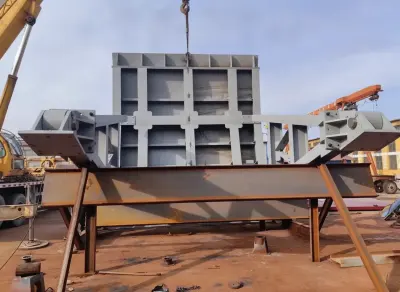
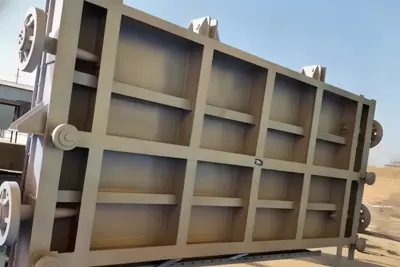
Product details
Flap Gate Technical Parameters
| Technical Attribute | Technical Specification |
|---|---|
| Product Name | Flap Gate |
| Product Type | Non-powered one-way check valve |
| Main Function | Allows one-way discharge of the medium while preventing downstream backflow, seawater backflow, and external floodwater from entering pipelines or drainage systems |
| Applicable Medium | Raw water, rainwater, wastewater, industrial wastewater, and other liquids containing low to moderate levels of suspended solids |
| Nominal Diameter | DN200–DN3000; larger sizes can be customized according to project requirements |
| Nominal Pressure | Typically PN0.1–PN0.6; the specific pressure rating is determined according to installation conditions and structural design |
| Connection Type | Flanged connection, wall-pipe connection, or embedded connection; suitable for concrete chamber walls, pumping station outlets, and drainage pipelines |
| Valve Body Material | Carbon steel, stainless steel, ductile iron, or cast iron; commonly Q235B, 304 stainless steel, and 316 stainless steel |
| Flap Material | Rubber-lined carbon steel, stainless steel, or fiberglass-reinforced plastic (FRP); material can be selected according to corrosion resistance and medium requirements |
| Sealing Type | Flexible rubber seal or metal seal to ensure reliable check performance under low differential pressure conditions |
| Sealing Material | EPDM, NBR, or seawater-resistant rubber; EPDM is suitable for general wastewater and water applications, while NBR is suitable for oil-containing media |
| Opening & Closing Method | Automatically opens under the pressure of the flowing medium and closes automatically through the weight of the flap and back pressure, without requiring an electric or pneumatic actuator |
| Installation Direction | Normally installed horizontally at the outlet of drainage pipelines or wall openings; installation direction should be aligned with the medium flow direction |
| Operating Temperature | Generally -20°C to 80°C; the actual range depends on the valve body, sealing materials, and medium conditions |
| Surface Treatment | Sandblasting followed by epoxy coating, polyurethane coating, or hot-dip galvanizing; stainless steel versions can be pickled and passivated |
| Corrosion Protection | Suitable for general outdoor, wastewater, and coastal environments; heavy-duty corrosion protection systems can be customized according to salt spray, immersion, and corrosion conditions |
| Leakage Class | Manufactured to meet relevant inspection requirements for check valves and water supply and drainage equipment; the actual leakage class depends on the sealing design and project standards |
| Typical Applications | Wastewater treatment plants, urban stormwater discharge, pumping station outlets, river drainage outlets, seawall drainage, industrial wastewater systems, and flood control and drainage projects |
| Design Standards | Can be designed and manufactured according to GB, JB, ISO, EN, AWWA, or project-specific technical specifications |
| Optional Configurations | Limit devices, counterweights, maintenance supports, opening indicators, locking devices, corrosion-resistant coatings, and customized flanges |
| Parameters to Confirm for Procurement | Nominal diameter, design pressure, medium composition, flow rate, installation method, back pressure, differential head, material, corrosion protection requirements, and flange standard |
Flap Gate Manufacturer | Durable Industrial Flap Gates for Reliable Flow Control
Flap gates are self-closing flow-control devices used by municipal utilities, water authorities, civil contractors, and industrial operators to prevent reverse flow while allowing discharge in the intended direction. A properly selected flap gate combines a rigid body, a hinged cover, a dependable sealing surface, and corrosion-resistant hardware for service in drainage, wastewater, irrigation, flood-control, and process-water systems. Buyers typically evaluate more than nominal size: installation geometry, head pressure, media, temperature, coating, allowable leakage, and inspection requirements all affect performance. This guide explains how an industrial flap gate is configured, which standards may apply, and what overseas purchasers should confirm before requesting a quotation. For related flow-control equipment, see [[INTERNAL_LINK]] and [[INTERNAL_LINK]].
Product Overview
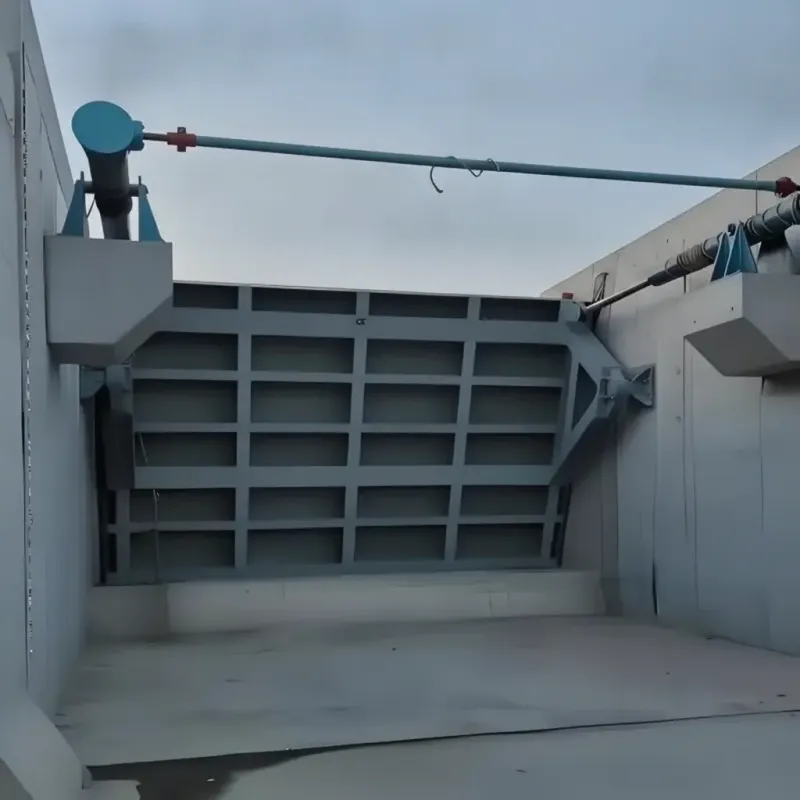
An industrial flap gate is a hinged closure installed at the end of a pipe, culvert, channel, wet well, or discharge structure. The flap opens when upstream pressure exceeds downstream pressure and closes when the pressure reverses. This simple differential-pressure action helps protect pumping stations, outfalls, drainage networks, and treatment facilities from tidal intrusion, flooding, backflow, and contamination.
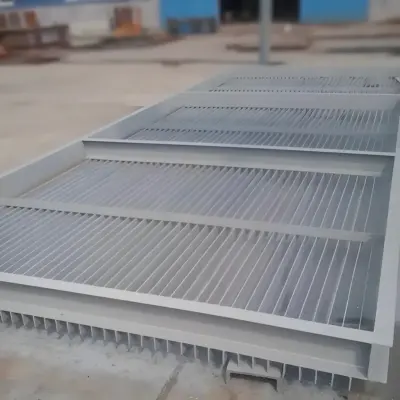
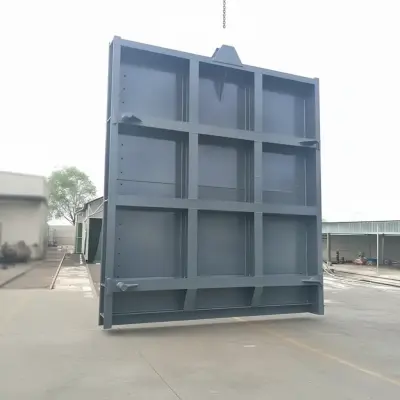
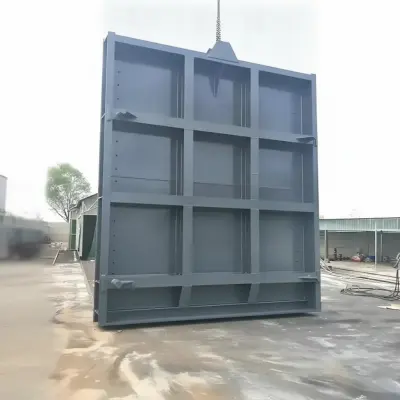
The assembly generally includes a gate body or frame, a hinged flap, hinge pins, bushings, fasteners, and a sealing arrangement. Depending on the design, the gate may be wall mounted, flange mounted, spigot mounted, or supplied for installation directly against a concrete structure. Circular versions are common on pipe outlets, while rectangular versions suit channels and culverts. The final connection pattern should be agreed from the project drawing rather than inferred from nominal diameter alone.
Common body materials include fabricated carbon steel, stainless steel, ductile iron, and cast iron. The appropriate choice depends on the fluid, immersion conditions, chloride exposure, abrasive solids, structural loading, and maintenance plan. Carbon-steel flap gates are often protected with a specified coating system, while stainless-steel or non-metallic wetted components may be preferred for corrosive wastewater and coastal installations. Elastomer selection is equally important. EPDM, NBR, and other compounds have different resistance to water, oils, chemicals, temperature, and biological-service conditions.
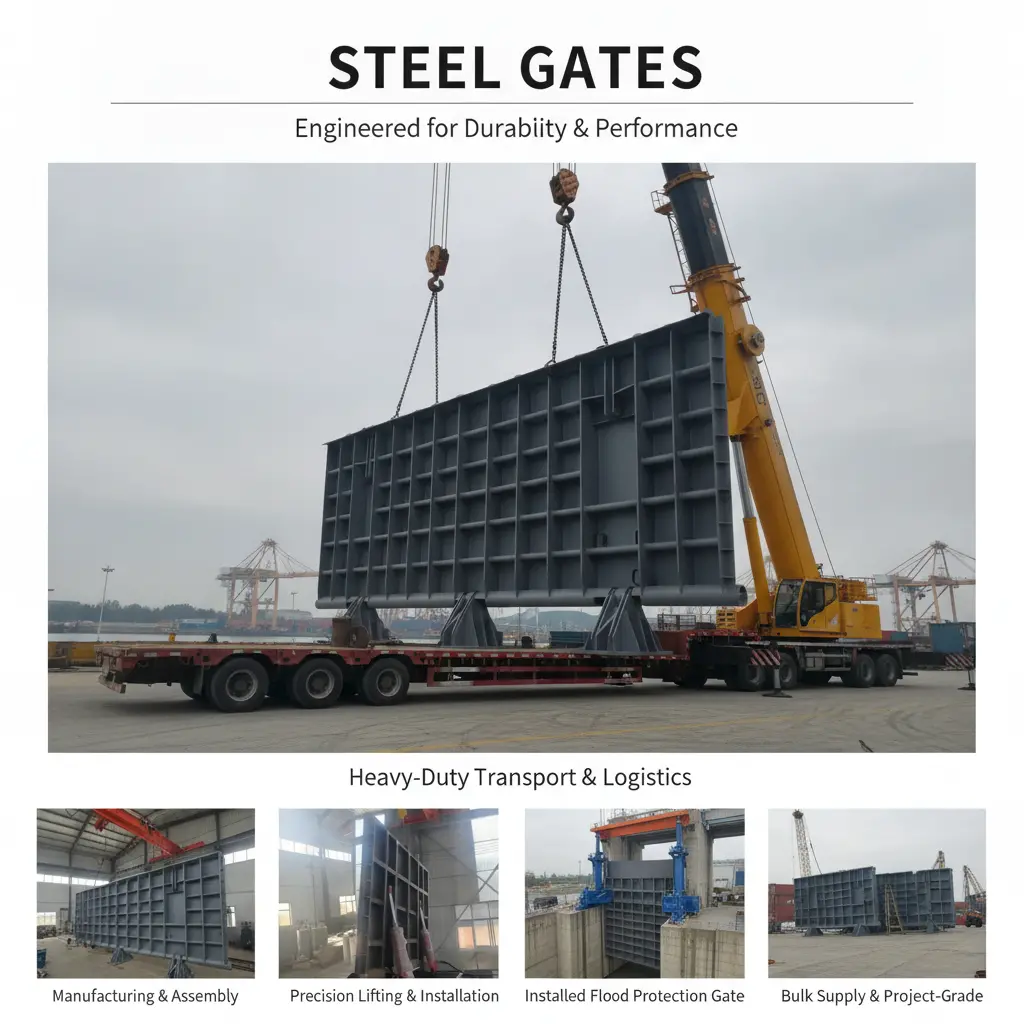
The main functional value of a flap gate is passive operation. It does not normally require an actuator, power supply, or control cabinet. That can simplify remote drainage structures and emergency discharge points. The tradeoff is that the gate depends on sufficient pressure differential and correct alignment. A buyer should therefore confirm the minimum opening head, closing behavior, expected leakage class, and whether manual opening, locking, or an auxiliary actuator is required. A comparison with [[INTERNAL_LINK]] can help when the application needs modulating rather than one-directional control.
Specifications & Standards
Flap gate specifications should be written around the service conditions and the installation interface. A typical inquiry includes nominal size or clear opening, design pressure or maximum water head, flow direction, media, operating temperature, mounting arrangement, face-to-face or overall dimensions, material grades, coating system, seal compound, hinge construction, and inspection requirements. For fabricated units, the purchaser should also request approved drawings showing the frame, cover, hinge axis, reinforcement, anchor holes, and sealing contact.
No single international standard covers every type of flap gate. The applicable references depend on whether the product is treated as a valve, a fabricated steel structure, a pipeline component, or part of a municipal drainage installation. The manufacturer and buyer should identify the governing project specification before production.
| Item | Possible reference | What the buyer should confirm |
|---|---|---|
| Valve pressure testing | ISO 5208 or EN 12266-1 | Test method, shell test pressure, seat or closure test, allowable leakage, and test duration. |
| Ductile-iron valve construction | EN 1074 series, where applicable | Whether the flap gate falls within the relevant water-supply valve category and which clauses apply. |
| Flanged connections | EN 1092-2 for cast-iron flanges, or the specified ASME B16.5 / B16.47 system where applicable | Nominal size, pressure class, drilling, gasket type, bolt material, and mating flange standard. |
| Structural steel fabrication | EN 1090-2, where required by the project | Execution class, welding quality, traceability, dimensional tolerances, and inspection documentation. |
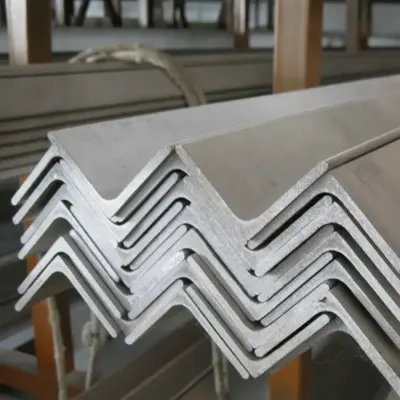
| Carbon-steel plate | ASTM A36 or the project-specified equivalent | Chemical and mechanical requirements, thickness, weldability, and mill-test certification. |
| Stainless-steel plate | ASTM A240 for relevant plate and sheet products | Specified grade, surface condition, corrosion environment, and material certificate. |
The references above are selection examples, not a blanket declaration of compliance. ASTM A36, for example, describes a structural carbon-steel product and does not by itself qualify a completed flap gate for pressure service. Similarly, a flange standard defines interface dimensions, not the complete hydraulic or structural performance of the assembly. A serious quotation should state the exact standard edition, the scope of compliance, and any exclusions.
For water and wastewater projects, material traceability may include heat numbers, certificates for pressure-retaining or structural parts, welding procedure records, welder qualifications, coating inspection reports, and dimensional inspection results. If the project requires third-party inspection, define the inspection and test plan before the purchase order. Useful tests may include visual and dimensional inspection, hinge movement checks, closure checks under specified head conditions, shell or leakage testing where technically applicable, and coating dry-film-thickness measurement.
Coatings should be specified by surface preparation, primer and topcoat system, dry-film thickness, exposure category, and repair procedure. Immersed service and atmospheric service do not have identical coating needs. In some projects, ISO 12944 is used to classify protective paint systems for steel structures, but the selected category and product system must match the actual environment. For potable-water contact or chemically sensitive service, request the required regulatory approval before finalizing seals, coatings, lubricants, and lining materials. See [[INTERNAL_LINK]] for a related material and coating selection reference.
Applications
Municipal wastewater outfalls
A flap gate at a treated-effluent or stormwater outfall permits discharge while limiting intrusion from a receiving river, canal, or tidal body. The purchaser should check the downstream water level range, debris exposure, odor-control requirements, and the consequences of leakage during high tide.
Stormwater drainage and flood-control structures
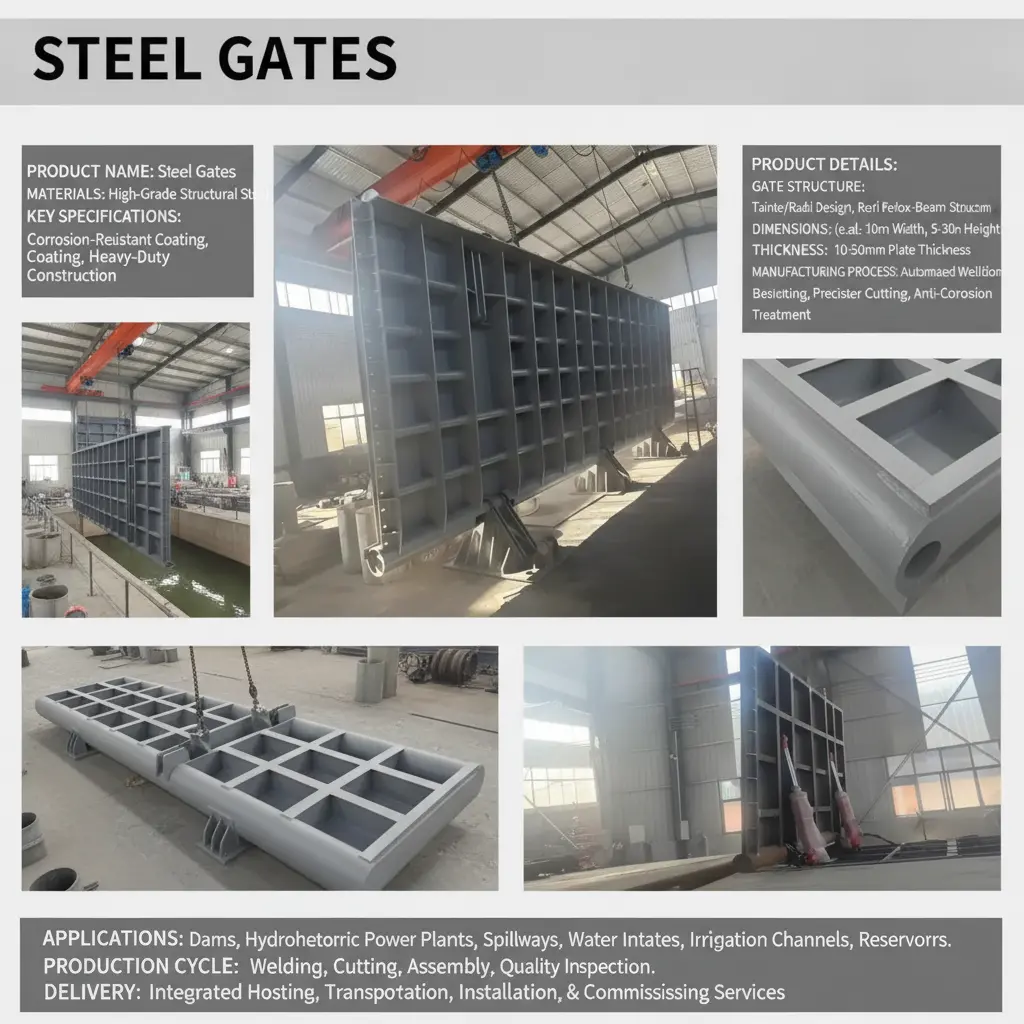
Drainage channels, box culverts, detention ponds, and flood-control walls commonly use flap gates as passive backflow protection. The design must account for debris, sediment, floating material, uneven concrete surfaces, and occasional impact loads. A robust frame and accessible hinge arrangement can reduce maintenance interruptions.
Pumping stations and wet wells
Discharge lines from lift stations may require a non-returning outlet that closes when pumps stop or downstream levels rise. The gate’s hydraulic resistance, closing speed, submergence, and access for inspection should be reviewed alongside pump selection. For broader non-return options, compare [[INTERNAL_LINK]] with the proposed flap-gate configuration.
Irrigation and water-management networks
Canal outlets, irrigation reservoirs, and agricultural drainage systems can use flap gates to maintain one-way flow without continuous electrical control. Water quality, suspended solids, seasonal water levels, and remote access often determine whether a coated steel, ductile-iron, or stainless-steel construction is appropriate.
Industrial process-water and cooling systems
Industrial facilities may install flap gates on cooling-water discharge, emergency drainage, raw-water intake protection, or containment systems. The media analysis should include chemical concentration, temperature, suspended solids, and any requirement for fire-water or environmental containment. A standard water-service design should not be assumed suitable for process chemicals without a compatibility review.
How to Choose / Buying Guide
Start with the hydraulic duty rather than the nominal pipe size. State the normal flow direction, minimum and maximum upstream and downstream levels, maximum reverse head, expected flow rate, and whether the gate must open under a low differential head. Ask for the manufacturer’s pressure or head rating and the basis used to establish it. A gate intended for a gravity outfall may have a very different duty from a gate exposed to a deep floodwater column.
Next, define the interface. Provide a drawing or dimensional schedule showing pipe outside diameter, wall opening, flange drilling, anchor arrangement, concrete thickness, access clearance, and the available space for the flap to swing. Confirm whether the unit is supplied with a gasket, anchor bolts, connection hardware, lifting points, and installation instructions. Small interface assumptions are a frequent source of site delays.
Choose materials from the environment. Carbon steel can be practical when the coating system is properly specified and maintainable. Stainless steel may reduce corrosion risk in chloride-rich or aggressive service, but grade selection still matters; not every stainless grade performs equally in every wastewater or marine environment. Ductile iron can provide a strong cast construction for water infrastructure, while elastomers and fasteners must be checked separately for compatibility. Request a corrosion allowance or coating repair plan where the project requires one.
Clarify closure and leakage expectations. Some applications need a tight seal against reverse water pressure; others accept a defined seepage rate because the gate is primarily a debris or backflow barrier. Ask whether the sealing surface is replaceable, how the hinge is lubricated, and how the gate behaves when sediment accumulates at the sill. If the gate is inaccessible after installation, prioritize inspection access and corrosion-resistant hinge components.
Certification should be tied to the contract documents. Request material certificates, relevant pressure-test records, dimensional inspection reports, coating records, certificates of conformity, and the manufacturer’s quality-management documentation when required. ISO 9001 certification can indicate a documented quality system, but it is not a product-performance certificate. A purchaser should also determine whether witness inspection, hold points, sample approval, or a pre-shipment inspection is required.
Commercial terms need equal precision. Confirm the minimum order quantity, but do not assume a universal MOQ because it varies with size, material, fabrication route, and customization. Establish the manufacturing lead time after drawing approval, not merely from the date of inquiry. Define the required delivery term, packing method, marking, spare seals, preservation for sea transport, and documentation package. Payment terms should be stated in the quotation and purchase order, such as an agreed deposit and balance arrangement or a documentary letter of credit, subject to the buyer’s internal controls.
For logistics, provide the destination country, delivery address or nominated port, preferred Incoterms rule, package limitations, and any import marking requirements. A large flap gate may ship as a single assembled unit or in protected subassemblies. The quotation should identify estimated package dimensions and weight when available so the buyer can compare freight and unloading requirements. Use [[INTERNAL_LINK]] to review related export packing or project procurement information.
Frequently Asked Questions
Q: What is the difference between a flap gate and a conventional check valve?
A: Both can prevent reverse flow, but a flap gate is commonly configured for large pipe outlets, channels, culverts, and wall penetrations where a hinged plate closes against a frame. A conventional check valve is usually a more compact pipeline valve with a defined body and internal closure element. The correct choice depends on head loss, opening pressure, available space, leakage requirements, media, and installation geometry.
Q: Which material should I specify for an industrial flap gate?
A: Specify material after reviewing water chemistry, chloride exposure, abrasion, temperature, immersion time, structural loads, and maintenance access. Fabricated carbon steel with a suitable coating can serve many water applications, while stainless steel, ductile iron, or specialized linings may be more suitable for aggressive environments. The body material, hinge parts, fasteners, and elastomer should each be checked for compatibility.
Q: Can a flap gate be supplied with ASTM, EN, JIS, or GB/T materials?
A: A manufacturer may be able to source materials to the project’s required system, but equivalence must be documented rather than assumed from a similar grade name. State the required standard, grade, product form, heat-treatment condition where relevant, and certificate type. The quotation should identify any proposed substitution for buyer approval.
Q: What certifications and inspection documents are normally available?
A: Depending on the contract, the supply package may include approved drawings, material certificates, certificates of conformity, dimensional records, pressure or leakage-test reports where applicable, welding documentation, coating inspection records, and packing lists. Third-party inspection or witnessed testing should be agreed before manufacturing. ISO 9001 documentation may support the supplier’s quality process but does not replace product-specific inspection evidence.
Q: What is the usual MOQ for flap gates?
A: There is no reliable universal MOQ. A standard-size unit may be quoted individually, while a custom fabricated gate, special alloy, or project-specific coating may require a higher commercial quantity or engineering charge. Include the size, material, quantity, connection type, and destination in the inquiry so the supplier can confirm the applicable minimum order and tooling requirements.
Q: How long is the delivery time?
A: Lead time depends on engineering approval, material availability, fabrication complexity, coating or lining, inspection, and order quantity. The meaningful date is usually measured from receipt of the agreed technical information and any required advance payment. Request a production schedule with drawing-submittal, approval, manufacturing, testing, packing, and dispatch milestones rather than relying on an unqualified estimate.
Q: What payment methods can an overseas buyer request?
A: Payment terms are negotiated according to the supplier, order value, country risk, and contract structure. Common arrangements include a bank transfer with an agreed deposit and balance, documentary credit, or other secured commercial terms. The quotation should state currency, banking charges, payment triggers, document requirements, and whether inspection or shipment documents are conditions for the balance.
Q: Can a flap gate be customized for a non-standard opening?
A: Yes, many flap gates are engineered around a project opening, pipe outlet, or concrete wall. Customization may cover width, height, hinge position, frame shape, flange drilling, anchor details, coating, seal material, lifting devices, and manual locking provisions. Provide a dimensioned drawing and hydraulic data so the supplier can verify structural and closure performance before fabrication.
Q: How should a flap gate be maintained?
A: Inspection frequency should reflect the media and access conditions. Check the sealing face, hinge pins, bushings, fasteners, coating damage, sediment buildup, debris, and free movement of the flap. Remove obstructions before they prevent closure, and replace worn seals or damaged corrosion protection according to the maintenance procedure. Record inspection findings, especially after flood events or abnormal reverse-head exposure.
Send the required opening or nominal size, mounting arrangement, design head, flow direction, media, material preference, coating requirement, quantity, destination, and documentation standard to request a technically comparable quotation for a Flap Gate. The supplier can then confirm drawings, compliance scope, lead time, packing, payment terms, and the complete delivered cost before order placement. You can also use [[INTERNAL_LINK]] to review complementary products and [[INTERNAL_LINK]] to submit a project inquiry.
Ratings & Reviews

Know your supplier
Supplier's customization ability
- Drawing-based customization
- Sample-based customization
- Full customization
Minimum order quantity: 10 pieces
Shipping total: To be negotiated
- Lead time:
- confirmed with the quotation
- Packaging:
- standard export packing
- Samples:
- available on request