 English
 Español
 Français
 Deutsch
 Português (Brasil)
 Русский
 العربية

Roller Gate Manufacturer | Durable Industrial Roller Gates for Reliable Flow Control

 China
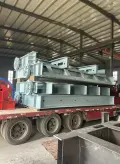
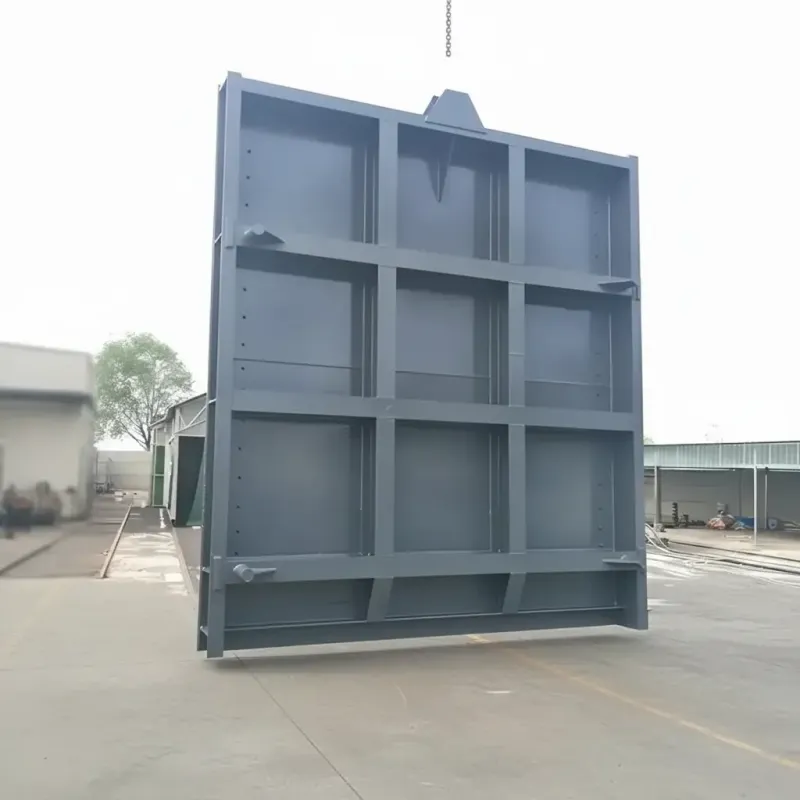
Supplier's customization ability
- Drawing-based customization
- Sample-based customization
- Full customization
Minimum order quantity: 1 pieces
Shipping total: To be negotiated
- Lead time:
- confirmed with the quotation
- Packaging:
- standard export packing
- Samples:
- available on request
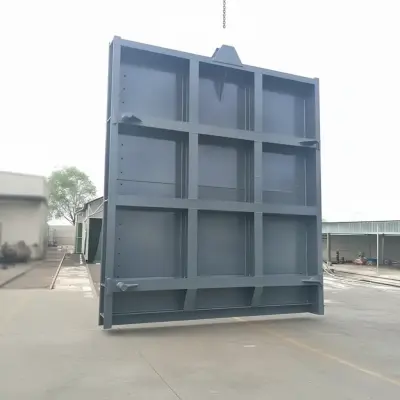
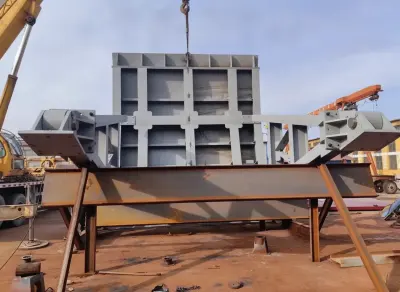
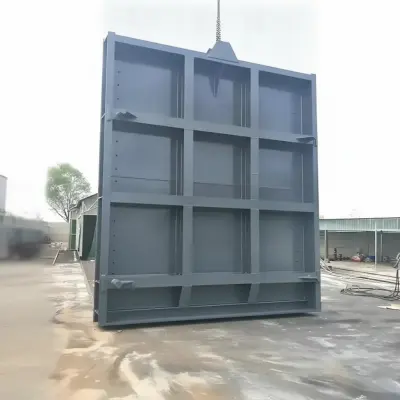
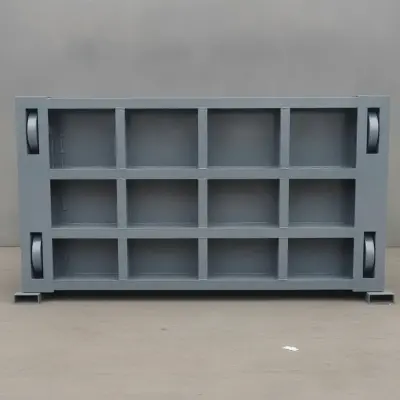
Product details
Roller Gate Technical Specification
| Parameter Category | Technical Specification |
|---|---|
| Product Name | Roller Gate |
| Applicable Medium | Water, industrial wastewater, irrigation water, and low-solids fluids |
| Structural Design | Vertical lifting gate with roller guide and load-bearing mechanisms installed on both sides of the gate leaf |
| Nominal Dimensions | Customized according to project requirements; common widths range from 300–3,000 mm and heights from 300–4,000 mm |
| Design Head | Typically 0.5–10 m; specific values depend on installation conditions and hydraulic pressure requirements |
| Hoisting Method | Manual, electric, pneumatic, or hydraulic operation |
| Gate Leaf Material | Carbon steel, stainless steel 304, or stainless steel 316L |
| Roller Material | Stainless steel, galvanized carbon steel, or wear-resistant alloy materials |
| Sealing Type | Flexible side and bottom seals; rubber waterstops, EPDM, or nitrile rubber seals available |
| Sealing Performance | Designed to meet bidirectional or unidirectional water-tightness requirements under the specified design head; leakage class can be manufactured according to project standards |
| Frame Material | Corrosion-protected carbon steel, stainless steel 304, or stainless steel 316L |
| Surface Treatment | Sandblasting followed by zinc-rich epoxy primer and topcoat, or hot-dip galvanizing according to requirements |
| Installation Method | Embedded installation, flanged connection, or wall-mounted installation |
| Operating Temperature | Typically -20°C to 80°C; sealing materials can be selected according to operating temperature conditions |
| Drive & Control | Can be equipped with limit switches, overload protection, local control panels, and remote automatic control systems |
| Applications | Water conservancy channels, pumping stations, wastewater treatment plants, irrigation systems, reservoirs, and industrial water treatment projects |
| Applicable Standards | Manufactured according to relevant gate, welded structure, and corrosion protection standards based on the customer's region and project requirements |
| Customization Options | Dimensions, materials, design head, hoisting force, drive method, sealing grade, and corrosion protection system can all be customized |
Roller Gate Manufacturer | Durable Industrial Roller Gates for Reliable Flow Control
A roller gate is a guided flow-control assembly used to regulate, isolate, or release water and other suitable liquids in channels, culverts, reservoirs, treatment plants, irrigation systems, and industrial process facilities. It is designed for overseas engineering contractors, water authorities, EPC companies, distributors, and maintenance teams that need a gate matched to a defined opening, head condition, operating cycle, and corrosion environment. A properly specified roller gate can provide controlled movement, predictable sealing, maintainable construction, and integration with manual, electric, hydraulic, or other actuation arrangements. Because dimensions, materials, loads, and operating conditions vary by project, procurement should be based on approved drawings and service data rather than a generic catalogue description. For related flow-control equipment, review [[INTERNAL_LINK]] and compare the gate configuration with the project’s hydraulic requirements.
Product Overview: Roller Gate Construction and Function
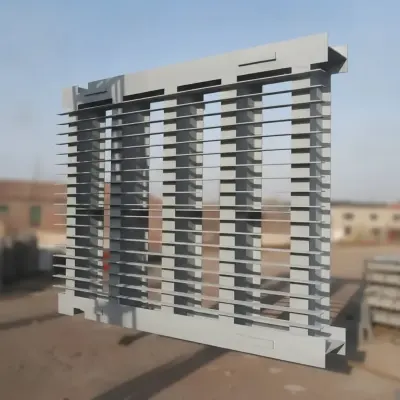
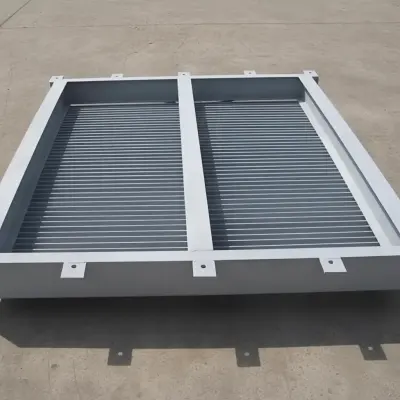
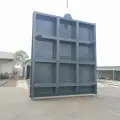
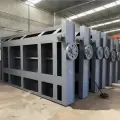
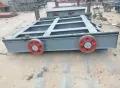
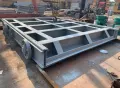
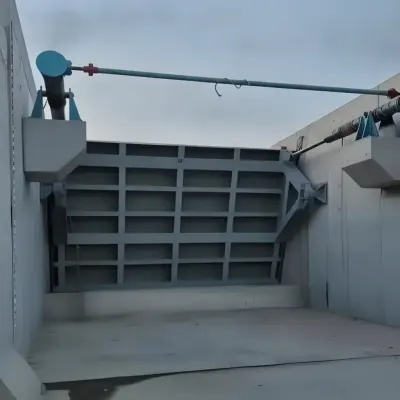
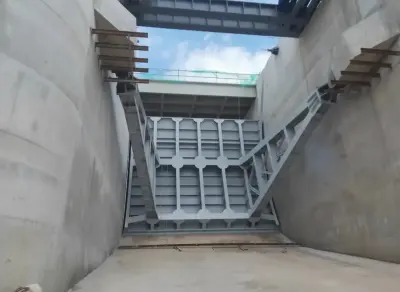
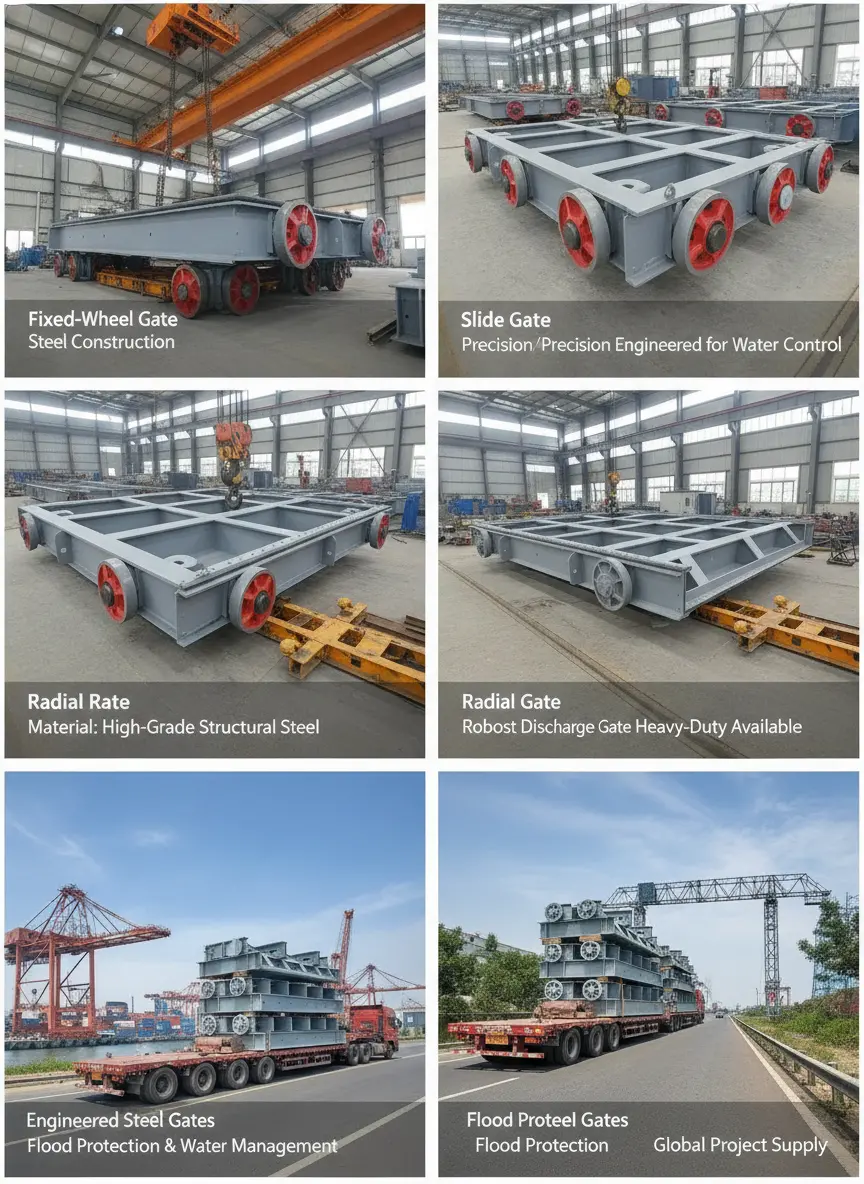
An industrial roller gate is a vertically moving gate panel supported and guided by rollers or wheel assemblies. The panel travels within side guides or embedded frames, while seals or sealing interfaces limit leakage when the gate reaches its operating position. Depending on the application, a roller gate may be used as a sluice gate, regulating gate, isolation gate, outlet gate, or channel-control gate. The final arrangement depends on whether the gate must hold water on one side, operate under balanced or unbalanced pressure, control a variable flow, or remain closed for maintenance isolation.
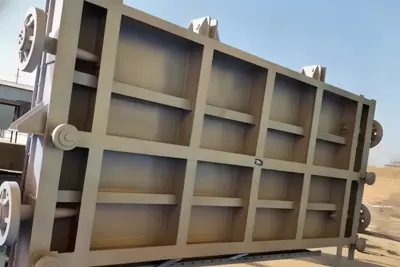
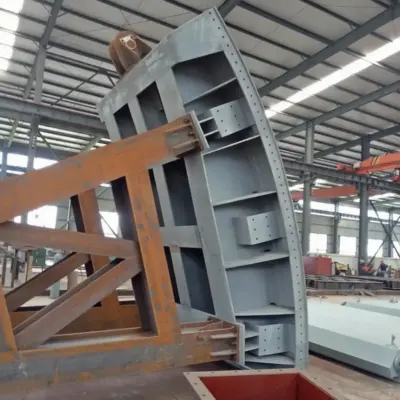
The principal components normally include a gate leaf, structural stiffeners, side guides, rollers or wheel units, top and bottom interfaces, seals, embedded or surface-mounted frames, fasteners, and an operating mechanism. The operating mechanism may be a handwheel and screw, electric actuator, hydraulic cylinder, or another engineered system. Accessories can include position indicators, limit switches, lifting beams, emergency operating provisions, protective covers, and control-panel interfaces. Not every project requires every accessory, so the request for quotation should identify the intended operating method and control philosophy.
Material selection should follow the liquid chemistry, immersion conditions, design head, ambient environment, expected operating frequency, and maintenance plan. Carbon steel is commonly considered for structural components where a suitable coating system is specified. Stainless steel may be selected for wetted, exposed, or corrosion-sensitive components when the service environment justifies it. Bronze, engineering plastics, elastomers, and other materials may be used for bushings, wear parts, or seals when compatible with the design. The exact grade and combination must be confirmed against the approved design, applicable standard, and chemical exposure data. See [[INTERNAL_LINK]] for information about complementary gate and valve products.
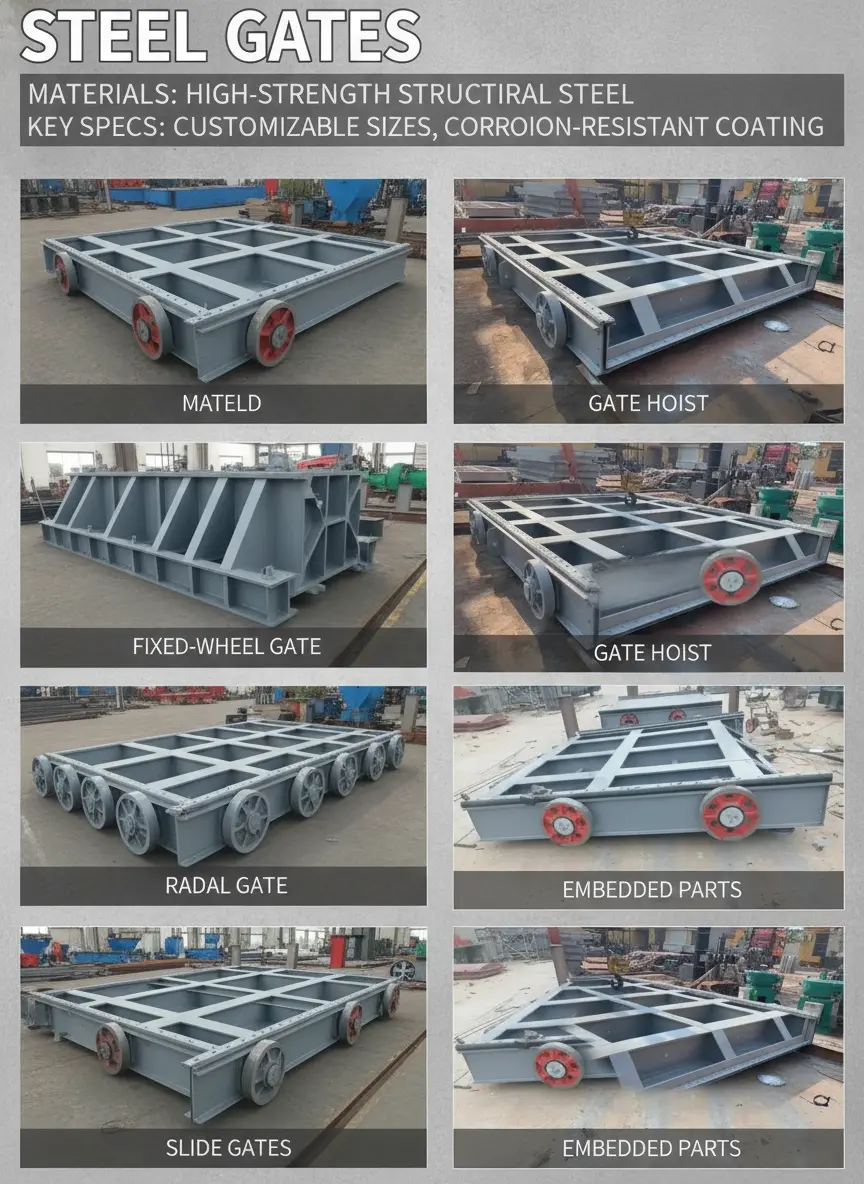
Roller-supported movement can reduce sliding resistance and help manage the forces associated with a large gate panel, but performance still depends on alignment, guide geometry, wheel loading, seal condition, and actuator sizing. A roller gate should therefore be treated as a system rather than a panel alone. Shop drawings, load calculations, interface dimensions, and inspection requirements are important parts of the supply.
Roller Gate Specifications & Standards
There is no single universal roller gate specification suitable for every water-control project. The purchaser should define the clear opening, gate elevation, sill and invert details, design water levels, differential head, flow direction, operating position, allowable leakage, duty cycle, environmental exposure, and connection arrangement. The manufacturer can then develop the gate leaf, guides, rollers, seals, and actuator around those conditions.
Typical specification items include the following:
- Clear width and height of the opening, with dimensional tolerances agreed on the approved drawing.
- Design head, test head, normal operating head, and any differential pressure that can occur during opening or closing.
- Gate orientation, flow direction, installation position, access conditions, and whether the frame is embedded or surface mounted.
- Panel material, structural steel grade, stainless-steel grade where required, coating system, and surface-preparation requirements.
- Seal material and profile, expected liquid temperature, chemical exposure, and replacement method.
- Roller, wheel, bearing, guide, and wear-component design, including inspection and lubrication provisions where applicable.
- Actuator type, available power supply, handwheel or manual override requirements, travel indication, limit switches, and control signals.
- Testing, documentation, marking, packing, installation support, and spare-parts requirements.
Standards should be selected according to the product scope and contract documents. Possible references include AWWA C561 for fabricated stainless-steel slide gates, AWWA C562 for fabricated composite slide gates, and AWWA C563 for fabricated stainless-steel sluice gates where the relevant product category and project requirements apply. AWWA C561 and related AWWA documents should not be cited as a blanket substitute for a project-specific roller-gate design; the purchaser should confirm the applicable edition and scope with the engineer.
For steel material and fabrication, the contract may also reference ASTM material standards, EN steel product and fabrication requirements, JIS material standards, or GB/T requirements. The specific standard depends on the selected material and supply location. For example, ASTM A240 can be relevant to stainless-steel plate and sheet, while ASTM A276 can be relevant to certain stainless-steel bars; these references apply only when the ordered material falls within their stated scope and grade requirements. EN 10025 may be relevant to structural steel products, and EN 1090-2 may be specified for execution of steel structures where the project adopts that framework. The exact grade, delivery condition, and inspection class must appear in the purchase specification.
| Item | What the purchaser should define | Reference approach |
|---|---|---|
| Gate and frame material | Grade, thickness, weld requirements, corrosion allowance, and finish | Applicable ASTM, EN, JIS, or GB/T material standard stated in the contract |
| Structural fabrication | Welding procedure, welder qualification, dimensional tolerance, and inspection | Project specification; EN 1090-2 or another accepted fabrication framework where applicable |
| Stainless-steel components | Grade, surface finish, passivation, and material certificates | Applicable ASTM A240, ASTM A276, EN, JIS, or GB/T grade standard |
| Sealing system | Elastomer type, temperature range, chemical compatibility, and replacement access | Approved material data and project leakage criteria |
| Functional testing | Travel, operation, leakage, actuator function, and inspection records | Approved inspection and test plan, contract standard, and engineer’s acceptance criteria |
Mechanical properties and chemical composition should be quoted only for a confirmed material grade. They are not interchangeable across ASTM, EN, JIS, and GB/T designations, even where grades are sometimes described as comparable. Request mill certificates, inspection reports, coating records, weld documentation, and test results when traceability is required. A related [[INTERNAL_LINK]] can help procurement teams organize the documentation package for water-control equipment.
Roller Gate Applications
A roller gate can serve several demanding flow-control functions when its geometry and operating mechanism are matched to the installation.
Water treatment and wastewater facilities
Roller gates may isolate channels, chambers, screenings areas, sedimentation zones, or maintenance sections. The specification should account for water chemistry, suspended solids, cleaning procedures, access for seal replacement, and the frequency of operation. Stainless or coated components may be considered according to exposure and the plant’s maintenance strategy.
Irrigation and agricultural water systems
Canal structures, diversion works, intake facilities, and distribution networks may use gates to regulate water levels or isolate sections. Sediment, debris, seasonal operation, and limited access can affect guide and seal selection. Operators should identify whether the gate is primarily for throttling, full isolation, or occasional emergency use.
Reservoirs, dams, and hydraulic structures
Outlet works, low-level outlets, spillway-related structures, and intake arrangements require careful evaluation of hydrostatic head, transient conditions, redundancy, inspection access, and emergency operation. The roller gate design should be reviewed by the responsible hydraulic and structural engineers before manufacture.
Stormwater and flood-control installations
Drainage channels, detention structures, pumping stations, and flood-control barriers may require a gate that operates after long periods of inactivity. Corrosion protection, debris management, manual override, position indication, and reliable access can be more important than high operating frequency.
Industrial process and utility systems
Industrial water intake, cooling-water, ash-handling, slurry-adjacent, and utility-channel installations may use roller gates where the liquid and solids content are compatible with the selected materials and sealing design. Chemical concentration, temperature, abrasion, and contamination should be disclosed before quotation. For a broader comparison with [[INTERNAL_LINK]], provide the process data rather than relying on the product name alone.
How to Choose a Roller Gate: Buying Guide
Procurement managers should begin with the operating case, not only the opening size. Ask the engineering team to provide the maximum and minimum water levels, design differential head, flow direction, expected flow velocity, liquid temperature, chemical analysis, suspended solids, and any possibility of debris impact or pressure fluctuation. Clarify whether the gate must regulate flow while partially open or is intended only for open-close isolation. A gate used for throttling can experience different loads, vibration, and wear from one used infrequently as a maintenance barrier.
Confirm the interface dimensions early. Clear opening, wall thickness, embedment depth, sill elevation, guide spacing, access platform, lifting height, and actuator mounting space all affect the design. Request a general arrangement drawing and interface schedule before fabrication. If civil works are still changing, include a formal drawing-approval stage and define which dimensions are frozen before production.
Material and corrosion protection deserve separate review. Specify the liquid and atmospheric environment, immersion or splash exposure, coating zones, required surface preparation, coating thickness or system, and repair procedure. Where stainless steel is proposed, confirm the grade, finish, welding requirements, and compatibility with adjacent materials. Seal material should be selected for the actual temperature and chemistry. The phrase “stainless steel” or “rubber seal” alone is not a complete technical specification.
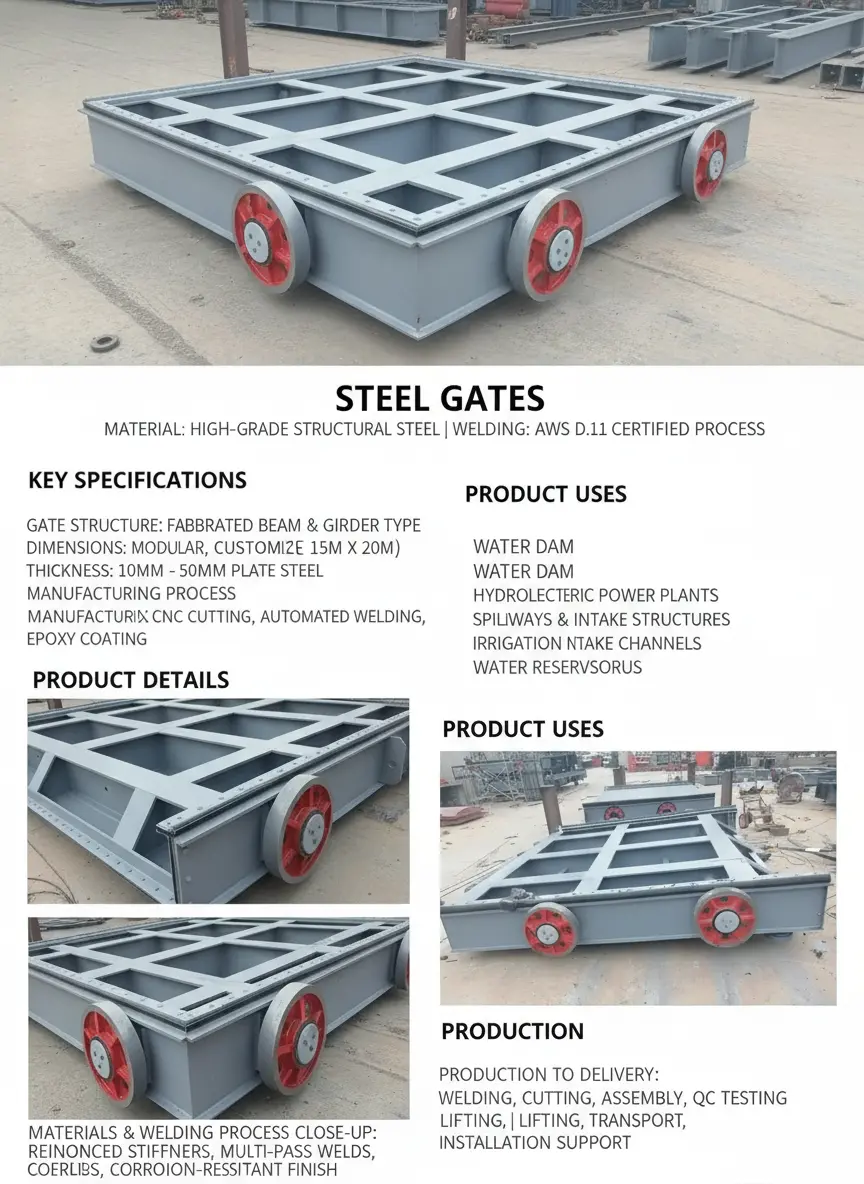
Certification should match the project’s risk and contract requirements. Ask whether the supplier can provide material certificates, welding records, dimensional inspection, coating inspection, actuator documentation, assembly records, and factory testing. If an AWWA, ASTM, EN, JIS, or GB/T standard is named, identify the exact document, edition, applicable clauses, and acceptance criteria. Standards are useful only when the purchase order states how compliance will be demonstrated.
MOQ, payment terms, and delivery should be confirmed in the supplier’s commercial quotation because they depend on size, material, actuator, customization, destination, and production capacity. Do not assume a standard stock quantity, fixed lead time, or universal payment method without written confirmation. Request a schedule showing drawing approval, material procurement, fabrication, inspection, testing, packing, and dispatch. Include the required delivery term and destination in the inquiry so freight and insurance responsibilities are clear.
For logistics, provide the shipment destination, unloading capability, maximum package dimensions, lifting equipment, and any export-document requirements. Large gate assemblies may require sectional packing or special handling. Confirm whether the package includes loose hardware, seal kits, actuator parts, installation instructions, preservation measures, and recommended spares. A practical [[INTERNAL_LINK]] may support planning for installation and maintenance items.
Frequently Asked Questions About Roller Gate Procurement
Q: What is the difference between a roller gate and a conventional slide gate?
A: Both designs can control or isolate flow, but a roller gate uses roller or wheel-supported movement within guides, while a conventional slide gate commonly relies more directly on sliding interfaces. The suitable choice depends on gate size, operating head, movement forces, sealing arrangement, duty cycle, and the project’s maintenance requirements. The manufacturer should compare the alternatives using the actual load case.
Q: Which material should be used for a roller gate?
A: There is no single correct material. Carbon steel with an engineered protective system may suit some structural applications, while stainless steel or other corrosion-resistant materials may be appropriate for aggressive, immersed, or hygiene-sensitive environments. Material selection should consider water chemistry, temperature, abrasion, structural loading, coating maintenance, and the applicable ASTM, EN, JIS, or GB/T requirements.
Q: Can a roller gate be supplied with manual and electric operation?
A: Roller gates can be designed around different operating arrangements, including manual screw mechanisms, electric actuators, hydraulic systems, or combinations with manual override. The quotation should identify travel, operating speed, available power, duty cycle, control signals, emergency operation, and environmental protection. Actuator selection should follow calculated gate loads and not be based only on gate dimensions.
Q: What certifications should an overseas buyer request?
A: Request the certificates and records required by the contract, which may include material certificates, welding documentation, dimensional inspection, coating inspection, functional testing, leakage results, actuator records, and a final quality dossier. If a named standard applies, ask the supplier to state the exact standard and evidence of conformity. Product certification needs vary by country, application, and project owner.
Q: Is there a fixed MOQ for roller gates?
A: A fixed MOQ should not be assumed. A roller gate is often engineered to an opening and service condition, so commercial quantities can depend on size, customization, material, actuator configuration, and the supplier’s production plan. Ask for the minimum order quantity, prototype policy, tooling charges if any, and pricing basis in the formal quotation.
Q: What payment terms are available for international orders?
A: Payment terms are commercial conditions that must be confirmed with the supplier. They may vary with order value, customer history, customization, inspection requirements, and the selected trade arrangement. The purchase order should state payment milestones, currency, bank charges, inspection points, and the documents required before final payment.
Q: How long does delivery take?
A: Delivery time depends on drawing approval, material availability, fabrication complexity, inspection, actuator sourcing, packing, and transport to the destination. A reliable quotation should separate engineering, production, testing, and transit periods. Obtain a project-specific schedule rather than relying on a generic lead-time statement, especially for large or non-standard roller gates.
Q: What information should be included in a roller gate inquiry?
A: Include the opening dimensions, installation drawings, design and operating heads, flow direction, liquid chemistry, temperature, suspended solids, operating frequency, required leakage performance, material preference, coating environment, actuator type, power supply, standards, inspection requirements, destination, quantity, and target delivery date. Photos and civil-interface drawings are also useful when replacing an existing gate. [[INTERNAL_LINK]] can provide a related checklist for preparing a technical inquiry.
Send the opening drawings, hydraulic conditions, material requirements, applicable standards, quantity, destination, and target schedule to request a project-specific roller gate recommendation and quotation. The resulting proposal can then identify the proposed construction, actuator, inspection documents, packing scope, delivery basis, and any items requiring engineering confirmation before order placement. You can also use [[INTERNAL_LINK]] to review related flow-control solutions and [[INTERNAL_LINK]] for maintenance or replacement planning.
Ratings & Reviews

Know your supplier
Supplier's customization ability
- Drawing-based customization
- Sample-based customization
- Full customization
Minimum order quantity: 1 pieces
Shipping total: To be negotiated
- Lead time:
- confirmed with the quotation
- Packaging:
- standard export packing
- Samples:
- available on request