 English
 Español
 Français
 Deutsch
 Português (Brasil)
 Русский
 العربية

GI Steel Coil Manufacturer | Hot-Dip Galvanized Steel Supplier
 China

Supplier's customization ability
- Drawing-based customization
- Sample-based customization
- Full customization
Minimum order quantity: 5 ton
Shipping total: To be negotiated
- Lead time:
- confirmed with the quotation
- Packaging:
- standard export packing
- Samples:
- available on request
Product details
GI Steel Coil Technical Specifications
| Product Name | GI Steel Coil (Galvanized Steel Coil) |
|---|---|
| Base Material | Cold Rolled Steel / Hot Rolled Steel |
| Applicable Standards | ASTM A653/A653M, EN 10346, JIS G3302, GB/T 2518 |
| Steel Grades | DX51D+Z, DX52D+Z, DX53D+Z, S220GD+Z, S250GD+Z, S280GD+Z, S350GD+Z, S550GD+Z, SGCC, SGCD, SGHC, CS Type A/B/C, SS Grade 33–80 |
| Thickness | 0.12–4.00 mm |
| Width | 600–1,500 mm |
| Zinc Coating | Z30–Z600 g/m², double-sided total |
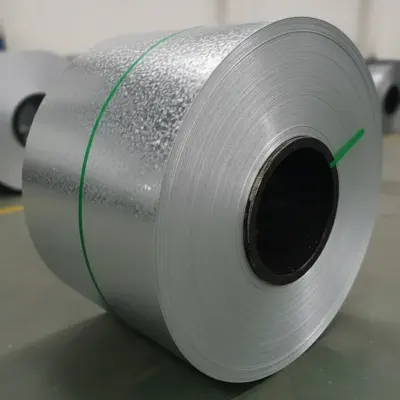
| Spangle Type | Zero Spangle, Minimized Spangle, Regular Spangle, Large Spangle |
| Surface Treatment | Chromated, Non-Chromated, Oiled, Dry, Anti-Fingerprint, Passivated |
| Surface Quality | Normal Surface, Improved Surface, Best Surface |
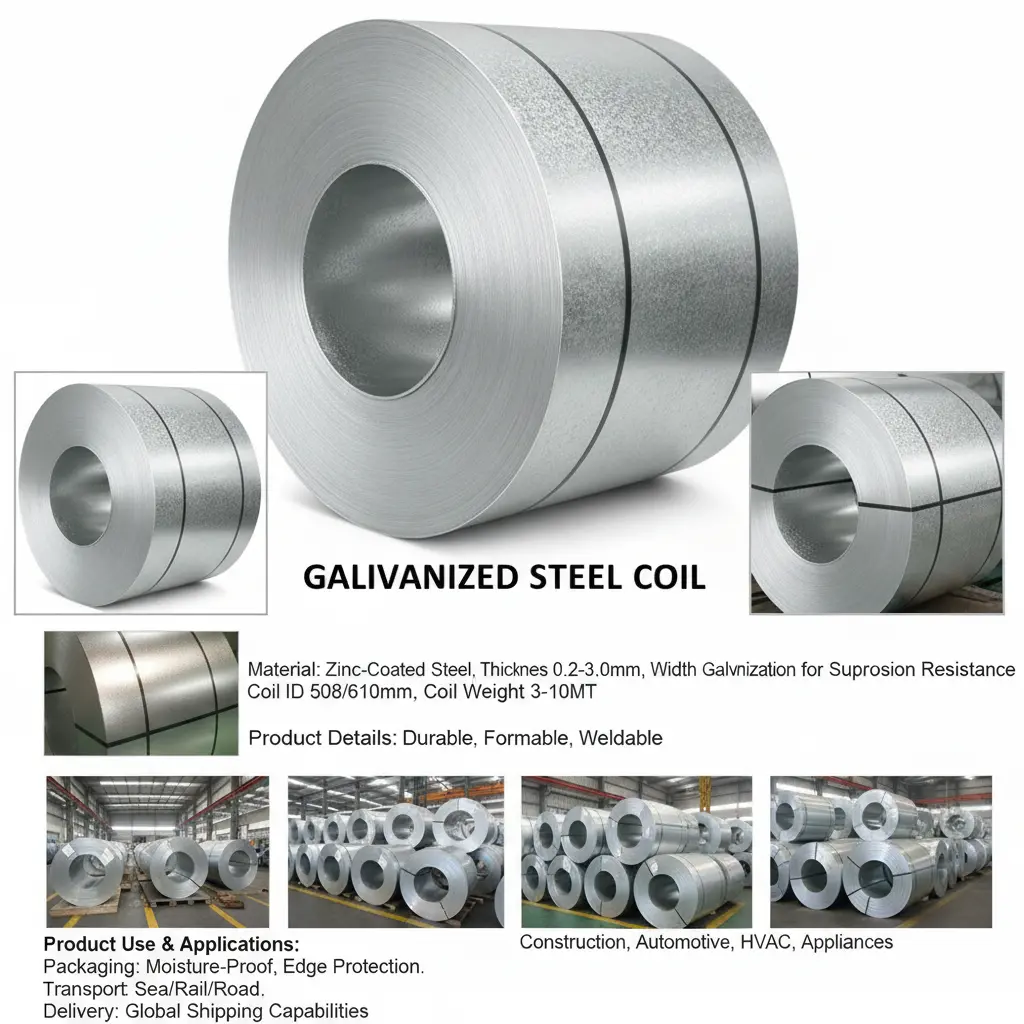
| Coil ID | 508 mm / 610 mm |
| Coil Weight | 2–10 MT or customized |
| Yield Strength | 140–550 MPa, depending on grade |
| Tensile Strength | 270–620 MPa, depending on grade |
| Edge Condition | Mill Edge / Slit Edge |
| Dimensional Tolerance | According to ASTM, EN, JIS, GB or agreed customer specifications |
| Common Applications | Roofing sheets, wall panels, HVAC ducts, home appliances, automotive components, steel structures, cable trays and general fabrication |
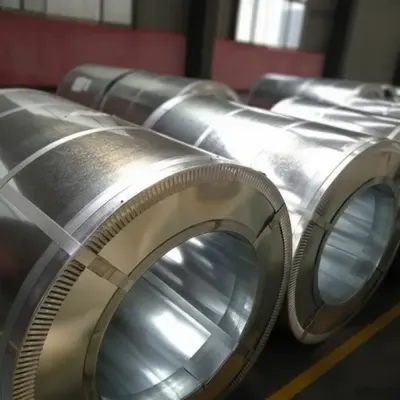
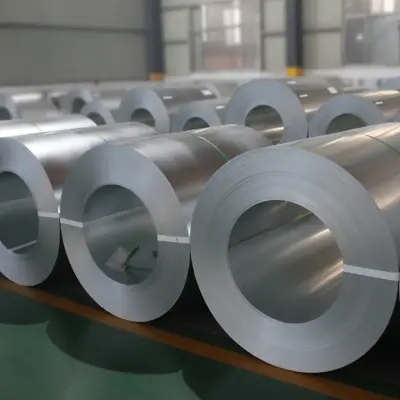
| Packaging | Seaworthy export packing with waterproof paper, steel sheet protection, edge protectors and steel straps |
| Customization | Thickness, width, zinc coating, grade, surface finish, coil weight and slitting service available |
GI Steel Coil Manufacturer | Hot-Dip Galvanized Steel Supplier
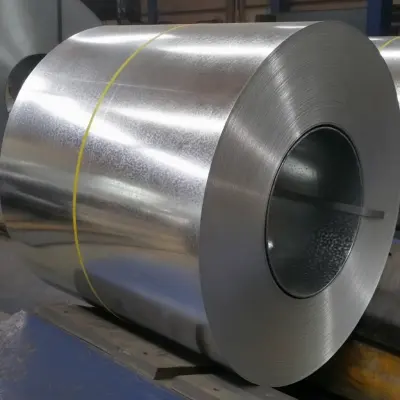
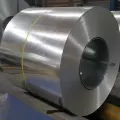
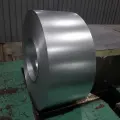
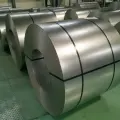
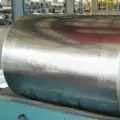
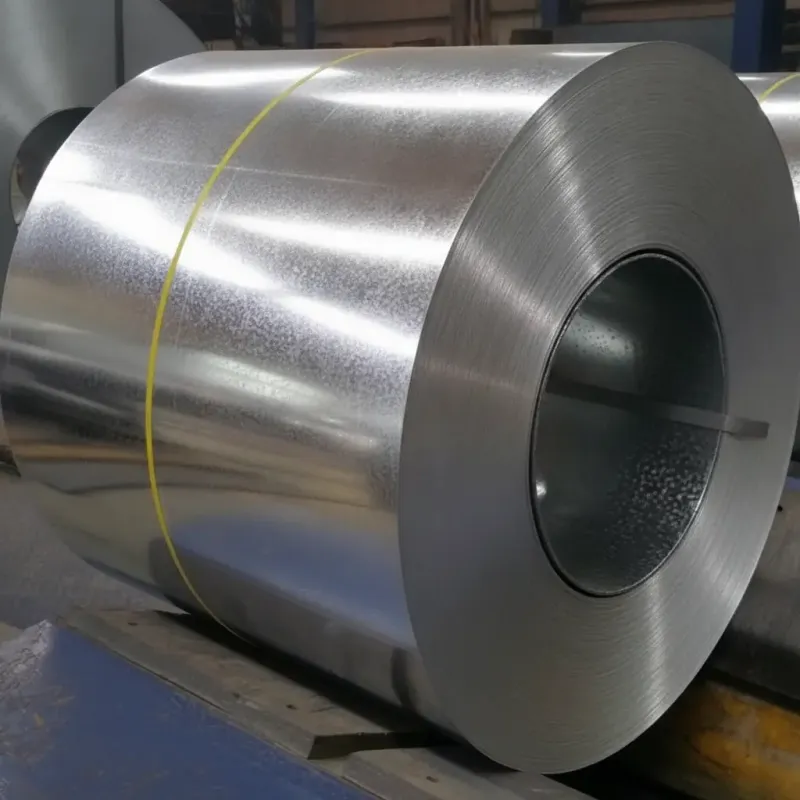
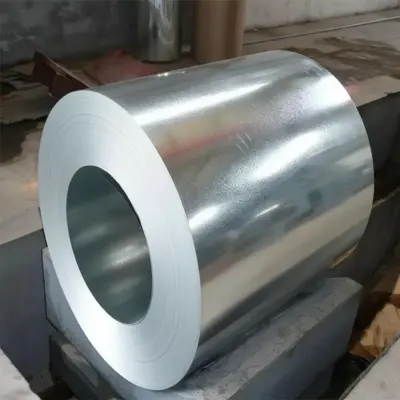
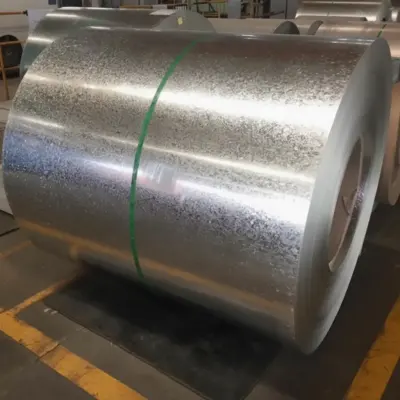
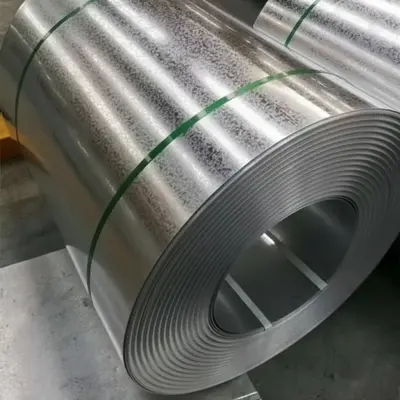
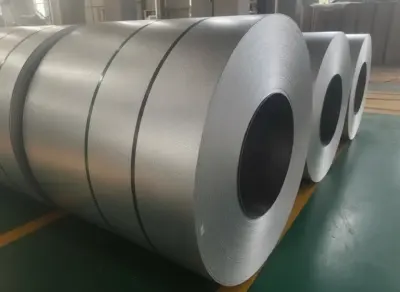
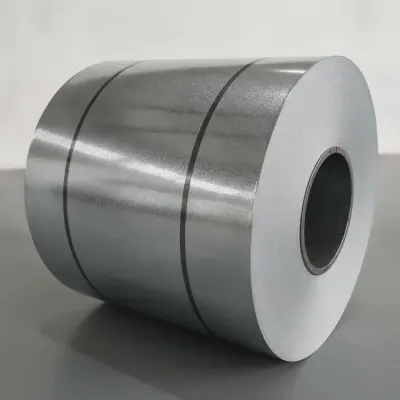
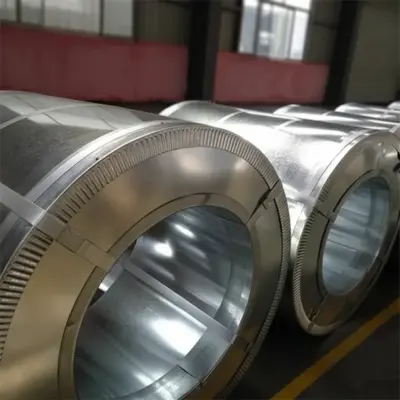
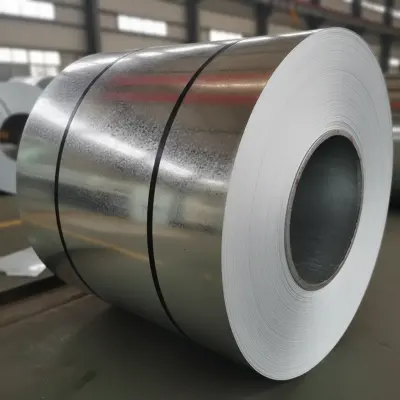
GI steel coil is a carbon steel flat product protected by a continuously applied zinc coating that helps delay corrosion during fabrication, transport, and service. It is supplied to overseas distributors, roll formers, roofing manufacturers, appliance producers, duct fabricators, and general industrial buyers that require consistent dimensions and a coating suitable for their processing conditions. The main procurement value lies in matching the steel grade, zinc coating designation, surface finish, dimensional tolerance, and coil packaging to the intended application. Buyers can also coordinate GI steel coil purchases with related [[INTERNAL_LINK]] products to simplify sourcing and shipment planning.
Product Overview: GI Steel Coil
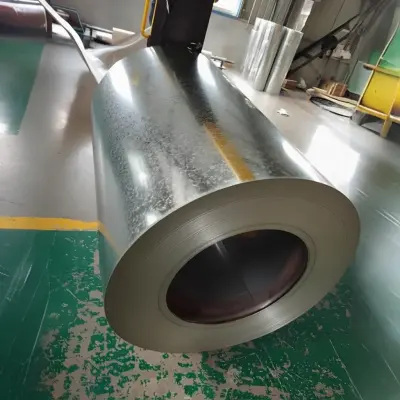
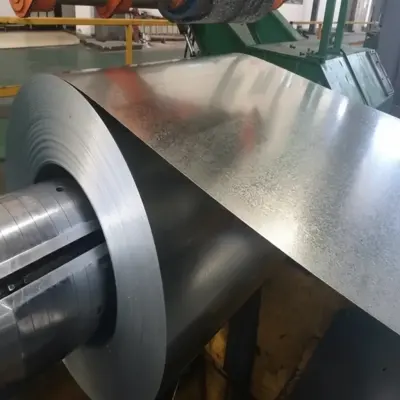
GI steel coil, also called hot-dip galvanized steel coil, is produced by passing a prepared steel strip through a bath of molten zinc in a continuous galvanizing line. The resulting metallic coating forms a barrier between the steel substrate and the surrounding environment. Zinc also provides sacrificial protection to exposed steel at small scratches and cut edges, although actual corrosion performance depends on coating mass, atmosphere, fabrication method, and maintenance conditions.
The substrate is generally low-carbon or structural-quality steel selected according to the forming, strength, and end-use requirements stated in the purchase specification. Commercial-quality material may be suitable for basic bending and roll forming, while drawing grades are intended for more demanding deformation. Structural grades are selected where specified yield strength and load-bearing performance are important. The applicable grade should always be identified by a recognized standard rather than by a generic description alone.
GI steel coil can be ordered with different coating designations, surface appearances, skin-pass conditions, surface treatments, oiling options, and dimensional tolerances. Regular spangle, minimized spangle, and other controlled appearances may be available depending on the manufacturing route and governing specification. Surface appearance is not, by itself, a reliable measure of zinc coating mass or corrosion resistance. Procurement teams should confirm coating compliance through the mill certificate and agreed inspection method.
Typical processing operations include slitting, cutting to length, roll forming, profiling, stamping, bending, and painting. Compatibility with these operations depends on substrate grade, coating adhesion, flatness, surface treatment, and lubrication. Buyers planning to apply paint or powder coating should disclose the downstream pretreatment process before ordering because passivation, oil, or anti-fingerprint treatments may affect coating preparation. Technical comparisons with [[INTERNAL_LINK]] and guidance on galvanized surface selection are available through [[INTERNAL_LINK]].
GI Steel Coil Specifications & Standards
GI steel coil specifications should be based on the end-use drawing and an applicable product standard. Four widely referenced standards are ASTM A653/A653M for steel sheet, zinc-coated or zinc-iron alloy-coated by the hot-dip process; EN 10346 for continuously hot-dip coated steel flat products for cold forming; JIS G 3302 for hot-dip zinc-coated steel sheet and strip; and GB/T 2518 for continuously hot-dip zinc-coated steel sheet and strip. These standards use different grade systems, coating designations, testing rules, and tolerance references, so grade equivalence must not be assumed without an engineering review.
| Specification Item | Available Ordering Basis | Buyer Confirmation Required |
|---|---|---|
| Substrate type | Commercial, forming, drawing, or structural grade as defined by the selected standard | Exact grade designation and required mechanical properties |
| Coating | Hot-dip zinc coating designated according to ASTM A653/A653M, EN 10346, JIS G 3302, or GB/T 2518 | Coating designation, test basis, and single- or double-sided reporting requirement |
| Thickness | Produced within the supplier's confirmed manufacturing range | Whether the ordered thickness includes or excludes the metallic coating |
| Width | Mill width or slit width, subject to production capability | Width tolerance, edge condition, and slit-burr requirement |
| Coil dimensions | Coil ID, coil OD, and coil weight arranged according to line and transport limits | Uncoiler capacity, lifting equipment, and destination handling restrictions |
| Surface | Spangle and surface condition subject to standard and manufacturing agreement | Visible-use requirements and acceptance criteria |
| Surface treatment | Options may include passivation, oiling, or other agreed treatment | Painting, bonding, welding, food-contact, or environmental restrictions |
| Documentation | Mill test certificate and inspection records as agreed | Certificate format, inspection level, and third-party verification |
ASTM A653/A653M includes several steel designations, such as commercial steel, forming steel, deep drawing steel, extra deep drawing steel, structural steel, and high-strength low-alloy steel. EN 10346 covers multiple continuously coated products and defines grade and coating designation systems for cold-forming and structural applications. JIS G 3302 and GB/T 2518 provide their own classifications and inspection provisions. A designation under one system should not be replaced with a designation from another system solely because the products have similar commercial descriptions.
Chemical composition and mechanical properties vary by grade. For that reason, a single chemistry or strength table cannot accurately represent all GI steel coil products. The values below indicate what should be verified against the relevant edition of the ordered standard and the manufacturer’s certificate rather than presenting unsupported universal limits.
| Property Category | Verification Source | Procurement Relevance |
|---|---|---|
| Chemical composition | Grade requirements in ASTM A653/A653M, EN 10346, JIS G 3302, or GB/T 2518, supported by the mill certificate | Influences formability, weldability, strength, and grade compliance |
| Yield strength | Applicable grade table and tensile test results | Important for structural design, roll-forming behavior, and springback |
| Tensile strength | Applicable grade table and tensile test results | Supports material verification and fabrication planning |
| Elongation | Applicable standard, specimen geometry, and gauge length | Helps assess suitability for bending, drawing, and profiling |
| Coating mass | Specified coating designation and prescribed coating test | Affects corrosion protection, fabrication behavior, and cost |
Dimensional tolerances may be governed by the product standard itself or by a related tolerance standard, depending on the ordering system. Under European specifications, buyers may need to reference EN 10143 for tolerances on continuously hot-dip coated steel sheet and strip. ASTM orders should identify the dimensional requirements and supplementary conditions associated with ASTM A653/A653M. For slit material, edge camber, burr height, width tolerance, and telescoping should be agreed separately if they are critical to automated feeding.
A complete inquiry should state the standard and edition where contractually necessary, grade, coating designation, nominal thickness, width, coil ID, target coil weight, surface condition, treatment, edge condition, intended fabrication process, and required documentation. Additional information about coil terminology can be found at [[INTERNAL_LINK]].
GI Steel Coil Applications
GI steel coil serves applications in which formed steel requires economical metallic corrosion protection. Product selection should reflect the environment, expected service life, forming severity, and any subsequent coating or joining operation.
Roofing, Cladding, and Rainwater Systems
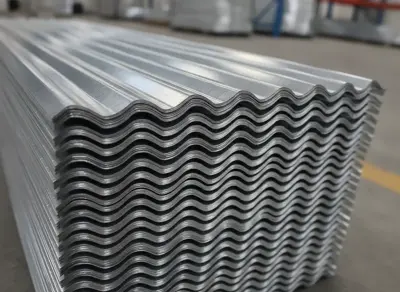
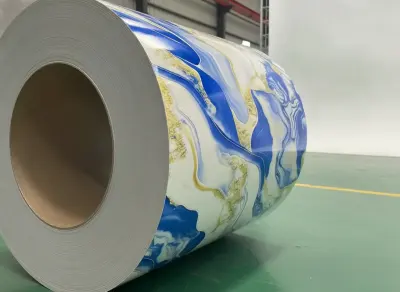
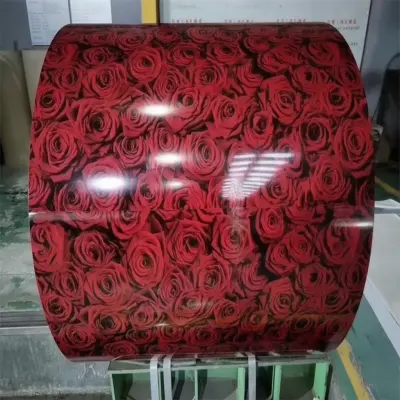
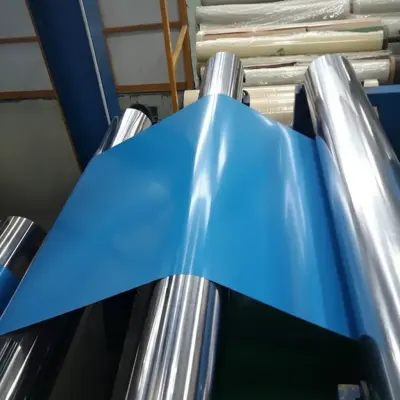
Roll-forming plants use galvanized coil to produce corrugated roofing sheets, wall panels, flashing, gutters, and downpipes. Profile geometry and equipment setup influence the required thickness tolerance, yield behavior, and coating adhesion. Roofing buyers should also distinguish bare galvanized products from prepainted galvanized products described in [[INTERNAL_LINK]].
HVAC and Ventilation Fabrication
Ductwork, plenums, air-handling components, and ventilation accessories are commonly fabricated from galvanized sheet. These products may involve cutting, folding, lock forming, and spot joining. Consistent width, flatness, coating condition, and forming performance help reduce stoppages on automated duct lines.
Light-Gauge Construction Components
Studs, tracks, channels, ceiling systems, and non-exposed framing components can be roll formed from GI steel coil. Structural or non-structural use must be clearly identified because the required grade, mechanical properties, coating class, and local building compliance may differ. The finished component manufacturer remains responsible for validating design loads and regulatory requirements.
Appliance and General Manufacturing
Galvanized steel is used for selected appliance housings, cabinets, panels, brackets, and internal components. Visible surfaces may require tighter appearance controls than concealed parts. Drawing or forming operations should be reviewed with the supplier to prevent ordering a substrate grade that lacks sufficient ductility.
Electrical Enclosures and Fabricated Parts
Cable trays, equipment cabinets, junction-box components, shelving, and miscellaneous stamped parts may use galvanized coil for corrosion protection. Buyers should disclose welding, painting, adhesive bonding, or powder-coating requirements because surface treatment can affect downstream preparation. Related fabrication materials can be reviewed through [[INTERNAL_LINK]].
How to Choose GI Steel Coil / Buying Guide
GI steel coil should be purchased through a written specification that connects the material to the buyer’s production process. A vague request for “galvanized coil” leaves unresolved questions about grade, coating, thickness basis, surface treatment, tolerances, and inspection. Procurement managers can reduce commercial and technical risk by reviewing the following points before requesting a quotation.
Define the Standard, Grade, and End Use
State whether the order follows ASTM A653/A653M, EN 10346, JIS G 3302, GB/T 2518, or another contractually accepted specification. Add the exact grade and describe the finished component. The application helps the supplier evaluate whether the requested material is intended for simple profiling, deep forming, structural service, welding, or painting. Do not treat similarly named grades from different standards as automatic equivalents.
Specify Dimensions and Processing Limits
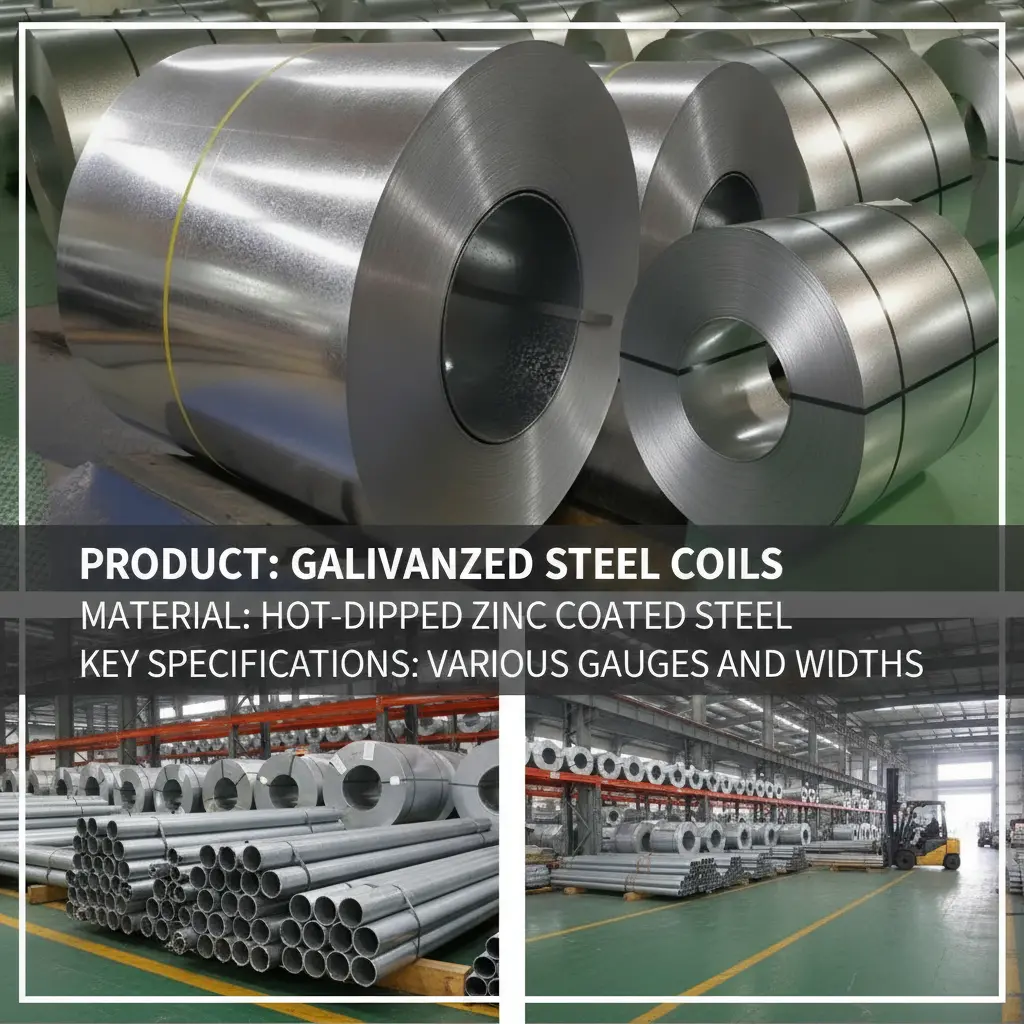
Provide nominal thickness, width, coil ID, acceptable coil weight, edge type, and required tolerances. Confirm whether thickness is specified as coated thickness or substrate thickness. For narrow slit coils, include camber, burr, and winding expectations where these affect line feeding. Coil weight and outside diameter must remain within the limits of the buyer’s uncoiler, crane, storage rack, and inland transport arrangements.
Confirm Coating and Surface Requirements
Select the zinc coating designation according to the governing standard and service environment. A heavier designation is not automatically the correct choice for every application because forming, welding, appearance, and cost also matter. Identify required spangle appearance, skin-pass condition, passivation, oiling, or other treatment. For exposed or painted parts, agree on representative samples or measurable acceptance criteria instead of relying on subjective descriptions.
Review Certification and Inspection
Request the required inspection certificate at the inquiry stage. Documentation may include heat or coil identification, chemical analysis, mechanical test results, coating test results, dimensions, and standard compliance, depending on the grade and supply agreement. If third-party inspection is required, define the agency, inspection scope, sampling point, and responsibility for fees before production. Buyers can review a documentation checklist at [[INTERNAL_LINK]].
Align MOQ, Production Schedule, and Delivery
Minimum order quantity depends on grade, coating, dimensions, surface treatment, mill scheduling, and whether material is produced as a parent coil or processed from available stock. Ask for the MOQ by specification rather than expecting one universal figure. Lead time should be confirmed after technical approval and may include raw material scheduling, galvanizing, slitting, testing, packing, and export handling.
Plan Export Packaging and Logistics
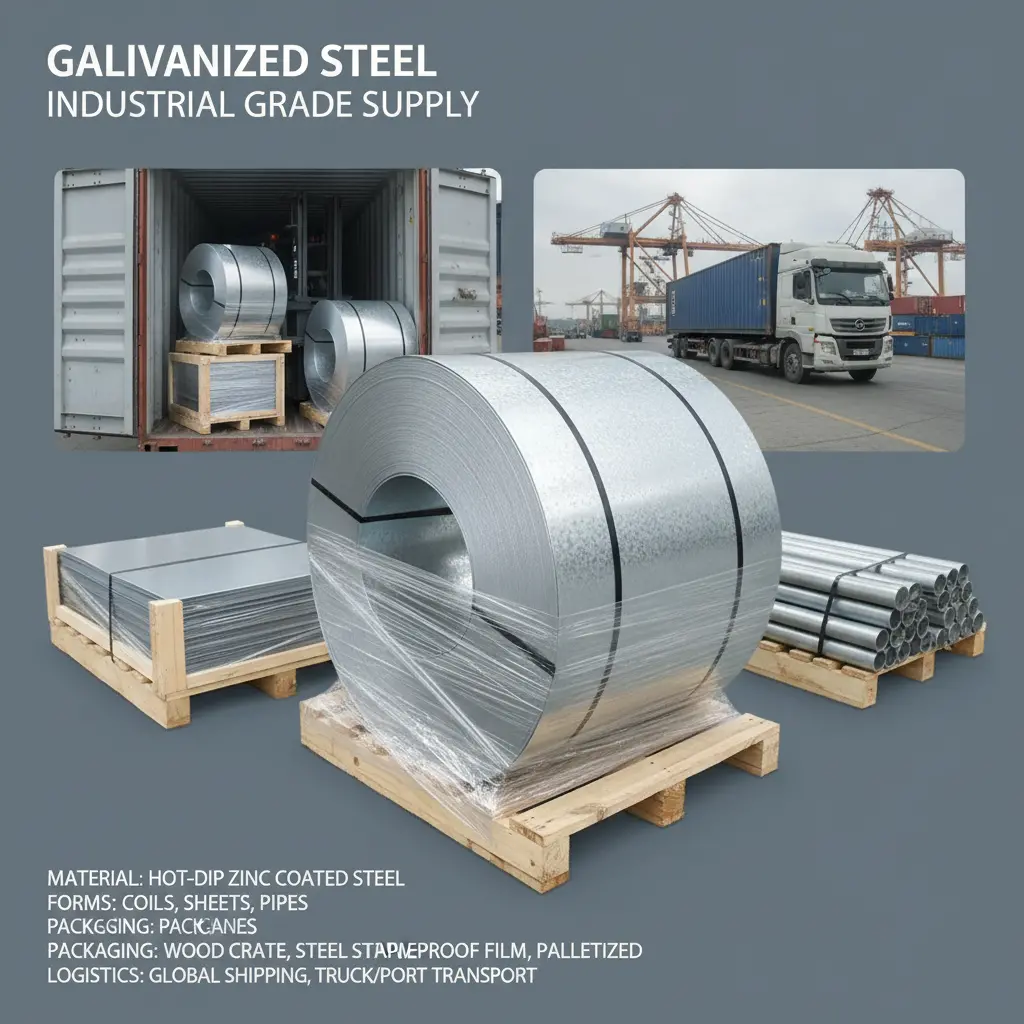
Specify whether shipment will move by container, breakbulk, or another agreed method. Packaging should be designed around moisture exposure, lifting method, route length, transshipment, and destination unloading equipment. The packing agreement may address wrapping, edge protection, strapping, skids, coil orientation, labels, and desiccant where appropriate. Buyers should also confirm maximum package weight and container-loading limitations with their logistics provider. General export packing considerations are discussed at [[INTERNAL_LINK]].
Frequently Asked Questions About GI Steel Coil
Q: What is the difference between GI steel coil and cold-rolled steel coil?
A: GI steel coil has a zinc coating applied by the hot-dip process, while ordinary cold-rolled steel coil is supplied without that metallic corrosion-protection layer. Cold-rolled material may offer a surface suited to specific finishing operations, but it generally requires additional protection if exposed to corrosive conditions. The correct choice depends on fabrication, appearance, coating, and service-environment requirements.
Q: What is the difference between GI steel coil and Galvalume or Al-Zn coated coil?
A: GI steel coil uses a predominantly zinc-based hot-dip coating, whereas Al-Zn coated products use an aluminum-zinc alloy coating governed by a different product specification. Their corrosion behavior, heat performance, forming characteristics, and cut-edge behavior are not identical. Buyers should select the coating system according to the application and relevant standard rather than substituting one product based only on appearance.
Q: Which certificates can be supplied with GI steel coil?
A: Certification depends on the ordered standard and commercial agreement. A mill test certificate may report product identification, grade, dimensions, chemical analysis, mechanical properties, coating results, and compliance information where applicable. State the required certificate type and any third-party inspection requirement in the inquiry so availability, scope, and cost can be confirmed before order placement.
Q: What is the minimum order quantity for GI steel coil?
A: There is no universal MOQ for every specification. The minimum quantity depends on grade, coating designation, thickness, width, surface treatment, production route, and stock availability. Standard stock dimensions may support a different quantity from custom mill production or precision slitting. Submit the full specification and requested tonnage to receive an applicable MOQ.
Q: How long is the production lead time?
A: Lead time varies with technical requirements, order volume, mill schedule, testing, processing, and packaging. Custom grades, uncommon coating designations, narrow tolerances, or third-party inspection can require additional time. The supplier should confirm the schedule after reviewing the final specification; ocean transit and destination customs clearance should be planned separately from production time.
Q: What payment methods are available for international orders?
A: Payment terms are subject to commercial review, order value, destination, credit assessment, and the agreed sales contract. International transactions may use bank-based methods agreed by both parties, but no particular method should be assumed before quotation. Buyers should confirm currency, deposit or balance conditions, banking charges, document-release terms, and any letter-of-credit requirements during negotiation.
Q: Can GI steel coil be slit or cut to custom dimensions?
A: Slitting or cut-to-length processing may be arranged when the requested dimensions fall within available equipment capability. Buyers should provide width, length if applicable, tolerances, edge condition, burr limit, coil ID, and package weight. Processed dimensions and quantity yield should be confirmed from the parent-coil plan before production.
Q: Can galvanized steel coil be painted, welded, or powder coated?
A: Yes, but successful processing depends on the zinc coating, surface treatment, cleanliness, joint design, and selected finishing system. Passivation or oil may require specific cleaning and pretreatment before painting or bonding. Welding galvanized steel also requires appropriate procedures, ventilation, and control of coating-related fumes. Trial processing is advisable for a new material and production route.
Q: How should GI steel coil be protected during ocean shipment and storage?
A: The coil should be packed and handled to limit water entry, condensation, edge damage, and movement in transit. On arrival, packages should be inspected promptly and stored in a dry, ventilated location under controlled conditions. Wet storage can cause staining on galvanized surfaces. Packing design, coil orientation, lifting method, and unloading capability should be agreed before shipment.
Q: How can a buyer verify the zinc coating designation?
A: Verification should follow the test method and reporting rules of the ordered standard, such as ASTM A653/A653M, EN 10346, JIS G 3302, or GB/T 2518. The purchase order should state the coating designation and whether independent testing is required. Visual spangle size or surface color cannot reliably establish coating mass.
Send your required GI steel coil standard, grade, coating designation, thickness, width, coil dimensions, quantity, surface treatment, destination, and certification requirements to request a technical review and quotation. Providing the finished application and processing method will help align the material specification, production route, export packaging, and delivery plan with your procurement requirements.
Ratings & Reviews

Know your supplier
Supplier's customization ability
- Drawing-based customization
- Sample-based customization
- Full customization
Minimum order quantity: 5 ton
Shipping total: To be negotiated
- Lead time:
- confirmed with the quotation
- Packaging:
- standard export packing
- Samples:
- available on request